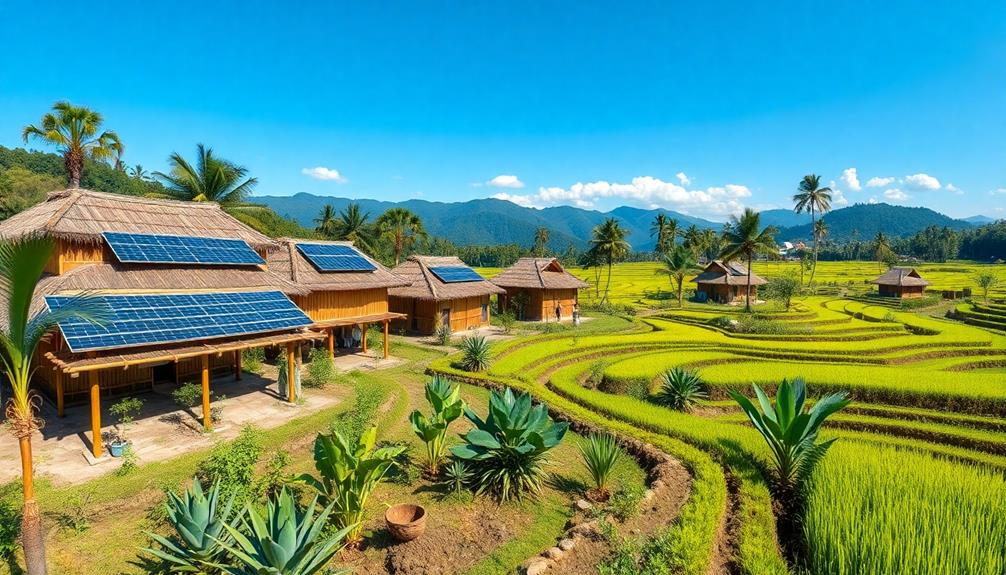

Top sustainable rural design trends in Indonesia focus on preserving cultural heritage while promoting ecological integrity. You'll see participatory design approaches that engage locals, ensuring their voices shape development. Traditional Ecological Knowledge, like Niteni and Pranatamangsa, enhances agricultural practices and fosters community ties. Community engagement strategies empower local craftsmanship and strengthen identities. Additionally, the Smart Villages concept utilizes technology to improve living conditions and promote entrepreneurship. These trends not only enhance resilience but also connect people to nature. If you're curious about how these elements come together for a sustainable future, there's much more to explore.
Key Takeaways
- Participatory design approaches empower communities by involving locals in the design process, ensuring their needs and cultural identities are prioritized.
- Traditional Ecological Knowledge (TEK) supports sustainable agriculture, utilizing techniques like Niteni and Pranatamangsa to enhance crop yields and biodiversity.
- Community engagement strategies promote local craftsmanship and traditions, strengthening community identity and fostering pride in cultural heritage.
- The Smart Villages concept utilizes ICT to enhance living conditions, promote local entrepreneurship, and support environmental stewardship in rural areas.
- Future directions focus on integrating TEK with luxury tropical design aesthetics, maintaining a connection to nature while promoting sustainable practices.
Impact of Industrialization on Rural Areas
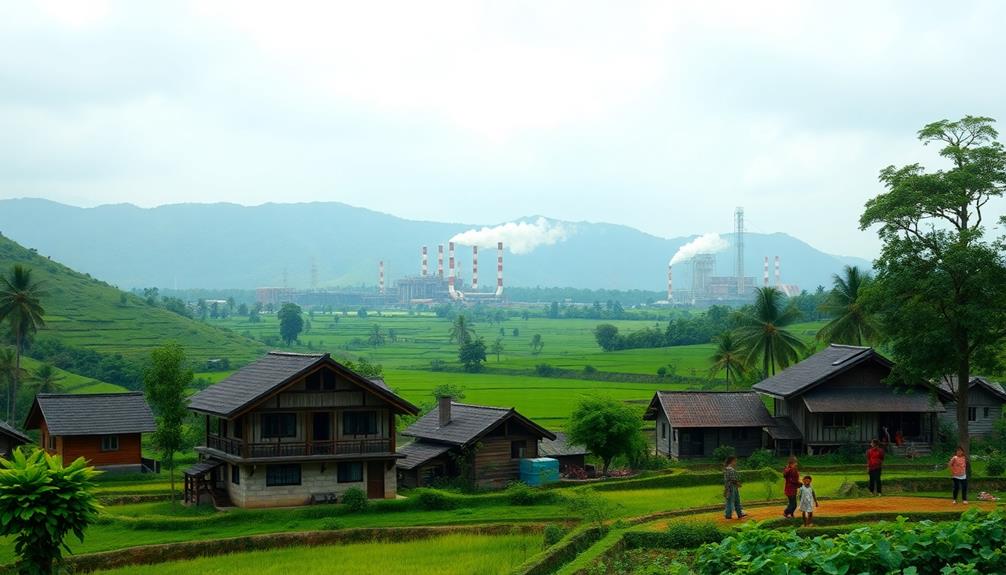
Industrialization in Indonesia has profoundly impacted rural areas, reshaping lives and landscapes alike. As you observe the shift from traditional farming to modern agricultural practices, you'll notice the erosion of cultural identities tied to these age-old methods.
The Green Revolution of 1968 marked a turning point, prioritizing economic growth over sustainable development, leading to significant environmental degradation and a loss of biodiversity. This transformation has also influenced traditional housing designs, as many rural communities are adapting to modern materials and construction methods, often at the expense of their cultural heritage and sustainability principles.
Traditional Indonesian houses typically utilize natural materials that promote sustainability, a practice that's increasingly overlooked in favor of contemporary building techniques.
Urbanization policies have exacerbated the economic divide, leaving rural poverty rates at 12.36% as of September 2022. This uneven development has disrupted not only local economies but also the community ties that once flourished around farming.
Mechanized practices have taken precedence, focusing on profit rather than ecological sustainability, which further contributes to the decline of traditional farming.
As you witness these changes, it becomes clear that the need for sustainable rural development in Indonesia is critical. By integrating traditional ecological knowledge into modern practices, you can help revitalize rural communities and preserve their cultural heritage amidst the pressures of industrialization.
Embracing sustainable design practices can pave the way for a more balanced approach that honors both economic growth and the environment.
Participatory Design Approaches
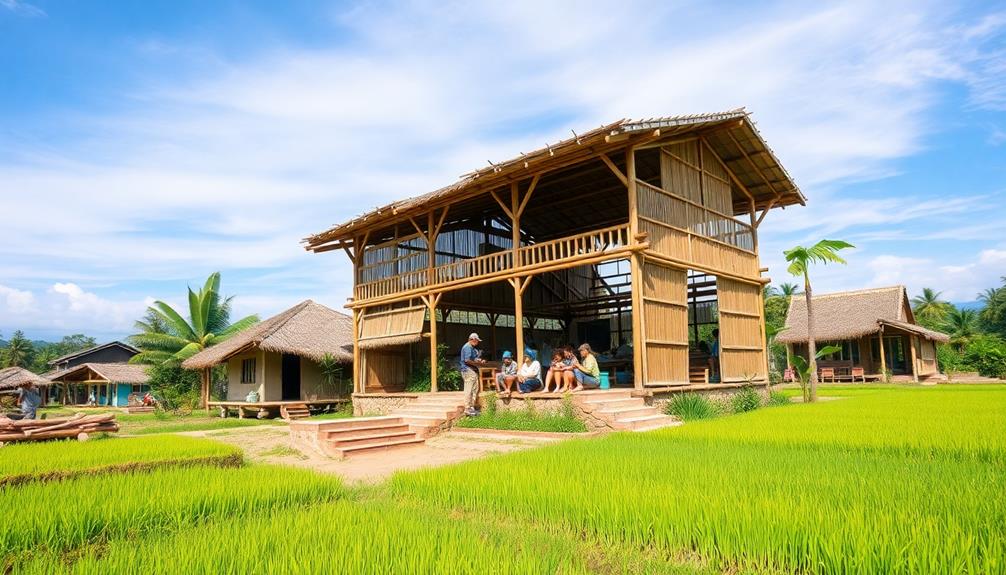
As rural communities in Indonesia face the challenges of modernization, participatory design approaches offer a solution that empowers locals by involving them directly in the design process. By treating community members as active contributors rather than passive subjects, you enhance local ownership and guarantee that projects are relevant to their needs.
This is particularly important in regions where traditional housing styles, such as Rumah Adat, reflect cultural significance and social status, emphasizing the need for designs that resonate with local identities.
The participatory design process includes activities like initiation meetings, treasure mapping, and idea generation workshops. These methods help identify community assets and guarantee all voices are heard. Engaging diverse stakeholders—such as local farmers and government representatives—fosters collaborative engagement to tackle local development challenges and promotes resilience in rural communities.
Additionally, utilizing ethnographic methods allows you to document local cultural practices, guaranteeing designs are informed by the unique context of the area. This approach supports sustainable development by integrating Traditional Ecological Knowledge, which enhances agricultural practices and strengthens regional identity.
Ultimately, participatory design not only addresses immediate needs but also nurtures a sense of community empowerment, setting a foundation for long-term ecological balance and sustainable growth in rural Indonesia.
Traditional Ecological Knowledge

In Indonesia, you'll find that Traditional Ecological Knowledge (TEK) plays a crucial role in sustainable agriculture through techniques like Niteni, which encourages careful observation of nature.
This approach aligns well with the use of natural materials in various aspects of Indonesian life, such as in Indonesian Kitchen Decor, where bamboo and wood enhance functionality and beauty.
By following the Pranatamangsa seasonal guidelines, farmers can align their practices with natural cycles, ensuring healthier crops.
Embracing TEK not only promotes environmental balance but also strengthens community ties and regional identity.
Niteni Observation Techniques
While many modern agricultural techniques focus on technology, Niteni observation techniques rooted in traditional ecological knowledge offer invaluable insights for sustainable farming in Indonesia. By engaging in Niteni, you can closely observe and document natural phenomena, allowing you to understand seasonal changes and ecological patterns that influence your farming practices.
This approach is essential for making informed decisions about when to plant and harvest, as guided by the Pranatamangsa calendar. Additionally, integrating elements of local culture, such as unique artistic expressions reflected in traditional crafts, can enhance community engagement and pride.
Niteni emphasizes the interconnection between human activities and nature, promoting sustainable living and ecological balance in rural areas in Indonesia. As you incorporate Niteni into your agricultural practices, you not only enhance your regional identity and local pride but also foster community engagement and empowerment.
This participatory design process supports the preservation of cultural heritage and biodiversity, key factors for sustainable development.
Utilizing Niteni in your farming methods can create a more resilient agricultural system that respects local traditions while adapting to modern challenges. By embracing these traditional observation techniques, you contribute to a sustainable future that honors both your community and the environment.
Pranatamangsa Seasonal Guidelines
Building on the insights gained from Niteni observation techniques, the Pranatamangsa seasonal guidelines offer a structured approach to agricultural timing in Indonesia. This traditional ecological knowledge system helps you optimize your agricultural activities by aligning planting and harvesting times with natural indicators.
By observing local weather patterns, moon phases, and ecological changes, you can enhance crop yields and better manage your resources. This approach resonates with the principles of Balinese design characteristics, which emphasize sustainability and a connection to nature.
Incorporating Pranatamangsa into your farming practices not only supports sustainable development but also reinforces the cultural identity of rural Indonesia. This deep-rooted wisdom enables you to mitigate the risks of crop failure, promoting food security and environmental stewardship within your community.
As you embrace these seasonal guidelines, you contribute to the preservation of local ecosystems and biodiversity. Utilizing Pranatamangsa reflects the importance of traditional design in modern agriculture, reminding you that sustainable practices are rooted in respecting nature.
Community Engagement Strategies

When you engage with rural communities in Indonesia, using collaborative design approaches can notably enhance the outcome.
By integrating local knowledge, such as traditional craftsmanship and cultural symbols, you not only respect their traditions but also empower them to participate actively in the design process.
This aligns with the principles of Indonesian wedding decor ideas, fostering sustainable practices that resonate with the community's values and needs.
Collaborative Design Approaches
Engaging communities in the design process is essential for fostering sustainable rural development in Indonesia. By utilizing collaborative design approaches, you can guarantee that all community members participate in decision-making, leading to impactful social innovation. Participatory learning techniques, like initiation meetings and craft design workshops, actively involve stakeholders, making them co-creators of their environment.
Incorporating Traditional Ecological Knowledge (TEK) enriches the design by preserving local narratives and identities. Recently, a project included 58 participants—24 from the local community and 28 from outside—highlighting the significance of diverse stakeholder collaboration for effective rural development.
Here's a quick look at key aspects of collaborative design approaches:
| Aspect | Description |
|---|---|
| Participatory Learning | Engaging community in decision-making processes |
| Multi-Sector Collaboration | Involving diverse stakeholders for effective solutions |
| Social Innovation | Creating sustainable and innovative community-led projects |
Focusing on openness and connectedness encourages knowledge exchange, addressing local challenges through a holistic approach. By embracing these strategies, you're not just designing spaces; you're empowering communities to shape their futures sustainably.
Local Knowledge Integration
Integrating local knowledge into the design process greatly enhances community engagement strategies in rural Indonesia. By utilizing local knowledge integration, you tap into the rich resources of Traditional Ecological Knowledge (TEK), which fosters sustainable development. Engaging local stakeholders through participatory design allows you to create solutions that resonate with community values and needs.
Additionally, incorporating elements such as traditional artistry into your designs can further enrich the cultural significance of the projects.
In your approach, consider using ethnographic methods to document community life. This helps capture local perspectives that inform your design decisions, reinforcing cultural narratives and ensuring that your initiatives reflect the community's identity.
Activities like treasure mapping and craft design workshops encourage community empowerment, giving locals a sense of ownership over development projects.
Collaborative engagement with diverse stakeholders, including local farmers and government representatives, is essential for addressing local development challenges. By actively involving these groups in the design process, you promote social innovation that benefits everyone.
Case Study: Sabrang Village

Sabrang Village, nestled in Delanggu District, serves as a compelling example of sustainable rural design in Indonesia. This village is renowned for its rice production, yielding around 20,395 tons annually, thanks to the cultivation of local varieties like Rojolele and Mentik Wangi.
The community's commitment to sustainable development is evident through its participatory design practices, which engage 58 participants, including local farmers and external stakeholders. This collaboration fosters community involvement, ensuring that everyone has a voice in shaping their environment.
Moreover, the use of traditional Indonesian style home decor within village structures enhances the cultural significance and aesthetic appeal of the community.
Traditional Ecological Knowledge (TEK) plays an essential role in Sabrang's agricultural practices. Techniques like Niteni and Pranatamangsa guide farmers in observing natural phenomena and adhering to seasonal farming guidelines.
The village emphasizes traditional design that reflects local cultural values and craftsmanship, inspired by Japanese design traditions. This approach not only enhances identity-making but also strengthens community-building efforts.
Sabrang's focus on co-creation and participatory learning is key to enhancing the resilience of its agricultural practices and overall community life. By integrating these elements, Sabrang Village exemplifies how sustainable rural design can effectively harmonize cultural heritage with modern agricultural needs.
Smart Villages Concept
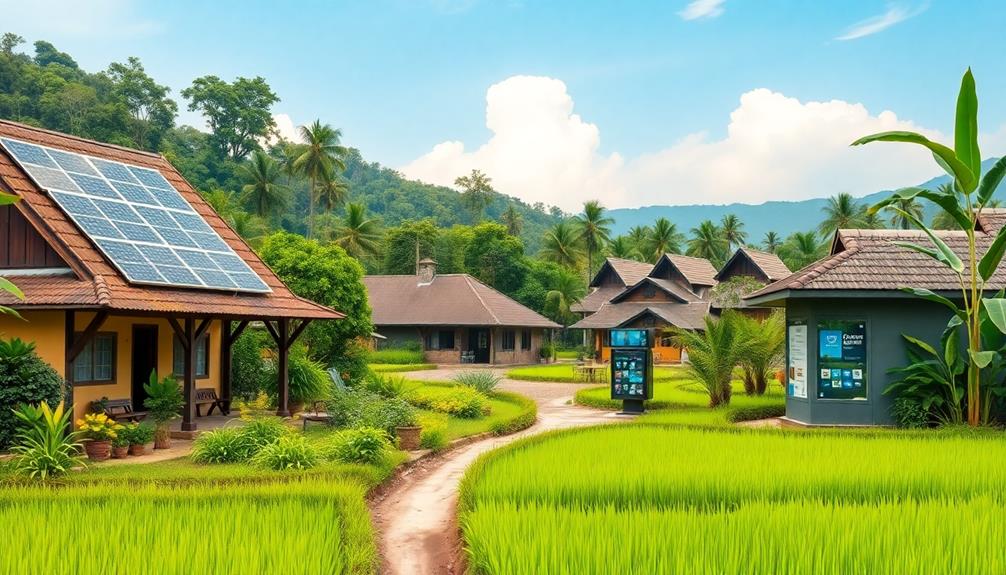
How can the Smart Villages concept transform rural life in Indonesia? By leveraging information and communication technology (ICT), Smart Villages enhance community resilience and promote sustainable development. This approach addresses vulnerabilities and improves local living conditions, fostering social inclusion and collective well-being.
| Key Elements | Benefits | Examples |
|---|---|---|
| ICT Integration | Improved access to services | Pondok Ranji for education |
| Local Entrepreneurship | Economic growth | Geluran Taman for language skills |
| Community Collaboration | Tailored solutions | Stakeholder engagement |
| Sustainable Practices | Environmental stewardship | Renewable energy initiatives |
The COVID-19 pandemic highlighted the need for Smart Villages, emphasizing their role in sustainable national development. As of 2022, 8.43% of villages were classified as Independent, while 27.34% were Developed, illustrating ongoing efforts to bridge rural disparities. Successful implementations demonstrate innovative strategies that attract investment and empower local entrepreneurs. By prioritizing community characteristics and input, Smart Villages can effectively meet local needs, fostering a resilient and inclusive rural environment. This transformation not only enhances living conditions but also paves the way for a brighter future for rural Indonesia.
Future Directions in Rural Design
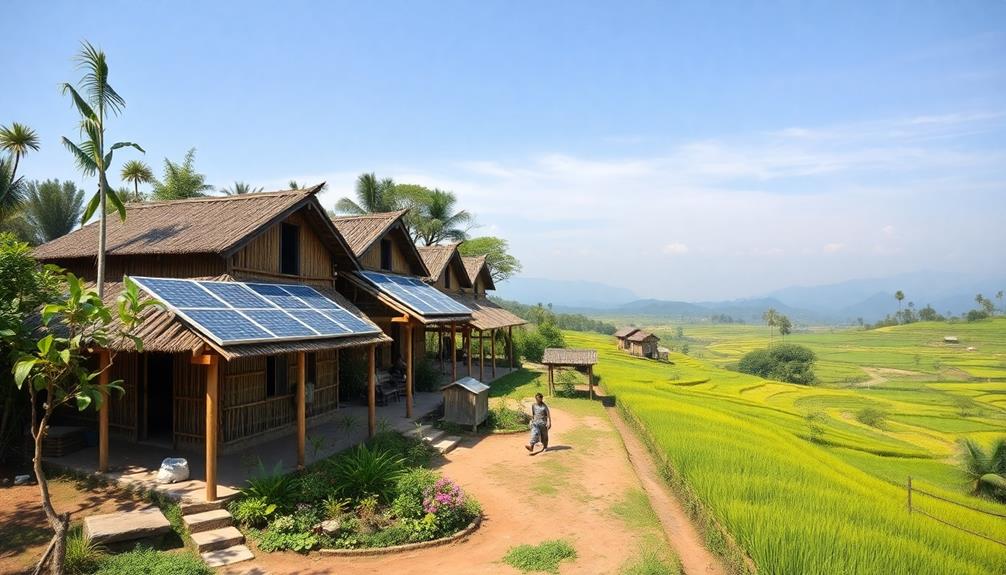
Embracing innovative approaches, future rural design in Indonesia is set to harness Traditional Ecological Knowledge (TEK) and smart village concepts to create sustainable environments.
By integrating TEK, you'll promote sustainable agricultural practices and enhance local biodiversity, drawing inspiration from methods like Niteni and Pranatamangsa, which emphasize observing nature. Additionally, incorporating elements from luxury tropical design aesthetics can enhance the visual appeal of rural spaces while maintaining a connection to the natural environment.
As you engage in community-focused design, participatory approaches will allow you to shape social landscapes, fostering a strong local identity and empowering residents. By prioritizing the community's input, you'll create spaces that resonate with their values and needs.
Moreover, the shift toward smart villages will leverage technology, enhancing local economies and resilience. With robust information and communication technology (ICT) infrastructure, rural areas can access improved education, health services, and economic opportunities.
This digital transformation addresses vulnerabilities highlighted during the COVID-19 pandemic, ensuring no community is left behind.
Lastly, incorporating biophilic principles in design will strengthen the connection between people and nature, enhancing mental well-being and promoting ecological stewardship.
Future rural design in Indonesia is poised to create vibrant, sustainable communities that thrive through innovation and collaboration.
Frequently Asked Questions
What Are the Benefits of Using Locally Sourced Materials in Rural Design?
Using locally sourced materials in rural design enhances sustainability, reduces transportation costs, and supports the local economy. You'll also create a unique character in your projects while minimizing environmental impact and fostering community pride.
How Does Permaculture Contribute to Food Security in Rural Indonesia?
Permaculture boosts food security by creating diverse, resilient ecosystems. You'll see improved soil health, increased crop yields, and reduced reliance on external resources. It empowers communities to sustainably manage resources and adapt to changing environmental conditions.
What Renewable Energy Options Are Popular in Indonesian Rural Areas?
Imagine the sun rising over lush fields, symbolizing hope. In Indonesian rural areas, solar panels and micro-hydropower systems thrive, providing clean energy. You'll find communities harnessing wind power too, embracing sustainable solutions for a brighter future.
How Can Water Conservation Techniques Be Implemented in Rural Designs?
To implement water conservation techniques in rural designs, you can integrate rainwater harvesting systems, use permeable materials for landscaping, and install efficient irrigation methods. These strategies will help you optimize water use and promote sustainability.
What Role Does Cultural Heritage Play in Sustainable Rural Design Trends?
Cultural heritage, akin to a well-worn path, shapes sustainable rural design by infusing local narratives, traditions, and materials. You'll find that respecting these elements fosters community identity and guarantees environmental harmony for future generations.
Conclusion
As you explore the top sustainable rural design trends in Indonesia, you'll see a striking contrast: the pull of industrialization versus the resilience of traditional practices. By embracing participatory design, integrating ecological wisdom, and fostering community engagement, you can help shape vibrant, sustainable futures for rural areas. The journey from Sabrang Village to the smart villages concept illustrates that innovation doesn't have to compromise heritage. Instead, it can harmonize with it, creating a richer, more sustainable landscape for all.

Aurora – Your Creative Guide Aurora serves as your creative guide, igniting inspiration and offering innovative design solutions for your home. With her keen eye for aesthetics and passion for creating beautiful spaces, she’s here to help you turn your vision into reality.