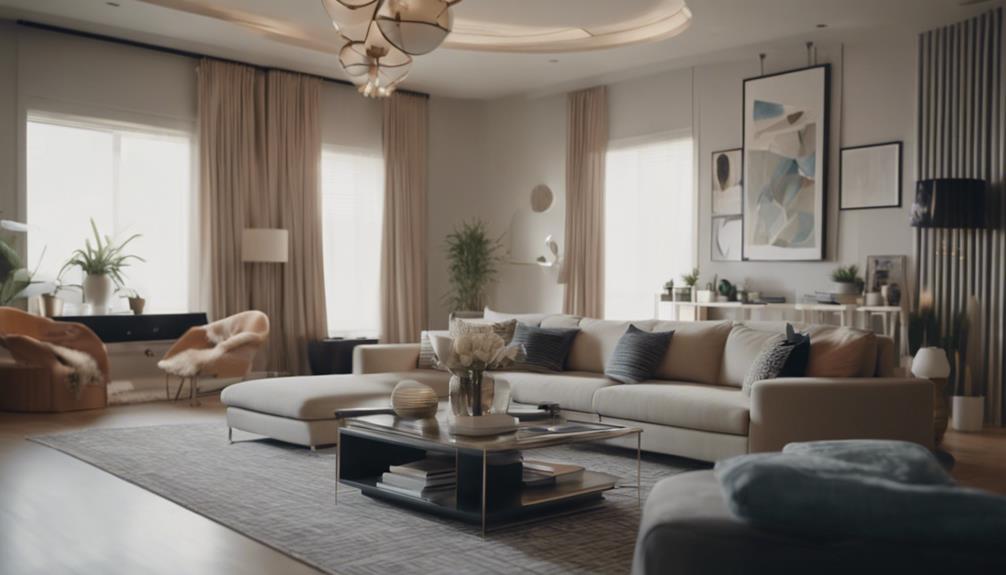

Interior designers use geometry to create order, harmony, and a modern feel in spaces. By incorporating shapes like squares, circles, triangles, and hexagons, they design structured layouts that symbolize different qualities impacting the mood of a room. Balancing geometric patterns subtly prevents overwhelming the space while adding intrigue and sophistication. Using geometric shapes not only enhances spatial perception by creating stability but also brings unity, energy, and modernity to the design. If you want to elevate your interior design skills, understanding how geometry influences space can take your creativity to the next level.
Listen free for 30 days with Audible
Thousands of audiobooks and originals — cancel anytime.
As an affiliate, we earn on qualifying purchases.
Key Takeaways
- Interior designers use geometric shapes for order, harmony, and modernity in designs.
- Geometric patterns create visual interest and balance in rooms.
- Spatial perception is enhanced by geometric shapes like circles, triangles, and hexagons.
- Balancing geometric designs prevents clutter and conveys specific feelings.
- Furniture, decor, and architectural details are strategically aligned with geometric patterns for cohesion.
As an affiliate, we earn on qualifying purchases.
Importance of Geometric Shapes
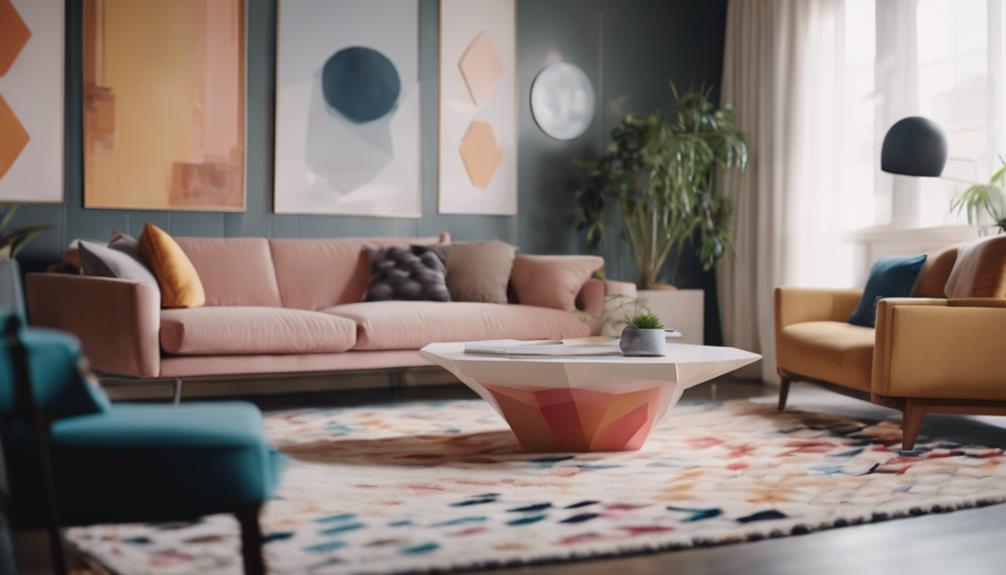
Geometric shapes play a fundamental role in interior design by providing order, harmony, and a touch of modernity to living spaces. When incorporating geometric shapes into interior design, achieving balance is essential. By carefully distributing squares, circles, triangles, or hexagons across key pieces like furniture and decor, you can create a structured layout that exudes harmony and visual interest. These shapes act as the building blocks that give your interior space a sense of organization and cohesion.
The strategic use of geometric shapes serves as an aesthetic technique to enhance the overall look and feel of a room. Different shapes symbolize various qualities, influencing the mood and atmosphere of the space. For instance, squares convey stability, while circles represent unity and wholeness. By understanding the significance of each shape, you can create a well-balanced design that not only looks visually appealing but also conveys a particular ambiance to those who inhabit the space.
Creating Visual Interest
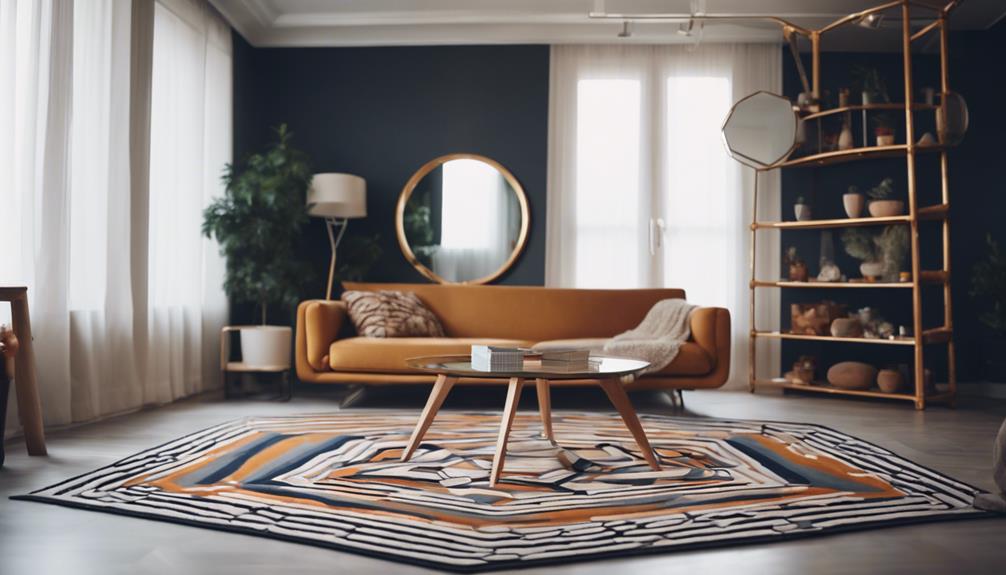
To enhance the appeal of your interior design and captivate viewers, consider how geometric patterns can create visual interest in the space. Geometric shapes offer a way to add structure, depth, and harmony to your rooms, making them visually engaging and dynamic.
Here are three tips to help you achieve this:
- Balance is Key: When incorporating geometric patterns, maintain a balance to prevent overwhelming the space. Mixing shapes like squares, circles, triangles, and hexagons can bring a sense of cohesion and prevent a chaotic look.
- Utilize Various Elements: Geometric shapes can be integrated into furniture, decor items, and architectural details. By incorporating these shapes throughout the space, you can elevate the overall aesthetic and create a unique ambiance.
- Mix Patterns Subtly: Experiment with blending different geometric patterns subtly. This can add intrigue and sophistication to your interior design while maintaining a sense of unity and coherence. By carefully combining these patterns, you can achieve a visually appealing and harmonious space.
Enhancing Spatial Perception
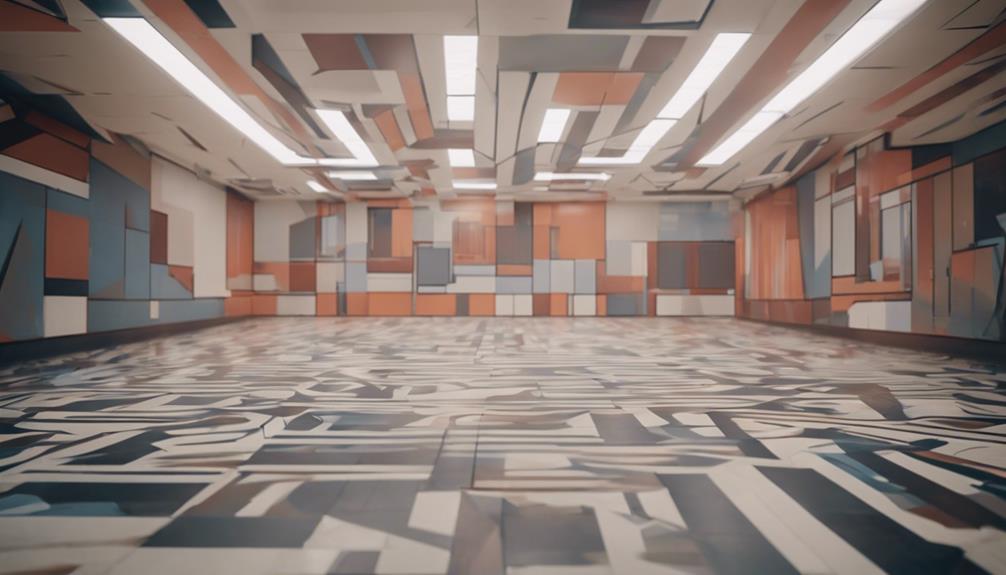
Enhancing spatial perception in interior design involves strategically utilizing geometric patterns to create a sense of order, stability, and sophistication within a room. By incorporating various geometric shapes like circles, triangles, and hexagons, designers can enhance the overall spatial perception of a space. Circles symbolize unity and infinity, adding harmony and fluidity to the room. Triangles bring a dynamic and confident energy, elevating the design aesthetic. Hexagons introduce modernity and excitement while providing structure and balance.
Balancing these key geometric shapes across furniture and accessories is crucial to prevent a cluttered look and to maintain a cohesive design that enhances spatial perception. When used thoughtfully, geometric patterns create a visual rhythm that guides the eye around the room, making the space feel more organized and visually appealing. So, next time you're designing a room, consider the power of geometry in enhancing spatial perception to create a harmonious and balanced environment.
Achieving Balance and Harmony
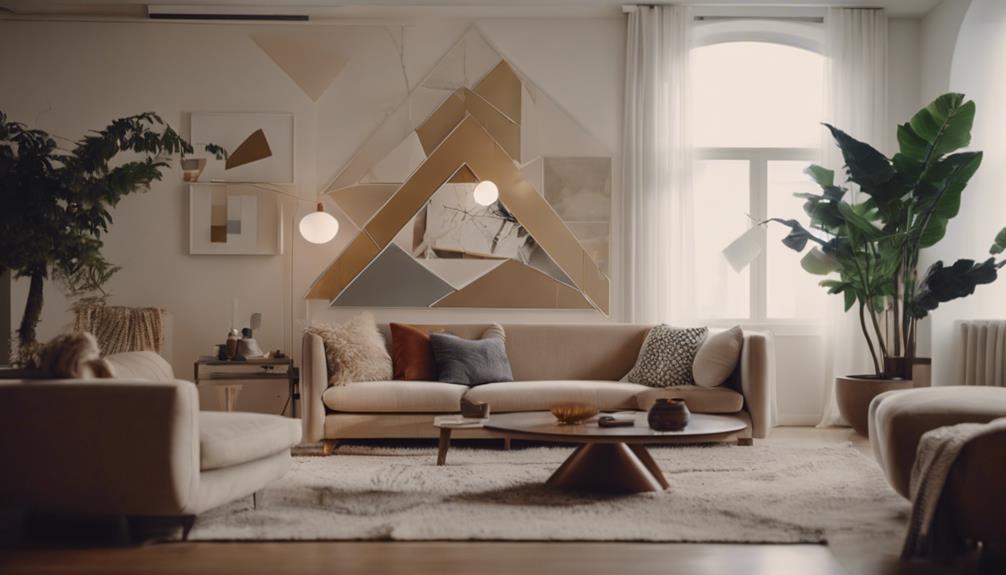
Aiming for balance and harmony in interior design involves skillfully integrating geometric patterns into furniture, decor, and architectural elements. By incorporating geometric shapes such as squares, circles, triangles, and hexagons, designers create a visually appealing and harmonious environment.
Here are three key aspects to contemplate when aiming for balance and harmony in your interior design:
- Creating Shapes and Lines: Use geometric shapes and lines in furniture and decor to establish a sense of order and balance in the room. For example, ponder how circular rugs or hexagonal tables can complement the architectural shapes of a space.
- Balancing Architectural Shapes: Harmonize the architectural geometry of a room with geometric patterns in furniture and decor elements. This balance guarantees a cohesive look that enhances the visual interest of the space.
- Enhancing Visual Interest: Geometric designs bring visual interest to a room while maintaining a sense of unity. Experiment with different patterns and shapes to find the right balance that suits your style and preferences.
Symbolism in Design
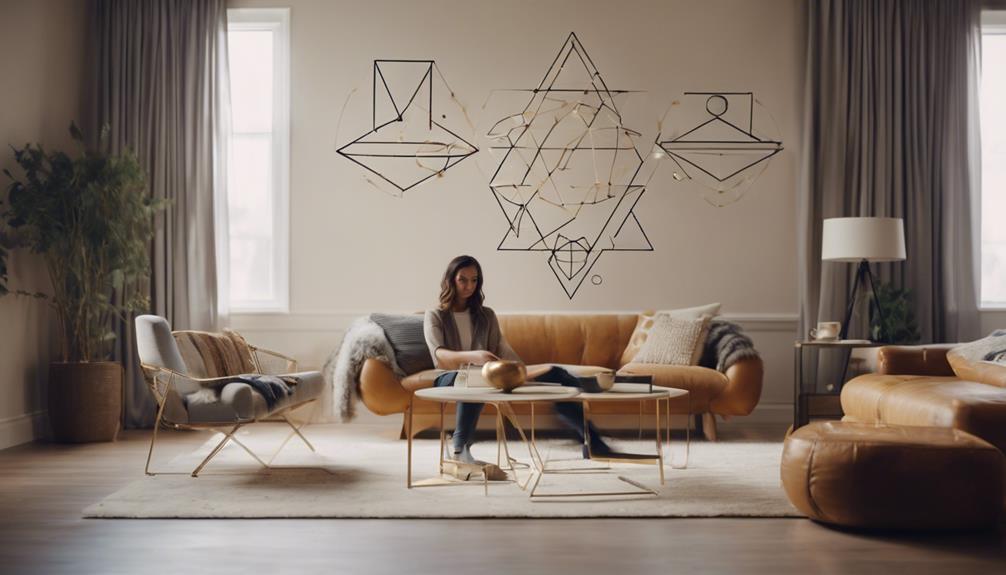
Geometric shapes play a significant role in interior design by symbolizing various concepts like stability, unity, confidence, and modernity.
Squares, with their equal sides and angles, are often used to convey stability and sophistication in a room. By incorporating circles, designers aim to symbolize unity and infinity, adding a sense of harmony and balance to the space.
Triangles, with their sharp lines and dynamic nature, represent confidence and energy, enhancing the overall look of a room. Hexagons, with their unique shape, bring a touch of excitement and modernity to a design, providing structure and balance.
Achieving balance by carefully balancing these geometric shapes is essential in avoiding clutter and creating a cohesive and visually appealing interior. By understanding the symbolism behind each shape and utilizing them effectively, interior designers can create spaces that not only look aesthetically pleasing but also convey specific feelings and concepts.
Practical Applications in Interiors
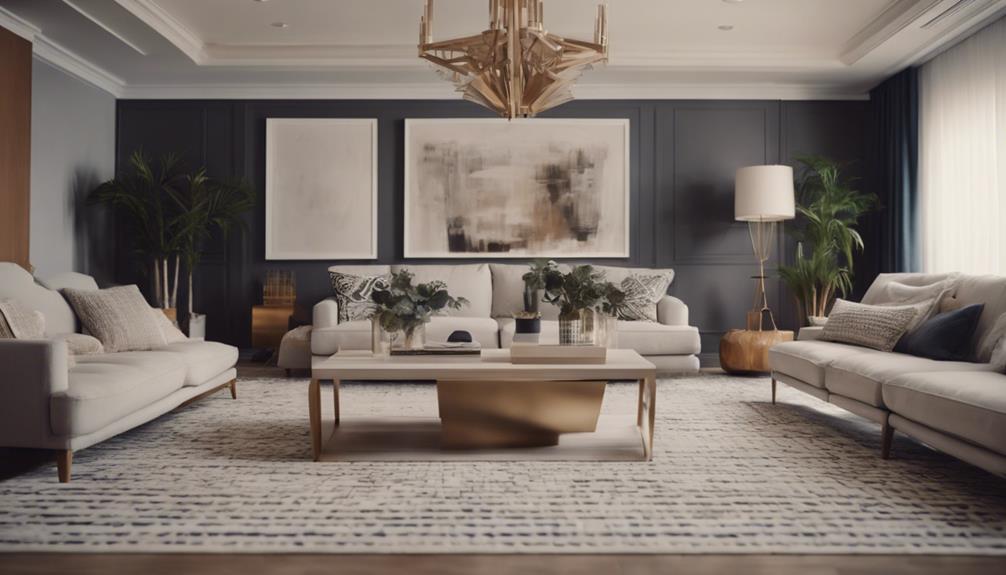
When it comes to practical applications in interiors, think about how geometric patterns can optimize spatial layout efficiency and create visual harmony balance in your space.
Consider using smaller geometric patterns in larger areas for a calming effect and incorporating geometric shapes in furniture and decor to enhance visual appeal.
Spatial Layout Efficiency
To enhance the efficiency of spatial layouts in interior design, consider utilizing geometric principles to optimize both functionality and aesthetic appeal. By incorporating geometric shapes and patterns, interior designers can achieve a harmonious balance between visual appeal and practicality in room design.
Here are three key ways spatial layout efficiency can be improved through the use of geometry:
- Maximizing Functionality: Placing furniture and decor strategically based on geometric principles enhances the usability of the space.
- Creating Visual Appeal: Utilizing geometric shapes and patterns adds visual interest and cohesion to the room design.
- Enhancing Balance: Achieving a sense of balance through geometry guarantees that every element in the space complements each other, enhancing the overall aesthetic appeal.
Efficient spatial layout design through geometry can transform interior spaces into functional and visually pleasing environments.
Visual Harmony Balance
Achieving visual harmony balance in interior design involves strategically integrating geometric patterns and shapes into furniture, decor, and architectural elements. Designers use geometry to create a cohesive look by cleverly distributing shapes and patterns throughout the room. Balancing geometric elements with the architecture is crucial to guarantee a harmonious design.
By utilizing shapes and lines based on geometric principles, designers can dramatically transform a room's look and feel. Harmonizing furniture and decor elements with geometric patterns helps establish a sense of order and balance in interior design.
Impact on Furniture Design
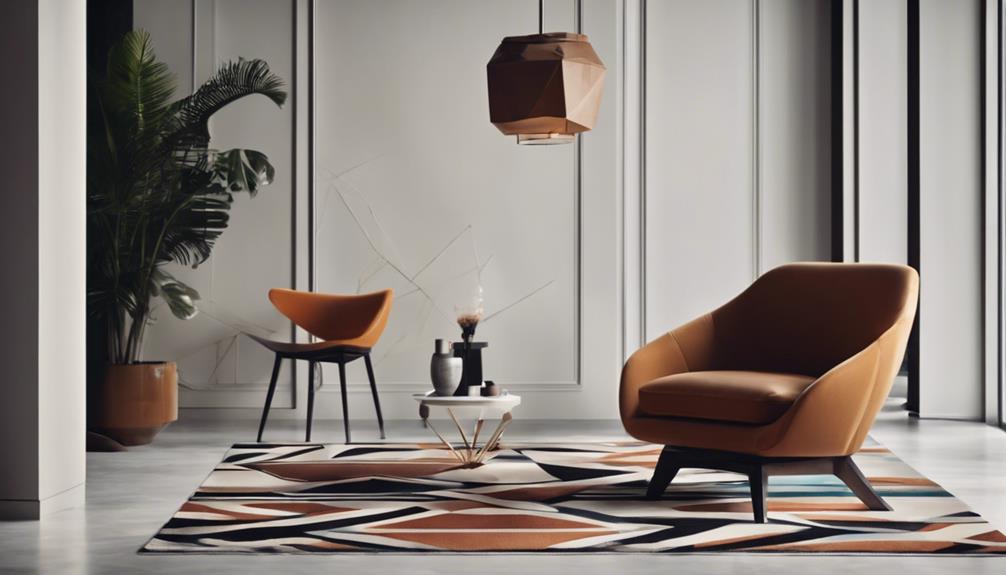
Geometric patterns in furniture design infuse spaces with modern flair and alluring visual appeal. When considering geometry in interior design, incorporating geometric shapes into furniture design can have a profound impact on the overall aesthetic of a room. Here's how it influences furniture design:
- Statement Furniture: Statement furniture pieces adorned with bold geometric patterns can act as eye-catching focal points in a room, adding a touch of contemporary style.
- Visual Interest: Geometric patterns in furniture create visual interest and a sense of dynamism, breaking away from traditional designs and adding a modern edge to the space.
- Harmonizing Patterns: Ensuring that the geometric patterns in furniture harmonize with the overall room design is essential for achieving a cohesive and unified look. By mirroring shapes or patterns across different furniture pieces, you can create a sense of harmony and balance within the space.
Incorporating Geometric Patterns
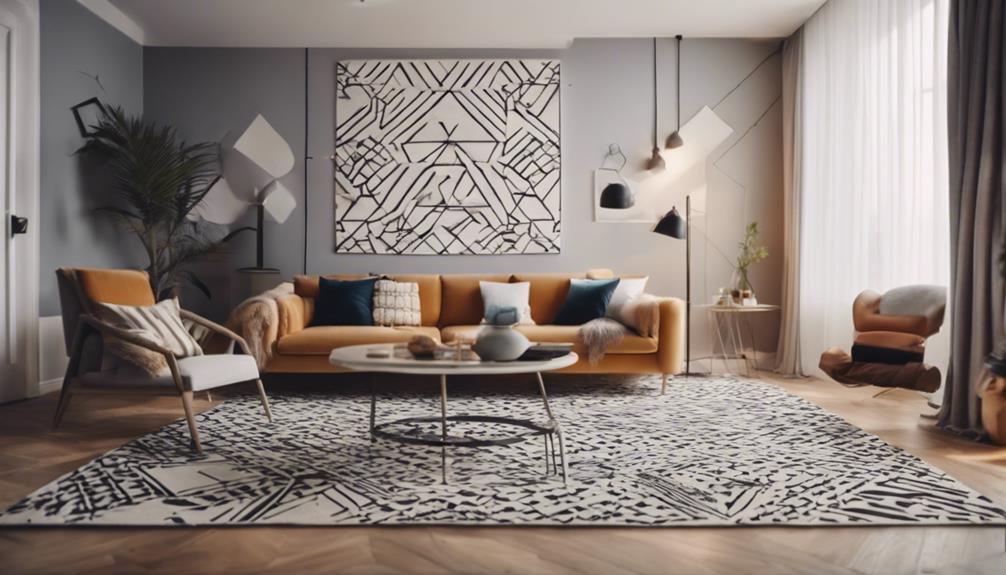
When incorporating geometric patterns in your interior design, consider the use of points. Points in geometric patterns can create focal areas, drawing the eye and adding visual interest to a space.
Utilize points in wallpaper choices, symmetry in furniture arrangements, and flooring tile patterns for a cohesive design scheme.
Geometric Wallpaper Choices
Selecting the right geometric wallpaper can greatly impact the perception of space in a room, enhancing its overall design. When choosing geometric wallpaper, consider the following:
- Opt for small geometric patterns in large areas to create a soothing effect and prevent overwhelming the space.
- Incorporate patterns in details like hexagonal doorknobs or cushions to bring harmony to the design without overpowering the room.
- Balance the geometric patterns on the wallpaper with the architectural geometry of the space to achieve a cohesive look. This will help create an illusion of height and add depth to the room while maintaining a sense of tranquility and order.
Symmetry in Furniture
To achieve a visually appealing and harmonious look in interior design, consider incorporating balanced geometric patterns in furniture for enhanced symmetry. Importance in furniture design plays a vital role in creating a sense of balance, order, and cohesion within a room.
By strategically placing geometric patterns on furniture pieces, you can elevate the overall aesthetic appeal of the space. These patterns not only add visual interest but also contribute to a structured and harmonious design.
Geometric shapes in furniture design serve as a tool for interior designers to create a cohesive and well-balanced environment. So, next time you're looking to spruce up a room, think about how incorporating geometric patterns in your furniture can enhance the symmetry and style of the space.
Flooring Tile Patterns
Consider how geometric patterns in flooring tiles can transform the perception of space and height within a room, adding a touch of visual intrigue and harmony to the overall design. When choosing geometric tile patterns for your space, keep in mind these tips:
- Opt for small geometric tile patterns in larger areas to create a calming effect.
- Experiment with hexagonal or other geometric shapes to enhance the harmony in your design.
- Balance eye-catching geometric tile patterns with the architectural geometry of the space for a cohesive look.
Trends in Geometric Interior Design
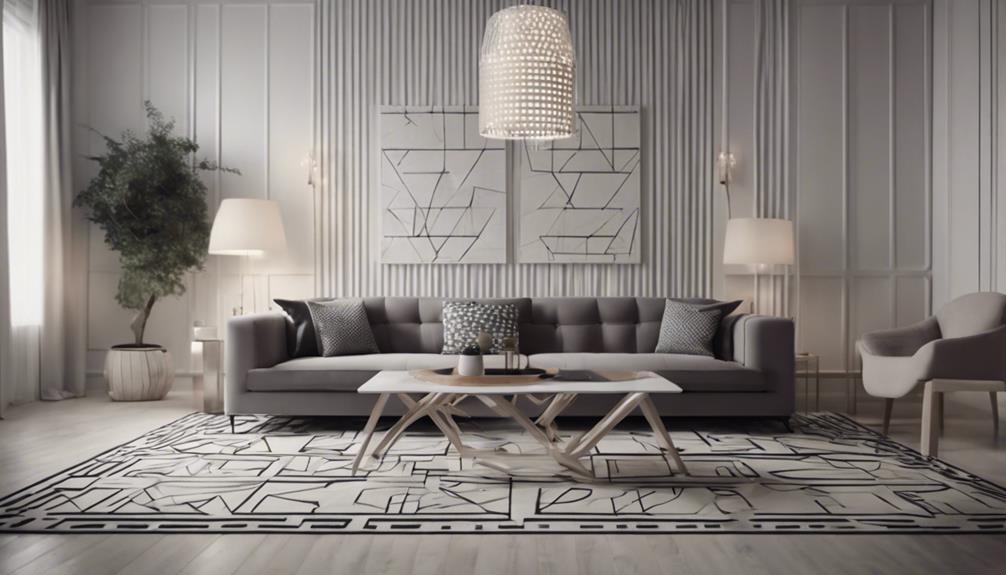
Geometric interior design trends are increasingly incorporating shapes like squares, circles, triangles, and hexagons to achieve visual impact in modern spaces. Interior designers use these geometric patterns not only in furniture and decor but also in architectural elements to create a cohesive and visually appealing space. By utilizing geometric shapes, designers can add structure, balance, and a sense of harmony to a room. Mixing different geometric patterns subtly or focusing on one shape category can help achieve a cohesive and stylish look in your home.
From minimalist to bold, geometric designs in interior spaces offer a wide range of options depending on the desired aesthetic and impact. Whether it's through wallpaper, rugs, furniture, or even lighting fixtures, incorporating geometric elements can transform a space. So, if you're looking to give your home a fresh and trendy update, consider embracing geometric interior design to add a touch of modern sophistication and visual interest to your living space.
Frequently Asked Questions
How Is Geometry Used in Design?
In design, geometry plays a pivotal role by adding structure and visual interest. Shapes like squares, circles, and triangles create balance and harmony in a space.
By incorporating geometric patterns in furniture and decor, you enhance the room's aesthetics. The golden ratio is often used to achieve pleasing proportions.
Proper sizing, layout, and selection of geometric elements contribute to a cohesive and visually appealing design overall.
How Do Interior Designers Use Math?
When designing interiors, math plays an essential role in guaranteeing everything fits just right. You use math to calculate furniture placement, ensuring a harmonious layout.
By understanding scale and proportion, you create visual balance with elements like rugs and artwork. Geometry helps you calculate angles and symmetry, achieving a cohesive design.
Concepts like the golden ratio assist in creating visually appealing spaces. Math ensures geometric patterns integrate seamlessly for a well-balanced design.
How Are Shapes Used in Interior Design?
Shapes in interior design play an essential role in creating a cohesive and visually appealing space. Squares bring sophistication, circles represent unity, triangles evoke confidence, and hexagons add modernity.
Incorporating these shapes strategically can enhance the overall look of a room. Balance is key to prevent a cluttered feel. By using shapes thoughtfully, interior designers can achieve a harmonious and stylish design that captivates those who enter the space.
What Are Geometric Patterns Interior Design?
Geometric patterns in interior design are a fun and stylish way to jazz up your space.
Think shapes like squares, circles, and triangles coming together to create a cool visual vibe.
From wallpaper to furniture, these patterns add depth and personality to any room.
Remember, balance is key – too many shapes can be overwhelming.
But with the right mix, you'll transform your space into a harmonious, eye-catching masterpiece!
Conclusion
To sum up, interior designers use geometry to create visually appealing spaces that enhance spatial perception, achieve balance, and convey symbolism in design.
While some may argue that geometric shapes can be too rigid or overwhelming, it's important to remember that they can also bring a sense of order and harmony to a room.
By incorporating geometric patterns and staying updated on trends, designers can transform any space into a stylish and functional masterpiece.
NFL season / tailgating Picks
team gear
As an affiliate, we earn on qualifying purchases.