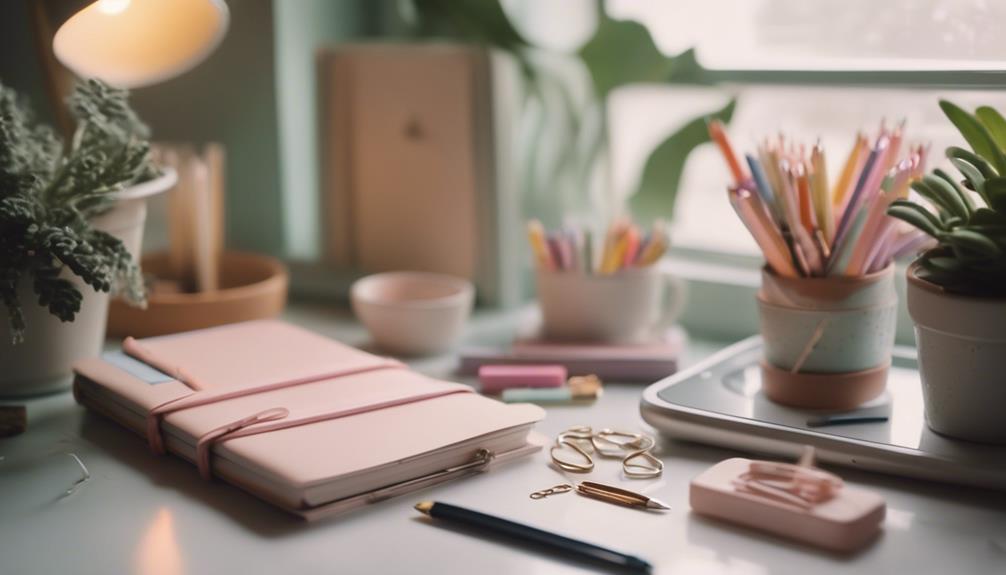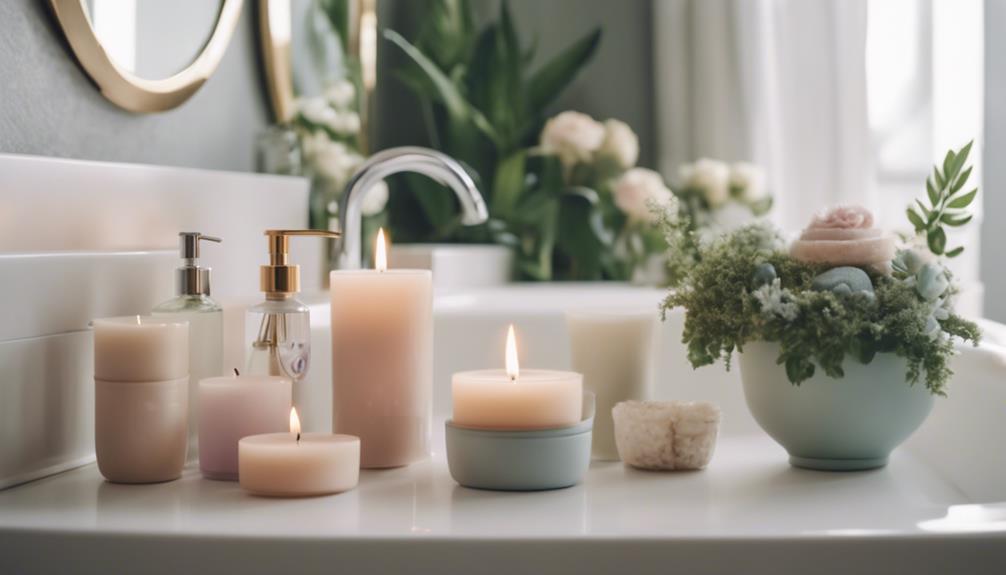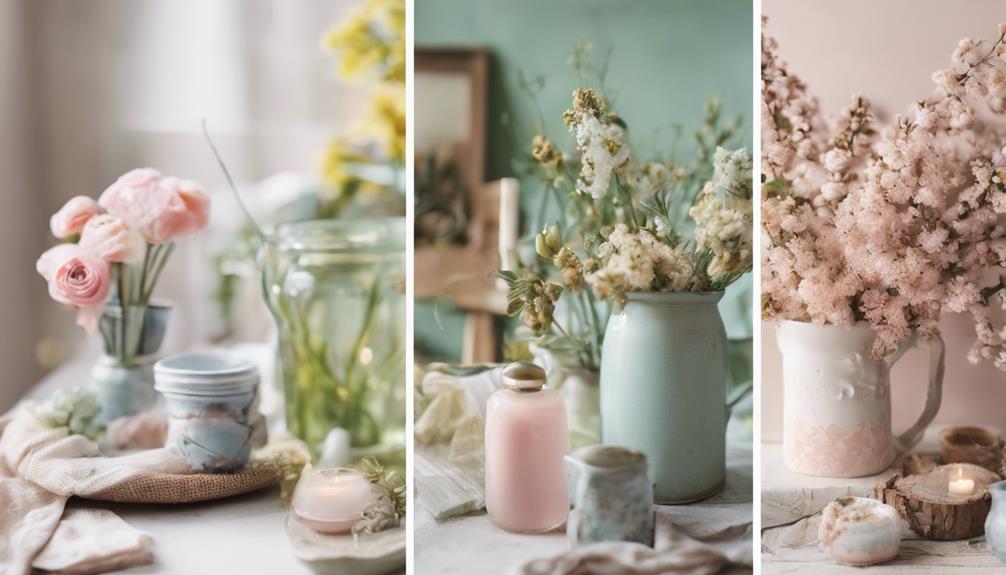
To start creating your own shabby chic home decor, begin by selecting gentle pastel colors such as light pink and mint green. Distress old furniture using sandpaper to achieve a worn appearance. Include floral designs and lace for a charming, romantic feel. Utilize distressing methods like dry brushing for a vintage aesthetic. Enhance furniture with vintage-style knobs. Add personalized images through decoupage for unique accents. Layer textures like lace and burlap for added dimension. Incorporate elements from nature like fresh flowers and reclaimed wood. By following these guidelines, your living space will exude coziness effortlessly. More tips are available for further inspiration.

Get furniture and decor delivered free — and shop member deals
- Fast, free delivery on millions of items
- Access to Prime Big Deal Days deals on October 6–7
- Prime Video, Amazon Music and more included
Key Takeaways
- Distress furniture with sandpaper for a weathered look.
- Use chalk paint in pastel hues for a vintage feel.
- Incorporate floral patterns and lace for romantic charm.
- Enhance furniture with vintage-style knobs for elegance.
- Create unique accents with decoupage on various surfaces.
shabby chic chalk paint for furniture
As an affiliate, we earn on qualifying purchases.
As an affiliate, we earn on qualifying purchases.
Choosing the Right Color Palette

When selecting the right color palette for your shabby chic home decor, opt for soft pastel hues like pale pink, mint green, and baby blue. These colors create a calming and soothing atmosphere, perfect for achieving that vintage and romantic shabby chic look. To make your color scheme more cohesive, consider adding touches of white throughout the decor. White helps to brighten up the space and adds a light and airy feel that goes along well with the pastel tones.
In addition to pastels, neutral tones such as beige, ivory, and soft grey can complement the color scheme beautifully. These colors provide a subtle backdrop that allows the pastels to stand out without overwhelming the space. If you want to add a touch of elegance to your shabby chic decor, consider incorporating subtle hints of metallic accents like gold or silver. These metallic touches can elevate the look and make your space feel more luxurious.
Mixing and layering different shades within the same color family can also create depth and visual interest in your shabby chic color palette. By carefully choosing and combining these colors, you can transform your space into a charming and inviting shabby chic oasis.
Upcycling Vintage Furniture
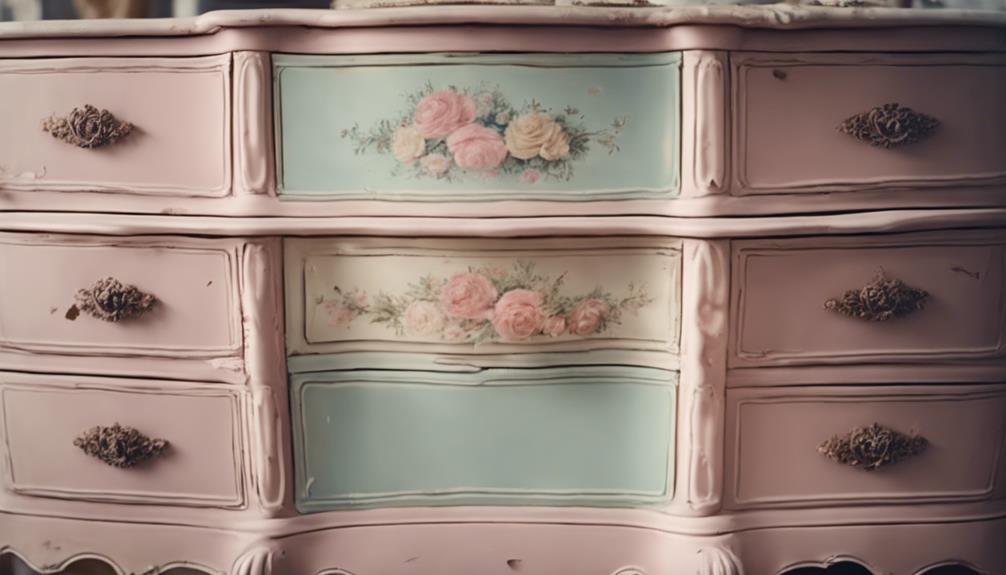
To upcycle vintage furniture for a shabby chic look, consider repurposing old or outdated pieces using techniques like distressing and painting with chalk paint. Vintage furniture pieces like dressers, tables, and chairs can be transformed into charming decor with a touch of elegance. Here are some tips to help you get started:
- Distressing: Use sandpaper or a paint scraper to create a weathered look on the furniture, focusing on edges and corners for a naturally worn appearance.
- Chalk Paint: Opt for matte chalk paint in soft pastel shades to give the furniture a vintage feel and a velvety finish.
- Vintage-Style Knobs: Replace modern knobs with antique or vintage-style hardware to enhance the shabby chic aesthetic of the piece.
Upcycling vintage furniture not only adds character to your home but also contributes to sustainability by giving new life to old items. It's a budget-friendly way to create unique pieces that reflect your personal style.
Adding Floral Patterns and Lace
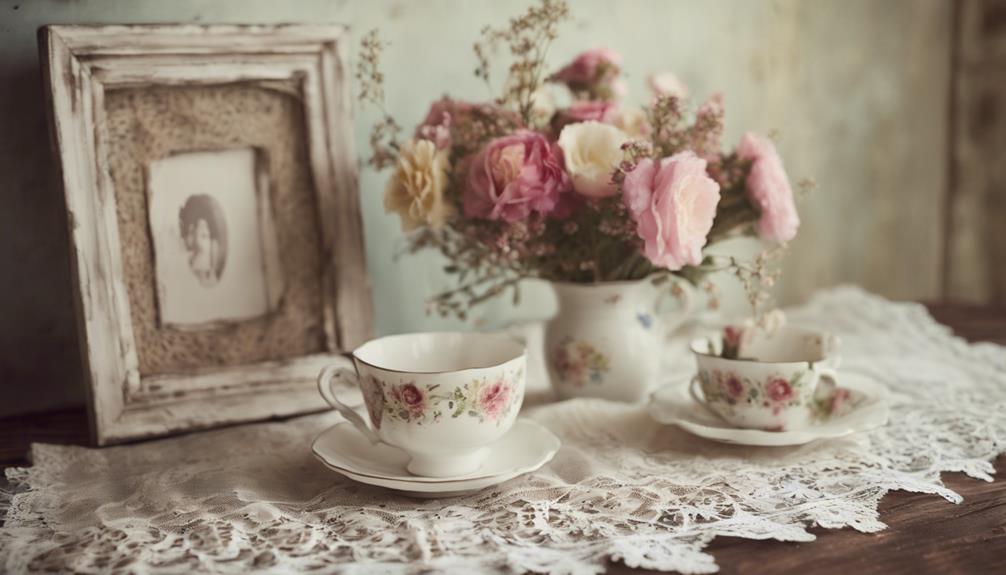
Incorporate soft floral patterns and delicate lace accents to infuse a romantic charm into your shabby chic home decor. By integrating these elements, you can create a cozy and vintage-inspired look that enhances the overall aesthetic of your space. Consider using vintage fabrics or wallpaper with floral prints to add a soft and feminine touch to your decor. You can also incorporate lace trim or doilies on furniture, curtains, or cushions for a delicate and romantic feel. Mixing and matching floral and lace elements can help you achieve a harmonious and cohesive shabby chic style.
Here is a table to help you visualize how to incorporate floral patterns and lace into your home decor:
| Ideas for Adding Floral Patterns and Lace |
|---|
| Use vintage fabrics with floral prints |
| Incorporate lace trim on furniture |
| Mix and match floral and lace elements |
Distressing Techniques for a Worn Look
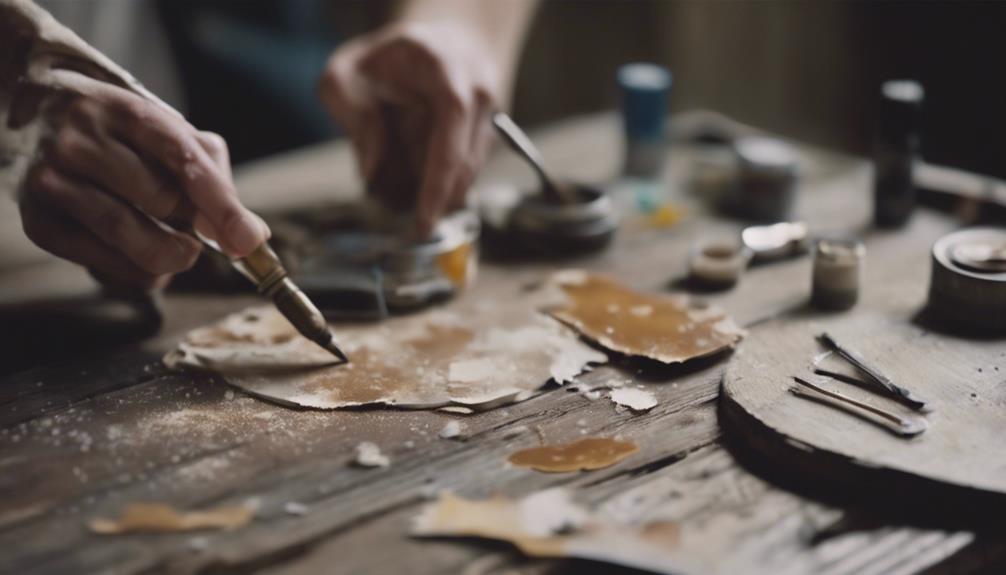
To achieve a worn look on your furniture or decor pieces, you can explore various paint distressing techniques, such as dry brushing or layering paint.
Sanding is a common method used to create an aged effect by gently removing layers of paint or finish.
Additionally, using wax can help add a patina to your pieces, enhancing their vintage charm and giving them a weathered appearance.
Paint Distressing Techniques
For achieving a worn, vintage look in your home decor, consider utilizing paint distressing techniques that involve sandpaper to create a weathered appearance on furniture or decorative items.
When distressing with paint, different grits of sandpaper can be used to achieve varying levels of distressing, from light to heavy distressing. Chalk paint is a popular choice for distressing due to its quick drying time, making sanding and color blending easier.
Focus on distressing edges, corners, and raised areas to mimic natural wear and tear for an authentic shabby chic look. Layering different paint colors and distressing them strategically can add depth and dimension to the finished piece.
- Varying grits of sandpaper for different distressing levels
- Chalk paint for easy sanding and color blending
- Strategic distressing for an authentic worn look
Sanding for Aged Effect
Achieving an aged effect in your shabby chic decor involves skillfully sanding surfaces to create a worn look that exudes vintage charm. By using different grits of sandpaper, you can control the level of distressing, revealing underlying layers of paint or wood. Focus on sanding along edges and corners to mimic natural wear and tear, adding an authentic vintage appearance to your pieces. This process can be customized to achieve the desired level of antiquing for each project, allowing for a personalized touch. Experiment with various sanding techniques to perfect the aged effect and bring a touch of nostalgia to your home decor.
| Sanding Tips | Description |
|---|---|
| Use Different Grits | Control distressing levels by selecting the right sandpaper |
| Focus on Edges | Mimic natural wear by sanding along edges and corners |
| Customize | Tailor the sanding process to achieve your desired antiquing level |
Using Wax for Patina
As you advance from sanding to distressing techniques, utilizing wax for creating a patina is a key step in achieving a worn look in shabby chic decor.
Here's why wax is essential for distressing furniture:
- Enhancing Distressed Appearance: Wax can be applied before painting to help achieve a worn look on wooden surfaces.
- Control Over Aging: By buffing or sanding wax after application, you can enhance the distressed effect while controlling the level of aging and wear.
- Creating Depth and Texture: Layering different colored waxes allows you to create depth and texture in the patina finish, adding character to your furniture piece.
Incorporating Vintage-Style Knobs
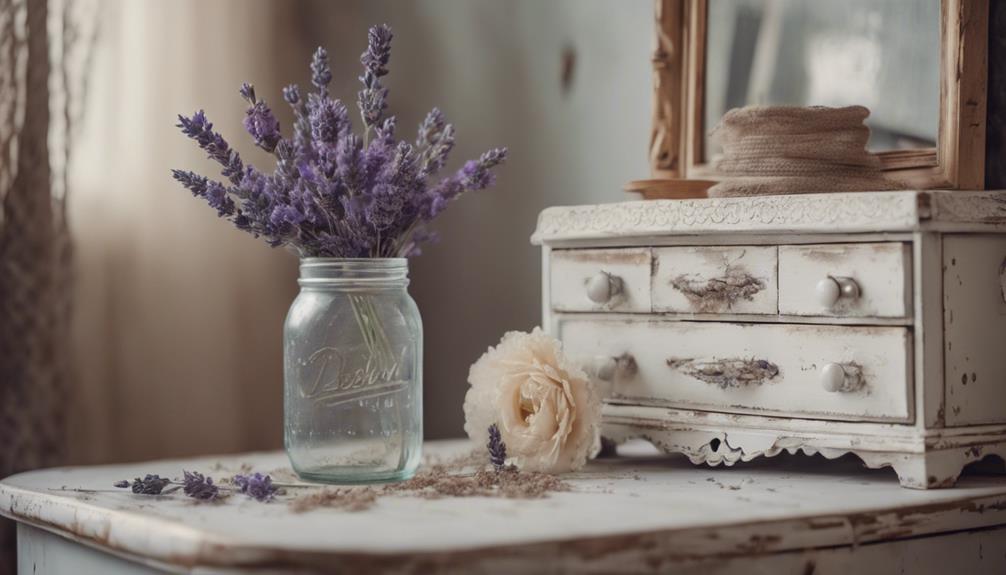
When enhancing your shabby chic home decor, consider incorporating vintage-style knobs to infuse a touch of nostalgia and elegance into your furniture pieces. Vintage knobs come in various designs such as floral, filigree, and antique finishes, allowing you to choose the ones that best complement your style.
Mixing and matching these knobs can bring a unique and personalized look to your furniture makeovers, adding character to each piece. Swapping out existing knobs with vintage-style ones is a simple and cost-effective way to update your furniture and give it a new life.
Using Chalk Paint for a Distressed Finish
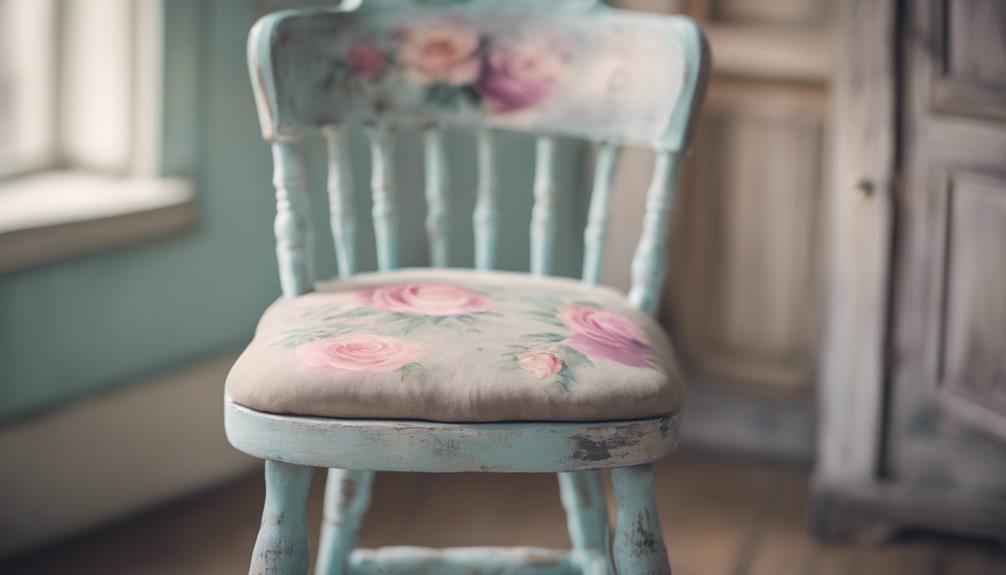
Consider using chalk paint to effortlessly create a distressed finish on your furniture and decor items for that shabby chic charm you desire. Chalk paint is a versatile choice for achieving a vintage look with ease. Here's why you should give it a try:
- Matte Finish: Chalk paint offers a matte finish that adds to the antique appeal of shabby chic decor.
- Easy Distressing: Distressing chalk paint is simple with sandpaper or a damp cloth, allowing you to customize the level of distressing.
- Quick Drying: With its quick drying time, chalk paint enables efficient application and distressing techniques, perfect for DIY projects.
Chalk paint adheres well to various surfaces like wood, metal, and plastic, making it a go-to option for revamping different pieces in your home. Plus, the soft, muted colors available in chalk paint collections are ideal for achieving the signature shabby chic aesthetic effortlessly.
Decoupaging to Create Unique Accents
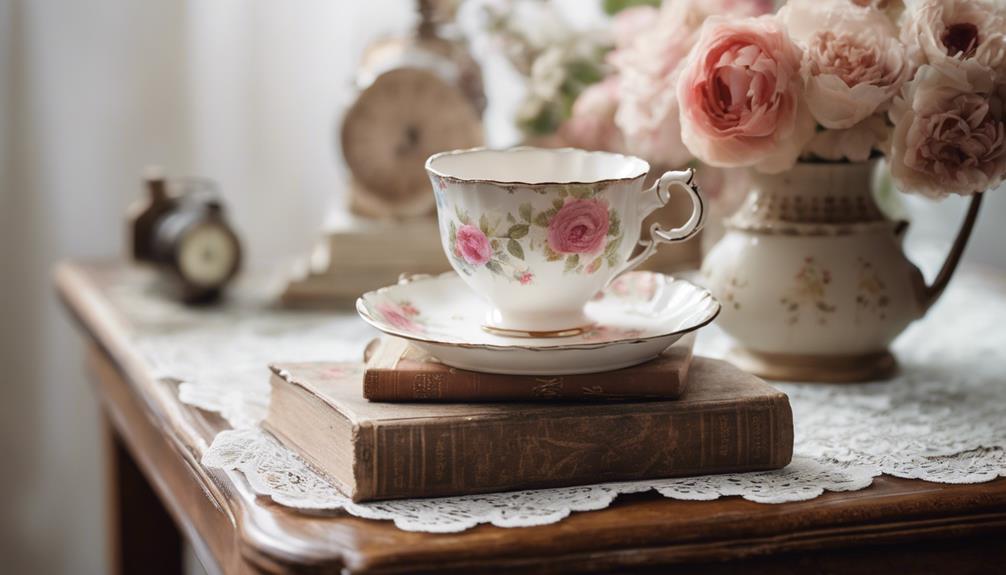
When decoupaging to create unique accents, you'll need to understand the basics, select suitable materials, and add finishing touches to complete your project.
Decoupage involves layering paper or fabric onto objects to personalize them, providing an opportunity to showcase your creativity.
Decoupage Basics
To create unique accents for your shabby chic home decor, mastering the basics of decoupaging is essential. Decoupage is a crafting technique where you decorate surfaces with cut-out paper designs using glue and a finishing coat.
Here are some key points to get you started:
- Decoupage can be done on various surfaces like wood, glass, metal, or plastic.
- Personalization is key as you can choose specific images, patterns, or colors to match your desired aesthetic.
- The process involves applying a base coat, arranging the paper cut-outs, and sealing with multiple layers of varnish or sealant for durability.
With these basics, you can begin transforming ordinary items into charming pieces for your shabby chic decor.
Choosing Materials
Having familiarized yourself with the basics of decoupage in creating unique accents for your shabby chic home decor, your next step is to carefully select the materials essential for this crafting technique.
Decoupaging requires a few key supplies to get started. You'll need mod podge or decoupage glue to adhere the decorative paper cutouts onto your chosen surface. Make sure to have a selection of decorative papers that resonate with the shabby chic aesthetic, such as vintage or floral patterns. Additionally, grab some paintbrushes to apply the glue smoothly and evenly.
Finishing Touches
For adding those final touches to your decoupaging projects and creating unique accents, consider incorporating small embellishments like delicate lace trims or vintage buttons. These details can elevate your DIY pieces to a whole new level, adding charm and character to your shabby chic decor.
When decoupaging, remember to pay attention to the finishing touches to achieve a polished look. Here are some ideas to inspire you:
- Use small pieces of lace to frame your decoupage design.
- Add vintage buttons in a contrasting color for a pop of personality.
- Consider incorporating tiny charms or beads for a whimsical touch.
These simple additions can make a big difference in the overall aesthetic of your shabby chic creations.
Layering Textures for Depth
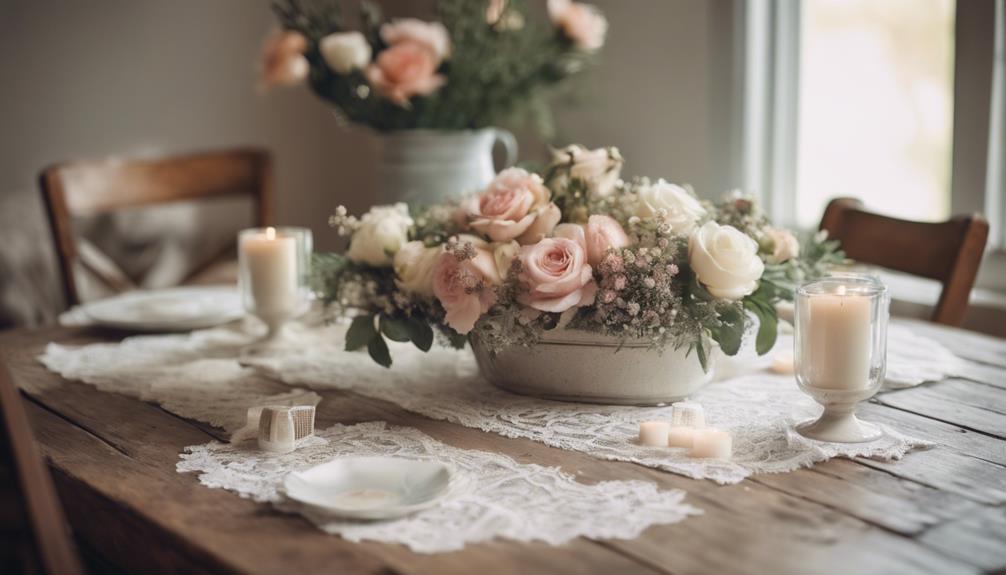
Enhance your shabby chic home decor by layering textures to add depth and visual interest. To achieve this style, combine materials like lace, burlap, and distressed wood.
Mixing soft fabrics with rougher textures such as wood or metal helps create the signature shabby chic look. By incorporating layers of textures, you can craft a cozy and inviting atmosphere in your home, enhancing the shabby chic aesthetic.
This approach adds dimension and a tactile experience to your decor scheme. Effective layering of textures allows you to design a harmonious and visually appealing space that captures the essence of shabby chic design.
Experiment with different textures to find the right balance that suits your personal style. Remember, layering textures is a key element in creating a shabby chic home decor that's both charming and unique.
Enhancing Decor With Natural Elements
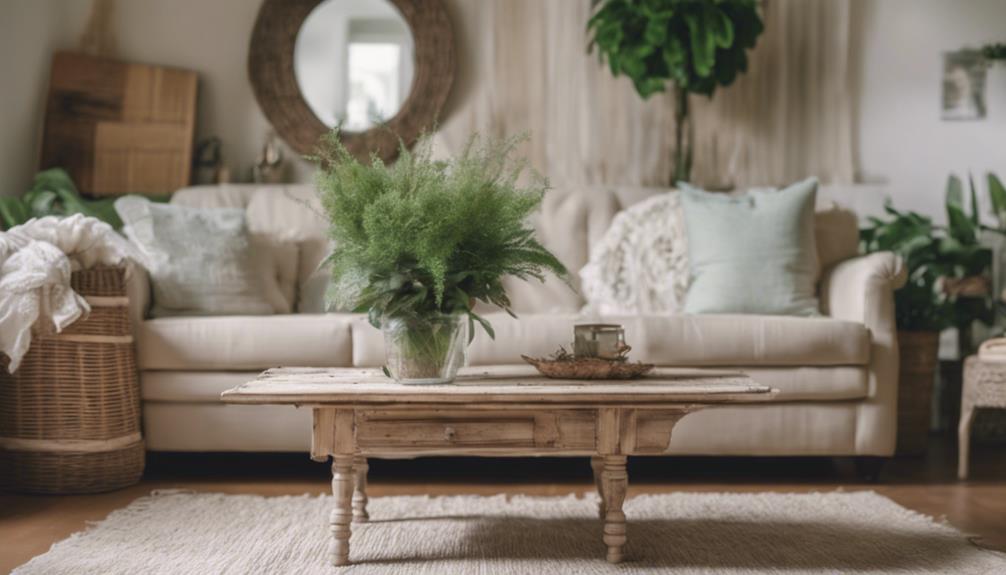
Enhance your shabby chic decor by incorporating eco-friendly elements like fresh flowers, greenery, or reclaimed wood.
Add a rustic touch to your home with natural fabrics such as linen, burlap, or cotton.
Integrate wooden accents and coastal treasures like seashells or stones to bring a touch of nature-inspired design to your space.
Eco-friendly Decor Elements
Incorporate natural elements such as reclaimed wood, burlap, and jute into your shabby chic decor to infuse an eco-friendly charm.
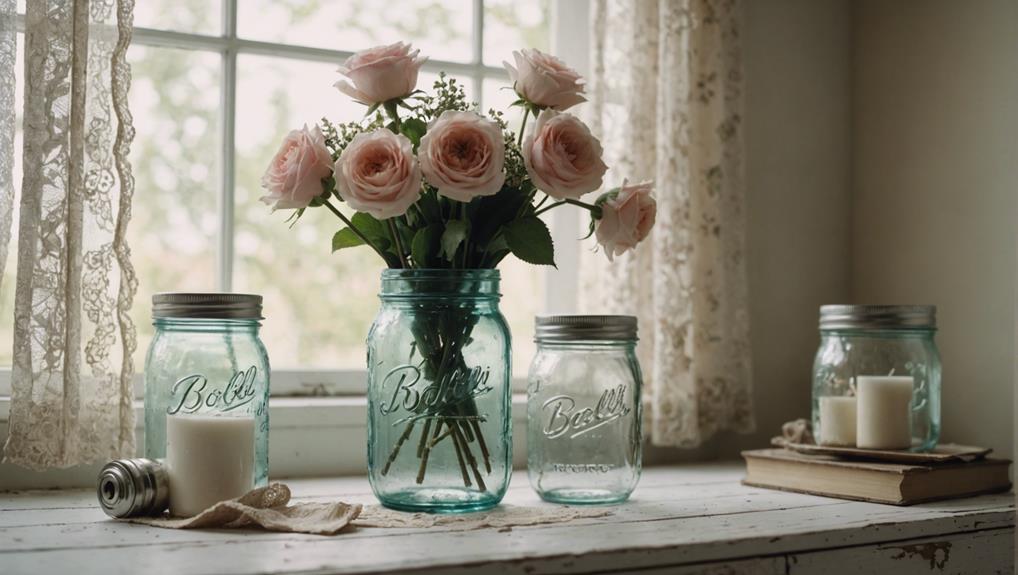
To enhance your decor sustainably, consider using repurposed items like mason jars, driftwood, and recycled glass bottles.
Integrate greenery such as succulents, air plants, and dried flowers to bring a fresh and organic feel to your shabby chic space.
- Use repurposed items like mason jars, driftwood, and recycled glass bottles
- Integrate greenery such as succulents, air plants, and dried flowers
- Opt for organic textiles like cotton, linen, and hemp
Incorporating Nature-inspired Designs
As you infuse natural elements like driftwood, seashells, and dried flowers into your shabby chic decor, you bring a rustic and organic touch to your living space. Consider using reclaimed wood or branches to create unique wall art or shelving, adding a natural and eco-friendly flair to your home. Opt for earthy tones and botanical prints in your textiles, such as floral patterns or leaf motifs, to bring the beauty of nature indoors. Integrate potted plants, succulents, or fresh flowers in vintage containers or mason jars to infuse your space with a revitalizing and lively ambiance. Enhance the natural vibe by incorporating woven baskets, rattan furniture, or jute rugs for texture and warmth in your shabby chic design scheme.
| Natural Elements | Ideas | Tips |
|---|---|---|
| Driftwood | Create a driftwood centerpiece for your table. | Mix in some candles for a cozy feel. |
| Seashells | Fill glass jars with seashells for a coastal touch. | Place them on a mantel or shelf. |
| Dried Flowers | Make a dried flower wreath to hang on your wall. | Select flowers that complement your decor. |
| Reclaimed Wood/ Branches | Craft a DIY branch ladder to hang blankets or towels. | Sand and varnish for a polished look. |
Finishing Touches and Styling Ideas

To elevate the shabby chic ambiance in your home, consider adding unique vintage lace doilies or crochet pieces as table runners or accents for a touch of charm. Enhance the rustic charm of your decor by incorporating distressed wooden signs with inspirational quotes or phrases.
Infuse a vintage vibe into your space by displaying antique teacups or teapots as unique planters or decorative pieces. For a simple yet elegant centerpiece that complements the shabby chic style, use mason jars filled with wildflowers or candles.
Additionally, layering different textures such as burlap, linen, and lace can create a visually interesting and cohesive look in your shabby chic decor. These finishing touches and styling ideas will help you achieve a beautifully curated shabby chic home that exudes warmth and character.
Frequently Asked Questions
How Do I Make My House Look Shabby Chic?
To make your house look shabby chic, use pastel colors for a vintage vibe. Incorporate distressed furniture for a weathered look. Mix textures like lace and rustic wood for depth.
Repurpose old items with chalk paint. Balance vintage with modern for an eclectic style.
Is Shabby Chic Still in Style in 2024?
Shabby chic remains a popular style in 2024, blending vintage charm with modern elements. Its cozy, lived-in look resonates with many homeowners.
Distressed furniture, pastel colors, and floral patterns continue to define shabby chic design. DIY enthusiasts are drawn to its versatility for creating personalized, vintage-inspired spaces.
Whether you're a fan of the trend or looking to try it out, shabby chic is still a stylish choice for home decor this year.
What Are the Key Elements of Shabby Chic?
To achieve shabby chic style, focus on distressed furniture, soft pastel colors, floral patterns, and lace accents.
Upcycling old items into new decor pieces is key.
Mix wood and fabric textures for an authentic look.
This vintage-inspired design emphasizes a worn, lived-in aesthetic that exudes charm and coziness.
What Are the Colors for Shabby Chic?
Soft pastel colors like pale pink, mint green, sky blue, and lavender are common in shabby chic decor. White is a staple color, creating a light and airy feel. Soft neutrals such as beige, ivory, and cream add warmth.
Subtle shades of grey and muted tones of blue or green enhance the vintage look. Faded hues and gentle tones create a romantic and cozy atmosphere in shabby chic interiors.
Conclusion
To sum up, by following these DIY shabby chic home decor tips, you can transform your living space into a charming and unique oasis.
Embrace the vintage look with distressed furniture, floral patterns, and lace accents. Don't forget to add personal touches with decoupaging and vintage-style knobs.
Incorporate natural elements for a touch of nature and finish off with some stylish accents for a complete look.
Get creative and let your personality shine through in every corner of your home.
Fall Picks
fall essentials
As an affiliate, we earn on qualifying purchases.