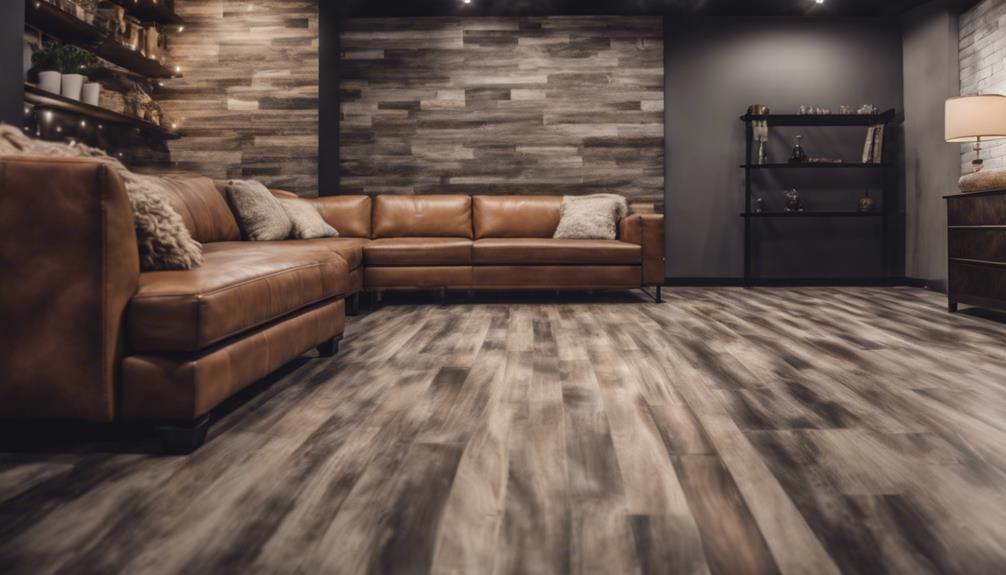

For basement flooring, my best overall pick is the Delta FL Plastic Sub-Floor, because a raised layer can help separate finished flooring from a cool concrete slab. For a softer, easy-to-fit surface, Sorbus wood-grain foam tiles stand out, while VEVOR drainage tiles better suit damp utility areas where water can reach the floor. The main tradeoffs are moisture management, comfort underfoot, durability, and how permanent or labor-intensive the installation will be. Foam tiles are approachable and forgiving, but they are not a substitute for moisture control or a hard-wearing finish. Read on for how these 15 options compare and which type of basement use each suits.

Get furniture and decor delivered free with Prime
- Fast, free delivery on millions of items
- Prime Video, Amazon Music and more included
- Member-only deals all year
Complete the kit


Key Takeaways
- Moisture strategy matters more than appearance: Delta FL’s subfloor approach and VEVOR’s drainage openings address slab-related concerns differently from foam tiles and peel-and-stick vinyl.
- Foam tiles dominate the lineup: Sorbus, ProsourceFit, Haulcove, BeMaxx, Nazhura, and We Sell Mats offer cushioned, modular coverage, but foam is best for lighter-use rooms rather than heavy furniture or rolling loads.
- Pack size changes coverage, not the basic flooring type: The Sorbus 12-, 20-, 24-, 30-, and 36-piece options share a similar role; choose by measured area and spare-tile needs rather than assuming a larger pack is a different solution.
- Hard finishes and soft finishes solve different problems: Gorilla epoxy is a more permanent coating for prepared concrete, while interlocking foam prioritizes comfort and the ability to replace individual sections.
- There is no single best pick for every basement: A dry playroom, home gym, laundry area, and basement with moisture history call for different surfaces and installation plans.
| ZRJT Peel and Stick Vinyl Flooring Roll, 11.8 in x 590 in, 48.4 sq ft, Gray Wood Grain |  | Best for a Thin, Seam-Sparing Finish | Material: PVC | Color: Gray | Dimensions: 590 × 11.8 inches | VIEW ON AMAZON | See Our Full Breakdown |
| Sorbus Interlocking Wood Grain Foam Floor Tiles (24 Pack, Gray) |  | Best Value for a Cushioned Basement Zone | Material: 3/8-inch EVA foam with PE core and OPP film | Color: Gray | Tile size: 24 × 24 inches | VIEW ON AMAZON | See Our Full Breakdown |
| Sorbus Interlocking Wood Grain Foam Floor Tiles (30 Pack, Gray) |  | Best for Covering a Larger Basement Area | Material: 3/8-inch EVA foam | Color: Gray | Tile dimensions: 24 × 24 inches | VIEW ON AMAZON | See Our Full Breakdown |
| ProsourceFit ½-Inch EVA Interlocking Exercise Puzzle Mat, 144 sq. ft., 36 Tiles, Black |  | Best for Basement Workouts and Impact Cushioning | Material: EVA foam | Color: Black | Tile dimensions: 24 × 24 inches | VIEW ON AMAZON | See Our Full Breakdown |
| Sorbus Interlocking Wood Grain Foam Floor Tiles, 20 Pack, Pine |  | Best for a Small Pine-Look Basement Area | Material: PE foam with OPP printed film | Color: Pine | Tile dimensions: Approximately 24 × 24 inches | VIEW ON AMAZON | See Our Full Breakdown |
| VEVOR Interlocking Tile 55PCS Black Drainage Tiles 12″ x 12″ Soft PVC Non-Slip Floor Mats |  | Best for Damp Utility Areas | Material: PVC | Tile count: 55 | Tile dimensions: 12 x 12 inches | VIEW ON AMAZON | See Our Full Breakdown |
| Sorbus Interlocking Wood Grain Foam Floor Tiles, 36-Pack, Pine |  | Best for a Cushioned Basement Playroom | Material: PE foam with OPP plastic printed film | Tile count: 36 | Tile dimensions: 24 x 24 x 0.38 inches | VIEW ON AMAZON | See Our Full Breakdown |
| We Sell Mats Stone-Look Tan Marble Foam Floor Tiles, 3/8-Inch, 12-Pack |  | Best Decorative Foam Option | Material: EVA foam | Tile count: 12 | Tile dimensions: 24 x 24 inches | VIEW ON AMAZON | See Our Full Breakdown |
| ProsourceFit ½-Inch EVA Interlocking Exercise Puzzle Mat, 48 sq. ft., 12 Tiles |  | Best for Basement Home Gyms | Material: EVA foam | Tile count: 12 | Tile dimensions: 24 x 24 inches | VIEW ON AMAZON | See Our Full Breakdown |
| Gorilla Epoxy Garage Floor Coating Kit, 12-Piece, 550 sq. ft. |  | Best Permanent Concrete Finish | Material: Two-part epoxy, 100% solids | Compatible surface: Concrete | Coverage: Up to 550 sq. ft. | VIEW ON AMAZON | See Our Full Breakdown |
| Sorbus Interlocking Wood Grain Foam Floor Tiles, 12 Pack, Pine |  | Best Wood-Look Pick for Small Areas | Brand: Sorbus | Material: PE foam with OPP printed film | Tile count: 12 | VIEW ON AMAZON | See Our Full Breakdown |
| Haulcove 18-Piece EVA Foam Interlocking Floor Tile Set |  | Best for Small, Reconfigurable Workout Zones | Brand: Haulcove | Material: Ethylene vinyl acetate (EVA) | Tile count: 18 | VIEW ON AMAZON | See Our Full Breakdown |
| Delta FL Plastic Sub-Floor for Basements |  | Best Basement-Specific Subfloor Option | Manufacturer: Cosella Dorken | Product type: Plastic sub-floor for basements | Part number: DLFL | VIEW ON AMAZON | See Our Full Breakdown |
| BeMaxx Interlocking EVA Foam Gym Mats, 18-Piece Set |  | Best Small-Area Impact and Noise Buffer | Material: EVA foam | Tile dimensions: 12.6 × 12.6 × 0.4 inches | Coverage: Approximately 18 sq ft | VIEW ON AMAZON | See Our Full Breakdown |
| Nazhura 12-Piece Interlocking EVA Foam Gym Mat, 48 Sq Ft |  | Best for Broad Cushioned Coverage | Brand: Nazhura | Material: Ethylene vinyl acetate (EVA) foam | Tile count: 12 | VIEW ON AMAZON | See Our Full Breakdown |
| basement flooring | Material | Color | Coverage | Tile count |
|---|---|---|---|---|
| ZRJT Peel and Stick Vinyl Floo | PVC | Gray | 48.4 sq. ft. | — |
| Sorbus Interlocking Wood Grain | 3/8-inch EVA foam with PE core and OPP film | Gray | Approximately 96 sq. ft. | 24 |
| Sorbus Interlocking Wood Grain | 3/8-inch EVA foam | Gray | 120 sq. ft. | 30 |
| ProsourceFit ½-Inch EVA Interl | EVA foam | Black | 144 sq. ft. | 36 |
| Sorbus Interlocking Wood Grain | PE foam with OPP printed film | Pine | 80 sq. ft. | 20 |
| VEVOR Interlocking Tile 55PCS | PVC | Black | — | 55 |
| Sorbus Interlocking Wood Grain | PE foam with OPP plastic printed film | Wood Grain – Pine | 144 sq. ft. | 36 |
| We Sell Mats Stone-Look Tan Ma | EVA foam | Tan marble | 48 sq. ft. | 12 |
| ProsourceFit ½-Inch EVA Interl | EVA foam | Black | 48 sq. ft. | 12 |
| Gorilla Epoxy Garage Floor Coa | Two-part epoxy, 100% solids | Gray | Up to 550 sq. ft. | — |
| Sorbus Interlocking Wood Grain | PE foam with OPP printed film | Pine | 48 sq ft | 12 |
| Haulcove 18-Piece EVA Foam Int | Ethylene vinyl acetate (EVA) | Black | Up to 18 sq ft | 18 |
| Delta FL Plastic Sub-Floor for | Plastic | — | Not provided | — |
| BeMaxx Interlocking EVA Foam G | EVA foam | Anthracite | Approximately 18 sq ft | — |
| Nazhura 12-Piece Interlocking | Ethylene vinyl acetate (EVA) foam | Black | 48 sq ft | 12 |
More Details on Our Top Picks
ZRJT Peel and Stick Vinyl Flooring Roll, 11.8 in x 590 in, 48.4 sq ft, Gray Wood Grain
For a basement with a smooth, dry, level subfloor, this peel-and-stick roll offers a more continuous wood-look surface than the interlocking foam options here. Its 48.4-square-foot coverage comes in a long roll, so there are fewer joins than with the Sorbus 24-inch tiles, though careful alignment matters during installation. The thin PVC layer is water-resistant and scratch-resistant, which suits everyday indoor use, but it is not a cushioned solution for standing workouts or play. Compared with the ProsourceFit ½-Inch EVA Mat, ZRJT takes up far less height and looks more like conventional flooring, but gives up impact absorption. I would skip it over uneven concrete or where dampness is a recurring issue: the adhesive needs a clean, dry surface, and the supplied details do not describe a basement moisture-control system.
Pros:- 48.4 sq. ft. coverage in a roll means fewer seams than small-format tiles.
- Water-resistant, scratch-resistant PVC surface suits ordinary indoor use.
- Self-adhesive format is designed for DIY installation and can be cut to fit.
- Thin profile adds little height compared with foam mats.
Cons:- Requires a clean, dry, level, smooth surface for the adhesive to work well.
- At 0.03 inches thick, it offers little cushioning or impact protection.
- Water resistance does not address moisture coming through a basement slab.
Best for: Basement owners with a smooth, dry, level floor who want a thin gray wood-look covering and can prepare the surface carefully.
Not ideal for: Owners with damp, uneven, or rough concrete, or anyone seeking cushioned flooring for exercise or extended standing.
- Material:PVC
- Color:Gray
- Dimensions:590 × 11.8 inches
- Thickness:0.03 inches
- Coverage:48.4 sq. ft.
- Product form:Roll
- Installation:Self-adhesive
- Grade:Residential/Commercial
Our verdict“Choose this roll for a prepared, dry basement floor when a thin, wood-look finish matters more than cushioning.”
Sorbus Interlocking Wood Grain Foam Floor Tiles (24 Pack, Gray)
This 24-tile set is a practical way to cover a sizable basement area with cushioned, waterproof foam without applying adhesive. Each 24-inch square tile covers about four square feet, for roughly 96 square feet total, making it a more substantial starting point than the Sorbus Pine 20-Pack. The interlocking layout is easy to assemble and wipe clean, so it suits a workout corner, play zone, or standing area on a hard, even floor. The tradeoff is the foam construction: it feels softer and less like permanent flooring than the ZRJT vinyl roll, and visible joins can interrupt the wood-grain look across a large installation. I would not use it as a fix for a damp or uneven slab, and the tiles may not stay perfectly aligned under persistent heavy traffic.
Pros:- 24 tiles cover about 96 sq. ft., providing broad coverage in one set.
- Interlocking installation requires no adhesive.
- Waterproof, non-absorbent surface is easy to wipe clean.
- 3/8-inch foam adds cushioning for exercise and standing.
Cons:- Interlocking seams remain visible across larger floor areas.
- Foam feel is less like conventional finished flooring than the ZRJT vinyl roll.
- The supplied details do not establish suitability for recurring slab moisture or heavy traffic.
Best for: Basement gym and playroom owners who want a large, easy-to-assemble cushioned area without adhesive.
Not ideal for: Buyers seeking a seamless, hard-wearing finish or planning to cover an uneven or persistently damp basement floor.
- Material:3/8-inch EVA foam with PE core and OPP film
- Color:Gray
- Tile size:24 × 24 inches
- Tile count:24
- Coverage:Approximately 96 sq. ft.
- Installation:Interlocking; no adhesive needed
- Model number:MAT-WOODGRY24A
Our verdict“Pick this set for a large basement activity zone where cushioning and simple assembly matter more than a seamless finish.”
Sorbus Interlocking Wood Grain Foam Floor Tiles (30 Pack, Gray)
With 120 square feet of coverage, this 30-pack makes more sense than the 24-pack when the goal is to outfit a larger basement room in one purchase. The tiles share the same 24-inch format and 3/8-inch cushioning, so the added area does not change the basic feel: this is a soft activity surface, not a hard, permanent flooring finish. Like the smaller Sorbus Gray 24-Pack, it installs without adhesive and is easy to clean, while the ProsourceFit ½-Inch Mat offers thicker cushioning for workout-focused spaces. The Sorbus set’s wood-grain film gives it a more domestic look, but the borders remain visible and tiles can shift under heavy foot traffic. I would choose it for a defined play or exercise zone, not as a seamless solution for the entire basement.
Pros:- 30 tiles provide 120 sq. ft. of coverage.
- Interlocking design allows installation without adhesive.
- 3/8-inch EVA foam cushions hard floors for exercise or play.
- Waterproof surface is straightforward to clean.
Cons:- Visible tile borders interrupt the appearance of a continuous floor.
- Tiles may shift under heavy foot traffic unless secured.
- Less cushioning than the ½-inch ProsourceFit mat.
Best for: Homeowners covering a larger, flat basement playroom or workout zone who prefer gray wood grain and cushioned tiles.
Not ideal for: Buyers who need a seamless finish, thicker workout cushioning, or a floor intended to withstand heavy ongoing traffic.
- Material:3/8-inch EVA foam
- Color:Gray
- Tile dimensions:24 × 24 inches
- Thickness:0.38 inches
- Tile count:30
- Coverage:120 sq. ft.
- Installation:Interlocking
- Model number:MAT-WOODGRY30
Our verdict“Choose the 30-pack over the smaller Sorbus set when you need more cushioned coverage and can accept visible seams.”
ProsourceFit ½-Inch EVA Interlocking Exercise Puzzle Mat, 144 sq. ft., 36 Tiles, Black
For a basement gym, the ProsourceFit set stands out for pairing the lineup’s largest stated coverage with its thickest listed foam: 144 square feet across 36 half-inch tiles. That extra cushioning and noise reduction make it better suited to exercise and play than the thinner Sorbus gray wood-grain tiles, though the black workout-mat look is less decorative. Its interlocking pieces assemble, clean, and store easily, and the material is listed as phthalate-free. The tradeoff is that foam can compress beneath heavy objects, so I would not place heavy equipment or fixed furniture on it without checking how the load is supported. Like the other foam systems, it is intended for a flat, hard surface; it should not be treated as a remedy for an uneven or damp basement slab.
Pros:- 144 sq. ft. coverage across 36 tiles suits a large workout zone.
- ½-inch thickness provides more cushioning than the Sorbus 3/8-inch foam tiles.
- Water-resistant, noise-reducing surface supports home exercise use.
- Interlocking tiles are easy to assemble, clean, and store; material is phthalate-free.
Cons:- Foam may compress under heavy objects or equipment.
- Black exercise-mat styling is less suited to buyers seeking a wood-look basement finish.
- Best used on flat, hard surfaces rather than uneven floors.
Best for: Basement gym owners who need a broad, cushioned workout surface with noise reduction and straightforward cleanup.
Not ideal for: Buyers seeking a wood-look finish, a hard permanent floor, or a surface for heavy stationary equipment that may compress the foam.
- Material:EVA foam
- Color:Black
- Tile dimensions:24 × 24 inches
- Thickness:½ inch
- Tile count:36
- Coverage:144 sq. ft.
- Features:Interlocking, water-resistant, noise-reducing, phthalate-free
- Warranty:Limited lifetime warranty against manufacturer defects
Our verdict“Choose ProsourceFit for a large basement exercise area where thicker cushioning and noise reduction outrank decorative styling.”
Sorbus Interlocking Wood Grain Foam Floor Tiles, 20 Pack, Pine
This 20-pack suits buyers who want to try a faux pine finish in a smaller basement zone without committing to a full-room covering. Its 80 square feet of interlocking tiles provide more area than the smaller Sorbus pine set in the roundup, while the detachable edges make it easier to create a finished boundary or expand later. The 3/8-inch foam adds comfort over hard floors, and the waterproof, non-absorbent surface can be wiped clean. Compared with the Sorbus Gray 24-Pack, this option trades broader coverage for a warmer wood-look color and a manageable starting set; it also remains a foam mat, not a rigid flooring system. I would avoid it in a high-traffic basement or where furniture and equipment will place sustained weight on the tiles.
Pros:- Pine finish offers a warmer wood-look appearance than the gray Sorbus sets.
- 80 sq. ft. coverage gives a defined zone without requiring a larger set.
- Interlocking tiles install without adhesive and can be expanded with additional sets.
- Waterproof, non-absorbent surface wipes clean with a damp cloth.
Cons:- 3/8-inch foam is less suited to heavy foot traffic than a hard flooring surface.
- Intended for indoor use rather than exposed outdoor areas.
- Interlocking seams remain visible across the installed area.
Best for: Basement owners furnishing a small playroom, workspace, or gym corner who want a pine wood-look foam surface that can be expanded.
Not ideal for: People finishing a high-traffic basement or placing heavy furniture and equipment on the floor.
- Material:PE foam with OPP printed film
- Color:Pine
- Tile dimensions:Approximately 24 × 24 inches
- Thickness:3/8 inch
- Tile count:20
- Coverage:80 sq. ft.
- Installation:Interlocking; no adhesive needed
- Care:Wipe with a damp cloth
- Water resistance:Waterproof and non-absorbent
Our verdict“Pick this set for a modest basement activity zone when pine styling and expandable, cushioned coverage matter more than heavy-duty durability.”
VEVOR Interlocking Tile 55PCS Black Drainage Tiles 12″ x 12″ Soft PVC Non-Slip Floor Mats
For a basement laundry zone, utility sink, or other spot where water regularly lands, the VEVOR drainage tiles address a problem foam mats do not: standing moisture beneath the flooring. Their raised 0.6-inch support pins let water drain through, while the textured PVC surface is intended to provide traction when wet. The 55 one-foot tiles can be fitted to different layouts without adhesive, unlike the fixed coverage of the Gorilla Epoxy Garage Floor Coating Kit. That flexibility has a tradeoff: the open, hard-plastic grid feels less like finished room flooring and may be uncomfortable for long periods of standing. At 0.6 inches thick, it is also not the strongest choice for very heavy traffic or loads. I’d pick it for targeted wet areas, not as a cozy covering for an entire finished basement.
Pros:- Raised support pins allow water to drain beneath the surface.
- Non-slip surface is suited to wet areas.
- Interlocking tiles can be arranged and customized without adhesive.
- PVC surface can be rinsed for straightforward cleanup.
Cons:- Open-grid design is less comfortable and polished than continuous flooring.
- Only available in black.
- 0.6-inch thickness may be inadequate for very heavy traffic.
Best for: Homeowners covering a basement laundry or utility area where drainage and a slip-resistant surface matter more than a seamless appearance.
Not ideal for: People finishing a basement lounge or bedroom, or placing heavy rolling equipment on the floor; the open grid is utilitarian and the tiles are relatively thin.
- Material:PVC
- Tile count:55
- Tile dimensions:12 x 12 inches
- Tile thickness:0.6 inches
- Support pin height:0.6 inches (15 mm)
- Color:Black
- Weight:21.2 kg
- Model number:30*30*1.5cm-B
Our verdict“Choose VEVOR for a basement zone that gets wet and needs drainage, but choose a solid-surface option for a finished living area.”
Sorbus Interlocking Wood Grain Foam Floor Tiles, 36-Pack, Pine
The Sorbus pine foam tiles are the most room-like choice here for someone who wants a softer basement floor without taking on a permanent installation. Their wood-grain printed surface gives a playroom or casual workout area a warmer look than the black ProsourceFit EVA exercise mat, while the 24-inch tiles cover ground quickly and interlock without adhesive. The foam also cushions hard concrete for floor play or standing. The compromises are material and setting: these are lightweight indoor tiles, not a hard-wearing surface for workshop traffic, heavy furniture, or regular dragging of equipment. Their waterproof construction makes wipe-downs easier, but it does not turn foam into a durable basement subfloor or solve moisture coming up through concrete. I’d choose them for a dry, family-use zone and skip them where basement dampness is unresolved.
Pros:- Cushions hard flooring for play, exercise, and standing.
- Pine wood-grain print gives a warmer look than plain gym mats.
- Interlocking tiles install without adhesive and include detachable edge pieces.
- Waterproof surface wipes clean and additional sets can extend coverage.
Cons:- Foam is not designed for heavy-duty traffic or high-impact use.
- Indoor-use construction is not a remedy for persistent basement moisture.
- Lightweight tiles may shift or separate under rough use.
Best for: Families setting up a dry basement playroom or light-use exercise area who want cushioning and a wood-look finish without adhesive.
Not ideal for: Basement workshop owners or buyers covering damp concrete; foam is intended for indoor use and is less suited to heavy-duty or high-impact traffic.
- Material:PE foam with OPP plastic printed film
- Tile count:36
- Tile dimensions:24 x 24 x 0.38 inches
- Coverage:144 sq. ft.
- Color:Wood Grain – Pine
- Installation:Interlocking; no adhesive required
- Care:Wipe with a damp cloth
- Model number:MAT-WOODPN36
Our verdict“Pick Sorbus for a dry basement playroom where comfort and appearance matter more than heavy-duty durability.”
We Sell Mats Stone-Look Tan Marble Foam Floor Tiles, 3/8-Inch, 12-Pack
For buyers who want cushioning but would rather avoid the look of a workout mat, the tan marble print gives these We Sell Mats tiles a more decorative finish than the plain black ProsourceFit puzzle mat. The 12 interlocking panels cover 48 square feet, making them a manageable choice for a defined basement exercise corner or standing area. Their 3/8-inch EVA foam offers anti-fatigue support on hard floors, and the listed absence of lead, latex, and phthalates may matter to households choosing flooring for children. They remain foam tiles, though: they are designed for flat indoor surfaces, not a basement with active moisture or demanding workshop use. The brand also cautions that styles may not interlock with other brands, so expansion can limit matching choices. Compared with the thicker Sorbus foam tiles, this set favors a stone-look finish over added thickness.
Pros:- Tan marble print looks more decorative than plain exercise mats.
- EVA foam adds anti-fatigue cushioning on hard floors.
- Interlocking panels assemble without a permanent installation.
- Listed as free of lead, latex, and phthalates.
Cons:- Limited to flat indoor surfaces and not suited to unresolved basement moisture.
- Tiles may not interlock with other styles or brands.
- 3/8-inch foam offers less thickness than the 1/2-inch ProsourceFit mat.
Best for: Basement owners creating a small, dry exercise or standing area who want cushioned flooring with a decorative stone-look pattern.
Not ideal for: Buyers covering uneven or damp concrete, or anyone planning to combine these tiles with another brand or style.
- Material:EVA foam
- Tile count:12
- Tile dimensions:24 x 24 inches
- Thickness:3/8 inch (10 mm)
- Coverage:48 sq. ft.
- Color:Tan marble
- Weight:10 pounds
- Care:Wipe with a damp cloth
- Free of:Lead, latex, and phthalates
Our verdict“Choose this set for a small, dry basement zone where a decorative finish matters more than extra thickness or cross-brand expandability.”
ProsourceFit ½-Inch EVA Interlocking Exercise Puzzle Mat, 48 sq. ft., 12 Tiles
For workout flooring over a dry, flat basement slab, the ProsourceFit 1/2-inch EVA mat puts function ahead of decoration. Its extra thickness compared with the 3/8-inch We Sell Mats stone-look tiles gives floor exercises a more cushioned surface, while the interlocking panels help protect the floor and soften workout noise. Water-resistant foam is also easier to wipe clean after exercise than a carpeted area. This is a focused gym solution, not a basement-wide finish: the black puzzle-mat appearance is utilitarian, and the product data warns that foam can compress under heavy objects. It also calls for a flat, hard surface, so it should not be used to disguise uneven concrete. I’d select it for a workout zone and use a more durable flooring system elsewhere, especially where equipment weight or moisture is a concern.
Pros:- Half-inch EVA provides cushioning for workouts and floor exercises.
- Helps protect the underlying floor and reduce workout noise.
- Water-resistant tiles are easy to clean.
- Interlocking format can be assembled and stored without adhesive.
Cons:- Foam may compress under heavy objects or concentrated equipment loads.
- Best suited to flat, hard surfaces rather than uneven concrete.
- Black exercise-mat styling is less finished than decorative flooring.
Best for: Home gym owners with a flat, dry basement floor who want cushioning for floor exercises and some noise reduction.
Not ideal for: People seeking a decorative whole-basement floor or a surface for heavy stationary equipment; foam can compress beneath concentrated loads.
- Material:EVA foam
- Tile count:12
- Tile dimensions:24 x 24 inches
- Thickness:1/2 inch
- Coverage:48 sq. ft.
- Color:Black
- Weight:9.3 pounds
- Phthalates:None
Our verdict“Choose ProsourceFit for a dedicated basement exercise area on flat, dry concrete, but not for a heavy-equipment or decorative flooring project.”
Gorilla Epoxy Garage Floor Coating Kit, 12-Piece, 550 sq. ft.
Among these picks, the Gorilla epoxy kit is the one intended to turn prepared concrete into a continuous, hard-wearing floor rather than add a removable layer. Its two-part, 100% solids epoxy coating resists chemicals, abrasion, oil, salt, gas, and hot-tire pickup, making it a stronger fit for a basement garage or utility space than the foam tiles from Sorbus or ProsourceFit. The kit also includes concrete etch, decorative flakes, and application supplies, so it is a more involved project than snapping together tiles. That permanence is also its main tradeoff: coverage can change with concrete porosity, application temperature must stay at or above 50°F, and cooler conditions can extend curing. The stated 24-hour time before driving applies under suitable conditions. I’d choose it for sound, properly prepared concrete—not as a shortcut over a damp or poorly prepared slab.
Pros:- Resists chemicals, abrasion, oil, salt, gas, and hot-tire pickup.
- Creates a continuous high-gloss concrete finish rather than a tiled surface.
- Kit includes concrete etch, decorative flakes, and application supplies.
- Can be driven on after 24 hours under suitable conditions.
Cons:- Coverage varies with concrete condition and porosity.
- Requires surface preparation and a more involved application than interlocking tiles.
- Application below 50°F is not recommended, and cooler temperatures can extend curing.
Best for: Homeowners finishing a sound basement concrete floor in a garage or utility area who want a continuous coating with resistance to oil and abrasion.
Not ideal for: DIYers unwilling to prepare and coat concrete, or anyone with damp, damaged, or cold slabs that cannot meet the application conditions.
- Material:Two-part epoxy, 100% solids
- Compatible surface:Concrete
- Coverage:Up to 550 sq. ft.
- Volume:256 fluid ounces
- Kit pieces:12
- Color:Gray
- Finish:High gloss
- Full cure time:24 hours
- Application temperature:Do not apply below 50°F
Our verdict“Choose Gorilla epoxy for a prepared concrete basement garage needing a durable, continuous coating, but skip it if the slab is damp or conditions are unsuitable.”
Sorbus Interlocking Wood Grain Foam Floor Tiles, 12 Pack, Pine
The Sorbus 12-pack in Pine makes sense when a basement needs a softer surface with a warmer, wood-inspired appearance rather than a utility-style mat. Its 12 large tiles cover 48 square feet, and the interlocking edges allow a tool-free layout that can be lifted or rearranged. The waterproof, non-absorbent finish is easy to wipe clean, a practical advantage in a basement where spills happen. Compared with the smaller Haulcove tiles, Sorbus creates a more continuous-looking surface with fewer seams; compared with the thicker Nazhura set, its 0.38-inch foam offers less cushioning. It is still foam, not a rigid basement subfloor or a heavy-duty finish, so I would reserve it for light-use living, standing, or exercise areas and avoid placing heavy equipment on it.
Pros:- Pine wood-grain print gives a softer, warmer look than plain black gym tiles.
- Twelve 24-inch tiles cover 48 square feet with relatively few seams.
- Waterproof, non-absorbent surface wipes clean with a damp cloth.
- Interlocking installation needs no adhesive and allows flexible layouts.
Cons:- At 0.38 inches thick, it provides less cushioning than the 0.5-inch Nazhura tiles.
- Foam is not suited to heavy equipment or demanding, high-impact use.
- The product is described for indoor use, not as a basement subfloor system.
Best for: Basement owners who want a wood-look, cushioned surface for a light-use room, standing area, or modest workout zone.
Not ideal for: People finishing a basement that needs a rigid subfloor, or those placing heavy equipment or high-impact activities on the flooring; this is lightweight foam intended for indoor use.
- Brand:Sorbus
- Material:PE foam with OPP printed film
- Tile count:12
- Coverage:48 sq ft
- Tile dimensions:24 × 24 × 0.38 inches
- Color:Pine
- Installation:Interlocking; no adhesive needed
- Water resistance:Waterproof and non-absorbent
- Care:Wipe with a damp cloth
Our verdict“Choose this set for a small basement area where a cushioned pine look matters more than rigid support or heavy-duty durability.”
Haulcove 18-Piece EVA Foam Interlocking Floor Tile Set
The Haulcove 18-piece set is a compact choice for protecting a defined basement workout spot rather than covering a whole room. Its 18 small tiles cover up to 18 square feet, connect without tools, and can be stacked away when the floor needs to serve another purpose. The textured, water-resistant EVA surface adds cushioning and wipes clean, while its light weight makes handling straightforward. Compared with the 48-square-foot Sorbus Pine set, Haulcove is easier to store and better suited to a small exercise footprint, but it leaves more seams and covers much less area. BeMaxx offers a similar 18-square-foot format with edge pieces and stated impact- and noise-reduction features; Haulcove’s appeal is its simple, portable setup. Skip it if you need broad coverage or a fixed basement finish.
Pros:- Tool-free interlocking setup makes it easy to rearrange the workout footprint.
- Lightweight tiles stack for storage when the basement has multiple uses.
- Textured, water-resistant surface provides cushioning and wipes clean.
- EVA foam helps protect the floor beneath exercise equipment and movement.
Cons:- Coverage is limited to up to 18 square feet.
- 12.6-inch tiles create more seams than the larger Sorbus or Nazhura tiles.
- Provides a gym-mat appearance rather than a decorative basement flooring finish.
Best for: Apartment-sized or multipurpose basement workout areas where a small, easy-to-store protective mat is more useful than permanent room coverage.
Not ideal for: Buyers covering a large basement room or seeking a finished, wood-look floor; the set covers only up to 18 square feet and uses small tiles.
- Brand:Haulcove
- Material:Ethylene vinyl acetate (EVA)
- Tile count:18
- Coverage:Up to 18 sq ft
- Tile dimensions:12.6 × 12.6 × 0.4 inches
- Weight:2.8 lb
- Color:Black
- Care:Wipe with a damp cloth
Our verdict“Pick Haulcove for a small basement exercise zone you want to assemble, clean, and store without fuss.”
Delta FL Plastic Sub-Floor for Basements
Delta FL is the only product in this group identified specifically as a plastic basement subfloor, which makes it a more relevant starting point for buyers seeking an underlayment system than the foam exercise tiles. That distinction matters: the Sorbus Pine and BeMaxx mats are cushioned surface products, while Delta FL is designated for basement subfloor use. However, the supplied product information is sparse: it gives no dimensions, coverage, material details beyond plastic, or installation instructions. I would not assume how it handles a particular slab, moisture condition, or finished-floor layer without checking the manufacturer’s full documentation. The name makes it the strongest basement-focused candidate in this lineup, but the lack of specifications makes it harder to plan than the clearly sized Nazhura or Sorbus sets.
Pros:- Identified specifically as a subfloor product for basements.
- Plastic construction distinguishes it from the lineup’s cushioned foam mats.
- More directly relevant to basement subfloor planning than exercise-oriented tile sets.
Cons:- Available product details do not state tile or sheet dimensions.
- Coverage and installation method are not provided in the supplied specifications.
- The limited information makes material performance and compatibility difficult to judge.
Best for: Basement renovators specifically looking for a basement-designated plastic subfloor product and willing to verify installation and compatibility details before buying.
Not ideal for: Buyers who need a ready-to-size flooring kit with clear coverage and installation guidance; the available product data does not provide those details.
- Manufacturer:Cosella Dorken
- Product type:Plastic sub-floor for basements
- Part number:DLFL
- Package quantity:1
- Material:Plastic
- Dimensions:Not provided
- Coverage:Not provided
- Installation details:Not provided
Our verdict“Consider Delta FL when a basement-specific subfloor is the priority, but confirm coverage, installation, and compatibility before choosing it.”
BeMaxx Interlocking EVA Foam Gym Mats, 18-Piece Set
The BeMaxx 18-piece set is aimed at basement users who want a cushioned workout surface that can help soften impact and noise, not a conventional finished floor. Its roughly 18-square-foot coverage suits a focused exercise or play area, and the slip-resistant, waterproof tiles are washable and easy to maintain. Compared with Haulcove’s similarly sized set, BeMaxx specifies edge pieces and calls out shock absorption and noise reduction, making its intended role clearer. But both use small 12.6-inch tiles, so either option creates more seams than the 24-inch Sorbus Pine or Nazhura tiles. BeMaxx also weighs just 2.7 pounds, favoring portability over a substantial, fixed installation. I would choose it for localized cushioning, while avoiding it as a whole-room basement floor or a solution for heavy equipment.
Pros:- Cushioned, shock-absorbing surface helps soften exercise impact.
- Slip-resistant and waterproof surface is washable and straightforward to clean.
- Includes edge pieces for a neater boundary around the assembled area.
- Lightweight 2.7-pound set is easier to move than a permanent flooring system.
Cons:- Approximately 18 square feet is limited coverage for a basement room.
- Small 12.6-inch tiles make more seams than the larger Sorbus and Nazhura options.
- A foam gym mat is not a rigid basement subfloor or fixed finish.
Best for: Basement exercisers or families who need a portable, washable mat area with stated slip resistance and impact cushioning.
Not ideal for: Anyone finishing a large basement room or seeking a rigid, permanent floor; its 18-square-foot coverage and foam construction are better suited to a localized activity area.
- Material:EVA foam
- Tile dimensions:12.6 × 12.6 × 0.4 inches
- Coverage:Approximately 18 sq ft
- Set contents:18 tiles with edge pieces
- Weight:2.7 lb
- Color:Anthracite
- Features:Cushioned, slip-resistant, shock-absorbing, lightweight, washable
- Material free from:BPA, latex, lead, phthalates, and silicone
Our verdict“Choose BeMaxx for a portable, cushioned basement workout or play zone, not for wall-to-wall flooring.”
Nazhura 12-Piece Interlocking EVA Foam Gym Mat, 48 Sq Ft
For buyers who want to cover more than a workout corner, the Nazhura 12-piece set offers a useful step up in area: 12 large tiles cover 48 square feet, matching the Sorbus Pine set while providing a thicker 0.5-inch foam layer. The textured, slip-resistant surface and tool-free puzzle edges suit exercise or play zones, and the tiles can be wiped clean or air-dried. Compared with Haulcove and BeMaxx, Nazhura needs fewer tiles to cover a larger footprint, reducing the number of seams across the floor. Its added thickness does not make it a rigid subfloor, though, and the supplied description notes that cushioning may still be limited for some activities. I would pick it over the thinner Sorbus when workout cushioning matters more than a wood-grain appearance, but not for heavy equipment or a conventional finished basement.
Pros:- Twelve 24-inch tiles cover 48 square feet, with fewer seams than smaller-tile sets.
- At 0.5 inches thick, it is thicker than Sorbus Pine’s 0.38-inch tiles.
- Textured, slip-resistant surface is suited to workouts and play.
- Interlocking edges allow tool-free setup and flexible layouts.
Cons:- The manufacturer notes that 0.5-inch thickness may not provide enough cushioning for some activities.
- Foam mats are not a rigid basement subfloor or conventional permanent flooring.
- Black gym-mat styling offers less decorative variety than Sorbus’s pine wood-grain finish.
Best for: Basement households creating a larger cushioned exercise or play area who prefer fewer, larger tiles and a textured surface.
Not ideal for: Buyers who need rigid subfloor support, a decorative wood-look finish, or more cushioning for demanding activities; this remains a foam mat with stated limits.
- Brand:Nazhura
- Material:Ethylene vinyl acetate (EVA) foam
- Tile count:12
- Coverage:48 sq ft
- Tile dimensions:24 × 24 × 0.5 inches
- Color:Black
- Surface:Textured
- Features:Cushioned, interlocking, slip-resistant, water-resistant
- Care:Air dry or wipe with a damp cloth
Our verdict“Choose Nazhura for broad, cushioned basement workout or play coverage when larger tiles matter more than a decorative finish.”

How We Picked
I ranked these options by how well their materials and installation styles match common basement conditions: concrete slabs, possible moisture, cooler temperatures, and rooms with different levels of foot traffic. I gave greater weight to moisture-aware designs, practical coverage, comfort where it matters, and the ability to repair or remove sections. I also separated products by their actual role rather than treating every interlocking tile as interchangeable.
The order favors versatility for typical basement projects, then more specialized choices. Delta FL ranks highly for its raised subfloor function, while VEVOR earns a distinct place for drainage in wet-prone utility zones. Foam products follow because they are accessible and comfortable but have limits under heavy loads and around water; the Sorbus pack sizes are distinguished mainly by coverage. Peel-and-stick vinyl and epoxy can create a more finished look, yet depend more heavily on suitable, prepared concrete. Product descriptions do not establish that any option makes a damp basement safe or fixes a water problem, so I treat moisture investigation and installation requirements as part of the buying decision.
Factors to Consider When Choosing Basement Flooring
Basement flooring is a system choice, not just a surface choice. Before comparing colors or tile counts, I would match the floor to the slab, the room’s purpose, and the consequences of water exposure. These factors help avoid paying for a finish that cannot suit the space.
Start With Moisture, Not the Finish
Check for visible seepage, musty odors, efflorescence, and damp spots before laying any flooring. A floor covering can hide symptoms without addressing the source, and trapped moisture may damage adhesives or affect indoor air quality. Raised subfloor products and open drainage tiles serve different purposes: one creates separation beneath a finish, while the other allows water to move through its surface. Neither replaces repairs, drainage work, or a moisture assessment when water is recurring. If the slab has a known moisture issue, follow the flooring maker’s limits and seek qualified advice before covering it. Choosing a pretty surface first is a common way to create a costly removal job later.
Match Cushioning to the Room’s Load
Foam can make a playroom or standing workout area more comfortable, but softness also means it can compress under concentrated weight. Heavy cabinets, appliances, treadmills, and narrow furniture feet may leave dents or make tile joints shift. For those loads, consider how the product handles pressure and whether the manufacturer permits that use, rather than relying on thickness alone. Add wide furniture glides where appropriate, and avoid dragging heavy objects across interlocking seams. A hard coating may suit a storage or workshop floor better, while modular foam can be the more pleasant choice for floor exercises. The right balance depends on what stays in the room, not just who walks through it.
Measure the Whole Layout and Buy for Cuts
Measure the usable floor area after accounting for stairs, posts, closets, and built-ins, then map the room before choosing a pack count. Tile coverage figures can describe the joined surface, but edge cuts and irregular corners reduce the area covered by the pieces you buy. Keep extra material if future repairs matter, especially for a room that may receive furniture or equipment. Rolls and coatings have different waste patterns: a narrow roll may require many seams, while a coating needs enough material for the specified application area and conditions. Avoid comparing package counts alone, since tile dimensions and total coverage vary. A simple sketch can prevent both shortages and a pile of unused flooring.
Check Installation Limits Before Committing
Interlocking tiles are generally easier to lay and replace than glued or coated surfaces, but the slab still needs to be reasonably clean, flat, and dry. Peel-and-stick material relies on compatible surfaces and dependable adhesion, so dusty, rough, cold, or damp concrete can undermine the bond. Epoxy asks for more preparation and careful attention to the coating instructions, curing conditions, and ventilation. A subfloor system can add height, which may affect doors, stairs, thresholds, and appliances. Measure those clearances before ordering rather than discovering a door that no longer swings freely. If a project needs precise surface preparation or chemical handling, factor in the time and skill required.
Choose a Surface You Can Maintain
Basements often combine storage, laundry, exercise, and recreation, so think about spills and cleaning routines as well as appearance. Textured or open drainage surfaces may help in utility spaces but can collect debris in their gaps. Foam seams are easy to separate for spot cleaning, though they may need periodic lifting to inspect the slab below. A continuous coating has fewer joints but can be harder to patch invisibly if it chips. Vinyl rolls present another balance: fewer individual pieces than tiles, but a damaged section may be less convenient to replace. Pick a maintenance routine you will actually follow, including access to the concrete if moisture concerns arise.
Pay More for the Problem You Need to Solve
A higher-cost flooring system is worthwhile only when its added function matches the room. A basement with cold concrete may benefit more from an appropriate subfloor assembly than from a decorative foam pattern, while a workout space may call for cushioning and easy tile replacement. A durable coating can make sense for a prepared, dry slab that sees regular traffic, but it is a poor shortcut around concrete preparation. For low-use storage, basic modular coverage may be enough if the slab is suitable and the limits are clear. Do not pay for a premium finish if you expect to change the room soon or have not resolved water concerns. Spend first on the underlying condition, then on the surface that fits how the basement will be used.
Frequently Asked Questions
Can I install basement flooring if the concrete sometimes gets damp?
First identify why and when the slab gets damp; flooring alone will not stop water entry. Persistent seepage, standing water, or a musty smell calls for moisture investigation before covering the concrete. Raised subfloor panels and drainage-style tiles may suit some conditions, but they have different designs and are not interchangeable waterproofing systems. Adhesive-backed surfaces and coatings can fail when the slab is outside their moisture limits. Check the product instructions and address the source before choosing a finish.
Is interlocking foam suitable for a basement with heavy furniture or exercise equipment?
It can work for lighter activity areas, but foam may compress under concentrated or sustained loads. Check the manufacturer’s use guidance for the specific equipment and consider the shape and weight of its feet, not only the total weight. Protective platforms or broad load-spreading pads may reduce pressure on the tiles, though they do not change the material’s stated limits. For a workshop, storage room, or heavy machine, a firmer surface may be a better match. If the room serves several purposes, use foam only in the zone where cushioning is useful.
Should I choose peel-and-stick flooring or interlocking tiles for concrete?
Choose based on slab condition and whether you value a more continuous look or easier removal. Peel-and-stick flooring depends on clean, dry, compatible concrete and dependable adhesion, so uneven or damp slabs can create problems. Interlocking tiles are usually easier to lift or replace in sections, but their seams remain visible and can collect dirt. Neither option corrects an unsuitable substrate. If you may need to inspect the concrete later, a removable system is often more practical.
Do I need a separate underlayment beneath basement flooring?
Not automatically: some products include a raised or cushioned structure, while others are designed to sit directly on a suitable slab. Adding an unapproved layer can interfere with locking edges, adhesion, stability, or the product’s moisture behavior. Review the installation instructions for both the floor and any proposed underlayment, and check the effect on door and stair clearances. A separate layer may address comfort or separation only when the full assembly is compatible. If the slab has moisture concerns, do not treat an extra layer as a fix without technical guidance.
Which option makes the most sense for a basement gym?
For stretching, bodyweight workouts, and light exercise, the EVA foam options in this roundup prioritize cushioning and modular coverage. A gym with heavy weights or machines needs closer attention to compression, equipment stability, and the manufacturer’s load guidance; soft tiles may not suit every setup. You can also separate zones, using cushioning where people exercise on the floor and a firmer surface beneath heavy equipment. Consider how sweat and spills will be cleaned and whether you need to lift tiles to inspect the slab. Match the surface to your workouts rather than assuming all gym mats handle the same use.
Conclusion
For a versatile starting point, I would choose Delta FL Plastic Sub-Floor as the best overall option when a raised layer fits the slab and the room’s height constraints. For value-minded buyers who want cushioned, modular coverage, the Sorbus foam tiles are a practical family of options; select the pack size by measured area, not the name alone. The best premium-style choice for a dry, properly prepared concrete floor is Gorilla Epoxy Garage Floor Coating Kit, though its preparation and permanence make it less suitable for a quick or reversible project. For beginners, interlocking foam tiles are the easiest route to a modular surface that can be rearranged or replaced. For damp-prone utility zones, consider VEVOR drainage tiles only after addressing the source of moisture; for a softer gym floor, compare the ProsourceFit and other EVA sets against your equipment loads. My final choice would follow the basement’s moisture conditions first, then its daily use and installation limits.