To choose the perfect rug or carpet for your home, assess your space and lifestyle first. Measure your room to determine the right size and consider the traffic each area gets. Select materials that suit your needs, like durable synthetics for high-traffic zones or cozy wool for inviting spaces. Pay attention to pile and texture for style and comfort. Don’t forget the importance of care and rug pads to extend their life. There’s so much more to explore on this topic!

Get furniture and decor delivered free — and shop member deals
- Fast, free delivery on millions of items
- Access to Prime Big Deal Days deals on October 6–7
- Prime Video, Amazon Music and more included
Key Takeaways
- Assess room size and function to determine appropriate rug dimensions and materials suitable for high-traffic areas.
- Choose durable materials like wool for longevity or synthetic fibers for easy maintenance based on your lifestyle needs.
- Select the right pile height; low-pile rugs are ideal for high traffic, while high-pile rugs offer comfort for cozy spaces.
- Invest in a quality rug pad to enhance safety, comfort, and longevity of your rug while protecting your flooring.
- Regularly clean and rotate rugs to maintain their appearance and extend their lifespan, considering professional cleaning for deep stains.
As an affiliate, we earn on qualifying purchases.
Assessing Your Space and Lifestyle

When you assess your space and lifestyle, it’s crucial to take into account how you’ll use each room and the expected foot traffic.
High-traffic areas like living rooms and hallways need durable rugs, so opt for stain-resistant materials, especially if you have children and pets. Additionally, consider investing in top-rated vacuums to help maintain the cleanliness of these high-traffic areas. To enhance the overall design, consider using a rug that incorporates cozy textiles to add warmth and comfort to the space. A thoughtfully chosen rug can also contribute to a more organized environment, promoting mental clarity amidst your living area.
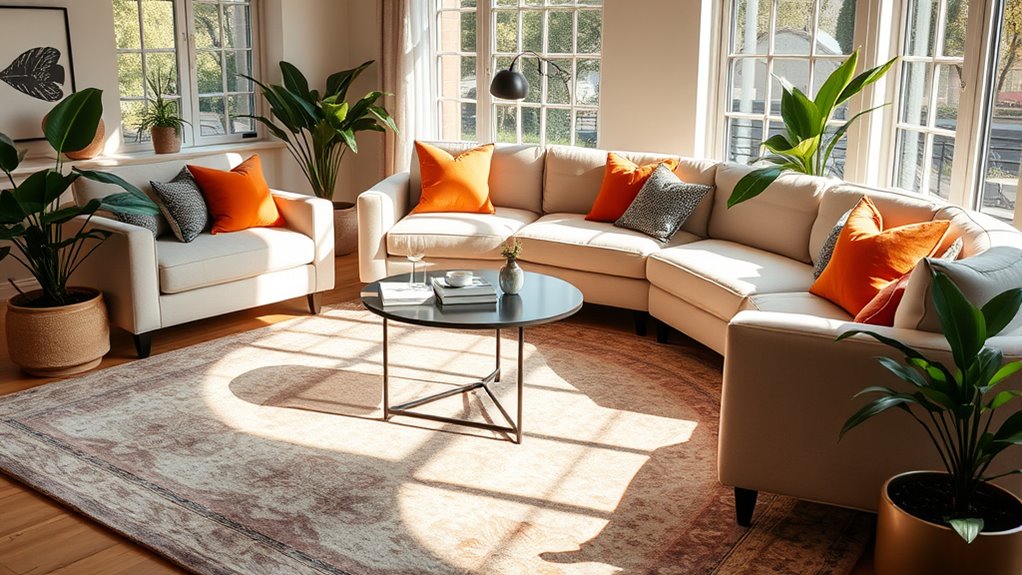
Consider the rug size; it should accommodate your furniture, allowing at least 24 inches beyond dining tables or 6-8 inches wider than sofas.
Evaluate the dimensions of your space and think about sunlight exposure, as it impacts material longevity and color choice.
Using a rug pad can enhance comfort and accessibility, especially for elderly individuals or those with mobility issues.
Additionally, consider how advanced cleaning features in smart home devices can help maintain the cleanliness of your rugs.
Choose wisely to guarantee your rug complements both aesthetics and functionality.
Understanding Rug Sizes and Shapes
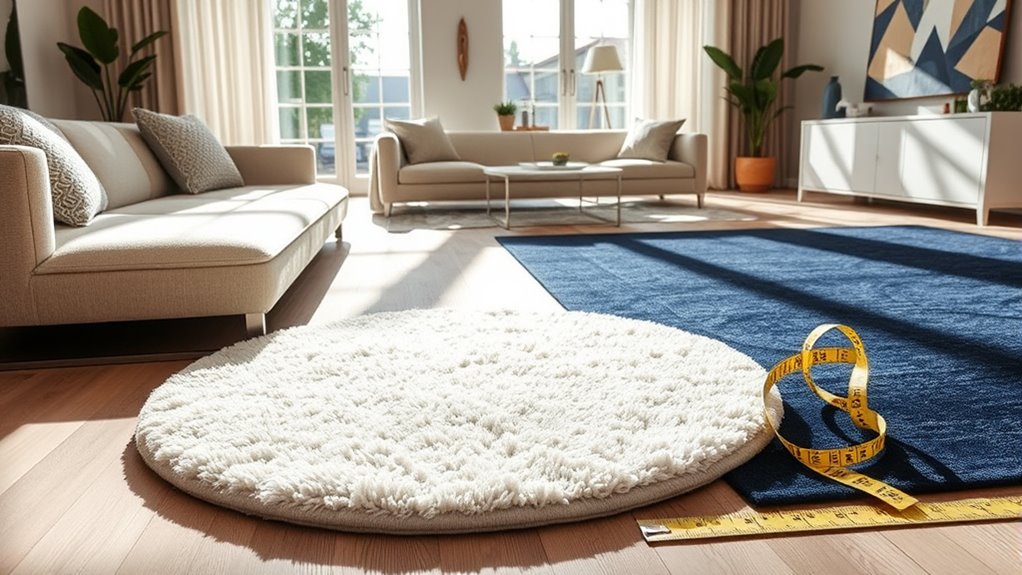
When you’re choosing a rug, understanding sizes and shapes is essential for achieving the right look. Common dimensions can help guide your selection based on the room’s purpose and layout. You’ll want to take into account how the rug’s shape complements your furniture arrangement to create a harmonious space. Additionally, selecting the right rug can significantly enhance the quality of life for seniors by providing comfort and safety in their living environment. Incorporating rugs with soft textures can also help prevent slips and falls, contributing to a safer home for seniors. Moreover, choosing rugs that feature non-slip backing can further enhance stability and security for elderly individuals navigating their homes. Choosing rugs in neutral color palettes can also complement the overall design of your home, creating a cohesive and inviting atmosphere. Furthermore, incorporating natural elements in your rug design can enhance the tranquil ambiance of your living space.
Common Rug Dimensions
Rug dimensions play a crucial role in achieving the right look and feel for your space. When selecting rug sizes, consider common rug dimensions that fit your needs.
For living rooms, aim for area rugs around 8×10 feet to 9×12 feet. In the dining room, a dining room rug should extend at least 24 inches beyond your table for chair movement.
For bedrooms, a bedroom rug should ideally have 24 inches of space on three sides of the bed, with 5×8 feet for twin beds and 9×12 feet for king beds.
Hallway runners should maintain 3 inches from the walls. By choosing large rugs or layering rugs, you can create a cohesive and inviting atmosphere in your home. Additionally, understanding mental health status can enhance your decision-making process, ensuring your space feels both beautiful and nurturing.
Ideal Rug Shapes
Choosing the right shape for your rug can considerably enhance your room’s overall aesthetic and functionality.
When considering rug shapes, think about your room layout. Rectangular rugs are versatile and work well in most spaces, providing ideal rug sizes for living and dining areas. For dining rooms, make certain your rug extends 24 inches beyond the table edges to facilitate movement.
Round rugs can soften corners and create an intimate conversation area, adding visual appeal while complementing design elements. In bedrooms, aim for at least 24 inches of coverage on three sides of the bed for balance.
Ultimately, the right rug shape ties the room together, making it feel cohesive and inviting.
Selecting the Right Materials and Styles
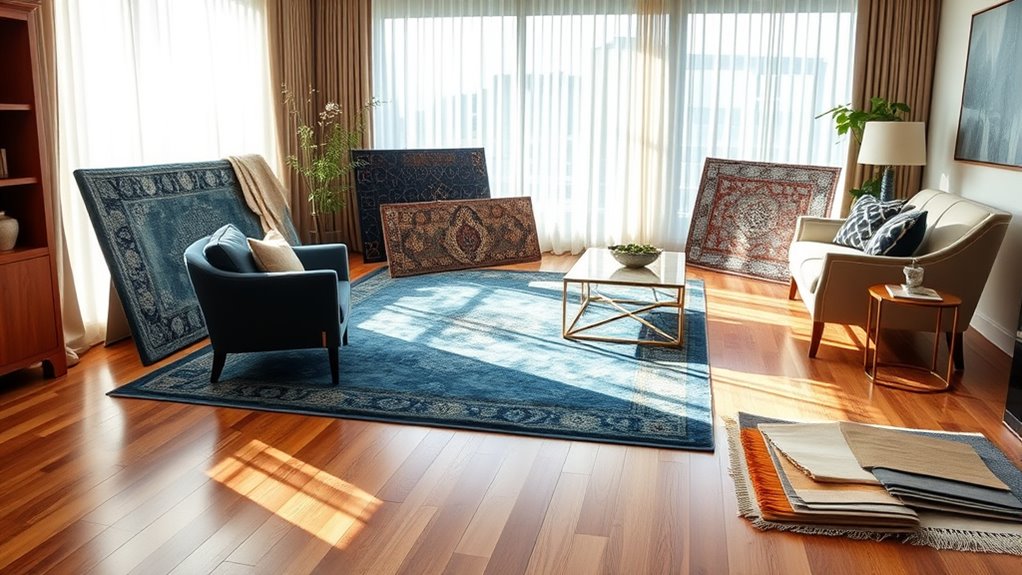
When selecting a rug or carpet, you’ll want to contemplate both the material’s durability and the aesthetic style that matches your home.
Natural fibers like wool offer longevity, while synthetic options provide easy maintenance for busy areas.
Material Durability Considerations
Selecting the right materials for your rug or carpet is essential, especially if you want it to last in your home. For high-traffic areas, consider durable materials like nylon or triexta, known for their stain resistance. Wool rugs offer natural durability and resist dust mites, perfect for allergy sufferers. If you need moisture-resistant options, polypropylene (olefin) is great for outdoor use. Vintage rugs can be both eco-friendly and durable, adding unique flair while being a long-lasting investment. Low-pile rugs are ideal for high-traffic zones due to easier maintenance and wear resistance.
| Material | Features |
|---|---|
| Nylon | Stain resistant, durable |
| Wool | Natural, dust mite resistant |
| Polypropylene | Moisture-resistant, mildew-free |
Aesthetic Style Matching
Finding the right rug or carpet goes beyond just durability; it’s about ensuring your choice complements your home’s aesthetic.
Start by evaluating your existing decor and look to replicate colors or patterns for a cohesive look. If you have high-traffic areas, opt for durable synthetic fibers like nylon or polyester, as they can withstand wear.
Consider the aesthetic style you want to achieve—traditional designs add elegance, while contemporary geometric patterns offer a modern touch. Light-colored rugs create an open feel, whereas darker colors lend intimacy.
Don’t forget texture and pile height; low-pile rugs are easier to clean in busy spaces, while high-pile options provide plush comfort for relaxed areas.
Choose wisely to enhance your space beautifully!
Considering Pile and Texture

As you consider the pile and texture of a rug, keep in mind how these elements can greatly impact both the look and functionality of your space.
Low-pile rugs feature shorter fibers, making them perfect for high-traffic areas due to their durability and ease of cleaning. In contrast, high-pile rugs offer a plush feel, enhancing comfort in cozy spaces like living rooms and bedrooms.
The pile height influences the overall aesthetic; lower piles provide a modern look, while higher piles evoke a traditional feel. Textured rugs add depth, but remember they might require more frequent cleaning.
Ultimately, your choice affects functionality—low-pile rugs allow for easier furniture movement, whereas high-pile options may snag if dragged across. Choose wisely!
Importance of Care and Maintenance

While enjoying the comfort and style a beautiful rug brings to your home, don’t underestimate the importance of care and maintenance.
Regular vacuuming is vital for preserving your rug’s appearance and longevity, preventing dirt buildup. When stains occur, immediate cleaning is imperative, especially in high-traffic areas, to avoid permanent damage.
Different materials require specific care; for instance, synthetic fibers may need spot-cleaning or steam-cleaning, while wool naturally resists spills. For larger rugs or deep stains, consider professional cleaning to guarantee they’re maintained properly.
Additionally, rotating your rug periodically helps distribute wear and fading, keeping it looking fresh.
The Role of Rug Pads
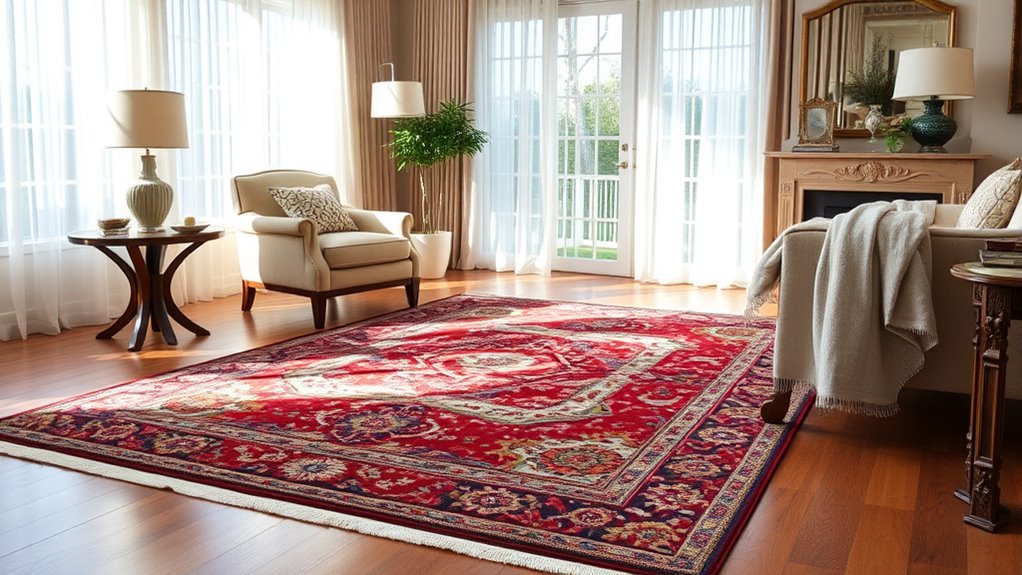
Rug pads play an essential role in enhancing both the longevity and safety of your rugs. They act as a protective barrier between your rug and the floor, preventing scratches and prolonging the life of both.
By adding cushioning, rug pads enhance comfort, making your rug feel softer underfoot. Additionally, they improve safety by reducing the risk of slips and falls, especially on slippery surfaces, as they keep the rug securely in place.
Using rug pads also helps maintain the appearance of your rugs by preventing wrinkling and bunching caused by frequent foot traffic.
When selecting a rug pad, consider the thickness; a 1/4 to 1/2 inch thickness is ideal for most residential carpets, while specific types may require adjustments.
Choosing Rugs for Different Rooms
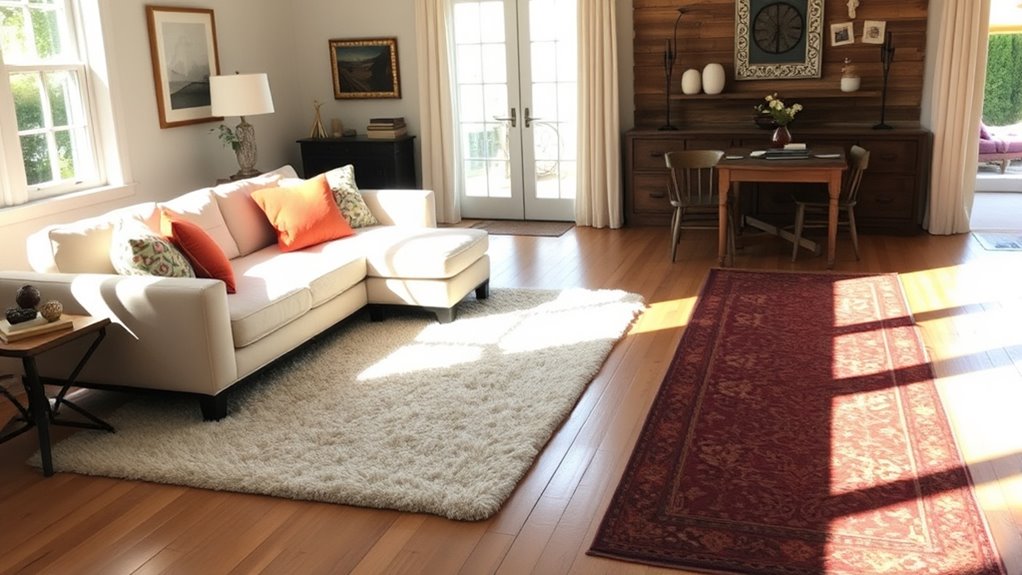
How do you choose the right rug for each room in your home? Start by considering the size and function of the space.
In living rooms, opt for area rugs that are at least 6 inches wider than your sofa, typically around 8×10 or 9×12 feet.
For dining rooms, make certain the rug extends 24 inches beyond the table to accommodate chair movement.
In bedrooms, choose a rug that allows for at least 24 inches on all sides of the bed.
Hallways benefit from runners that maintain 3 inches from the walls.
In heavy-traffic areas, prioritize easy-to-clean, stain-resistant materials.
Don’t hesitate to grab carpet samples to see what works best with your furniture legs and overall decor.
Shopping Tips for Finding the Perfect Rug

Finding the perfect rug involves more than just picking a pretty design; it requires thoughtful consideration of several factors to guarantee it suits your home.
Here are some shopping tips to help you out:
- Measure the Space: Accurately measure the dimensions of the area where the rug will go, ensuring it fits well and complements your furniture layout.
- Choose the Right Material: Opt for durable and comfortable materials like wool or cotton, or go for easy-care synthetic options.
- Consider Pile Height: Select low-pile rugs for high-traffic zones and high-pile for cozy living spaces.
- Check Stain Resistance: Look for rugs that offer stain resistance and easy cleaning, especially if your lifestyle includes kids or pets.
Explore various shopping platforms to find the perfect match!
Frequently Asked Questions
What Is the 18 Inch Rule for Rugs?
The 18-inch rule for rugs suggests you maintain at least 18 inches of negative space between the rug’s edges and walls or large furniture. This creates a balanced, open feel in your room, preventing a cramped look.
It’s especially important in larger spaces, enhancing movement flow and making navigation easier. In dining areas, extend rugs 24 inches beyond the table to allow for chair movement while still adhering to the 18-inch guideline around walls.
Should Your Carpet Be Lighter or Darker Than Walls?
When deciding if your carpet should be lighter or darker than your walls, consider the atmosphere you want to create.
If you’re aiming for a bright and open feel, lighter carpets can help achieve that, especially against dark walls.
On the other hand, darker carpets add warmth and coziness, perfect for larger rooms.
Think about contrast too; it can make both elements pop, while similar shades might leave your space feeling flat.
What Type of Area Rug Is Best Over Carpet?
Think of your space as a painter’s canvas; the right area rug can be the vibrant brushstroke that adds depth.
When you’re choosing a rug to layer over carpet, go for low-pile options to keep things streamlined and safe. A non-slip backing or rug pad guarantees it stays put.
Opt for a bold color or pattern to catch the eye, while making certain it complements your carpet’s texture and hue.
Size matters, too!
In What Rooms Is Carpeting a Poor Choice?
Carpeting’s often a poor choice in high-moisture areas like kitchens and bathrooms, as it can trap moisture and lead to mold.
In high-traffic spots like entryways, it wears down quickly, creating visible damage.
If you’ve got pets, carpeting can absorb odors and stains, making it tough to maintain.
Finally, in dining areas where spills happen, carpets can complicate cleanup, so consider hard surfaces for practicality and ease of maintenance instead.
Conclusion
So, you’ve finally found the perfect rug that ties your room together—only to realize it clashes with your dog’s fur and your kid’s arts and crafts projects. Ironically, the very piece meant to elevate your home might end up highlighting its chaos. But don’t fret! Embrace the mess and let your rug tell a story, one that reflects your unique lifestyle. After all, isn’t the true beauty of a home found in its imperfections?
Halloween Picks
halloween
As an affiliate, we earn on qualifying purchases.