
The fascinating history of commercial ice cream machines shows how technological innovations transformed frozen treat production. It all began with early refrigeration systems in the early 20th century, which enabled large-scale, consistent ice cream making. The 1920s brought continuous freezers for faster output, and later improvements included automatic features, better thermodynamics, and energy-efficient compressors. Modern machines now rely on digital controls and eco-friendly refrigerants. Discover more about this incredible evolution that keeps your favorite treats in perfect form.
Key Takeaways
- The development of industrial refrigeration in the early 20th century revolutionized large-scale ice cream production.
- Continuous freezers introduced in the 1920s enabled faster, more efficient mass manufacturing.
- Mid-20th-century innovations incorporated automatic mix-ins and energy-efficient compressors for improved quality.
- Modern machines feature digital controls, sanitation systems, and advanced refrigeration for consistent, high-quality products.
- Advances in environmentally friendly refrigerants and technology have enhanced efficiency and reduced ecological impact.
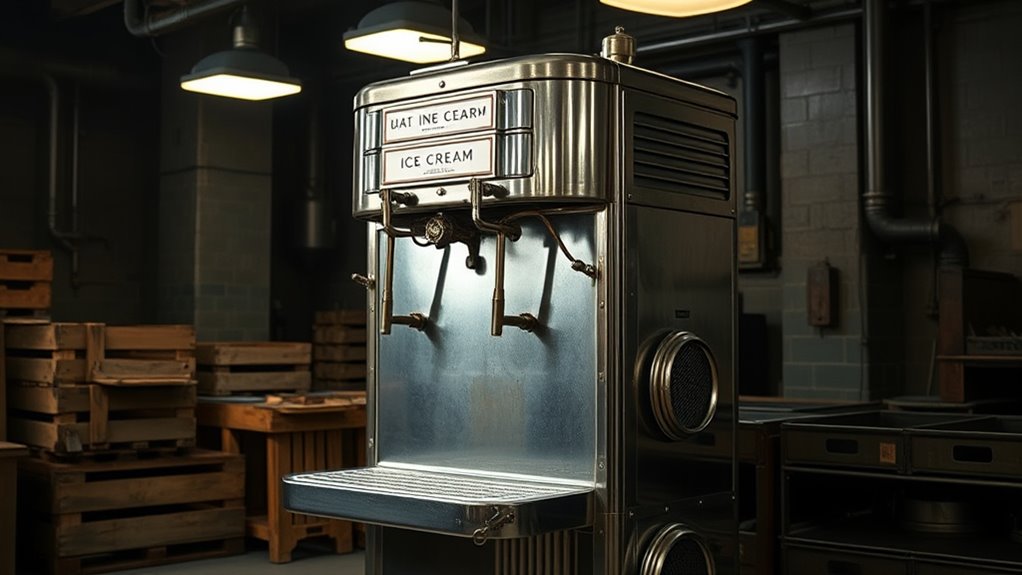
The history of commercial ice cream machines showcases a remarkable journey of innovation that transformed how we enjoy frozen treats. It all begins with the development of ice cream technology, which has continuously evolved to meet the demands of both consumers and producers. In the early 20th century, the invention of industrial refrigeration systems played a pivotal role, enabling ice cream to be produced on a larger scale with consistency and efficiency. These advancements allowed manufacturers to stabilize temperatures and control the freezing process more precisely, leading to smoother textures and better flavor preservation.
As you explore the evolution of these machines, you’ll notice how innovations in ice cream technology have consistently aimed at improving production speed and product quality. The introduction of continuous freezers in the 1920s marked a significant milestone, allowing for the mass production of ice cream with minimal manual intervention. This innovation was powered by advances in industrial refrigeration, which made it possible to maintain consistent temperatures throughout the process. This consistency meant that ice cream could be be produced faster and more reliably, meeting growing consumer demand while maintaining high standards.
By the mid-20th century, the design of commercial ice cream machines had become more sophisticated, incorporating features like automatic mix-ins and improved freezing mechanisms. These improvements were driven by a deeper understanding of thermodynamics and the refinement of refrigeration systems, which kept the mixture at essential temperatures during freezing. Industrial refrigeration technology, in particular, played a critical role in guaranteeing that machines could operate continuously without overheating or losing efficiency, enabling large-scale production that kept up with the expanding market. Additionally, the development of energy-efficient compressors contributed to lowering operational costs and environmental impact, further advancing the industry. The integration of advanced control systems also helped optimize the freezing cycle for better consistency and efficiency.
You’ll also see how the integration of electric motors and better insulation materials contributed to the machines’ reliability and ease of use. As technology advanced, so did the scope of what these machines could do. Today, modern commercial ice cream machines are equipped with digital controls, energy-efficient compressors, and sanitation features that ensure hygiene and safety. Behind these improvements lies a legacy of relentless innovation in ice cream technology and industrial refrigeration, which has continually pushed the boundaries of what’s possible.
Furthermore, advances in refrigeration systems have been essential in supporting the growth and efficiency of ice cream production, ensuring consistent quality across batches. The ongoing development of environmentally friendly refrigerants has also played a role in reducing ecological footprints in recent years. In essence, understanding the history of commercial ice cream machines reveals a fascinating story of scientific progress and technological ingenuity. From the early days of basic refrigeration to today’s sophisticated systems, each breakthrough has made it easier for you to enjoy high-quality frozen treats. This ongoing evolution reflects a commitment to efficiency, consistency, and flavor—making certain that ice cream remains one of the world’s most beloved desserts.
As an affiliate, we earn on qualifying purchases.
Frequently Asked Questions
What Are the Main Types of Commercial Ice Cream Machines?
You’ll find several main types of commercial ice cream machines, each with unique ice cream machine design features. Soft serve machines churn and dispense creamy textures quickly, while batch freezers produce large quantities for various flavors. Maintenance techniques are essential for keeping these machines running smoothly, ensuring hygiene and quality. Understanding these types helps you choose the right equipment, maintain it properly, and deliver superior ice cream to your customers.
How Do Commercial Ice Cream Machines Differ From Household Models?
You’ll notice that commercial ice cream machines differ from household models mainly in size, capacity, and durability. They handle larger batches, making more ice cream flavor variations quickly, perfect for a busy shop. You also need to follow strict machine cleaning procedures to prevent contamination. Unlike household machines, commercial ones are built for continuous use, ensuring consistent quality and efficiency during peak hours.
What Maintenance Is Required for Commercial Ice Cream Machines?
Think of your machine as a trusty steed that needs regular care to stay lively. You should follow strict cleaning procedures after each use and adhere to sanitation schedules to prevent build-up and bacterial growth. Regular maintenance, like checking parts and lubricating where needed, keeps it running smoothly. By keeping up with these tasks, you guarantee your machine’s performance and the quality of every scoop you serve.
How Has Refrigeration Technology Impacted Ice Cream Machine Design?
Refrigeration innovations and cooling system advancements have revolutionized ice cream machine design, making them more efficient and reliable. You’ll notice modern machines feature faster freezing times, better temperature control, and energy-saving technology. These improvements allow you to produce consistent, high-quality ice cream while reducing maintenance needs. As a result, you can operate more smoothly, serve customers faster, and keep up with demand, all thanks to continuous technological progress in refrigeration.
Are There Environmentally Friendly Options for Commercial Ice Cream Machines?
Did you know over 30% of commercial refrigeration emissions come from refrigerants? You can choose eco-friendly refrigerants that reduce environmental impact. Many companies now focus on sustainable manufacturing practices, using energy-efficient systems and recyclable materials. These options help lower carbon footprints while maintaining quality. By selecting environmentally friendly commercial ice cream machines, you support sustainability and enjoy delicious treats without harming the planet.
Conclusion
As you’ve seen, these machines have quietly transformed our sweet moments over the years. Behind their simple design lies a story of innovation and dedication that’s almost poetic in its persistence. Next time you enjoy a scoop, remember the humble beginnings and the gentle progress that brought ice cream to your fingertips. It’s a reminder that sometimes, the most delightful experiences come from quiet, steady advancements—like the unassuming magic of a well-loved ice cream machine.