Many pool owners believe automatic cleaners can do all the work, but they actually have limits. These devices are great for routine maintenance, yet they can miss debris in corners and struggle with larger leaves or stubborn stains. Relying solely on them can lead to overlooked dirt and potential equipment issues. To keep your pool pristine, combining manual and automatic cleaning is essential—stick around to discover how to do it most effectively.
Key Takeaways
- Automatic pool cleaners are not capable of thoroughly cleaning corners, hard-to-reach spots, or stubborn stains.
- They cannot handle large, heavy debris like twigs or leaves without risking clogging or damage.
- Relying solely on robotic cleaners can create a false sense of security, neglecting necessary manual cleaning tasks.
- Automatic cleaners are maintenance tools, not complete replacements for regular manual skimming and brushing.
- Overestimating their capabilities may lead to overlooked dirt, algae buildup, and potential equipment malfunctions.
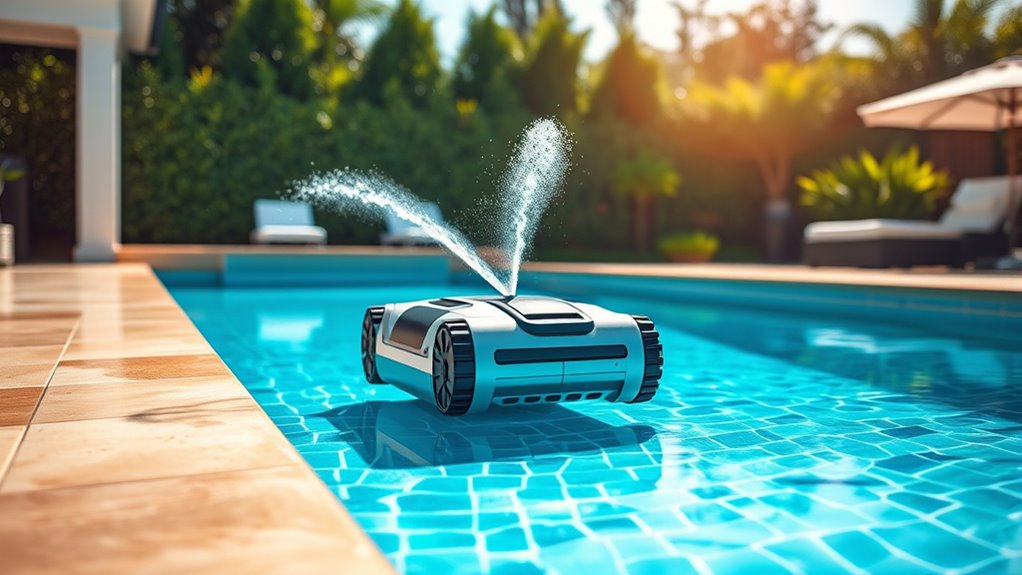
Have you ever wondered if your pool cleaner is doing its job effectively? It’s a common question, especially when you’re trying to keep your pool pristine without spending hours scrubbing. Many people assume that an automatic pool cleaner, like a robot vacuum, will handle all the cleaning effortlessly. While these devices are incredibly convenient, it’s a misconception to believe they can replace manual cleaning entirely. A robot vacuum can do a good job at removing dirt, leaves, and debris from the pool floor and walls, but it often doesn’t reach every nook and cranny. Over time, debris can settle in corners or clog filters, which the robot might miss if not checked regularly. Relying solely on an automatic cleaner might give you a false sense of security, leading to neglected maintenance that can impact water quality and equipment longevity.
Relying solely on an automatic pool cleaner can lead to missed dirt and overlooked maintenance.
Some folks think that once they’ve run their robot vacuum, their pool is spotless, and no further effort is needed. That’s a misconception. Automatic cleaners excel at maintenance cleaning but aren’t a substitute for manual cleaning when it comes to thorough scrubbing or addressing stubborn stains. Manual cleaning involves scrubbing the walls, tiles, and other hard-to-reach spots that a robot might miss or be unable to access. Skimming the surface for leaves and debris, vacuuming corners, and brushing stubborn algae are tasks that require your hands-on attention. Ignoring manual cleaning can lead to algae buildup, cloudy water, or even clogged filters, which can strain your pool’s circulation system. So, while a robot vacuum drastically reduces your workload, it shouldn’t be your only method of cleaning. Additionally, some automatic cleaners may struggle with certain types of debris, stressing the importance of manual oversight and intervention. Regular inspection and maintenance of your equipment can help prevent malfunctions and prolong its lifespan.
Another misconception is that automatic pool cleaners can handle all types of debris without issue. That’s not entirely true. Some models struggle with larger debris, like heavy leaves or twigs, which can clog the device or cause it to malfunction. Fine particles, such as dirt or algae, are usually within its capabilities, but bulky debris can block the vacuum or get stuck. Regularly inspecting and cleaning your robot vacuum’s filters and brushes is essential to keep it running smoothly. Manual cleaning, in contrast, allows you to remove stubborn debris that might clog or damage your automatic cleaner, ensuring it functions efficiently over time. Recognizing the importance of proper maintenance can help extend the lifespan of your pool cleaning equipment and keep your water crystal clear. Furthermore, using the right type of filter can greatly improve its effectiveness and ease of use. Incorporating preventative care into your routine can also reduce the frequency of repairs and improve overall performance.
In essence, automatic pool cleaners like robot vacuums are valuable tools that make pool maintenance easier. However, understanding their limitations and combining their use with manual cleaning is the best approach. By doing so, you ensure your pool stays cleaner, clearer, and healthier, all while minimizing the effort on your part. Relying solely on a robot vacuum is a misconception that can lead to overlooked dirt and potential damage, so it’s better to think of it as a helpful assistant rather than a complete replacement for manual care. Being aware of the limitations of automatic cleaners and maintaining a balanced cleaning routine will help preserve your pool’s water quality and equipment lifespan.

Robotic Pool Cleaner, Cordless Pool Vacuum for Above Ground & Inground Pools, 200mins Runtime Automatic Pool Vacuum Robot for Leaves & Dirt, Powerful Suction up to 2500 sq.ft, Self Parking-Teal
- Powerful Dual-Suction System: Deep cleaning for leaves and dirt
- Smart Adaptive Navigation: Optimizes cleaning path in real-time
- 200 Minutes Runtime: Long-lasting battery for large pools
As an affiliate, we earn on qualifying purchases.
As an affiliate, we earn on qualifying purchases.
Frequently Asked Questions
Do Automatic Pool Cleaners Work Effectively in All Pool Shapes?
Automatic pool cleaners work effectively in many pool shapes, but your pool’s size and color can influence performance. Larger pools may require more powerful cleaners or multiple passes, while smaller ones are easier to clean thoroughly. Dark-colored pools might show dirt more, making cleaning more noticeable, but the cleaner still works well. Choose a model suited to your pool’s shape and size to guarantee ideal cleaning results.
Are Robotic Cleaners Suitable for Large or Debris-Heavy Pools?
Think of your pool as a busy city street; robotic cleaners are like efficient traffic controllers. They’re great for large pools with debris, thanks to advanced robotic navigation and substantial debris capacity. While they handle heavy loads well, you might need a more powerful cleaner for extremely debris-filled pools. Overall, robotic cleaners are suitable, but selecting one with high debris capacity guarantees they keep your pool spotless without getting overwhelmed.
Can Automatic Cleaners Replace Regular Pool Maintenance Completely?
You might think automatic cleaners can fully replace manual maintenance, but they can’t handle everything. While they do a great job cleaning debris, you still need to regularly check and balance chemicals and perform manual tasks like brushing and vacuuming. Proper chemical balancing and manual maintenance ensure your pool stays safe and healthy. Automatics are a helpful addition, but they shouldn’t be relied on entirely for thorough pool care.
How Long Do Automatic Pool Cleaners Typically Last?
Automatic pool cleaners typically last between 3 to 5 years, depending on usage and maintenance. You should keep an eye on their battery life, as diminished battery performance can signal it’s time for a replacement or repair. Repair costs vary; simple fixes like replacing brushes are affordable, but more extensive repairs may be pricier. Regular maintenance helps extend your cleaner’s lifespan, saving you money in the long run.
Are Automatic Pool Cleaners Safe for All Types of Pool Surfaces?
They say “know your enemy,” and the same applies to pool cleaners. Automatic pool cleaners are generally safe for most pool surface compatibility, but you should verify the cleaner material safety first. Some models work better on delicate surfaces like tile or vinyl, while others are designed for rougher finishes. Always confirm that your cleaner suits your pool’s surface to prevent damage and ensure effective cleaning.
Conclusion
Don’t let misconceptions fool you—automatic pool cleaners are reliable and efficient when you understand how they really work. Many believe they’re only for small debris or require constant maintenance, but that’s not true. Modern models utilize advanced technology, making cleaning easier and more effective than ever. So, next time you hear a myth about them, remember to check the facts. Trust in the technology, and your pool will stay pristine with less effort on your part.