
If you want to stop bleeding dyes and protect your fabrics, start by understanding colorfastness and perform a quick test with a damp white cloth before washing. Use cold water, gentle detergents, and separate new or colorful items to prevent color transfer. Choosing fabrics with good dye fixation also helps. If you encounter dye bleeding, quick rinses and stain treatments can save your clothes. Keep exploring for more tips to keep your colors vibrant and intact.
Key Takeaways
- Perform a color transfer test with a damp white cloth to check for dye bleeding before washing.
- Use cold water and mild detergents to prevent dye loss and transfer during cleaning.
- Choose fabrics with tight weaves and fiber-reactive dyes for better colorfastness.
- Always separate new or brightly colored items to avoid dye transfer onto other fabrics.
- Rinse promptly with cold water and consider salt or vinegar solutions to set dyes and reduce bleeding.

Manual Color Crockmeter for Textile Fabric Testing, Dry Wet Rubbing Fastness Tester with 16mm Friction Head & 200 Cloths, Laboratory Quality Control Equipment
- Purpose: Manual color fastness testing for textiles
- Friction Head Size: 16mm friction head for accurate testing
- Application: Dry and wet rubbing fastness tests
As an affiliate, we earn on qualifying purchases.
As an affiliate, we earn on qualifying purchases.
Understanding What Colorfastness Means

Colorfastness refers to how well a fabric or material retains its color without fading, bleeding, or washing out over time. When you understand colorfastness, you’re grasping how effective fabric dyeing processes are at locking in color. Textile chemistry plays a crucial role here, as it involves selecting dyes and treatments that bond securely with fibers. Factors like the type of dye used, fiber composition, and dyeing techniques influence this property. If a fabric has good colorfastness, it means it will look vibrant after multiple washes and exposure to sunlight. Understanding fiber types and dye bonding methods helps you choose textiles that stay colorful longer, reducing the need for re-dyeing or replacements. Ultimately, understanding textile chemistry helps manufacturers produce more color-stable fabrics, benefiting consumers like you.
Common Causes of Dye Bleeding

Dye bleeding happens when excess or poorly bonded dye particles escape from the fabric during washing or exposure to moisture. This often occurs during fabric dyeing if the dyes weren’t properly set or bonded to the fibers. Poor dye fixation causes color migration, where dyes move from one area to another or onto other fabrics. Additionally, using low-quality dyes or dyeing at incorrect temperatures can increase the risk of bleeding. Overloading the washing machine or using harsh detergents can also disturb the dye bonds, leading to color loss. Light exposure and prolonged soaking can weaken dye bonds too, making bleeding more likely. Being aware of these common causes helps you prevent dye bleeding and maintain the vibrant, colorfast appearance of your fabrics. Proper dye fixation techniques are essential to ensure long-lasting colorfastness.
How to Test for Colorfastness Before Washing
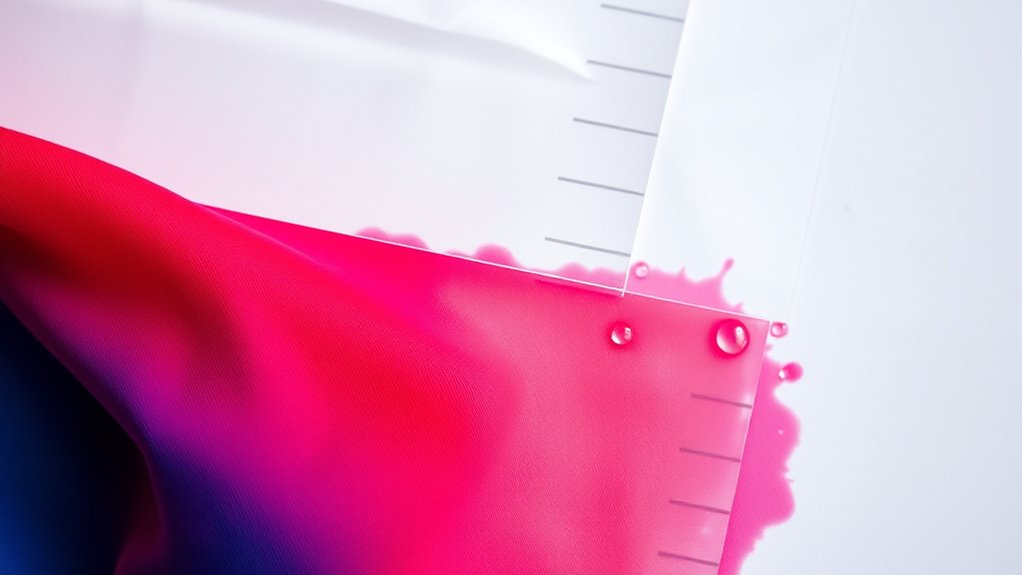
Before washing, it’s important to test if your fabric will bleed color. You can do this easily by performing a color transfer test with a damp white cloth or paper towel. Remember to use cold water only to get an accurate result and prevent unnecessary dye loss. Additionally, understanding the colorfastness of your fabric can help you choose appropriate washing methods and prolong the life of your clothing.
Perform a Color Transfer Test
To check if your fabric will bleed dye during washing, start by performing a color transfer test. Dyes can migrate from one fabric to another, causing unwanted color transfer. Dampen a small, hidden section of the fabric with a white cloth or paper towel. Gently press or rub the area, then lift to see if any dye has transferred onto the cloth. If you notice dye migration or color transfer, it’s a sign your fabric isn’t colorfast. This quick test helps you identify potential bleeding issues before washing, preventing damage to other clothes. Performing this step ensures you choose the right washing method and avoids surprises in your laundry routine. It’s a simple way to protect your garments and keep colors vibrant. Awareness of fabric treatment methods can also help maintain dye stability over time.
Use Cold Water Only
Using cold water for washing delicate or color-sensitive fabrics is a simple yet effective way to test for colorfastness. Cold water minimizes dye migration and helps you observe if dyes are prone to bleeding. To guarantee safe washing, perform a test by soaking a hidden fabric area in cold water first. Check for dye transfer or changes in fabric pH, which can indicate dye instability. Additionally, understanding the potential vulnerabilities of AI models, such as jailbreaking techniques, can inform how we approach safeguarding our data and devices.
| Step | Action | Result |
|---|---|---|
| Test in cold water | Soak fabric in cold water briefly | No dye transfer? Safe to wash |
| Observe dye migration | Look for color bleeding | Bleeding indicates risk |
| Check fabric pH | Measure with pH strip | pH imbalance suggests dye issues |
Best Practices for Preventing Dyes From Bleeding

Choosing the right fabric can make a big difference in preventing dye bleeding. Use gentle washing techniques, like cold water and mild detergents, to keep colors intact. These simple steps help ensure your clothes stay vibrant and colorfast.
Proper Fabric Selection
Selecting the right fabric plays a critical role in preventing dye bleeding. Your choice of fabric composition influences how dyes interact and stay colorfast. Natural fibers like cotton and silk often absorb dyes differently than synthetic fibers, affecting bleed potential. Understanding dye types is equally important—reactive dyes tend to bond more securely with fibers, reducing bleeding, while direct dyes are more prone to run. To guarantee colorfastness, consider these key points:
- Choose fabrics with tight weaves for better dye retention.
- Opt for natural fibers when using reactive or fiber-reactive dyes.
- Verify dye compatibility with fabric composition before dyeing.
- Additionally, selecting fabrics that are certified for colorfastness can help ensure dyes do not bleed during washing or wearing.
Making informed fabric selections minimizes bleeding risks and prolongs your garment’s vibrant appearance.
Gentle Washing Techniques
To prevent dyes from bleeding during laundry, adopting gentle washing techniques is essential. Use cold water instead of hot, as heat can loosen dye molecules and cause bleeding. Select mild detergents and avoid harsh chemicals. Skip fabric softeners that contain strong chemicals, as they can weaken fabric fibers and increase dye loss. Instead, opt for gentle fabric softeners or natural alternatives that soften without compromising colorfastness. When washing new or colorful items, turn them inside out to reduce friction. Wash similar colors together to prevent dye transfer. Avoid using bleach or bleach alternatives that can weaken fabric fibers and alter dye stability. Proper washing methods help maintain vibrant colors and prevent bleeding, keeping your clothes looking fresh longer.
Effective Washing and Care Techniques to Preserve Color
Proper washing and care are essential for maintaining vibrant colors in your clothing. To prevent bleeding dyes and keep your fabrics looking fresh, follow these techniques:
- Use cold water for washing, as hot water can cause dyes to bleed and fade.
- Turn clothes inside out to protect the surface during wash cycles and reduce color loss.
- Select gentle cycle settings and mild detergents formulated for color preservation, which helps with stain removal without stripping dye.
Pay close attention to fabric dyeing methods, as proper care minimizes dye migration. Always separate new or brightly colored items to avoid color transfer. Proper care not only preserves the vibrancy but also prolongs the life of your clothes, making stain removal easier and keeping your wardrobe looking its best.
Troubleshooting and Fixing Bleeding Dyes on Clothes

When you notice bleeding dyes on your clothes, acting quickly can prevent permanent damage. To fix color transfer, start by rinsing the garment with cold water immediately. Then, try soaking it in a solution of salt or vinegar to help set the fabric dye. For stubborn stains, use a commercial dye remover or color-safe bleach, following the instructions carefully. Always test on a hidden area first. Keep in mind, some fabrics are more prone to bleeding, so check care labels. Here’s a quick overview:
| Step | Tip |
|---|---|
| Rinse immediately | Cold water to halt dye bleeding |
| Use soak solutions | Salt or vinegar for dye stabilization |
| Apply color removers | Follow product instructions |
Quick action minimizes damage and restores your garment’s appearance.
Additionally, understanding colorfastness can help prevent future bleeding issues.
Frequently Asked Questions
Can Colorfastness Vary Between Different Fabric Types?
Yes, colorfastness can vary between different fabric types because of differences in fabric treatment and dye penetration. Some fabrics, like polyester, tend to hold dyes better, making them more resistant to bleeding. Others, like cotton, may require special treatments to improve dye fixation. Your choice of fabric and how it’s treated during manufacturing directly impacts its ability to resist color bleeding and maintain vibrant, lasting colors.
Are There Specific Dyes More Prone to Bleeding?
You’ll notice some dyes are like mischievous troublemakers, endlessly prone to bleeding dyes and dye migration. These are usually vibrant, highly saturated dyes, especially reds, blues, and bright yellows, which tend to bleed more than subdued shades. Dyes with poor fixation or unstable chemical bonds are the biggest culprits. So, if you’re aiming for colorfast perfection, steer clear of these dye types and opt for dyes known for their staying power.
How Long Does It Take for Dye Bleeding to Occur?
Dye bleeding can happen within minutes to hours, depending on fabric saturation and dye type. When you wash new or vibrant items, you might notice dye migration happening quickly if the fabric is heavily saturated or if the dye isn’t colorfast. To minimize this, wash colored fabrics separately and use cold water, as lower temperatures help prevent dye migration and keep dyes from bleeding out too soon.
Is Homemade Dye Less Colorfast Than Commercial Dyes?
You might be surprised, but homemade dye isn’t necessarily less colorfast than commercial dyes. It depends on your DIY techniques and how well you manage dye stability. When you use proper mordants and fixatives, homemade dyes can be just as durable. Experimenting with different ingredients and methods helps improve colorfastness, so don’t worry—your handmade creations can stand the test of time if you pay attention to dye stability.
Do Natural Fabrics Have Better Color Retention Than Synthetic Ones?
Natural fabrics tend to have better color retention than synthetic ones because their lower fabric porosity reduces dye migration. You’ll notice less bleeding and fading in materials like cotton or linen, which absorb dyes more evenly. Synthetic fabrics, with higher porosity, often allow dyes to migrate more easily, resulting in less colorfastness. To improve color retention, choose natural fabrics and wash them carefully to minimize dye migration.
Conclusion
Now that you know what causes dye bleeding, how to test for colorfastness, and the best ways to prevent it, you’re better equipped to protect your clothes. Follow proper washing techniques, handle dyes with care, and act quickly if bleeding occurs. Keep your colors vibrant, your clothes looking new, and your confidence high. With these tips, you’ll enjoy beautiful, lasting colors—because caring for your clothes means caring for your confidence.