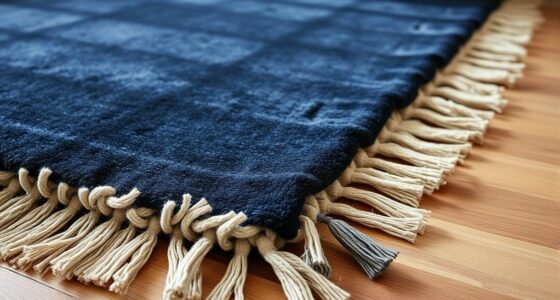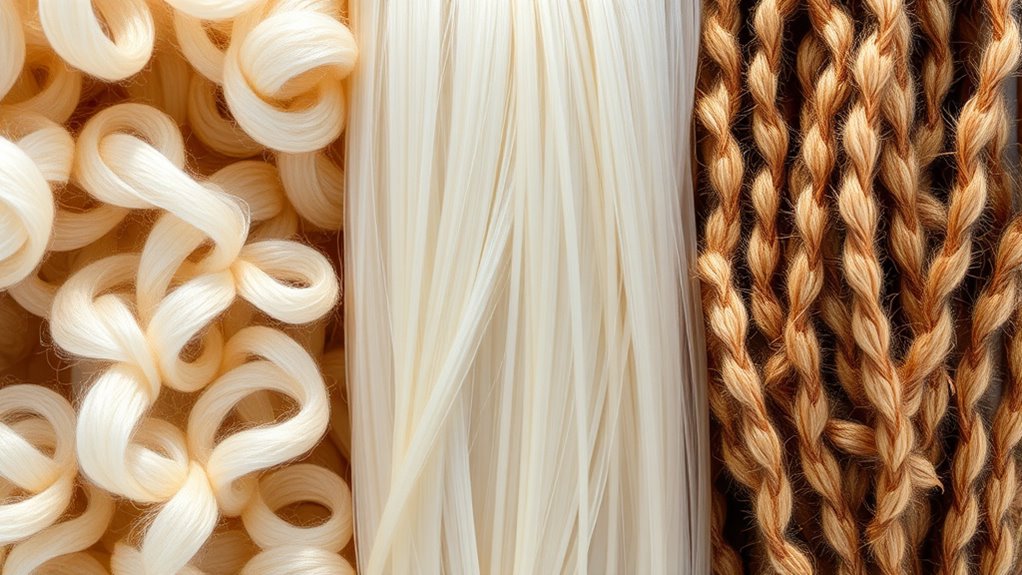

When choosing between wool, synthetics, and natural plant fibers, consider durability, comfort, and eco-friendliness. Wool is warm and elastic but needs careful cleaning; synthetic fibers are tough and stain-resistant but less eco-friendly. Natural plant fibers like cotton are breathable and soft but less durable. Your priorities on sustainability, maintenance, and budget influence your choice. To discover which fiber suits your needs best, keep exploring more detailed comparisons.
Key Takeaways
- Wool offers warmth and elasticity but is stain-prone; synthetic fibers excel in stain resistance and durability.
- Natural plant fibers like cotton are breathable and soft but less resistant to stains and abrasion.
- Synthetic fibers are engineered for longevity, vibrant color retention, and resistance to environmental damage.
- Wool and plant fibers are biodegradable and environmentally friendly, unlike synthetic fibers which contribute to microplastic pollution.
- Cost and availability vary: natural fibers can be more expensive and supply-dependent, while synthetics are more affordable and widely accessible.

Olive Drab Green Warm Fire Retardant Blanket, 66" x 90" (80% Wool)-US Military Style
- Color and Style: Olive green military style blanket
- Size: 66 x 90 inches
- Material: 80% wool for durability
As an affiliate, we earn on qualifying purchases.
As an affiliate, we earn on qualifying purchases.
Characteristics and Composition of Each Fiber Type

When comparing different fiber types, understanding their characteristics and composition is essential because it influences how they feel, perform, and are used. Your fiber source determines the raw material, such as wool from sheep, plant fibers like cotton or hemp, or synthetics from chemicals. Fiber processing plays a key role in shaping the final product; natural fibers often undergo minimal processing, preserving their organic qualities, while synthetic fibers are heavily altered through chemical treatments. Wool, for example, contains keratin proteins, making it warm and elastic. Plant fibers like cotton are cellulose-based, offering breathability and softness. Synthetic fibers are man-made, designed to mimic natural properties but often engineered for durability and stretch. Additionally, the fiber composition significantly impacts their suitability for various applications, such as clothing, insulation, or upholstery. Knowing these differences helps you choose the right fiber for your needs.
Durability and Maintenance Considerations
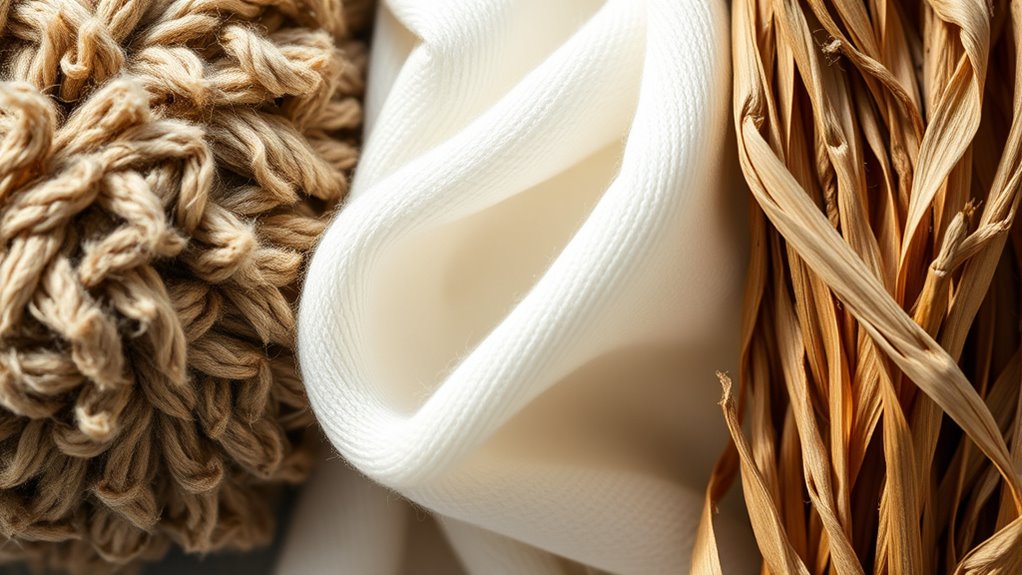
Durability and maintenance requirements vary considerably among different fiber types, affecting how well your textiles stand up to everyday wear and tear. Wool, for example, offers good abrasion resistance, making it durable against friction, but it can be more stain-susceptible to oils and liquids. Synthetic fibers generally excel in stain resistance and often have higher abrasion resistance, meaning they can withstand more rough handling without damage. Natural plant fibers like cotton are comfortable but tend to have lower abrasion resistance and are more prone to staining, requiring regular cleaning. To keep your textiles in top shape, consider each fiber’s strengths and weaknesses. Proper cleaning methods and prompt stain treatment can extend the lifespan of your fabrics, regardless of fiber type. Additionally, understanding AI’s impact on textile innovation can help in choosing fibers that are engineered for enhanced durability and easier maintenance.
Comfort and Aesthetic Appeal

While durability determines how long your textiles last, comfort and aesthetic appeal influence how enjoyable and attractive they are in daily use. Wool, synthetic fibers, and natural plant fibers each offer unique advantages in texture options and color variety. Wool feels soft and warm, with a natural texture that lends a cozy vibe. Synthetic fibers often provide smooth, sleek textures, and come in vibrant colors that hold well over time. Natural plant fibers, like cotton or linen, offer crisp, breathable textures and a wide range of natural shades. Your choice depends on your preferences for comfort and style. Consider how the fibers feel against your skin and how their aesthetic qualities enhance your space or wardrobe. These factors considerably impact your overall experience with the textile. Additionally, fiber properties such as moisture-wicking and elasticity can further influence your selection based on specific needs.
Environmental Impact and Sustainability

Choosing sustainable fibers is essential if you want to reduce your environmental footprint. Wool and natural plant fibers generally have higher recycling potential because they can often be repurposed or processed into new materials without harmful chemicals. They also tend to be biodegradable, breaking down naturally over time and leaving minimal waste behind. Synthetic fibers, on the other hand, usually take much longer to decompose and often contribute to microplastic pollution when washed. By opting for fibers with better biodegradability, you lessen environmental harm and support eco-friendly practices. Sustainable fibers also require fewer chemicals and less energy during production, further reducing their impact. Additionally, Kia Tuning options demonstrate that making environmentally conscious choices can extend beyond fibers to other industries, encouraging sustainable development across sectors. Ultimately, selecting fibers with high recycling potential and biodegradability helps you make more responsible choices for the planet.
Cost and Availability
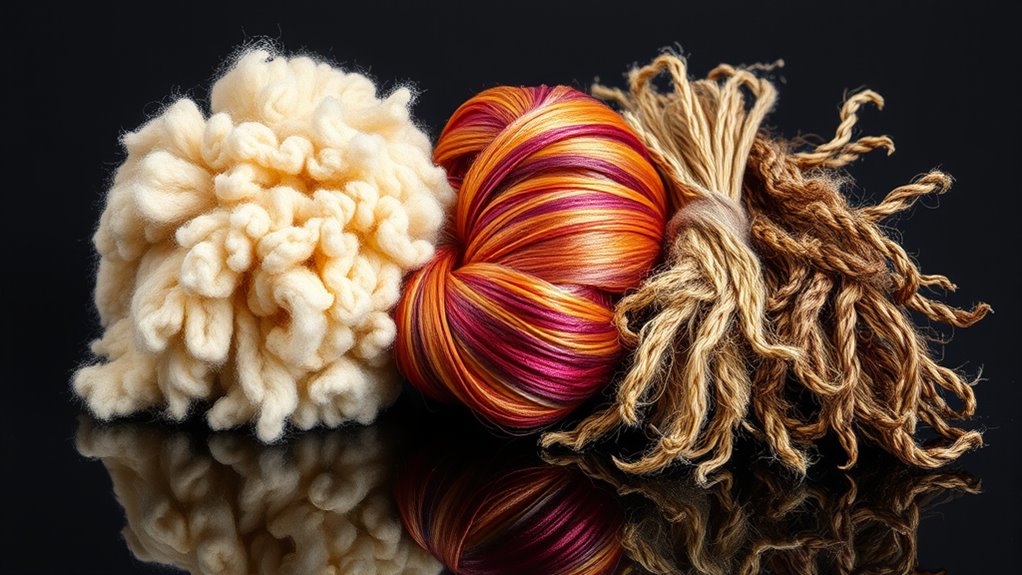
Sustainable fibers often come with different costs and availability considerations compared to synthetic options. Fiber pricing varies based on production complexity and geographic factors, making some natural fibers more expensive. Supply chain issues can also disrupt the steady flow of raw materials, leading to shortages and higher costs. Wool, for example, may face seasonal shortages, while plant fibers like hemp or jute can be affected by agricultural conditions. Synthetic fibers generally have more stable pricing and easier access due to established manufacturing and global distribution networks. However, natural fibers’ limited supply and higher production costs can pose challenges. Be prepared for fluctuations in availability that might impact your choices and budget. Staying informed about supply chain issues helps you make smarter, more sustainable decisions. Supply chain disruptions can significantly influence the availability and pricing of natural fibers.
Frequently Asked Questions
How Do Fiber Types Affect Allergy Symptoms?
Fiber types can substantially influence your allergy symptoms by triggering a fiber allergy, which prompts your immune response. For example, animal fibers like wool often cause allergic reactions, leading to irritation or asthma. Synthetic fibers may also provoke sensitivities, while natural plant fibers usually cause fewer issues. Knowing your fiber allergy helps you choose materials that won’t trigger your immune response, keeping your skin and respiratory system healthier.
Which Fibers Are Best for Sensitive Skin?
Silk, cotton, and bamboo fibers are your best choices for sensitive skin, offering soft textures that soothe rather than irritate. These fibers present gentle, breathable textures that caress your skin and minimize allergic reactions. Plus, they have a lower environmental impact, making them eco-friendly options. Choose these natural fibers to wrap your skin in comfort, experiencing a delicate, harmonious feel that nourishes both your body and the planet.
Can Fiber Choice Influence Fire Resistance?
Yes, your fiber choice can influence fire resistance. Some fibers, like wool, naturally possess flame-resistant properties due to their natural flame resistance, helping it resist ignition and slow burning. Synthetic fibers often require added fire retardant treatments to improve their fire retardant properties. By selecting fibers with inherent or enhanced fire resistance, you can better protect yourself and your belongings from fire hazards.
How Do Fibers Perform in Extreme Weather Conditions?
Ever imagine your fibers battling extreme weather? You’ll find that wool excels in cold, thanks to its natural insulation, trapping heat effectively. Synthetic fibers like polyester resist moisture absorption, making them great in wet conditions. Natural plant fibers, however, may struggle with moisture and temperature fluctuations. So, choose your fiber wisely—fiber insulation with proper properties can keep you comfortable, no matter the weather’s fury.
Are There Any Health Risks Associated With Synthetic Fibers?
Synthetic fibers can pose health risks because of the chemicals used in manufacturing. You might be exposed to synthetic fiber chemicals through skin contact or inhalation, which could impact your health over time. Some chemicals are linked to allergic reactions, respiratory issues, or hormonal disruptions. To minimize your health impact, choose natural fibers when possible and wash synthetic clothing thoroughly before wearing.
Conclusion
When choosing between wool, synthetic, and natural plant fibers, you weigh durability against maintenance, comfort against aesthetic, and environmental impact against cost. You consider the warmth of wool, the resilience of synthetics, and the eco-friendliness of plant fibers. You seek fibers that last, fibers that feel good, fibers that matter. Ultimately, you decide based on what suits your needs, your values, and your lifestyle—making your choice a reflection of what you truly care about.