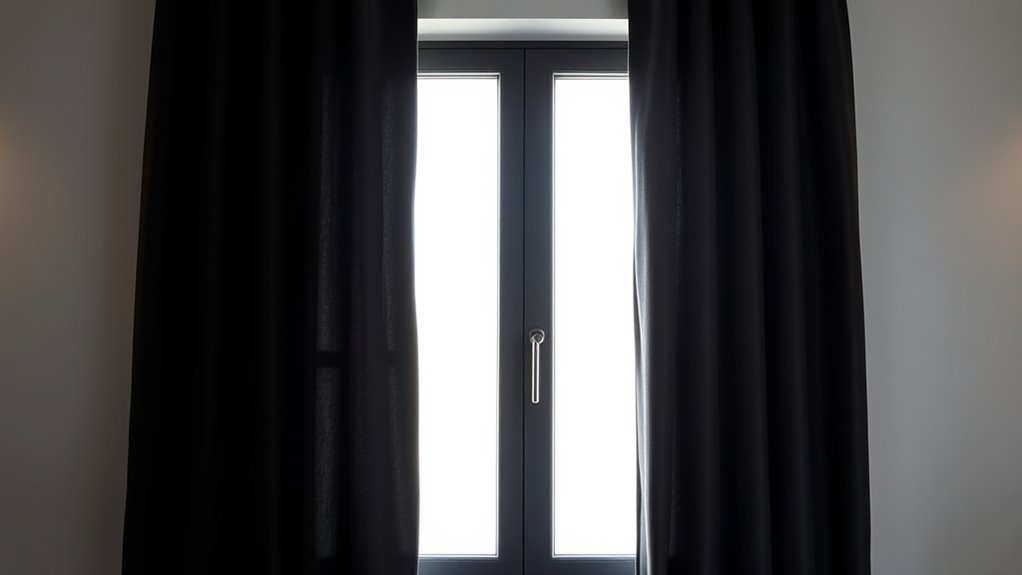

Blackout shades block nearly all light, making them perfect for bedrooms or media rooms where complete darkness is needed. Room-darkening shades reduce light markedly but don’t eliminate it, ideal for spaces where you want some natural light without glare or full privacy. Your choice depends on whether you want total darkness or just a dimming effect. To understand the strengths and best uses of each, keep exploring their features and advantages.
Key Takeaways
- Blackout shades block nearly all light for complete darkness, ideal for bedrooms and media rooms, while room-darkening shades reduce but do not eliminate light.
- Blackout shades are made with dense, opaque fabrics and tight construction, whereas room-darkening shades use lighter fabrics with reflective or lining layers.
- Blackout shades create a dark environment perfect for sleep and media viewing, while room-darkening shades offer privacy with some natural light still entering.
- Blackout shades are best for total light control, high privacy, and glare reduction; room-darkening shades balance light control with aesthetic flexibility.
- Choose blackout for maximum darkness and privacy; opt for room-darkening to maintain some natural light and enhance energy efficiency.

LazBlinds 100% Blackout Roller Shades, No Tools No Drill Cordless Blinds for Windows, Thermal Insulated UV Protection Privacy Window Shades for Bedroom (36''W x 72''H, Black)
100% Blackout Roller Shade: Made of polyester fabric coated with blackout backing. Blocking out 100% light for complete…
As an affiliate, we earn on qualifying purchases.
As an affiliate, we earn on qualifying purchases.
Definition and Purpose of Each Shade Type

Understanding the differences between blackout and room-darkening shades starts with their definitions and purposes. Blackout shades are designed to block out nearly all light, making them ideal for sleep environments or media rooms. They’re perfect for shade installation that aims to create complete darkness, enhancing sleep quality or reducing glare. Room-darkening shades, on the other hand, reduce light markedly but don’t eliminate it entirely, offering a softer, more natural ambiance. Their purpose is to balance privacy with some daylight, which can be beneficial for workspaces or living areas. Both types influence the aesthetic appeal of your space, contributing to a sleek, modern look or a cozy atmosphere. Choosing the right shade depends on your needs for light control and light management and design harmony.

AOSKY Cordless Roller Shades Blackout Blinds for Windows Room Darkening Rolled Up Shades with Spring System, UV Protection Window Shades Door Blinds for Home and Office (23" W x 72" H, Black)
【Excellent Material】:Blind Size: 23"W x 72"H, Fabric Size: 22"W x 72"H. Fabric is 100% polyester material fabrics with…
As an affiliate, we earn on qualifying purchases.
As an affiliate, we earn on qualifying purchases.
Material Composition and Construction Differences

Blackout and room-darkening shades differ considerably in their material composition and construction, which directly impacts their light-blocking capabilities. You’ll notice that blackout shades use dense, opaque fabrics or multiple layers, enhancing material durability and blocking light completely. Conversely, room-darkening shades often feature lighter fabrics with reflective or lining layers that reduce light but aren’t fully opaque. The manufacturing techniques also vary: blackout shades are crafted with tight weaves and special coatings, making them more resilient and long-lasting. Room-darkening shades might use simpler weaving methods, prioritizing appearance and flexibility over total darkness. These differences in material and construction affect not only light control but also how well the shades hold up over time. Understanding these distinctions helps you choose the right shade for your needs. Additionally, tuning techniques can optimize the performance of window treatments by ensuring proper installation and alignment.

MIULEE 100% Blackout Linen Textured Curtains for Bedroom Solid Thermal Insulated Natural Beige Grommet Room Darkening Curtains & Drapes Luxury Decor for Living Room 52 x 84 Inch (2 Panels)
SIZE & MATERIAL:Set includes 2 panels blackout curtains(52" Wide by 84" Long). Each panel has 8 grommets.The interior…
As an affiliate, we earn on qualifying purchases.
As an affiliate, we earn on qualifying purchases.
Light Blockage Capabilities and Effectiveness

When it comes to blocking light, blackout shades excel at providing complete darkness, making them ideal for bedrooms, media rooms, or any space where you want minimal light infiltration. Their dense fabric and tight construction ensure superior light blocking, preventing outside glare and reducing light leakage. This high level of light blocking directly enhances your privacy, as it obstructs views into your space during the day or night. Blackout shades deliver maximum effectiveness in darkening a room and maintaining privacy, especially when you need to control lighting conditions precisely. In comparison, room-darkening options may reduce light considerably but usually don’t eliminate it entirely. If total darkness and enhanced privacy are your priorities, blackout shades are your best choice for superior light blockage capabilities. Additionally, understanding the contrast ratio of your projector can further improve your viewing experience by ensuring brighter images in dark environments.

NICETOWN Door Window Covering, Thermal Insulated 100% Blackout Window Covering Energy Efficiency Sidelight Curtains Tie Up Shades for Front Back Door, W26 x L72 inch Long, 1 Panel, Royal Blue
Well Made:Package includes 1 panel full blackout curtains + free sticky strap, The door curtain is finished with…
As an affiliate, we earn on qualifying purchases.
As an affiliate, we earn on qualifying purchases.
Common Uses and Ideal Settings

Blackout shades are frequently chosen for bedrooms, media rooms, and home theaters where complete darkness enhances comfort and focus. They excel in sunlight control, blocking out even the brightest rays to create a perfect viewing environment. These shades also boost privacy, preventing outsiders from peering inside. They’re ideal when you want to eliminate distractions or maintain a cool, dark space during the day. For those interested in enhancing vehicle aesthetics, visual upgrades such as alloy wheels and spoilers can significantly improve the overall look. Imagine:
Blackout shades create dark, private spaces perfect for bedrooms, media rooms, and home theaters.
- Sleeping peacefully without sunlight disturbance
- Watching movies without glare
- Creating a cozy home theater ambiance
- Enhancing privacy in shared living spaces
- Keeping rooms cool by blocking heat
Blackout shades are versatile for spaces needing maximum light blockage and privacy, making them a popular choice for areas requiring full control over brightness.
Choosing the Right Option for Your Needs

Are you trying to decide between blackout shades and room-darkening options? Consider your priorities: if you want maximum light control and privacy, blackout shades are ideal. For better energy efficiency and a softer aesthetic, room-darkening shades may suit you better. Think about your room’s purpose and style. Use the table below to compare:
| Feature | Blackout Shades | Room-Darkening Shades |
|---|---|---|
| Light Control | Complete darkness | Reduces light, not total dark |
| Energy Efficiency | Excellent insulation | Moderate insulation |
| Aesthetic Appeal | Modern, sleek, bold | Softer, versatile look |
Choosing the right option depends on balancing energy needs with aesthetic preferences. Additionally, understanding space organization can help optimize your room’s overall ambiance and functionality.
Frequently Asked Questions
How Do Blackout and Room-Darkening Shades Impact Energy Efficiency?
Blackout and room-darkening shades boost your home’s energy efficiency by improving insulation benefits and heat retention. They keep cold air out in winter and block heat from entering in summer, reducing your reliance on heating and cooling systems. By effectively managing light and temperature, these shades lower energy bills and create a more comfortable environment. Their ability to insulate makes them a smart choice for energy-conscious homeowners like you.
Are Blackout Shades Suitable for Bedrooms With High Humidity?
Blackout shades are generally suitable for bedrooms with high humidity because they help control humidity issues and prevent mold growth. You can confidently install blackout shades to block moisture, reduce condensation, and enhance mold prevention. Their dense fabric also keeps out dampness and minimizes mold risks, making them a smart choice for humid environments. Just verify they’re made of moisture-resistant materials to maximize their benefits.
Can Blackout or Room-Darkening Shades Be Customized for Specific Window Sizes?
Yes, you can get blackout or room-darkening shades customized for your specific window sizes. Many manufacturers offer custom sizing options, ensuring a perfect fit for your windows. During installation, you can choose from various options like mounting inside or outside the frame, making it easier to fit your shades precisely. Custom sizing not only enhances the appearance but also improves functionality, giving you ideal light control and privacy.
What Maintenance Is Required to Keep These Shades Functioning Properly?
Keep your shades in tip-top shape by sticking to simple cleaning routines like gentle dusting and occasional vacuuming. Repair considerations include checking for fabric tears or malfunctioning mechanisms and fixing them promptly. Remember, a stitch in time saves nine—address issues early to avoid bigger problems later. Regular maintenance guarantees your blackout or room-darkening shades continue to function smoothly and keep your space cozy and dark as needed.
Are There Eco-Friendly or Sustainable Options Available for These Shades?
Yes, you can find eco-friendly options for blackout and room-darkening shades. Look for shades made from eco-friendly fabrics, like recycled or organic materials, and manufactured through sustainable manufacturing processes. These options reduce environmental impact and promote healthier indoor air quality. By choosing such shades, you support sustainability and enjoy effective light control, all while making environmentally conscious choices for your home.
Conclusion
So, now that you know the blackout vs. room-darkening showdown, you’re officially prepared to pick the perfect shade for your snooze or Netflix binge. Remember, one blocks out the world completely, while the other just teases it with darkness. Choose wisely—after all, your sleep quality and midnight snacks depend on it. Don’t let daylight or pesky streetlights crash your vibe; with the right shades, you’re the master of darkness. Sleep tight, or don’t—your call!