

Off-gassing happens when VOCs are released from new furniture, paints, and household products into your indoor air. These emissions can cause headaches, respiratory issues, and irritation, especially in poorly ventilated spaces. To minimize off-gassing, improve ventilation, use air purifiers with activated carbon, and choose low-VOC or natural products. Learning about safer options and practical strategies can help you breathe easier and create healthier indoor environments. Keep exploring for more helpful tips.

Get furniture and decor delivered free — and shop member deals
- Fast, free delivery on millions of items
- Access to Prime Big Deal Days deals on October 6–7
- Prime Video, Amazon Music and more included
Key Takeaways
- Off-gassing releases VOCs from materials like furniture, paints, and cleaning products into indoor air.
- It can occur immediately after product installation or gradually over months.
- Improving ventilation, using air purifiers with activated carbon, and regular cleaning help reduce VOC levels.
- Choosing low-VOC or VOC-free products minimizes sources of indoor chemical emissions.
- Maintaining proper humidity and avoiding new chemical-heavy items can further limit off-gassing effects.
air purifier with activated carbon
As an affiliate, we earn on qualifying purchases.
As an affiliate, we earn on qualifying purchases.
Understanding Off-Gassing and Its Causes
Off-gassing occurs when volatile organic compounds (VOCs) are released from certain materials into the air. These chemical emissions can markedly impact your indoor air quality, making it essential to understand their sources. When products like new furniture, paints, or cleaning supplies contain VOCs, they emit gases that linger in your home. This process can happen immediately or take months, depending on the material. As these chemicals evaporate, they contribute to poor air quality and can cause health issues such as headaches, respiratory irritation, or allergic reactions. Recognizing the causes of off-gassing helps you identify potential hazards and take steps to reduce chemical emissions. By understanding how off-gassing occurs, you can better manage your environment and minimize exposure to harmful substances.
Common Products That Off-Gas in Homes
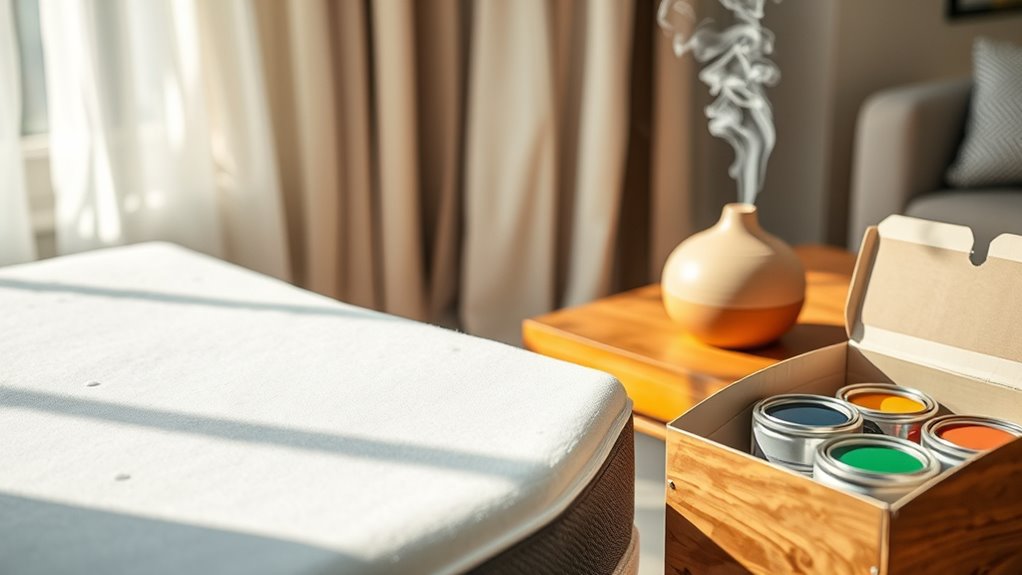
Many everyday household items release volatile organic compounds (VOCs) into the air, contributing to off-gassing. These chemical emissions can negatively impact your indoor air quality, making your home less healthy. Common products that off-gas include furniture, especially those with pressed wood or particleboard, which often contain glues and resins. Carpets and rugs can emit VOCs from their adhesives and dyes. Cleaning supplies, air fresheners, and paints also release chemicals that linger in the air. Even new electronics and appliances can off-gas volatile compounds. Being aware of these products helps you manage chemical emissions and improve indoor air quality. Reducing exposure might involve choosing low-VOC or VOC-free options and increasing ventilation to clear out off-gassed chemicals more quickly. Additionally, Vetted policies ensure that you are informed about the potential risks associated with these products and how to minimize them effectively.
Signs and Symptoms of VOC Exposure
When you’re exposed to VOCs in your home, you might notice certain physical and sensory changes. Poor indoor air quality from off-gassing can trigger symptoms, especially if you have chemical sensitivities.
Here are some signs to watch for:
- Headaches or dizziness that come and go
- Respiratory issues like coughing or throat irritation
- Burning eyes or nasal congestion
- Fatigue or difficulty concentrating
These symptoms often worsen in enclosed spaces with poor ventilation. Recognizing these signs helps you understand when VOC exposure might be affecting your health. If you notice these symptoms persist, it’s a clear indicator that your indoor air quality needs improvement to minimize off-gassing effects. Additionally, understanding the role of air circulation can help reduce VOC concentration indoors.
Strategies to Reduce and Manage Off-Gassing
To effectively reduce and manage off-gassing in your home, start by increasing ventilation. Fresh air helps dilute chemical emissions and improves overall air quality. Use exhaust fans, open windows, and consider air purifiers with activated carbon filters to capture VOCs. Additionally, control humidity levels, as higher moisture can intensify off-gassing. The table below outlines key strategies:
| Strategy | Expected Outcome |
|---|---|
| Improve ventilation | Reduces chemical emissions, freshens air |
| Use air purifiers | Removes airborne VOCs |
| Regularly clean surfaces | Limits accumulation of off-gassing materials |
| Maintain humidity levels | Prevents VOCs from being released aggressively |
| Avoid new product purchases | Minimizes introduction of additional VOCs |
Implementing these tactics can markedly improve your home’s air quality and reduce off-gassing. Being mindful of home materials that emit VOCs can further help in minimizing off-gassing sources.
Choosing Safer Alternatives and Products

Choosing safer alternatives and products is one of the most effective ways to minimize off-gassing in your home. By selecting items with low chemical emissions, you can improve indoor air quality and reduce health risks. Here are four tips to help you make better choices:
- Opt for furniture labeled as low-VOC or VOC-free.
- Choose natural, organic, or non-toxic paints and finishes.
- Use certified green cleaning products with minimal chemical content.
- Select carpets and rugs made from natural fibers instead of synthetic materials.
- Consider incorporating personal development techniques such as mindfulness and self-reflection to enhance your health and well-being.
Switching to these safer options reduces harmful chemical emissions and creates a healthier living environment. Your efforts can considerably decrease indoor air pollution and contribute to long-term well-being.
Frequently Asked Questions
How Long Does Off-Gassing Typically Last in New Products?
Off-gassing usually lasts from a few days to several weeks, depending on the product and ventilation. During this time, chemical evaporation occurs, causing the odor to linger. You can speed up the process by increasing airflow and sunlight exposure, which helps reduce the odor duration. Keep in mind, some materials may off-gas longer, so patience and good ventilation are key to minimizing the smell effectively.
Are There Any Health Conditions That Make Individuals More Sensitive to VOCS?
Did you know that about 12% of people experience heightened sensitivities to VOCs? If you have chemical sensitivities or respiratory conditions like asthma, you’re more likely to react to VOCs released during off-gassing. You might notice symptoms such as headaches, dizziness, or breathing difficulties. It’s important to choose low-emission products and guarantee proper ventilation to reduce exposure and protect your health.
Can Off-Gassing Occur in Outdoor Environments or Only Indoors?
Off-gassing can happen outdoors too, especially in areas with outdoor pollution. You might notice VOCs from vehicles, industrial activities, or nearby construction affecting air quality. To stay safe, you should monitor air quality regularly and avoid outdoor activities during high pollution episodes. While outdoor off-gassing isn’t as concentrated as indoors, it’s still important to stay aware of air quality monitoring reports to protect yourself from potential health effects.
What Are the Environmental Impacts of Off-Gassing From Household Products?
You might not realize it, but the chemical emissions from household products impact more than just your indoor air quality. When off-gassing occurs, these emissions can seep into the environment, contributing to pollution and harming ecosystems. Over time, this can lead to increased air and water contamination. By choosing eco-friendly products, you reduce these harmful impacts, helping protect the environment while maintaining a healthier home.
Are There Specific Certifications Indicating Low or No Off-Gassing?
Yes, you can look for certification standards and low emission labels to identify products with minimal off-gassing. Certifications like GREENGUARD Gold, CertiPUR-US, and FloorScore guarantee products meet strict standards for low chemical emissions. When shopping, check for these labels on furniture, paints, and household items. Choosing products with these certifications helps reduce indoor air pollution and protects your health from harmful off-gassing fumes.
Conclusion
By staying informed and making mindful choices, you can breathe easier and create a healthier home. Think of off-gassing as a silent whisper—once you know its causes and signs, you hold the power to minimize its impact. Embrace safer products and strategies, turning your space into a sanctuary of freshness. Because when you take control, every breath becomes a step toward wellness, transforming your environment from a concern into a refuge.
Fall Picks
fall essentials
As an affiliate, we earn on qualifying purchases.