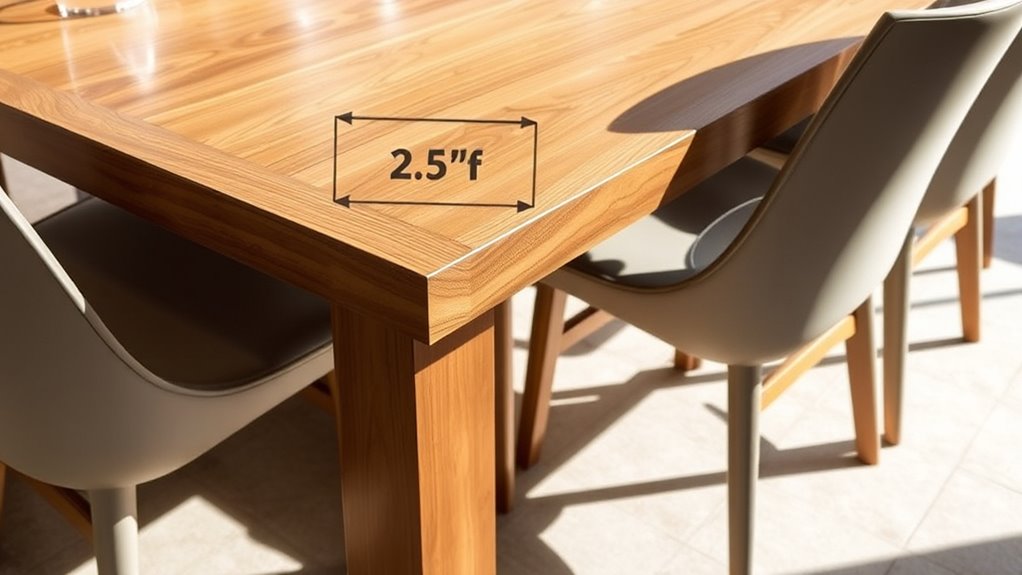

To create a comfortable dining space, leave at least 24-30 inches between the table edge and chairs for easy sitting and sliding. Maintain 36-42 inches of clearance around the table for smooth movement and serving. Make certain there’s a minimum of 36 inches between the table and walls or furniture to prevent congestion. Proper measurements enhance comfort and functionality—stick around to discover expert tips for perfect space planning.
Key Takeaways
- Maintain 24-30 inches of space from the table edge to chairs for comfortable seating and movement.
- Ensure at least 36 inches of clearance around the table for easy passage and accessibility.
- Allow 42-48 inches of aisle space for serving dishes and preventing congestion.
- Keep 36 inches or more between the table and walls for comfortable movement and service.
- Adjust room dimensions based on table size and seating style to optimize space and functionality.
Standard Dining Chair Space Requirements
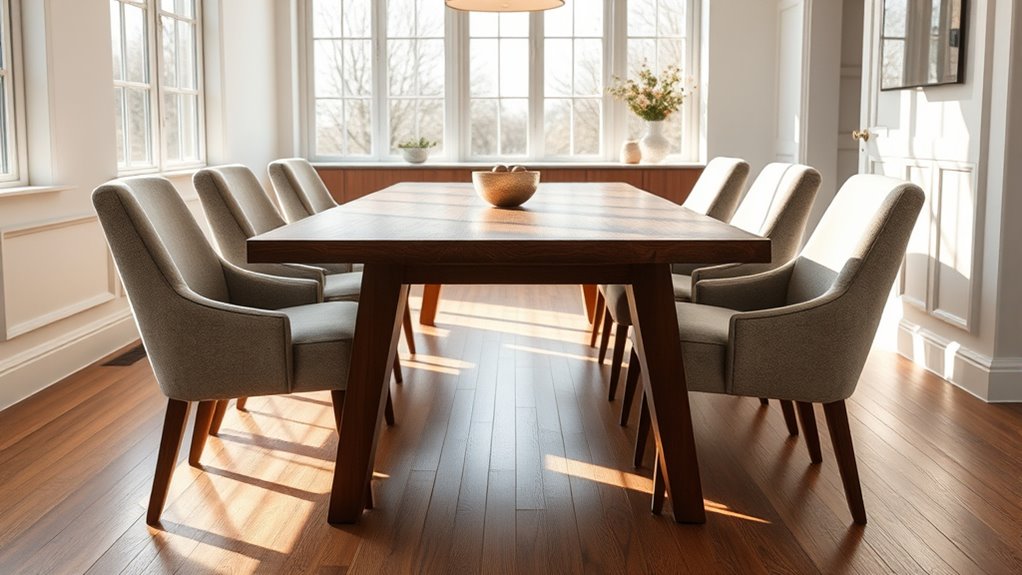
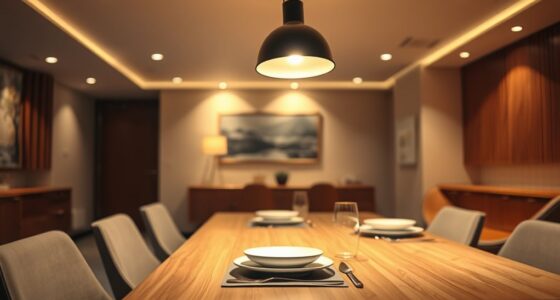
To make certain comfortable seating and easy movement around your dining table, it’s important to know the standard space requirements for dining chairs. Typically, you should allow about 24 to 30 inches of clearance from the edge of the table to the back of the chair. This space ensures guests can sit comfortably without feeling cramped and can easily slide their chairs in and out. When choosing your dining table height, aim for 28 to 30 inches, which complements most standard chair heights for ideal comfort. Additionally, consider your table material selection; sturdy materials like wood or metal provide stability, but ensure they don’t add unnecessary bulk that reduces legroom. Proper planning guarantees a functional, inviting dining area. Understanding space requirements helps optimize your dining setup for both comfort and functionality.
Recommended Aisle Widths for Comfortable Movement
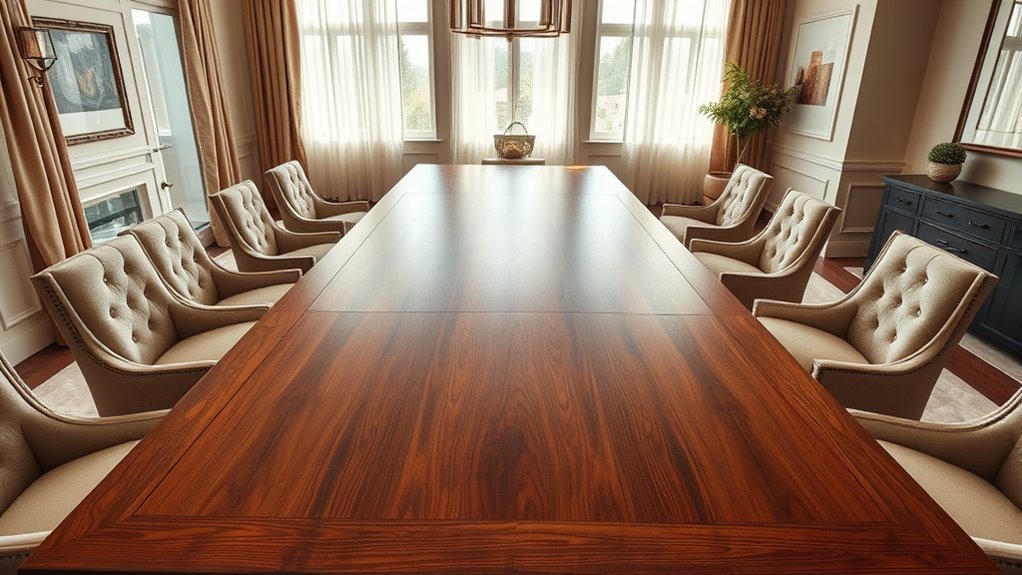
You want enough space to move easily around your dining area without feeling cramped. Maintaining an ideal walking width helps prevent congestion and makes serving meals more comfortable. Proper aisle widths guarantee everyone can access the table effortlessly.
Ideal Walking Space
Ensuring enough space to move comfortably around your dining table enhances both safety and convenience. A clear walking path allows you to enjoy decorative centerpieces and lighting arrangements without feeling cramped. Ideally, aim for at least 36 inches of clearance from the table edge to surrounding furniture or walls. This space lets guests pass easily and reach their seats without hassle. Here’s a quick guide:
| Space Needed | Purpose |
|---|---|
| 36 inches | Comfortable passage, access to centerpieces |
| 42 inches | Extra room for serving or passing dishes |
| 48 inches | Spacious movement, ideal for larger gatherings |
This distance ensures everyone moves freely while appreciating your decor. Proper clearance transforms your dining experience into a seamless, enjoyable occasion. Maintaining space and organization helps prevent clutter and creates a more welcoming environment.
Avoiding Congestion
Maintaining appropriate aisle widths prevents congestion and makes movement around your dining table effortless. When designing your space, ensure there’s enough room for people to pass comfortably, especially if you add decorative accents or ambient lighting. Narrow aisles can cause bottlenecks, making it difficult to serve or socialize without feeling cramped. Aim for at least 36 inches of clearance around the table to allow easy access and prevent crowding. This space also accommodates movement when adjusting or reaching for items, minimizing the risk of bumping into decorative accents or fixtures. Adequate aisle widths not only promote comfort but also enhance the overall aesthetic, allowing your ambient lighting and decorative accents to shine without obstruction or clutter. Recognizing angel number patterns can also subtly influence your space planning by aligning your environment with positive energies.
Ensuring Easy Access
Achieving easy access around your dining table depends on selecting the right aisle widths. Aim for at least 36 inches of clearance on all sides, especially if you frequently entertain. This space allows you and guests to move comfortably without bumping into decorative accents or lighting arrangements. If your space is tight, consider reducing decorative accents that obstruct pathways or reposition lighting fixtures to avoid creating obstacles. Proper aisle widths also make serving and cleaning easier. Keep in mind that wider aisles enhance flow and comfort, preventing congestion during busy meals. By prioritizing clear pathways, you’ll ensure everyone can move freely and comfortably, making your dining experience more enjoyable. Remember, thoughtful spacing complements your decor and lighting, elevating the overall ambiance. Incorporating rustic decor elements can also help maintain a cohesive farmhouse aesthetic while ensuring functional space.
Minimum Clearance Between Table and Walls

What is the ideal amount of space you should leave between your dining table and the walls? Generally, aim for at least 36 inches of clearance. This space allows you to move comfortably without bumping into decorative accessories or lighting arrangements nearby. If your dining area is tight, try to maintain a minimum of 30 inches, but anything less might feel cramped and hinder easy access. Keep in mind that too much space can make the area feel disconnected, so balance is key. Adequate clearance ensures you can easily pull out chairs and serve meals without obstruction. Proper spacing also helps highlight decorative accessories and lighting arrangements, creating a welcoming and functional dining environment. Additionally, understanding standard measurements can help you plan your space more effectively.
Optimal Distance for Serving and Access

To guarantee easy serving and movement, you need to take into account the right walkway space around your table. A minimum of 36 inches is recommended for comfortable access, but more space can make a difference. Finding the ideal distance helps everyone move freely without feeling cramped. Incorporating exfoliation techniques like glycolic acid can also enhance skin radiance, making you feel more confident during gatherings.
Minimum Walkway Space
Ensuring enough walkway space around your dining table is essential for smooth serving and easy movement. A minimum of 36 inches is recommended so guests can comfortably pass, serve, and access decorative accents without obstruction. Consider these key points:
- Keep at least 36 inches of clearance for unobstructed movement.
- Leave enough space for decorative accents and lighting arrangements to enhance ambiance without crowding the walkway.
- Ensure pathways allow for easy access to chairs, storage, and other nearby furniture.
- Choosing high-quality skincare ingredients can help maintain healthy skin even during busy gatherings.
This space ensures you can serve meals efficiently and move freely without bumping into furniture. Proper clearance also highlights your decorative accents and lighting arrangements, creating an inviting, functional dining area that’s both stylish and practical.
Comfortable Serving Distance
Maintaining a suitable serving distance guarantees your guests can pass dishes and access the table comfortably without feeling cramped. Ideally, leave about 24 to 30 inches between the edge of the table and the seating area, allowing easy movement. This space also accommodates decorative accents, preventing clutter that hampers access. Consider lighting arrangements that don’t cast shadows or create obstructions over the serving area, ensuring everyone can see and reach items effortlessly. A well-planned distance helps guests serve themselves without stretching or bumping into decor. Incorporating sustainable design principles into your dining space can enhance both functionality and eco-friendliness. By keeping these measurements in mind, you create an inviting, functional space that balances aesthetics with practicality, making every meal more comfortable and enjoyable for everyone at your table.
Space Needed for Pulling Out Chairs
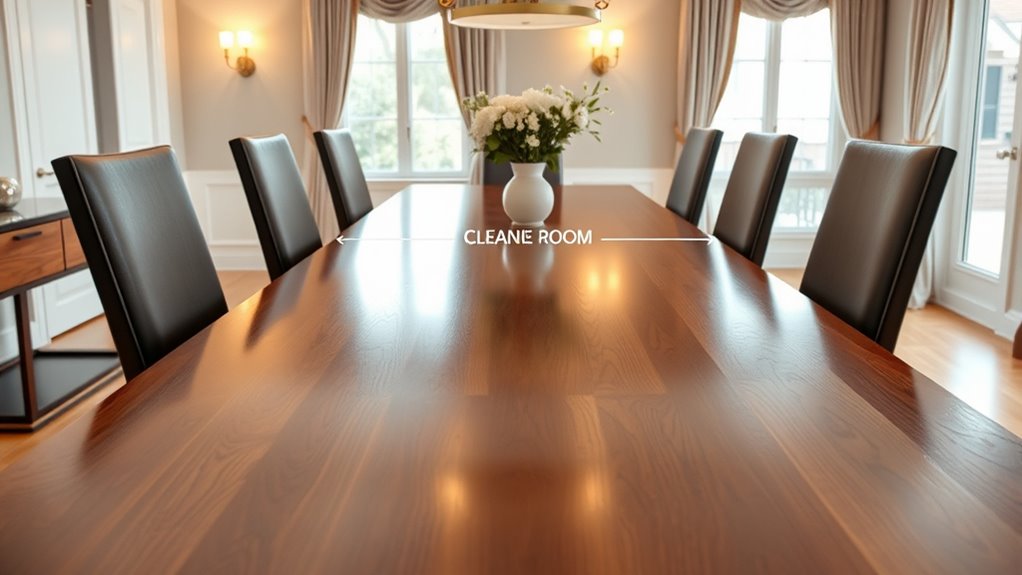
When pulling out chairs from your dining table, it’s important to have enough space to move comfortably without knocking into furniture or walls. Adequate clearance guarantees smooth seating and exit. To achieve this, consider these key points:
- Leave at least 24-30 inches of space behind each chair for easy movement.
- Avoid placing decorative elements or lighting fixtures directly behind the chairs, which could obstruct pulling out comfortably.
- Ensure there’s enough room to accommodate chairs fully extended without hitting other furniture or fixtures.
- Incorporate proper space planning to maintain a functional and comfortable dining area.
Room Dimensions for Different Table Sizes
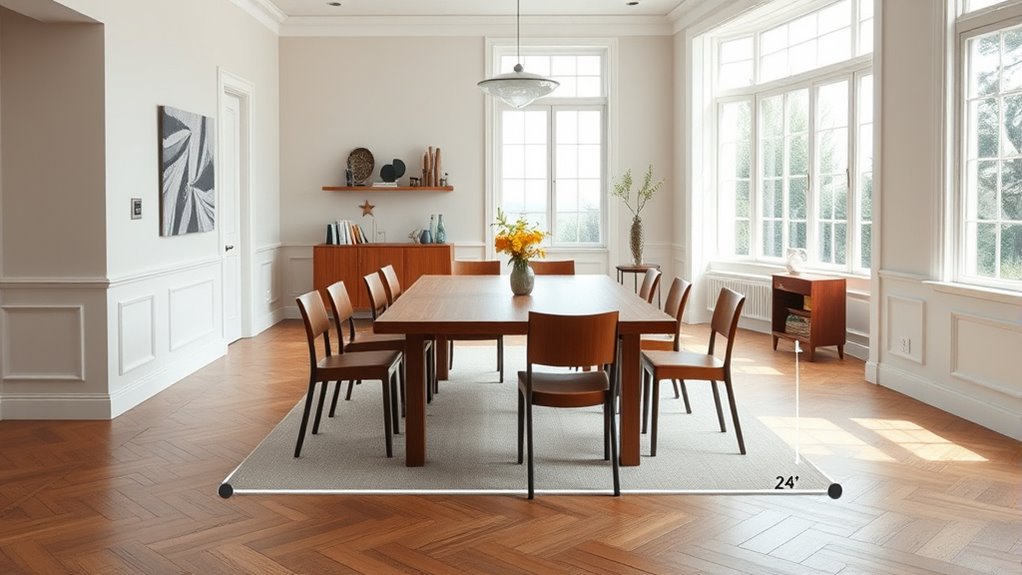
Choosing the right room dimensions is essential to comfortably accommodate different table sizes. For a large dining table, aim for at least 3 feet of clearance on all sides to allow for decorative centerpieces and easy movement. Smaller tables require less space, but you still want enough room for guests to sit comfortably without feeling cramped. Consider your lighting arrangements when planning room size; pendant lights or chandeliers should hang at appropriate heights, which depend on the table’s dimensions. For a standard rectangular table seating six, a room measuring around 12 by 14 feet works well. If you have a larger table or want more space for decorative accents, increase the room size accordingly. Proper room dimensions ensure a balanced, inviting dining area. Additionally, understanding vape juice expiration and storage tips can help you maintain fresh and safe beverages in your space.
Adjusting Clearances for Different Seating Styles
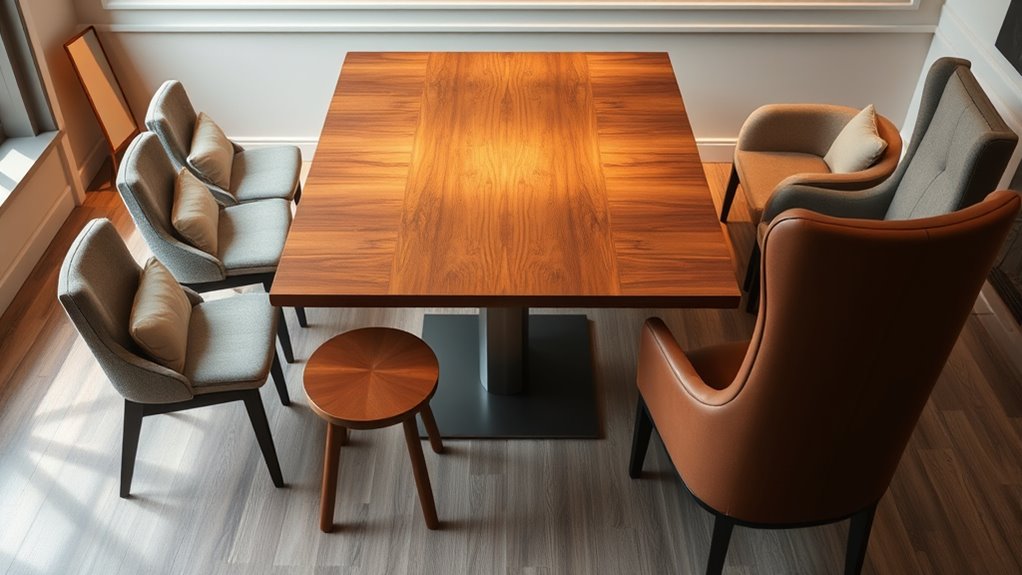
Adjusting clearances for different seating styles requires careful consideration of how guests will interact with the table. First, make certain there’s enough space for chair armrests without crowding, typically about 2-4 inches between chair arms and the table edge. Second, consider the tablecloth length: a longer tablecloth can restrict movement if it hangs too low, so aim for 8-12 inches of overhang. Third, account for varying seating types—armchairs may need more clearance than side chairs. To optimize comfort, measure the space around the chairs, leaving enough room for guests to sit and stand easily. Remember, proper clearance enhances interaction and comfort while maintaining the table’s aesthetic appeal.
Tips for Measuring Your Dining Area Effectively

To measure your dining area effectively, start by gathering the right tools, such as a tape measure, a notepad, and a pencil. First, measure the length and width of the space to determine how much room you have for your table. Don’t forget to account for decorative lighting fixtures overhead, ensuring they won’t interfere with seating or movement. When considering wall art placement, measure the height and width of the walls to decide where to position art without cluttering the space or obstructing sightlines. Take note of any architectural features or obstacles that could impact clearance. Accurate measurements help you select a table that fits comfortably while leaving enough room for decorative lighting and wall art, creating a balanced and functional dining environment.
Frequently Asked Questions
How Do Irregular Room Shapes Affect Dining Table Clearance Measurements?
Irregular room shapes and unconventional layouts can make measuring dining table clearance tricky. You need to account for uneven walls and unique angles, which might reduce space in certain areas. To guarantee comfortable movement, measure the narrowest points and plan your table size accordingly. This way, you prevent overcrowding and maintain good clearance, even in rooms with irregular shapes or unconventional layouts.
What Are the Clearance Considerations for Outdoor Dining Spaces?
When planning outdoor dining spaces, you should leave at least 3 feet of clearance around your patio furniture for easy movement. Consider the size of your dining table and chairs, ensuring enough space for comfortable seating and access to outdoor decor. Keep pathways clear of obstructions and account for weather-related factors that might affect furniture placement, making your outdoor area functional and inviting.
How Do Clearance Needs Vary for Different Table Shapes (Round, Rectangular, Oval)?
You’ll find clearance needs vary with table shapes like round, rectangular, or oval. For round tables, make certain there is at least 36 inches of space from chairs to walls for easy movement, especially around centerpiece placement. Rectangular and oval tables require similar clearance, but consider chair armrests when measuring to prevent crowding. Adjust space based on seating comfort, allowing enough room for guests to move freely without bumping into furniture or each other.
What Impact Do Built-In Features (Fireplaces, Cabinetry) Have on Clearance Planning?
Built-in features like fireplaces and cabinetry substantially impact your clearance planning. They limit furniture placement options, requiring you to measure carefully to guarantee safe, functional space around these features. You’ll need to account for their fixed positions and avoid blocking access or airflow. Proper planning helps you maintain comfortable movement and safety, making sure your dining area remains practical and visually appealing without obstructing built-in elements.
How Should Clearance Be Adjusted for Tables With Extendable or Movable Leaves?
Did you know extendable tables can increase your space by up to 50%? When planning clearance, you should account for the maximum size of your table with all leaves extended. For tables with movable leaves, measure the full extended length and guarantee enough space around the table for easy movement, especially when leaves are in use. Adjust clearance accordingly to maintain comfort and functionality during gatherings.
Conclusion
By paying attention to these measurements, you’ll create a dining space that flows like a well-orchestrated symphony. When you allow enough clearance, every meal becomes a comfortable dance rather than a cramped stumble. Measure carefully, plan thoughtfully, and let your dining area breathe freely—because the right space turns everyday meals into moments of effortless enjoyment. Remember, a well-sized table isn’t just about furniture; it’s about crafting a space where memories can flourish.

Sawyer – Your Storyteller Sawyer is your storyteller, sharing engaging narratives and insights to connect you with our brand and inspire your home projects. With his understanding of trends and passion for sharing stories, he keeps you informed and inspired every step of the way.