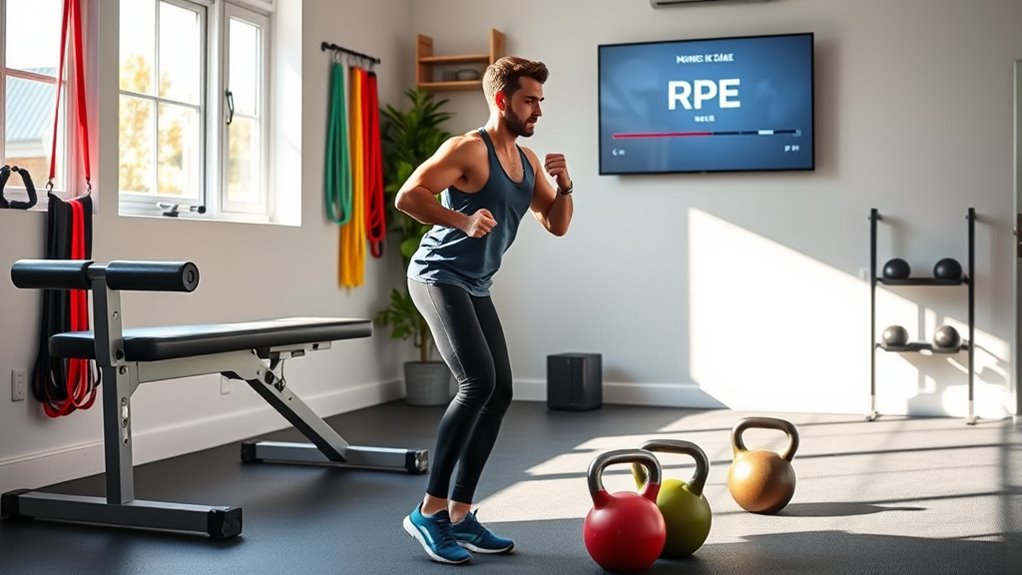

The RPE scale helps you monitor how hard your workout feels, making it perfect for beginners in a home gym. You rate your effort from 1 (easy) to 10 (max effort), which guides you to stay within your limits and prevent overtraining. Focus on listening to your body and adjusting as needed. If you want to understand each effort level better and optimize your routines, there’s more to discover ahead.

Get furniture and decor delivered free — and shop member deals
- Fast, free delivery on millions of items
- Access to Prime Big Deal Days deals on October 6–7
- Prime Video, Amazon Music and more included
Key Takeaways
- Start with RPE 3-4 for warm-ups and light activities, gradually increasing as confidence and fitness improve.
- Use RPE to listen to your body and prevent overexertion, especially when unfamiliar with exercise intensity.
- Remember that RPE 8-9 feels very challenging but still sustainable; beginners should aim lower until strength builds.
- Track your effort with a journal or app to monitor progress and learn your personal effort cues over time.
- Incorporate a variety of exercises and adjust effort levels to stay motivated, safe, and avoid training plateaus.
As an affiliate, we earn on qualifying purchases.
Understanding the Basics of the RPE Scale
The RPE (Rate of Perceived Exertion) scale is a simple tool that helps you gauge how hard you’re working during exercise. It directly relates to your exercise intensity and how you perceive your effort. Instead of relying solely on timers or heart rate monitors, the RPE scale encourages you to listen to your body and assess your training perception. It ranges typically from 1 to 10, with higher numbers indicating more strenuous effort. By understanding this scale, you can better control your workouts, avoid overexertion, and tailor your training to your current fitness level. This makes your exercise routine more effective and safer, especially for beginners who are still learning to interpret how their body responds to different levels of exertion.
How to Use the RPE Scale During Your Workouts

Wondering how to practically apply the RPE scale during your workouts? It’s simple: use it to gauge your exercise intensity and monitor your effort in real-time. As you perform each set, ask yourself, “How hard does this feel?” Rate your effort on the scale from 1 to 10. For example, aiming for an RPE of 7 means you’re working at a challenging but sustainable level, leaving a couple of reps in reserve. This helps prevent overtraining and ensures consistent progress. Incorporate RPE into your workout monitoring by adjusting weights or reps based on how you feel that day. Over time, you’ll develop a better sense of your effort levels, making your workouts more effective and tailored to your fitness journey. Additionally, integrating smart marketing strategies can enhance your motivation and track your progress through data-driven insights.
Decoding the RPE Levels: What Do They Really Mean?
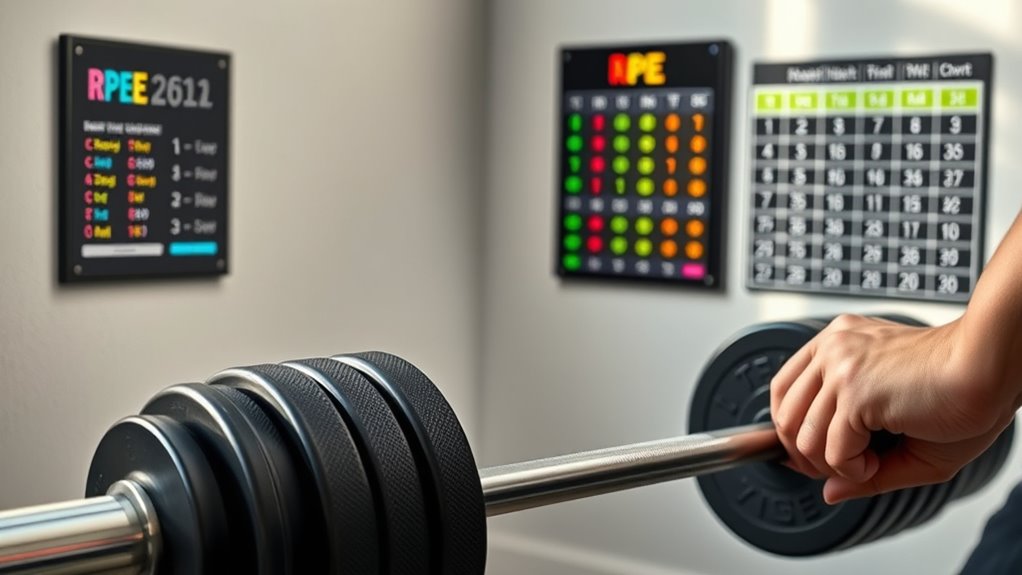
Understanding what each RPE level truly signifies can help you better interpret your effort and make more accurate adjustments during workouts. RPE levels correspond to different exercise intensities, which relate directly to your training zones. For instance, an RPE of 3 or 4 indicates light effort, suitable for warm-ups or recovery, while an RPE of 8 or 9 reflects high effort, pushing you close to maximum exertion. Recognizing these levels allows you to stay within your desired training zone, whether you’re aiming for endurance, strength, or recovery. By decoding the RPE scale, you gain a clearer picture of how hard you’re working, helping you avoid overtraining or undertraining. Ultimately, understanding these nuances helps you tailor workouts more effectively to reach your fitness goals. Additionally, being aware of warning signs of a checked-out partner can help you maintain motivation and emotional connection during your fitness journey.
Benefits of Incorporating RPE Into Your Routine
Incorporating RPE into your routine helps you control workout intensity based on how you feel, making your training more personalized. It encourages mindful awareness of your body, so you can adjust effort as needed. Plus, using RPE can help you avoid overtraining and reduce the risk of injury. Understanding fan culture can also enrich your motivation and connection to your fitness community, fostering a sense of shared purpose.
Personalized Intensity Control
Personalized intensity control through the RPE scale allows you to tailor your workouts to match your current fitness level and daily energy. This flexibility helps prevent overtraining and keeps you motivated. By adjusting intensity based on how hard you feel, you can incorporate a variety of exercises and equipment selection without risking burnout. Imagine selecting weights, resistance bands, or cardio options that match your effort level each day. Additionally, understanding angel numbers can provide motivational insights and spiritual guidance to support your fitness journey.
Promotes Mindful Training
Using the RPE scale encourages you to stay present and attentive during your workouts, fostering a more mindful training experience. By focusing on how hard each set feels, you naturally develop better mindful breathing, which keeps you centered and calm. This heightened mental focus helps you tune into your body’s signals, preventing you from pushing too hard or losing form. As you become more aware of your effort levels, you can adjust intensity in real-time, ensuring each session remains purposeful. Incorporating RPE encourages a deeper connection between your mind and body, making every movement intentional. Understanding training metrics such as RPE can also help you optimize your workout efficiency and prevent overtraining. Over time, this mindfulness not only enhances your workout quality but also cultivates a more sustainable fitness routine rooted in awareness and control.
Prevents Overtraining Risks
By paying close attention to your effort levels with the RPE scale, you can better prevent overtraining. Monitoring how hard each workout feels helps you avoid excessive muscle fatigue, which can lead to injury or burnout. When you accurately gauge your effort, you won’t push too hard too often, helping you manage workout frequency effectively. This approach allows your muscles adequate time to recover, reducing the risk of overtraining syndrome. Overtraining can cause diminished performance and increased soreness, so using RPE keeps you in tune with your body’s limits. Incorporating training principles such as the RPE scale helps you train smarter, not harder, for sustainable results.
RPE and Different Types of Exercises
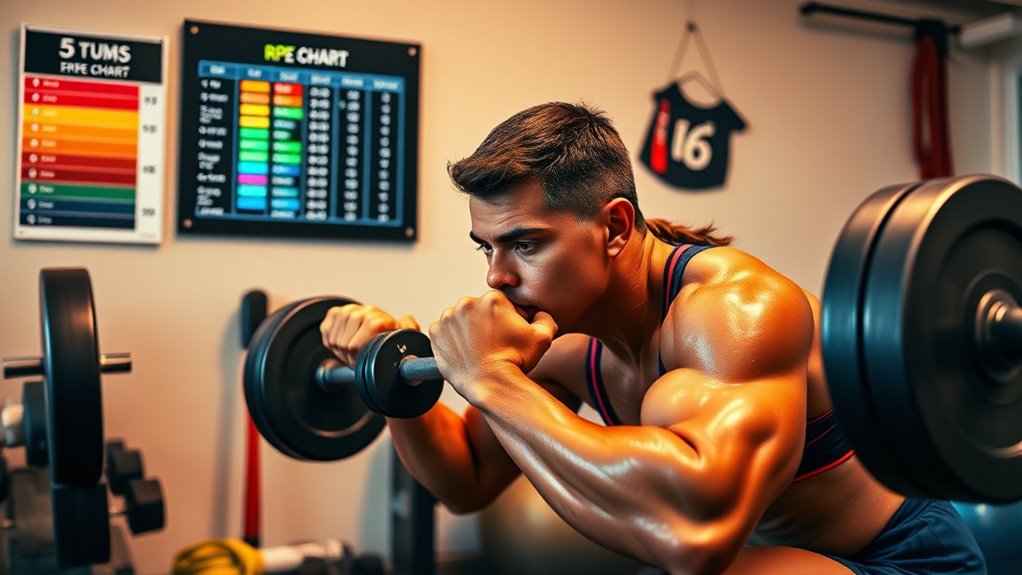
Whether you’re lifting weights or running, adjusting your effort with the RPE scale helps you train effectively. In resistance training, it guides you to select the right intensity for strength gains without overexerting. For cardio workouts, RPE guarantees you stay within your target effort level for improved endurance and safety. Additionally, understanding how AI-powered processing enhances fitness devices can further optimize your training experience.
RPE in Resistance Training
RPE plays a versatile role in resistance training, accommodating various exercises and ensuring you train effectively. Whether you’re doing free weights, machines, or bodyweight movements, RPE helps you gauge effort and adjust intensity. It guides rest period optimization, so you recover enough without overtraining. Proper equipment calibration is essential to match RPE with actual effort, especially on machines where resistance can vary. Incorporating maximizing space and organization techniques can also help create a dedicated, clutter-free environment that supports consistent training routines.
RPE for Cardio Workouts
Applying RPE to cardio workouts allows you to gauge effort accurately across different exercise types, helping you find the right intensity for steady-state runs, interval training, cycling, or rowing. For interval running, RPE helps you push hard during sprints while recovering during rest periods, ensuring you stay within a suitable effort zone. When cycling, adjusting your intensity based on RPE helps you maintain consistent cycling intensity, whether you’re climbing hills or riding on flat terrain. RPE also guides you during rowing sessions, ensuring you’re not overexerting or undertraining. By listening to your perceived exertion, you can tailor your cardio sessions to match your fitness level and goals, improving endurance, recovery, and overall performance without risking burnout or injury. Additionally, understanding how to incorporate performance tuning concepts can help you optimize your training outcomes and make gradual, effective progress.
Setting Personal RPE Goals for Progression
To effectively improve your fitness, it is vital to set personalized RPE goals that match your current abilities and future progressions. Clear goal setting helps you stay motivated and guarantees your training remains challenging without risking injury. When planning your progression, start by evaluating your current RPE levels during different exercises, then gradually increase intensity as you build strength and endurance. Establish specific RPE targets for each workout, such as aiming for a 6 or 7 during moderate sessions and pushing toward an 8 or 9 as you advance. Regularly reevaluate your RPE goals to reflect your progress. This personalized approach to progression planning keeps you focused, prevents overtraining, and helps you steadily improve over time. Additionally, understanding resources and tools available can provide valuable support throughout your fitness journey.
Common Mistakes to Avoid When Using the RPE Scale
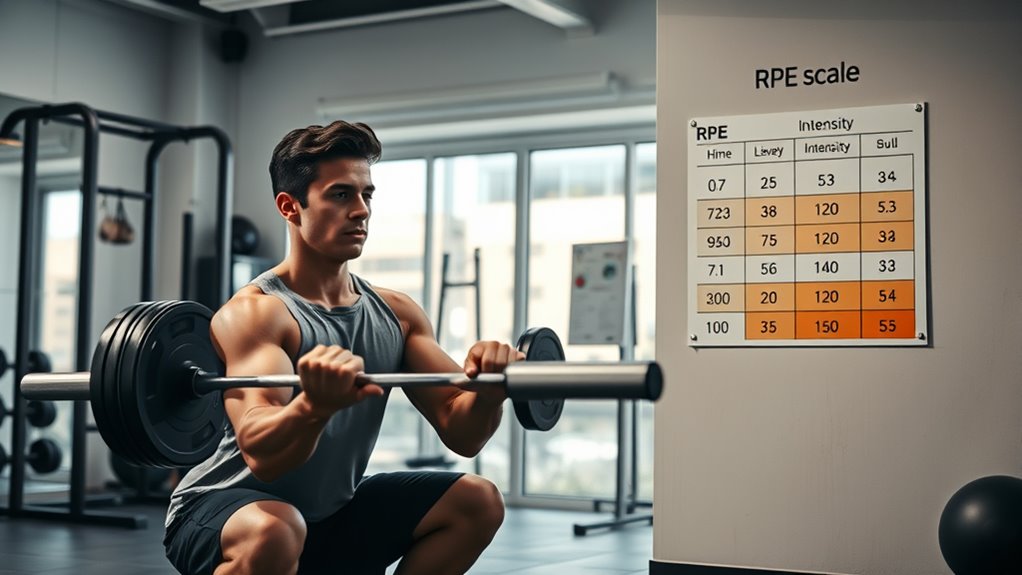
One common mistake is misjudging effort levels, which can happen when you’re unsure of what a specific RPE feels like or when you’re enthusiastic to push harder. This often leads to overestimating your effort, risking unnecessary muscle soreness and longer recovery times. Conversely, underestimating effort can result in a workout that’s too easy, limiting progress. Another mistake is ignoring workout duration; you might push too hard early on, causing fatigue and affecting subsequent sets. It’s essential to listen to your body and adjust your RPE accordingly, especially as fatigue builds. Accurate effort assessment helps you avoid burnout, reduces muscle soreness, and keeps your workout duration ideal for sustainable progress. Additionally, understanding Hyundai Tuning options can help you optimize your vehicle’s performance in tandem with your fitness goals, ensuring a balanced approach to physical and mechanical improvements. Consistency and honest self-assessment are key to using the RPE scale effectively.
Tools and Tips for Tracking Your RPE Effectively
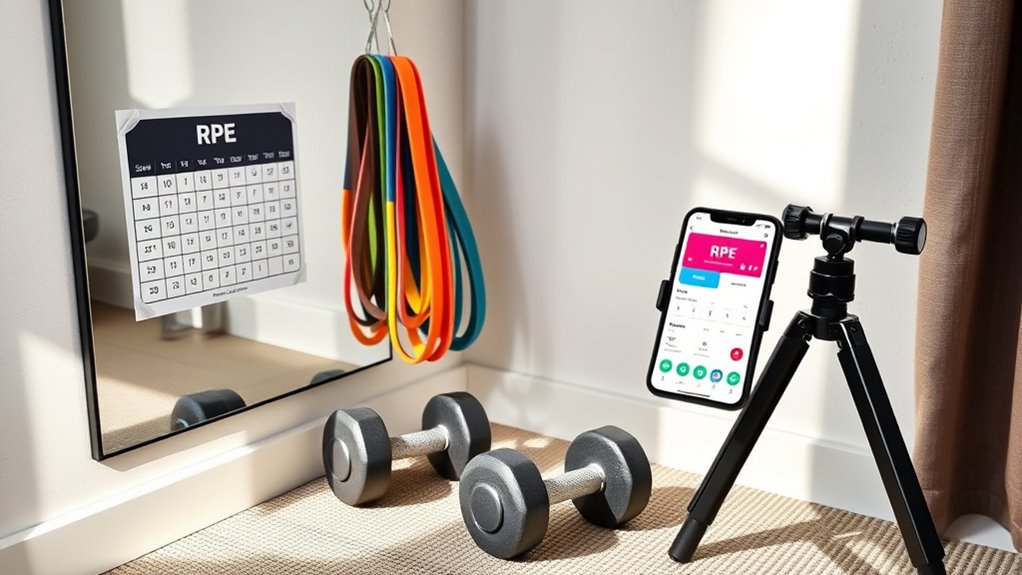
Using the right tools and strategies can make tracking your RPE much easier and more accurate. One effective method is monitoring your heart rate during exercise; it can provide an objective reference point to compare with your perceived effort. Additionally, paying attention to your breathing pattern helps gauge intensity—difficult breathing often correlates with higher RPE levels. Using a fitness tracker or heart rate monitor can automate this process, giving real-time data to inform your effort. Keep a workout journal, noting your perceived exertion alongside heart rate and breathing changes. Over time, this habit enhances your ability to judge effort accurately without relying solely on subjective feelings. Incorporating data-driven strategies into your routine can further refine your understanding and consistency in tracking RPE. Combining these tools and tips ensures you track your RPE consistently and improve your workout precision.
Making the Most of the RPE Scale in a Home Gym Setting
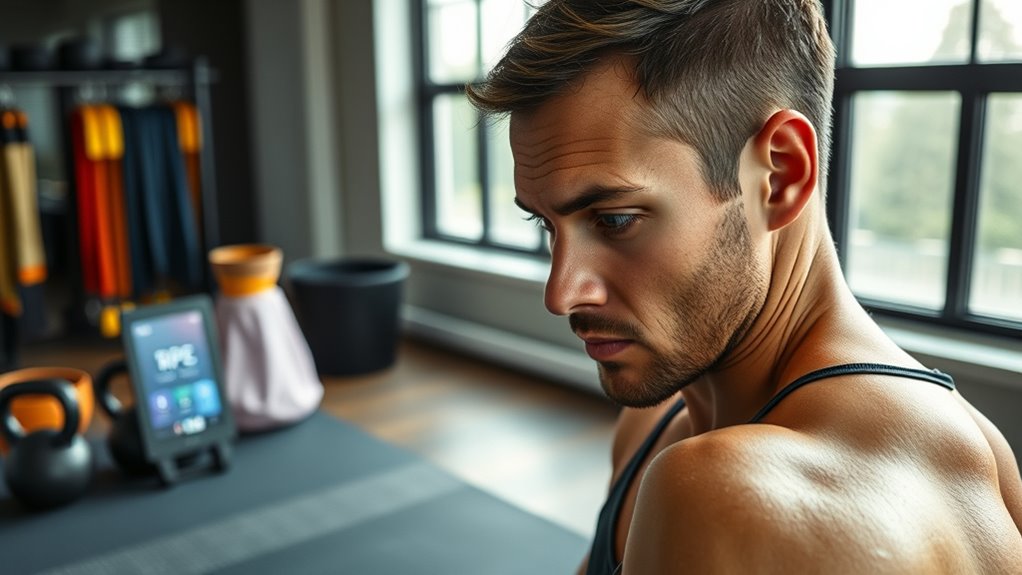
Maximizing the effectiveness of the RPE scale in a home gym requires intentional effort and mindful observation. To do this, vary your workouts by incorporating different exercises and intensity levels, which helps prevent plateaus and keeps your training engaging. Pay close attention to how your body responds, adjusting your effort based on your perceived exertion. Use motivation strategies like setting small goals or tracking progress to stay committed and aware of your limits. Keep a workout journal to note how different exercises feel at various RPE levels, making it easier to select appropriate intensities. Incorporating diverse exercise options can further enhance your understanding of the RPE scale and prevent training stagnation. By intentionally integrating exercise variety and motivation strategies, you’ll enhance your understanding of the RPE scale and optimize your home workout results.
Frequently Asked Questions
Can RPE Be Used for Cardio or Only Strength Training?
You can definitely use RPE for cardio, not just strength training. It involves perceiving how hard you’re working, which complements heart rate monitoring. By paying attention to perceived exertion, you can gauge intensity during cardio workouts, ensuring you’re pushing yourself without overdoing it. RPE offers a flexible way to listen to your body, helping you adjust effort in real-time, whether you’re running, cycling, or doing any aerobic activity.
How Does RPE Compare to Other Intensity Measurement Methods?
RPE offers better training accuracy for you because it’s a subjective method that reflects your personal effort, unlike objective methods like heart rate monitors. While heart rate can be affected by external factors, RPE captures your perceived exertion, making it especially useful for varied workouts. It bridges the gap between subjective versus objective measures, helping you tailor intensity precisely without needing equipment, ensuring effective, personalized training.
Is RPE Suitable for Beginners With Limited Training Experience?
Your workout success hinges on the fact that RPE is perfect for beginners with limited training experience. It’s like a secret weapon for optimizing training adaptation and workout personalization, guiding you to push just enough without overdoing it. You can easily tune into your body’s signals, making RPE a safe, effective tool that grows with you, ensuring steady progress and avoiding injury as you build strength and confidence.
How Often Should I Reassess My RPE Levels?
You should reassess your RPE levels every few weeks to guarantee consistent training and accurate progress tracking. As you gain experience, your perception of effort may change, so adjusting your RPE helps prevent overtraining or plateauing. Stay mindful of how your body responds, and don’t hesitate to update your RPE based on your current fitness level. Regular reassessment keeps your workouts effective and aligned with your goals.
Can RPE Help Prevent Overtraining or Injury?
Preventing pain and problems starts with proper progression planning and recovery strategies. RPE helps you regulate effort, reducing risks of overtraining and injury by keeping workouts within safe limits. By listening to your body’s responses and adjusting intensity accordingly, you stay consistent without overexertion. Incorporate regular reassessment and mindful recovery, ensuring your fitness journey stays safe, sustainable, and satisfying. RPE’s responsive approach keeps your progress protected and pain-free.
Conclusion
So, now you’re basically a RPE expert — or at least pretending to be one. Just remember, no scale can measure your sweat or your ego. Use it wisely, avoid overthinking, and don’t turn your home gym into a science experiment. Keep it simple, stay consistent, and maybe, just maybe, you’ll impress yourself more than your friends with your newfound “expertise.” Happy lifting — or, you know, just trying not to die.
Fall Picks
fall essentials
As an affiliate, we earn on qualifying purchases.