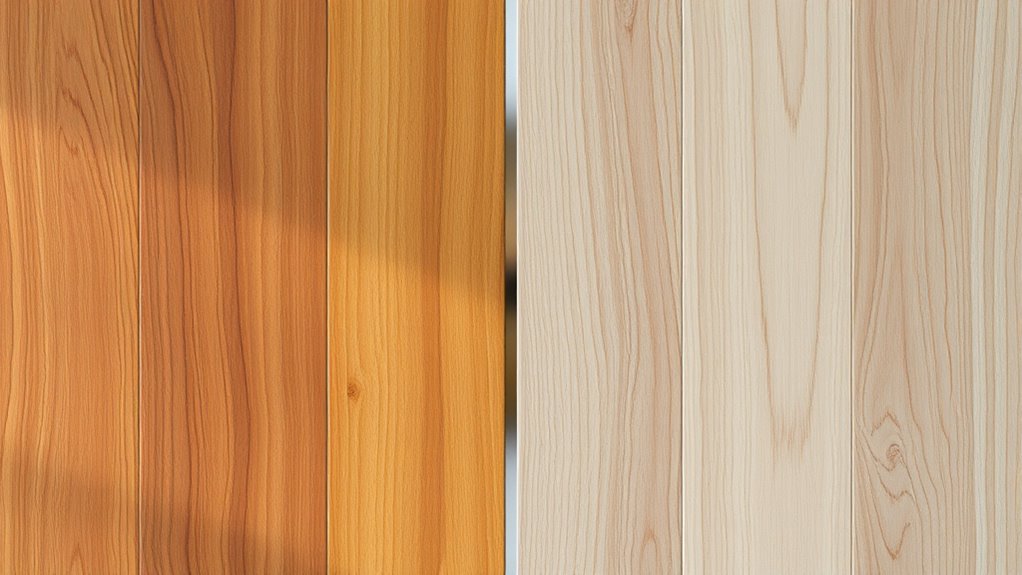

When choosing between hardwood and engineered wood for furniture, consider their durability, appearance, and cost. Hardwood offers a natural, unique look with timeless appeal but tends to be more expensive and sensitive to moisture. Engineered wood is more affordable, stable, and resistant to warping yet may lack the same richness in grain. Understanding their differences can help you select the best option for your style and needs—more insights await to guide your decision.
Key Takeaways
- Hardwood offers a natural, unique grain pattern and timeless appeal, while engineered wood provides a more uniform appearance and enhanced stability.
- Hardwood is more durable and long-lasting but tends to be more expensive; engineered wood is more affordable and resistant to warping.
- Hardwood can be refinished multiple times, extending its lifespan, whereas engineered wood has limited resurfacing options.
- Both materials require proper maintenance, but engineered wood is generally more forgiving with moisture and humidity fluctuations.
- The choice depends on budget, desired aesthetics, durability needs, and environmental considerations.
hardwood vs engineered wood furniture
As an affiliate, we earn on qualifying purchases.
As an affiliate, we earn on qualifying purchases.
Composition and Manufacturing Processes
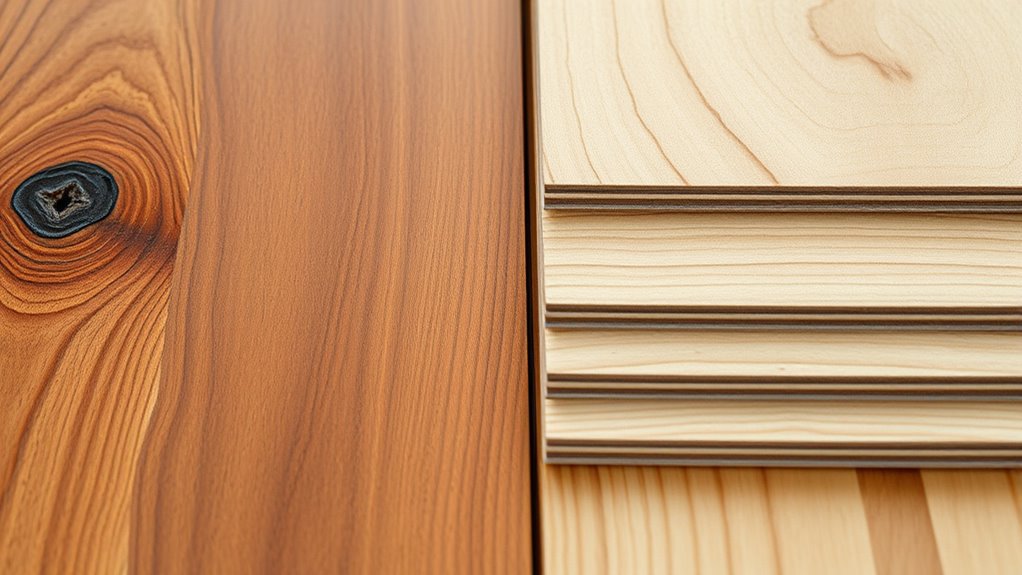
Understanding the composition and manufacturing processes is key to comparing hardwood and engineered wood. Hardwood comes from solid trees, with natural grain patterns that vary widely, giving each piece a unique look. Its manufacturing involves cutting logs into planks, then sanding and finishing them directly. Engineered wood, however, is made by layering thin wood veneers or fibers bonded with adhesives through specific manufacturing techniques like lamination or pressing. These techniques influence the grain patterns, often resulting in a more uniform appearance. Engineered wood’s construction allows for better control over stability and resistance to warping, but it also means the final product depends heavily on the manufacturing methods used. By understanding these processes, you can better evaluate the qualities and durability of each type of wood for your furniture needs. Additionally, health considerations such as off-gassing and adhesives used in engineered wood can impact indoor air quality and should be taken into account when selecting furniture.
Aesthetic Appeal and Design Flexibility
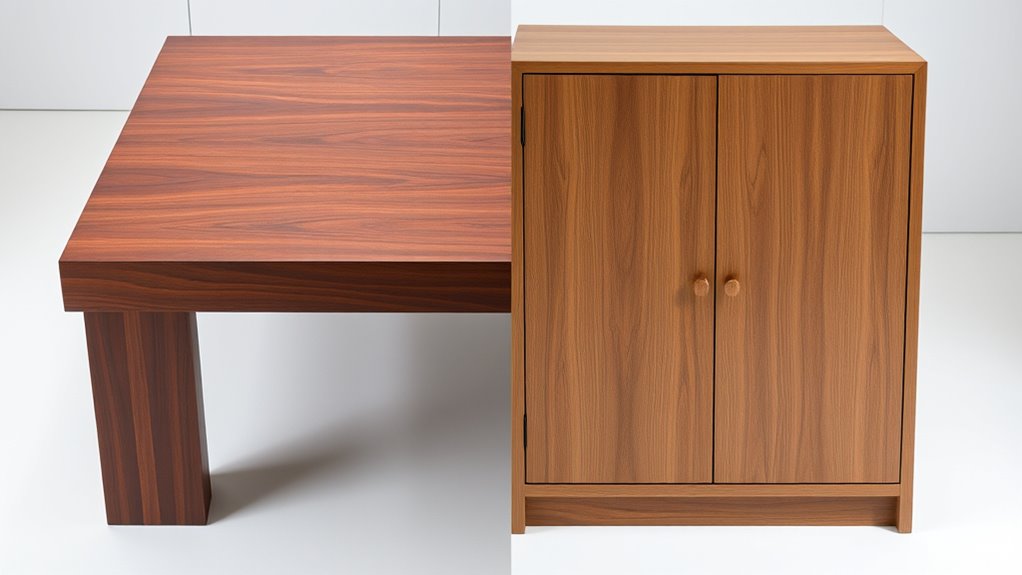
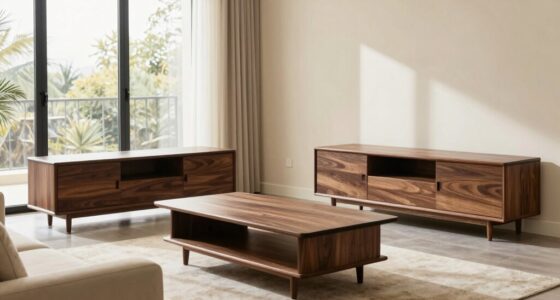
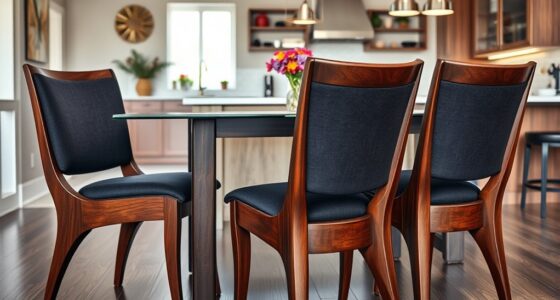
When it comes to aesthetic appeal and design flexibility, hardwood often stands out with its natural, unique grain patterns that add warmth and character to any space. You’ll find a wide range of color options, from rich browns to lighter shades, allowing you to match or contrast existing decor effortlessly. Hardwood offers remarkable style versatility, fitting traditional, rustic, modern, or eclectic designs. Its timeless beauty can be enhanced through staining, finishing, or carving, giving you creative freedom. Unlike engineered wood, hardwood’s natural variations provide a distinctive look that can make each piece feel special. Whether you prefer a classic oak or a luxurious cherry, hardwood’s aesthetic appeal and adaptability make it an excellent choice for personalized, stylish furniture pieces. Additionally, divorce statistics highlight how choosing durable and timeless materials like hardwood can contribute to long-lasting furniture investments that withstand years of use.
Cost Considerations and Budget Impact
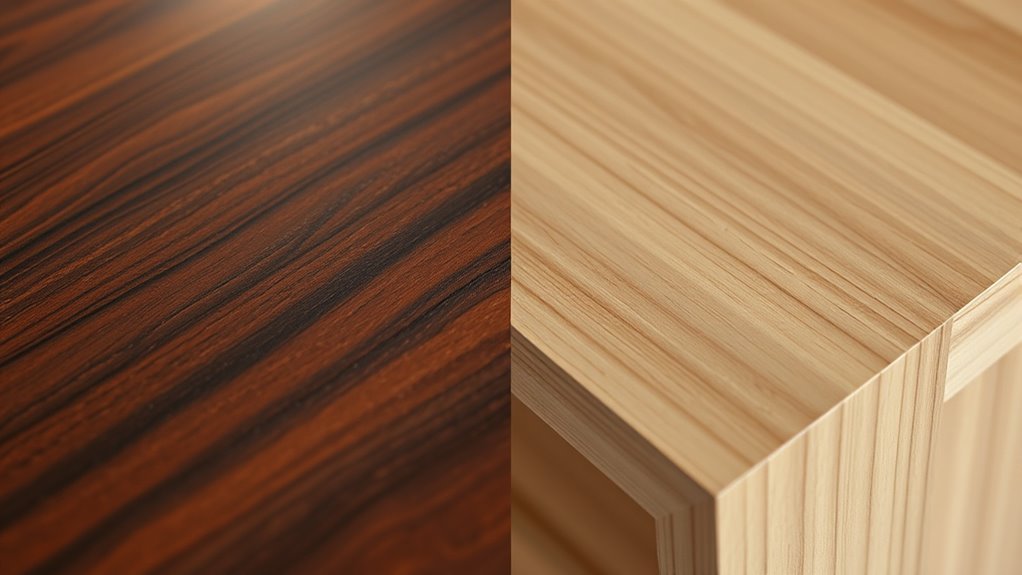
Hardwood flooring typically comes with a higher upfront cost compared to engineered wood, which can substantially impact your budget. When doing a price comparison, you’ll notice that hardwood options are more expensive per square foot, but they often add value to your home. Engineered wood tends to be more affordable initially, making it a good choice if you’re working within a tight budget. Consider how each option fits into your overall budget planning, factoring in installation, maintenance, and lifespan. While hardwood may require a larger initial investment, it can sometimes save money long-term through its durability. Additionally, cost considerations should include potential resale value and the longevity of the material, which can influence your overall investment. Balancing cost considerations with your aesthetic goals and long-term plans will help you make the best decision without overspending.
Durability and Longevity
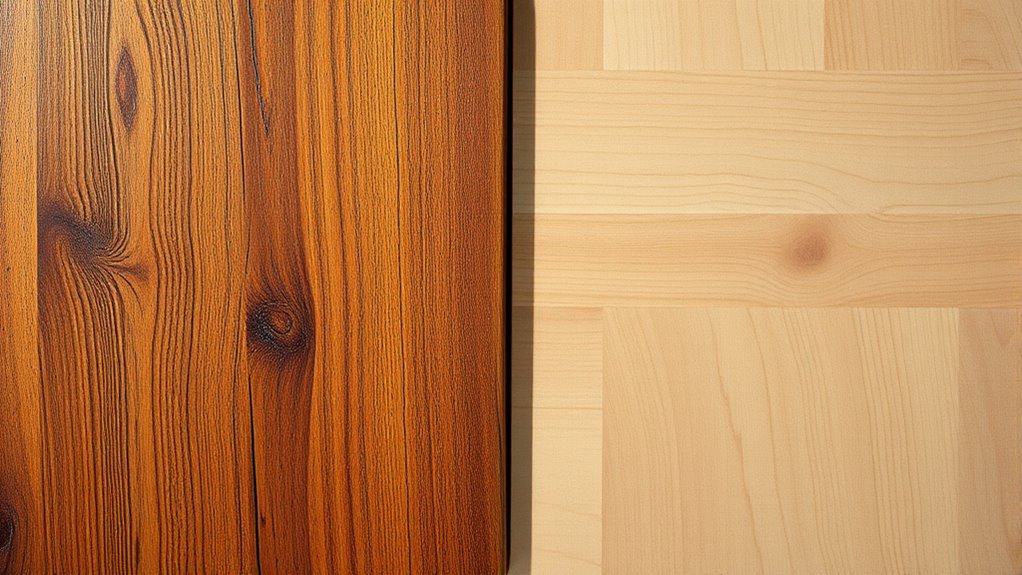
Engineered wood often offers impressive durability, especially in environments prone to moisture or temperature fluctuations. You’ll find that its layered construction resists warping and cracking better than solid hardwood. When considering finish options, engineered wood can be easily coated with durable finishes, enhancing its lifespan and protecting against daily wear. Additionally, choosing appropriate finishing materials can further extend the life of engineered wood furniture. However, be aware of allergens concerns; some engineered products may off-gas formaldehyde or other chemicals, which could affect sensitive individuals. Solid hardwood generally lasts longer with proper care, but it can be more susceptible to moisture damage. Overall, engineered wood provides a reliable, long-lasting choice for furniture that must withstand challenging conditions, especially if you prioritize versatile finish options and are mindful of potential allergen exposure.
Maintenance and Care Requirements
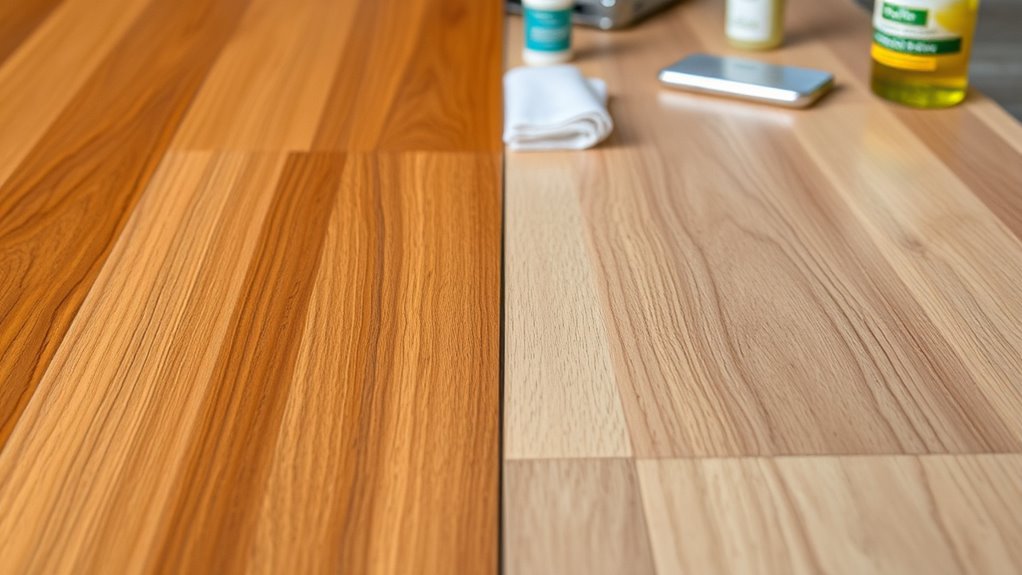
Maintaining your flooring depends largely on the material you choose. For hardwood, you should establish regular cleaning routines, such as sweeping or vacuuming to remove dust and debris, and occasionally damp-mopping with a wood floor cleaner. Engineered wood requires similar care but can be more forgiving with moisture. Protective treatments, like applying a polyurethane finish or using area rugs and furniture pads, help prevent scratches and wear. Both types benefit from avoiding excessive water and harsh chemicals, which can damage the surface. Reapplying protective coatings periodically extends their lifespan and maintains their appearance. Additionally, understanding the security features of your home can help prevent accidental damage or theft, preserving your flooring investment. Consistent maintenance ensures your flooring stays beautiful and functional over the years, whether you have hardwood or engineered wood. Proper care makes a significant difference in preserving your investment.
Environmental Impact and Sustainability
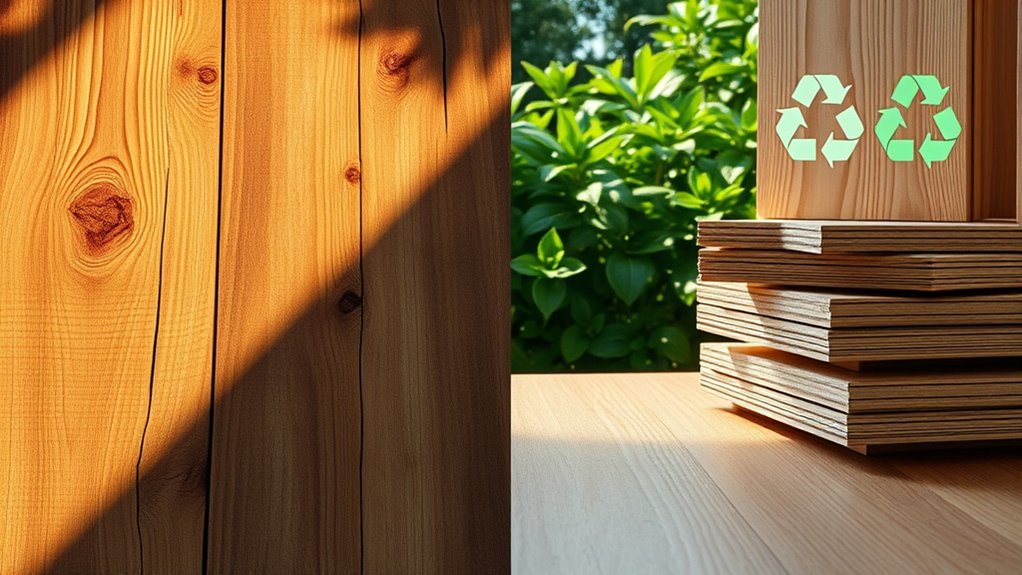
Choosing between hardwood and engineered wood involves considering their environmental footprints. Hardwood trees grow slowly and are often harvested unsustainably, increasing their carbon footprint. In contrast, engineered wood uses wood fibers and adhesives, which can utilize less raw material and have higher recycling potential. For example, engineered products can be repurposed or recycled more easily, reducing waste. Additionally, engineered wood generally has a lower carbon footprint due to faster production processes and less deforestation impact. However, the adhesives used may contain volatile organic compounds (VOCs), affecting overall sustainability. To make an eco-friendly choice, you should weigh these factors: recycling potential of engineered wood, carbon footprint of harvesting hardwood, and environmental impact of adhesives and production processes.
Repairability and Resale Value
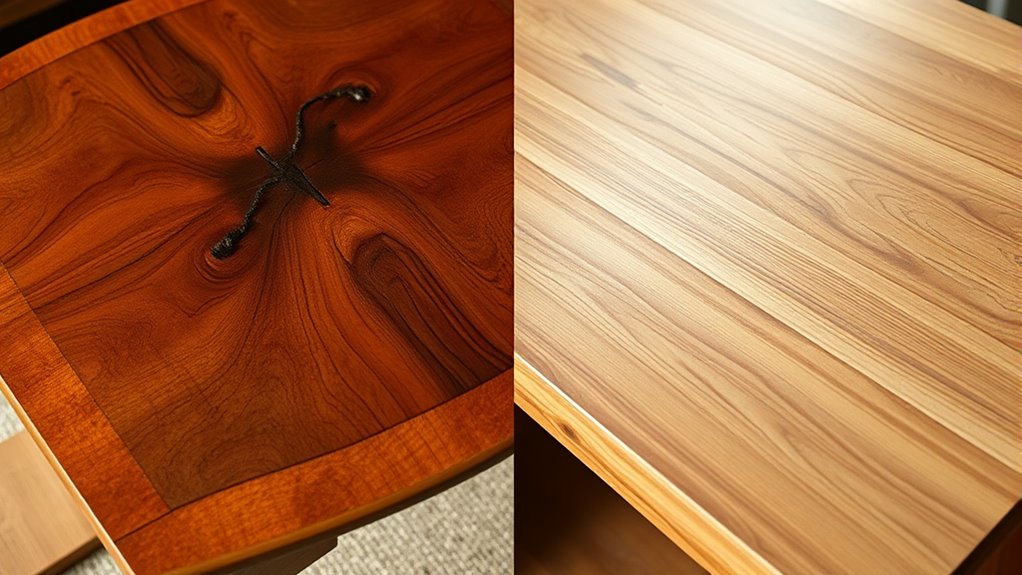
When it comes to repairability and resale value, hardwood generally offers a clear advantage because it can be sanded, refinished, and repaired multiple times without significant loss of quality. This reduces repair complexity, making it easier for you to maintain and restore your furniture over the years. Additionally, hardwood furniture tends to retain its aesthetic appeal longer, which helps prevent resale depreciation. Its durability and timeless look often translate into higher resale value, especially if it’s well-maintained. Conversely, engineered wood may be more prone to damage from moisture and scratches, increasing repair difficulty and accelerating resale depreciation. Moreover, the color accuracy of hardwood contributes to its lasting appeal, helping it stay relevant and attractive over time. Overall, investing in hardwood can save you money and effort in the long run, ensuring your furniture remains attractive and valuable.
Ideal Use Cases and Placement Considerations
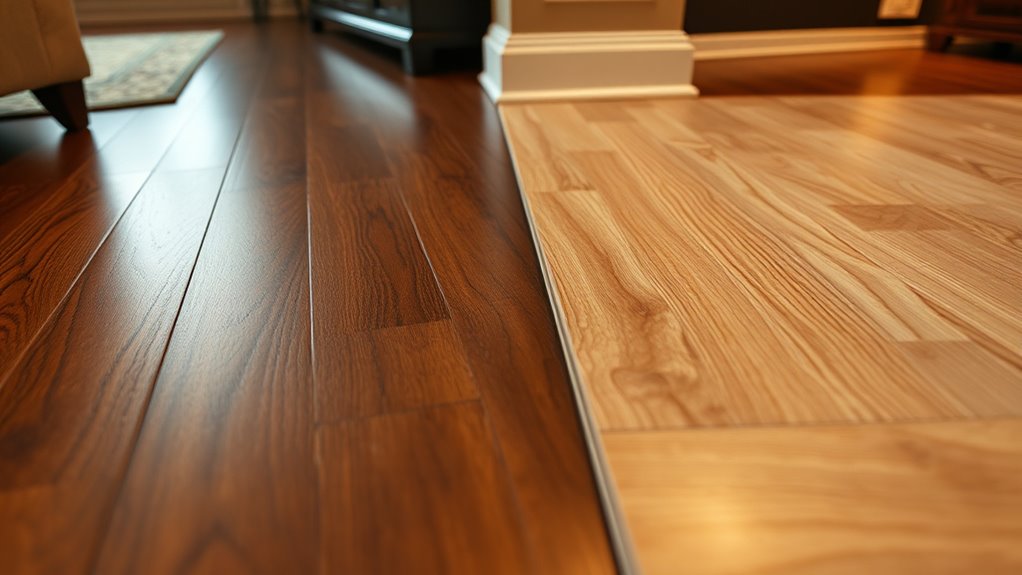
Hardwood is ideal for areas where durability and a timeless aesthetic are priorities, making it perfect for living rooms, dining areas, and bedrooms. Its natural beauty and longevity guarantee it complements various interior styles, enhancing interior compatibility. When considering placement, think about high-traffic zones or spaces that benefit from a classic look. Hardwood’s style matching capabilities allow it to blend seamlessly with traditional or modern decor, creating a cohesive environment. Keep in mind, hardwood works well in rooms with stable humidity levels to prevent warping. Its elegance makes it a versatile choice for spaces where you want to add warmth and value. Additionally, understanding the moisture resistance of hardwood can help prevent future damage and ensure longevity. Proper placement ensures you maximize its benefits while maintaining the desired style and durability.
Frequently Asked Questions
Can Engineered Wood Be Reclaimed or Repurposed Easily?
Yes, you can reclaim or repurpose engineered wood, but recycling challenges exist because its layered construction makes it harder to break down compared to solid hardwood. You might find it more difficult to reuse or recycle due to its glued materials, which impact the environmental impact. Still, with some effort, you can repurpose engineered wood into new furniture or projects, helping reduce waste and support sustainability.
How Does Humidity Affect the Stability of Hardwood Versus Engineered Wood?
Humidity impacts hardwood and engineered wood differently. You’ll notice hardwood absorbs moisture more easily, leading to swelling or warping, which affects its dimensional stability. Engineered wood, with its layered construction, resists moisture absorption better, maintaining its shape even in fluctuating humidity. When humidity levels change, expect hardwood to expand or contract more, while engineered wood stays more stable, making it a better choice if you face variable environmental conditions.
Are There Health Concerns Related to Adhesives in Engineered Wood?
Hold your horses, like a knight in shining armor, because adhesive toxicity in engineered wood can be a concern. Some adhesives emit chemical emissions that may cause health issues over time. While many modern products use low-VOC or formaldehyde-free glues, it’s wise to verify labels and opt for eco-friendly options. Being cautious ensures you avoid exposure to potentially harmful chemical emissions, keeping your home healthier and safer.
Which Type of Wood Is More Resistant to Pests and Insects?
You’ll find hardwoods generally offer better pest resistance and insect durability compared to engineered wood. Hardwoods like oak, teak, and mahogany contain natural oils and dense grain structures that repel pests and inhibit insect damage. Engineered wood, on the other hand, is more susceptible since it’s made from glued layers that don’t possess the same natural defenses. So, for pest-resistant furniture, opting for hardwoods provides stronger protection against insects and pests.
How Do Replacement Parts and Customization Options Compare?
You’ll find that engineered wood offers more flexible customization options, with many manufacturers allowing you to choose finishes, dimensions, and even unique designs. Notably, 65% of furniture brands provide easily replaceable parts for engineered pieces, making repairs simpler. Replacement parts are generally more accessible for engineered wood furniture, allowing you to update or fix your pieces without hassle. So, if customization and easy repairs matter, engineered wood is a smart choice.
Conclusion
Choosing between hardwood and engineered wood is like picking the perfect brushstroke for your masterpiece—each has its own charm. Hardwood offers timeless elegance and durability, while engineered wood provides versatility and affordability. Consider your style, budget, and lifestyle to make the best choice. Remember, your furniture is the canvas of your home’s story—pick the material that will showcase your unique taste and stand the test of time.