

To move sustainably, choose eco-friendly packing materials like biodegradable or recycled supplies. Reuse and repurpose items such as towels, cardboard boxes, and jars to cut waste. Minimize your load by decluttering and donating or recycling unwanted items, especially electronics and furniture. Opt for eco-friendly transportation options, like electric vehicles or bike moves, to lower emissions. Properly dispose of hazardous waste and donate usable goods to community organizations. Keep exploring for more tips to make your move greener and more responsible.
Key Takeaways
- Use biodegradable, recycled packing materials like boxes and shredded paper to minimize environmental impact.
- Reuse household items such as towels, linens, or cardboard boxes for packing and organizing.
- Declutter before moving to reduce load, and donate or recycle unwanted items responsibly.
- Opt for eco-friendly transportation options like electric vehicles, bicycles, or combined public transit.
- Properly dispose of hazardous waste and donate usable items to charities to prevent landfill waste.
As an affiliate, we earn on qualifying purchases.
Choose Eco-Friendly Packing Materials

Choosing eco-friendly packing materials is an excellent way to reduce your move’s environmental impact. Opt for biodegradable packaging whenever possible, as it breaks down naturally and minimizes waste. These materials are made from renewable resources and are safe for the environment. Additionally, consider using recycled packing supplies, such as boxes made from recycled cardboard and shredded paper for cushioning. These supplies help conserve resources and reduce landfill waste. By selecting biodegradable packaging and recycled packing supplies, you contribute to a greener move. Not only do these choices lessen your carbon footprint, but they also support sustainable practices. Making thoughtful decisions about packing materials guarantees your move is eco-friendly and responsible, aligning with your commitment to protecting the planet. Incorporating proper storage techniques can further extend the lifespan of your packing supplies and keep your belongings safe during transit.
Repurpose and Reuse Items During Packing

Reusing and repurposing items during packing is a simple yet effective way to minimize waste and reduce your environmental footprint. By embracing recycling ideas and creative repurposing, you give new life to everyday objects. Consider these options:
- Use your old towels or linens to protect fragile items, preventing waste and saving money on packing materials.
- Transform cardboard boxes into organizers or storage bins, extending their usefulness beyond the move.
- Repurpose glass jars or containers for storing small items or as decorative storage solutions.
- Choose sustainable packing materials that are eco-friendly and reduce environmental impact.
These small changes make a big difference. They help reduce landfill waste, cut down on packaging costs, and promote sustainable habits. Your thoughtful approach not only benefits the environment but also makes your move more eco-friendly and rewarding.
Minimize Your Moving Load

To make your move more efficient and environmentally friendly, focus on minimizing your moving load. Start by decluttering and donating items you no longer need. Prioritize recycling electronics properly to prevent harmful waste and reduce plastic waste from packaging. Additionally, pack only essentials to cut down on unnecessary items. Visualize your load with this simple table:
| Item Type | Action | Impact |
|---|---|---|
| Electronics | Recycle electronics | Prevent e-waste pollution |
| Plastic Items | Reduce plastic waste | Less landfill burden |
| Clothing | Donate or sell | Extend item lifespan |
| Furniture | Sell or donate | Minimize transport costs |
| Packing Materials | Reuse or recycle | Reduce waste |
This approach lightens your load and supports sustainability efforts. Efficient packing also helps to maximize space, reducing the number of trips needed and decreasing your carbon footprint during the move.
Select Sustainable Transportation Options
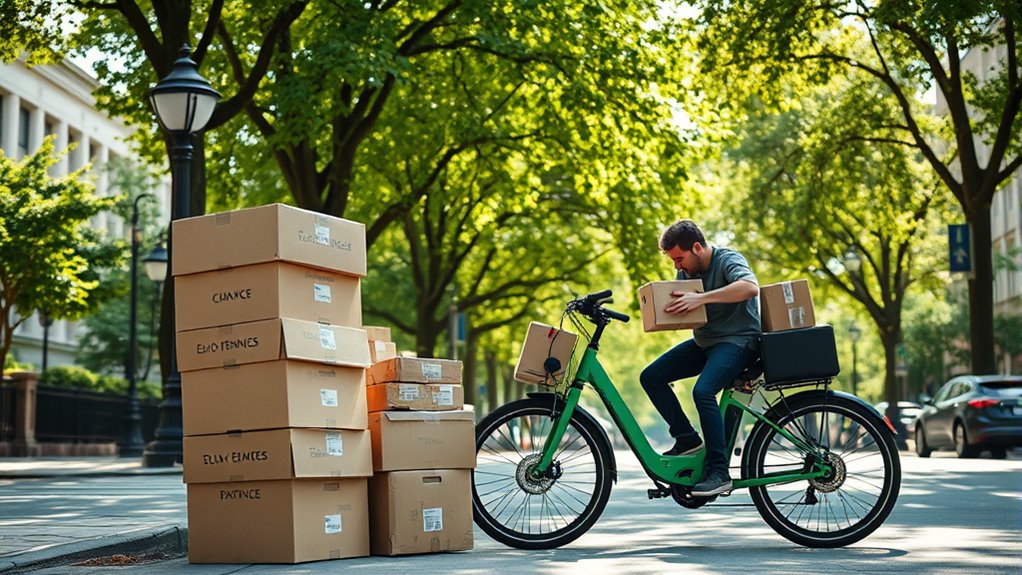
Opting for sustainable transportation options can substantially reduce the environmental impact of your move. Consider these eco-friendly choices:
- Use electric vehicles to lower emissions and energy consumption during your move.
- Embrace bicycle moving for short distances, which minimizes carbon footprint and promotes health.
- Combine public transportation with your move to decrease reliance on single-occupancy vehicles.
- Choosing the right transportation method can also help preserve local air quality and reduce noise pollution.
Electric vehicles offer a clean alternative, helping you move efficiently while protecting the planet. Bicycle moving not only reduces emissions but also transforms your move into an active, eco-conscious experience. Planning to use these options can make a significant difference in your carbon footprint. By choosing sustainable transportation, you contribute to a healthier environment and set a positive example for others. Every small step counts toward a greener, more sustainable future.
Properly Dispose of or Donate Unwanted Items

When you’re sorting through your belongings for your move, it’s important to contemplate how to handle items you no longer need. Proper disposal or donation reduces waste and supports sustainability. For electronic waste, find local e-waste recycling centers to ensure safe disposal. Hazardous materials like paints or chemicals should be taken to specialized disposal sites. Consider donating usable items to charities or thrift stores, extending their life and reducing landfill waste. Use this table to guide your decisions:
| Item Type | Disposal/Donation Method |
|---|---|
| Electronics | Recycle at certified e-waste facilities |
| Furniture | Donate or sell if in good condition |
| Hazardous materials | Drop off at hazardous waste collection centers |
| Clothing | Donate or reuse |
| Unwanted books or toys | Donate or give away |
Handling unwanted items responsibly helps the environment and your community. Proper disposal of items not only benefits the planet but also aligns with sustainable practices.
Frequently Asked Questions
How Can I Find Local Eco-Friendly Moving Companies?
You can find local eco-friendly moving companies by searching online for providers committed to sustainability. Look for companies that participate in recycling programs and use biodegradable packaging materials. Check their websites or reviews to confirm their eco-friendly practices, and don’t hesitate to ask directly about their environmental initiatives. Local directories and green business certifications can also help you identify companies that prioritize eco-conscious moving, making your move greener and more sustainable.
What Are the Best Ways to Label Reusable Packing Materials?
Imagine your reusable packing materials throwing a party, but nobody knows what’s inside! To avoid chaos, use eco-friendly markers for labeling. Opt for reusable labeling techniques, like attaching cloth tags or chalkboard labels you can erase and reuse. This way, your eco-friendly markers become the party planners, ensuring everyone knows what’s in each box, all while keeping your move sustainable and your materials happily reusable.
How Do I Calculate the Carbon Footprint of My Move?
To calculate your move’s carbon footprint, start with a carbon footprint calculation tool or calculator online. Input details like the distance, weight of your belongings, and mode of transportation. Focus on eco-friendly transportation options, such as electric vehicles or carpooling, to reduce emissions. This way, you can estimate your move’s environmental impact and make smarter choices to minimize your carbon footprint.
Are There Specific Certifications for Sustainable Packing Products?
You’ll find that many sustainable packing products carry eco label standards and biodegradable certifications, ensuring their eco-friendliness. When shopping, look for labels like FSC, Green Seal, or BPI, which verify that materials meet rigorous environmental criteria. Picture boxes made from recycled paper or biodegradable packing peanuts, giving your move a greener touch. These certifications help you confidently choose eco-friendly options, making your move both smooth and sustainable.
How Can I Encourage Movers to Adopt Eco-Friendly Practices?
You can encourage movers to adopt eco-friendly practices by sharing recycling incentives and eco-friendly packing tips. Suggest that they use reusable packing materials, which reduce waste, and highlight the benefits of recycling during the move. Offer incentives like discounts for recycling or using sustainable materials. By promoting these ideas, you motivate movers to adopt environmentally conscious habits, making the entire moving process greener and more sustainable.
Conclusion
By embracing these sustainable moving tips, you’ll turn your move into a green journey rather than a carbon footprint. Think of it as planting seeds for a healthier planet with each eco-friendly choice you make. Every reused box and eco-conscious decision helps you move lighter and brighter into your new space. Together, you’re not just moving homes—you’re helping the Earth breathe easier, one mindful step at a time.