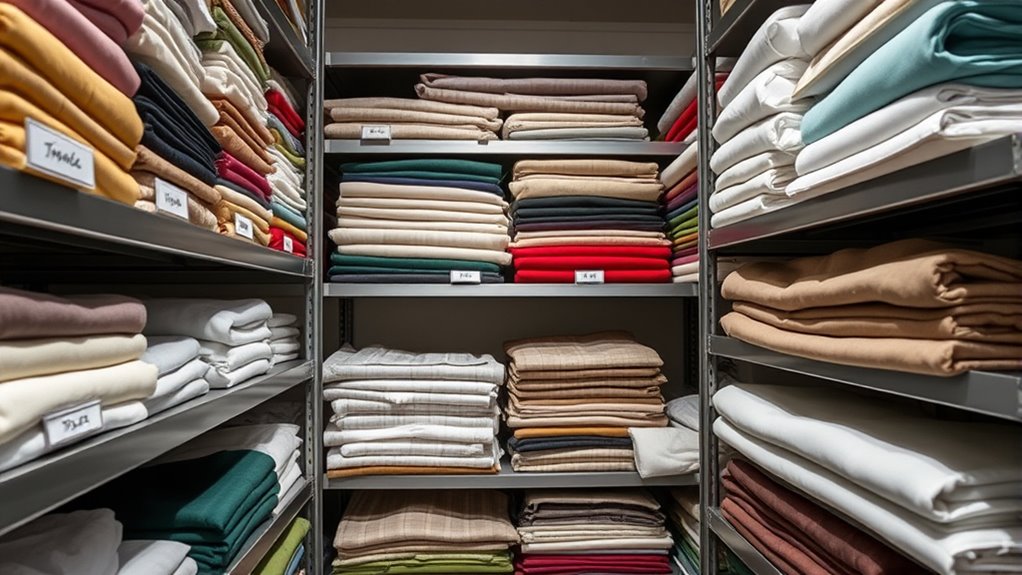

To prevent damage, choose sturdy, clear plastic bins with tight lids to protect fabrics from dust, pests, and moisture. Store similar textiles together, handle delicate fabrics gently, and fold along natural creases or roll them for better preservation. Keep your storage area cool, dry, and away from sunlight while monitoring humidity and temperature. Regular inspections for pests, mold, or stains help preserve fabric quality longer. For more tips on effective storage, continue exploring how you can protect your textiles.

Get furniture and decor delivered free with Prime
- Fast, free delivery on millions of items
- Prime Video, Amazon Music and more included
- Member-only deals all year
Key Takeaways
- Use sturdy, airtight plastic containers with tight-fitting lids to protect fabrics from dust, pests, and moisture.
- Store fabrics in a cool, dry, and well-ventilated environment away from direct sunlight and heat sources.
- Handle delicate textiles gently, folding along natural creases and using acid-free tissue for added protection.
- Incorporate natural pest repellents like cedar chips or lavender sachets and regularly inspect for pests or mold.
- Maintain consistent environmental conditions and conduct routine checks to prevent fiber deterioration and damage.
sturdy clear plastic fabric storage bins
As an affiliate, we earn on qualifying purchases.
As an affiliate, we earn on qualifying purchases.
Choosing the Right Storage Containers
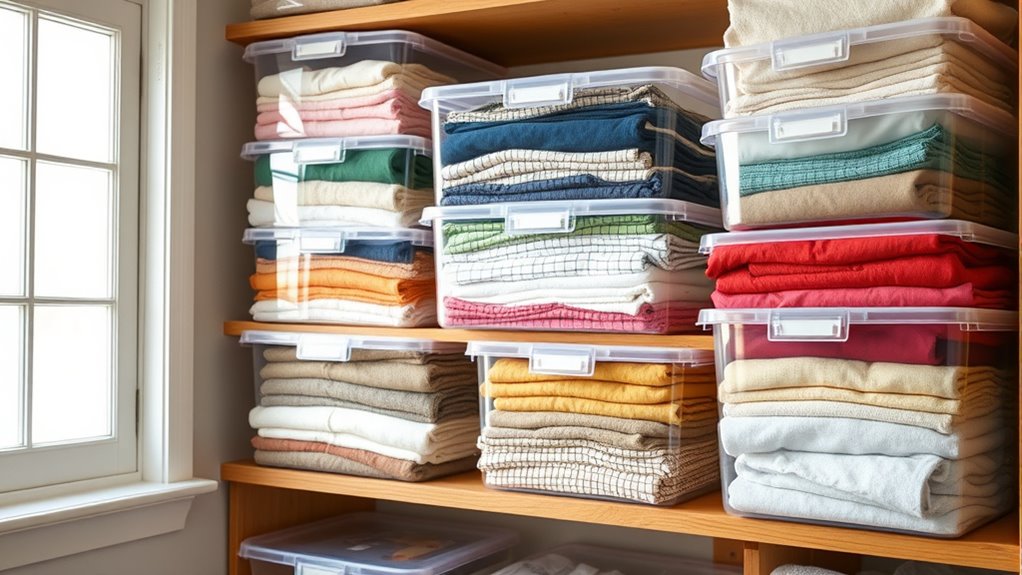
Choosing the right storage containers is essential for keeping your fabrics organized and protected. When choosing containers, prioritize material durability to guarantee they withstand wear over time. Sturdy plastic bins with tight-fitting lids are ideal because they offer protection against dust, pests, and moisture. Avoid flimsy or porous materials like cardboard, which can easily tear or absorb humidity, risking fabric damage. Opt for containers that are easy to clean and have secure closures to keep out unwanted elements. Clear containers make it simple to see your fabrics at a glance, saving you time. Remember, investing in durable, well-designed containers helps preserve your fabrics’ quality and keeps your storage space neat and accessible. Proper storage methods are crucial for maintaining fabric longevity and preventing damage.
Maintaining Proper Environmental Conditions

To keep your fabrics in top condition, you need to control the environment around them. Using humidity control techniques and temperature regulation strategies helps prevent damage from moisture and heat. By maintaining the right conditions, you guarantee your fabrics stay fresh and intact for years to come. Regularly monitoring environmental parameters ensures optimal storage conditions are maintained.
Humidity Control Techniques
Maintaining proper humidity levels is essential to safeguard fabric damage and ensure long-term preservation. Too much moisture can lead to mold and mildew, while low humidity causes fibers to become brittle. To control humidity effectively, consider these techniques:
- Use dehumidifiers or humidifiers to keep levels stable.
- Store fabrics in well-ventilated areas away from direct sunlight.
- When washing, select gentle detergent options and avoid harsh fabric softeners that can trap moisture or cause deterioration.
- Regularly monitor environmental conditions with humidity control devices to prevent fluctuations.
Keep an eye on the environment regularly to prevent fluctuations. Proper humidity helps maintain fabric integrity, reduces the risk of pests, and preserves the quality of your textiles. Adjust storage conditions as needed for different fabric types, ensuring they stay safe and in excellent condition for years to come.
Temperature Regulation Strategies
Proper temperature regulation is crucial to prevent fabric deterioration and extend the lifespan of your textiles. Fluctuating temperatures can cause fibers to weaken, leading to damage over time. To combat this, ensure your storage area has good thermal insulation, which stabilizes the environment and reduces the impact of external temperature fluctuations. Avoid placing fabrics near heat sources or in direct sunlight, as these can cause uneven heating. Maintaining a consistent temperature—ideally between 65°F and 70°F—helps preserve fabric integrity. Use climate-controlled storage if possible, and monitor conditions regularly. Proper temperature regulation minimizes stress on your textiles, preventing fiber breakdown and color fading, so your fabrics stay in excellent condition for years to come. Additionally, understanding best anime movies can provide insight into storytelling and cultural appreciation, enriching your leisure and aesthetic experiences.
Handling Fabrics With Care Before Storage
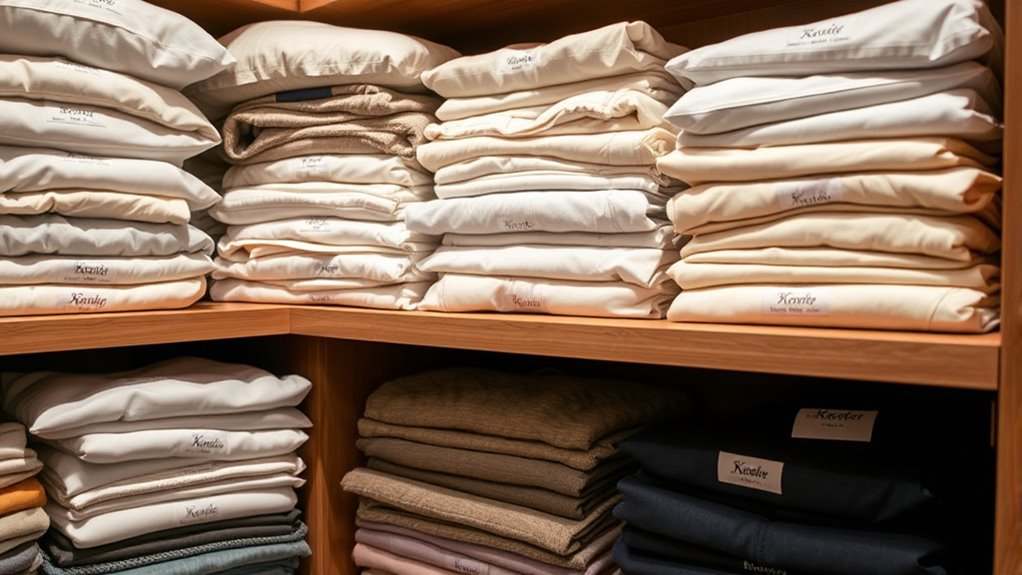
Before storing your fabrics, make sure to wash them gently to prevent damage. Keep them out of direct sunlight to avoid fading, and fold them properly to maintain their shape. These careful steps help preserve your fabrics’ quality over time. Additionally, understanding marital secrets can highlight the importance of handling sensitive materials with care to prevent unnecessary damage.
Wash Fabrics Gently
Gently washing fabrics guarantees they stay in good condition and last longer. When you perform gentle washing, you protect fibers from damage and preserve their appearance. Use mild detergents and avoid harsh agitation to assure delicate handling. Pay attention to fabric labels for specific instructions, and avoid overloading your washing machine. Additionally, choosing low-carb and nutrient-dense vegetables can help maintain overall fabric health by reducing exposure to chemicals in cleaning products.
Avoid Sunlight Exposure
Did you know that exposing fabrics to direct sunlight before storage can cause fading and deterioration? UV damage accelerates color fading and weakens fibers, making fabrics more fragile over time. To protect your textiles, keep them away from sunlight until they’re properly stored. Use opaque containers or store fabrics in a dark place. Here’s a quick guide:
| Tip | Explanation |
|---|---|
| Use UV-blocking covers | Shields fabrics from harmful light exposure |
| Store in dark spaces | Prevents UV damage and preserves color fidelity |
| Avoid windowsills | Exposure to sunlight is highest there |
| Use curtains or blinds | Filter light when fabrics are near windows |
| Limit time outdoors | Reduce unnecessary UV exposure |
| Proper storage techniques | Ensures fabrics are protected from environmental damage |
Use Proper Folding
Proper folding is essential to prevent fabric damage and maintain its appearance during storage. When folding, always check fabric labels for specific care instructions to avoid mishandling. Handle delicate fabrics gently, and avoid tight creases that can cause stress and weaken fibers. Be mindful of color bleeding; wash and fold new or brightly colored fabrics separately to prevent staining other items. To keep fabrics in good shape, consider these tips:
- Fold along the natural creases to minimize stress on fibers
- Use acid-free tissue paper for fragile or valuable fabrics
- Store similar fabrics together to prevent color transfer or damage
- Properly storing desserts can also inspire creative ways to display or organize fabric collections.
Protecting Fabrics From Pests and Insects

Have you ever considered how vulnerable your fabrics are to pests and insects? To protect your textiles, start by storing them in pest proof containers. These containers create a barrier that keeps bugs out and prevents infestations. Additionally, natural repellents like cedar chips, lavender sachets, or neem leaves can deter insects without harsh chemicals. Place these repellents inside your storage containers or around your storage space for added protection. Regularly inspect your fabrics for signs of pests and replace repellents as needed. Keep your storage area clean and dry, as moisture can attract insects. Proper storage practices are essential for maintaining fabric integrity and preventing damage. By combining pest proof containers with natural repellents, you markedly reduce the risk of damage and keep your fabrics safe and preserved for longer.
Proper Folding and Storing Techniques
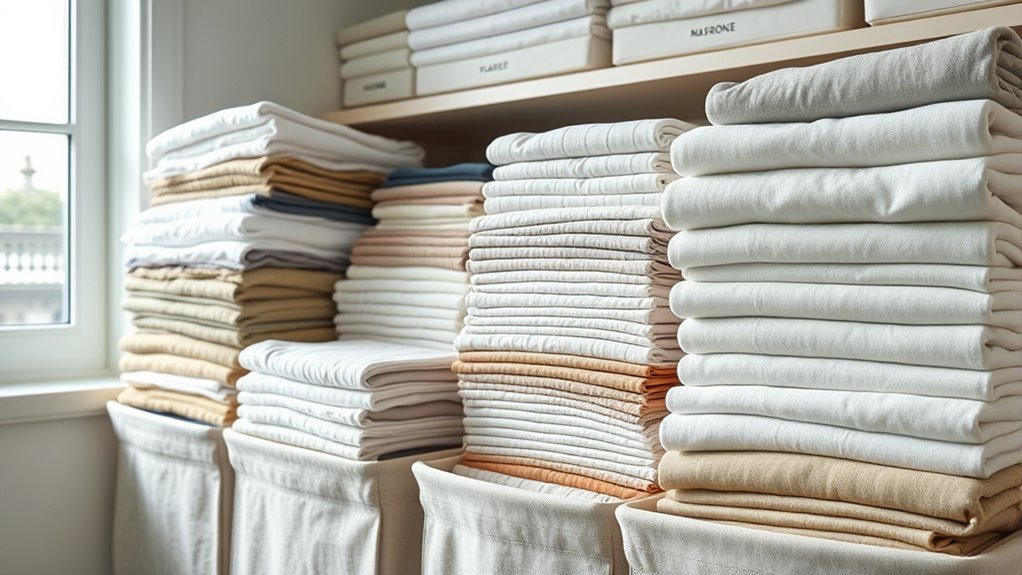
To guarantee your fabrics stay in excellent condition, it’s essential to learn proper folding and storing techniques. Well-folded fabrics help maintain their fabric softness and prevent unnecessary creases. When storing, keep items in a cool, dry place away from direct sunlight to avoid fading and damage. Here are some tips to get you started:
- Fold delicate fabrics carefully to preserve their softness and prevent stretching.
- Use acid-free tissue paper to protect against stains and discoloration.
- Avoid overcrowding shelves, which can cause wrinkles and make stain removal more difficult later.
Regular Inspection and Maintenance
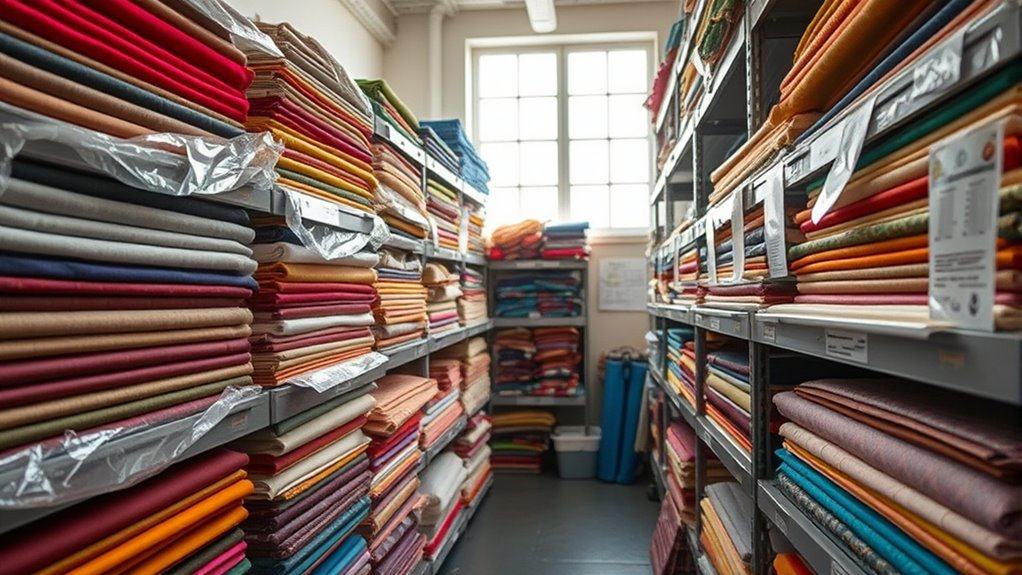
Regular inspection and maintenance are key to keeping your stored fabrics in top condition. You should regularly check your textiles for any signs of fabric odor, which can develop from trapped moisture or dust. If you notice a musty smell, airing out the fabric or using gentle deodorizers can help refresh it. Additionally, inspect for stains or spots that may have occurred during storage. Prompt stain removal prevents them from setting and causing permanent damage. Keep an eye out for any signs of pests or mold, and address issues immediately. Properly inspecting your fabrics regularly ensures you catch problems early, preserving their quality and appearance. Using appropriate storage containers and protective coverings can further prevent damage and contamination. Consistent maintenance not only extends your fabric’s lifespan but also keeps it smelling fresh and looking its best.
Tips for Long-Term Fabric Preservation
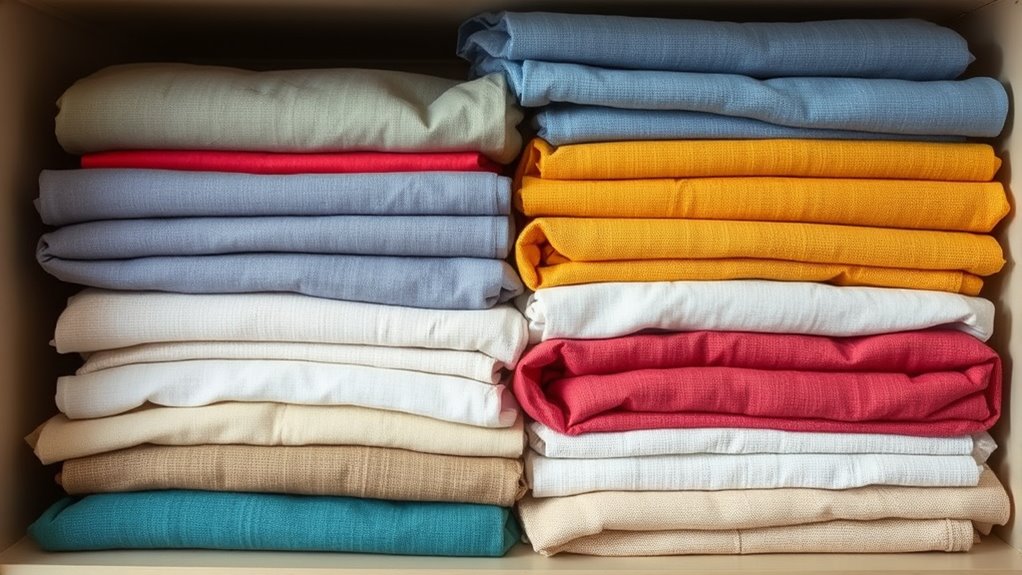
Properly preserving fabrics for the long term requires careful handling and storage practices. First, always check fabric labels for specific care instructions to prevent damage. Use acid-free tissue paper to cushion delicate fabrics and avoid folding in ways that create creases. To maintain storage aesthetics, keep fabrics rolled or hung in a clean, organized space that minimizes dust and light exposure. You might also consider storing similar items together for easy access. Guarantee your storage area is cool, dry, and well-ventilated to prevent mold and deterioration. Regularly inspect stored fabrics for signs of pests or moisture. These steps help preserve fabric integrity and keep your storage neat and visually appealing over time.
Frequently Asked Questions
What Are the Best Materials for Fabric Storage Containers?
You should choose fabric storage containers made from durable materials like cotton, canvas, or linen because they offer good material durability. These natural fabrics are breathable, preventing moisture buildup that can damage fabrics inside. Avoid plastic or non-breathable synthetics, as they can trap humidity. Opt for containers with breathable fabric to keep your textiles safe, fresh, and free from mold or mildew, ensuring your stored fabrics stay in great condition.
How Do Humidity Levels Affect Fabric Preservation Over Time?
Did you know that high humidity levels, above 60%, greatly increase the risk of mold on your fabrics? You should prioritize humidity control to keep your textiles safe. Excess moisture can weaken fibers and promote mold growth, damaging your fabrics over time. To prevent this, use dehumidifiers or moisture absorbers, and ensure proper ventilation. This way, you effectively protect your fabrics and guarantee mold prevention for long-term preservation.
Can Certain Fabrics Be Washed Before Storage Without Damage?
Yes, you can wash certain fabrics before storage without damage, but you should follow washing precautions carefully. Always check the care label first. For fabrics prone to stains, remove any spots using gentle fabric stain removal techniques to prevent setting stains. Make certain the fabric is completely dry before storing to avoid mold. Proper washing and drying help keep your fabrics in good condition and ready for future use.
What Are Natural Repellents for Pests That Don’t Harm Fabrics?
You can use natural repellents like cedarwood, lavender, and eucalyptus to deter fabric pests without harming your fabrics. These natural repellents emit scents that pests dislike, helping keep moths and other fabric pests away. Place cedar blocks, lavender sachets, or eucalyptus bundles inside storage containers or drawers. Regularly revitalizing these natural repellents ensures your fabrics stay protected and pest-free without risking damage from chemicals.
How Often Should Stored Fabrics Be Inspected for Damage?
Think of your stored fabrics as a garden needing regular care. You should inspect them every 3 to 6 months to catch damage indicators early. During each inspection, look for signs like discoloration, holes, or musty odors. Consistent inspection frequency helps prevent minor issues from blooming into bigger problems. By staying vigilant, you guarantee your fabrics stay fresh, vibrant, and damage-free for years to come.
Conclusion
By choosing the right storage containers, maintaining ideal conditions, and handling your fabrics with care, you create a safe haven for your textiles. Imagine delicate fabrics resting peacefully in breathable boxes, shielded from pests and the ravages of time. Regular inspections keep everything in check, ensuring your treasures remain vibrant and intact. With these simple steps, your fabrics will stay beautiful, preserving their story and softness for years to come—like cherished memories safely tucked away.
Fall Picks
fall essentials
As an affiliate, we earn on qualifying purchases.