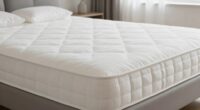
When you lie down, latex feels lively, responsive, and supportive with a firm yet bouncy surface that supports natural movement. Memory foam, in contrast, molds slowly and offers a plush, cradling sensation that relieves pressure and contours deeply to your body. Latex stays cooler and quieter, while memory foam tends to trap heat and may creak. If you want to understand these differences better, uncover more about how each material influences your sleep experience.

Get furniture and decor delivered free — and shop member deals
- Fast, free delivery on millions of items
- Access to Prime Big Deal Days deals on October 6–7
- Prime Video, Amazon Music and more included
Key Takeaways
- Latex responds instantly with a bouncy, resilient feel, while memory foam molds slowly, providing a sinking, plush sensation.
- Latex offers firm support and precise contouring with better airflow, whereas memory foam emphasizes deep pressure relief and softer support.
- Latex minimizes motion transfer with quick responsiveness, while memory foam absorbs movement, reducing disturbance between sleepers.
- Latex stays cooler due to open-cell structure, unlike memory foam, which tends to trap heat and retain warmth.
- Latex maintains its shape and support longer-term, whereas memory foam may develop indentations over time.
As an affiliate, we earn on qualifying purchases.
How Do Latex and Memory Foam Feel When You Lie Down?
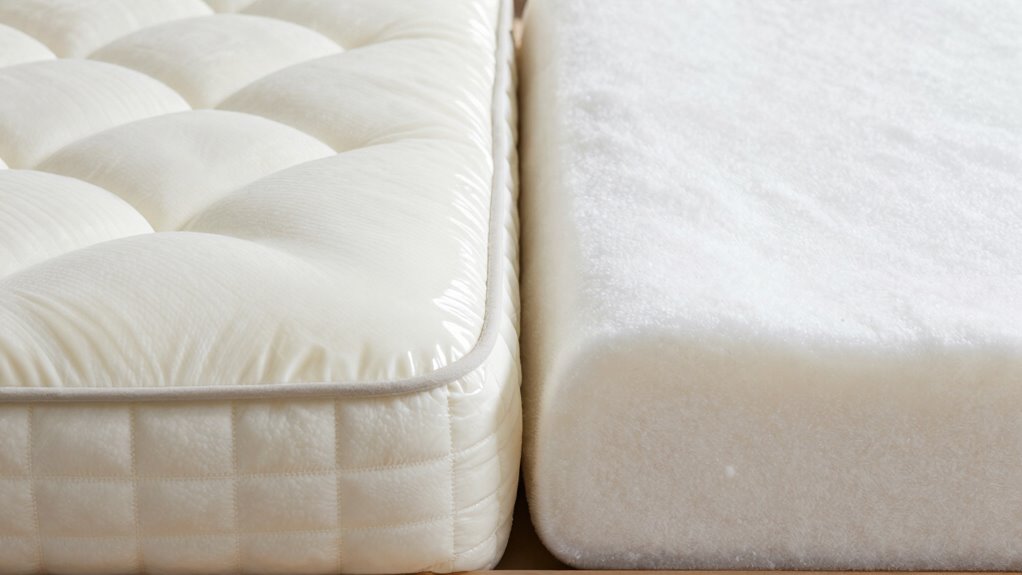
When you lie down on a latex mattress, you’ll notice it offers a firm yet responsive surface that quickly bounces back under your weight, providing a feeling of support. This responsiveness comes from latex elasticity, which allows the material to flex and return to shape rapidly. The foam density of latex also plays a role, giving it a balanced feel that isn’t overly soft or too firm. As you move, latex responds instantly, maintaining support without sinking excessively. Unlike memory foam, which molds slowly, latex offers a more lively and resilient sensation. The combination of latex elasticity and foam density creates a surface that feels both supportive and responsive, giving you a sense of stability and comfort throughout the night. Additionally, the advanced manufacturing techniques used in latex production improve its durability and longevity. Latex’s natural resilience contributes to its ability to recover quickly after pressure, which enhances its supportive qualities. This quick recovery also helps prevent the sagging and indentations often associated with other foam types. Moreover, its natural elasticity allows for better airflow, helping regulate temperature for a cooler sleep experience. Incorporating ventilation features in latex mattresses further enhances breathability and overall comfort.
Which Offers Better Support and Contouring for Your Body?
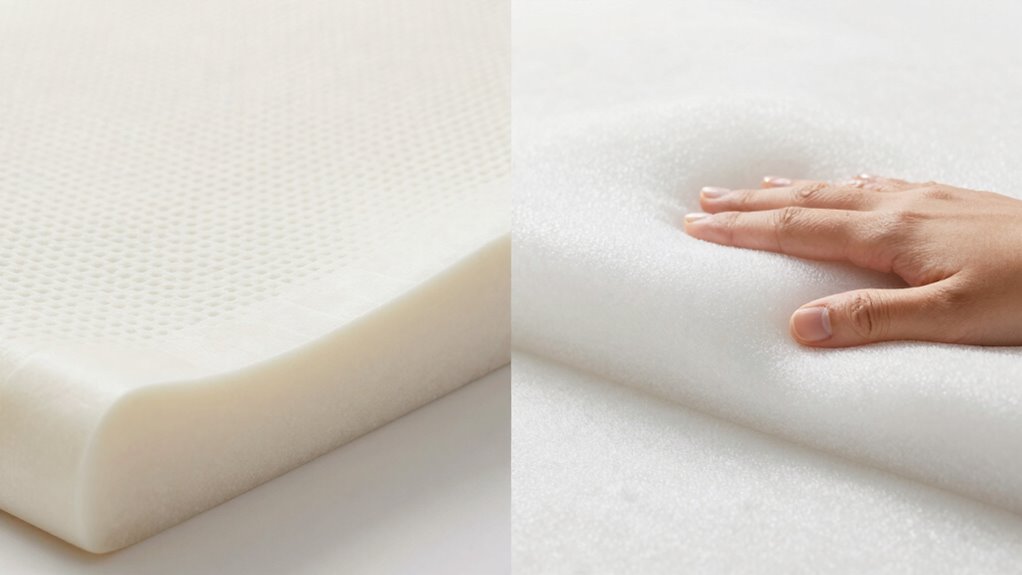
When comparing support levels and firmness, you’ll find latex tends to feel more resilient and stable, while memory foam offers a softer, more cradling sensation. For contouring, memory foam molds closely to your body’s curves, providing precise comfort, whereas latex offers a more responsive, bouncy feel. Your choice depends on whether you prioritize firm support or personalized contouring. Additionally, some investors consider the Gold IRA Markets reputation for transparency and customer service when choosing a provider.
Support Level and Firmness
Latex mattresses tend to provide a more uniform level of support, conforming closely to your body’s curves and offering excellent pressure relief. When comparing firmness levels, latex generally offers a medium to firm feel, giving you solid support without feeling too hard. The support strength is consistent, helping maintain proper spinal alignment. Latex maintains a more uniform support level across the mattress. Memory foam, on the other hand, adapts more slowly, providing deep contouring but sometimes feeling less supportive for heavier sleepers. Here’s how they compare: 1. Latex offers consistent firmness, ideal for those needing stable support. 2. Memory foam contours deeply, which can reduce support strength for some. 3. Latex maintains a more uniform support level across the mattress. 4. Memory foam’s support depends on density and firmness settings, which vary. Additionally, the material’s support and durability influence overall longevity and performance. The choice between these materials can also impact pressure relief and overall comfort over time. Considering material resilience and its effect on support consistency can help determine which mattress suits your long-term needs better.
Contouring Precision and Comfort
Contouring precision and comfort play a crucial role in how well a mattress supports your body’s unique shape. Latex firmness provides a responsive feel, offering targeted support that keeps your spine aligned while still conforming to your curves. It offers a balance between support and bounce, ensuring you don’t feel trapped in the mattress. Foam softness, on the other hand, allows for deeper contouring around pressure points, providing a plush, body-hugging experience. Memory foam molds closely to your shape, offering excellent pressure relief but sometimes sacrificing responsiveness. If you prefer a feel that supports your natural curves without feeling too soft or too firm, latex’s balanced firmness might suit you better. Conversely, if you prioritize sinking into lush comfort, foam’s softness could be more appealing. Additionally, understanding ventilation considerations can help you choose a mattress material that maintains comfort and freshness over time. Proper ventilation can also prevent heat buildup, enhancing sleep quality and mattress longevity.
How Fast Do Latex and Memory Foam Respond to Movement?
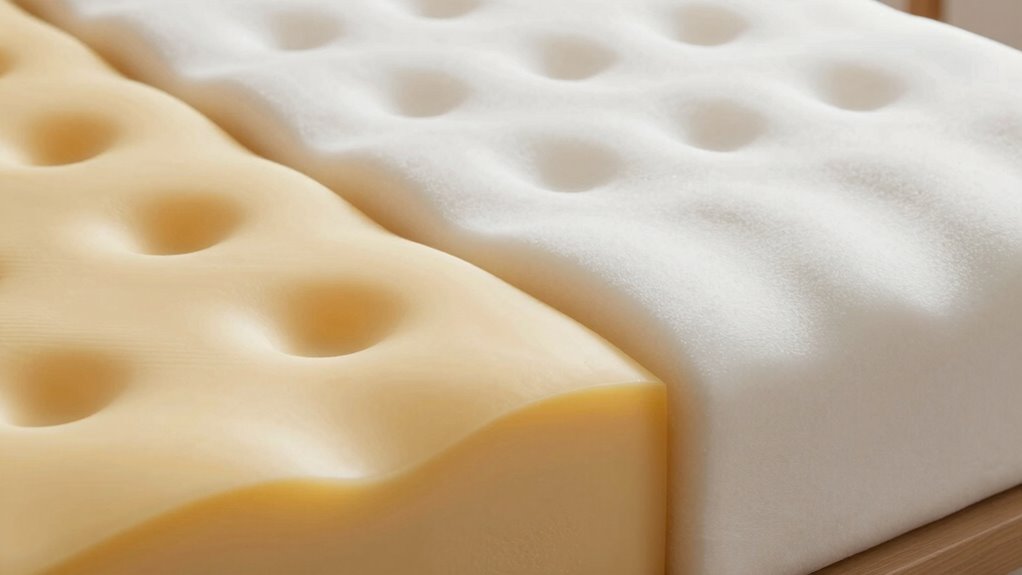
Understanding how quickly latex and memory foam respond to movement is essential when choosing a mattress. Latex responsiveness is rapid, meaning it reacts instantly to your movements, providing quick support and minimal sinkage. Memory foam, on the other hand, exhibits slower foam adaptation, contouring gradually to your shape and movement. This difference impacts sleep comfort and motion transfer. Additionally, the performance ratings of these materials are often based on their response times and durability, influencing overall comfort. Here’s a quick comparison: 1. Latex responds within milliseconds, offering immediate support. 2. Memory foam takes seconds to respond, creating a slow, sinking feeling. 3. Latex’s quick response reduces motion transfer between partners. 4. Foam adaptation in memory foam results in a softer, more enveloping feel. The response time also affects how well each material maintains its shape over time, which is important for long-term satisfaction. When considering longevity, latex typically holds its shape better due to its material resilience, making it a durable choice for many sleepers. Understanding material responsiveness can help you choose a mattress that matches your movement preferences.
Which Mattress Provides Softer Pressure Relief?
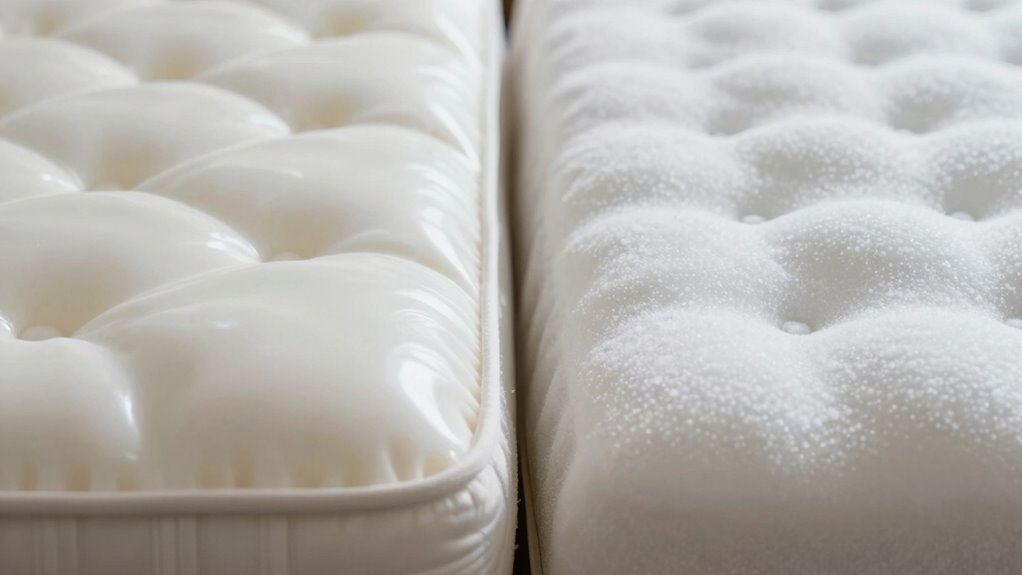
When comparing pressure relief, your body’s conformity and adaptability to each mattress matter most. Memory foam molds closely to your shape, offering targeted pressure distribution, while latex responds more quickly but provides slightly less contouring. Consider how response time and support influence your comfort to determine which mattress delivers softer pressure relief for you. Additionally, understanding the differences in foam materials can help you choose a mattress that best aligns with your preferences. Recognizing the material properties of each foam type can also guide you in selecting a mattress that offers the right balance of comfort and durability. Moreover, the variety of options available allows you to find a mattress that suits your specific pressure relief needs.
Conformity And Adaptability
Memory foam mattresses excel at providing softer pressure relief because they conform closely to your body’s shape, distributing weight evenly and reducing pressure points. This high foam flexibility allows the mattress to adapt to your movements and contours, ensuring comfort. Latex offers resilience, bouncing back quickly and maintaining support, but it doesn’t mold as precisely as memory foam. When comparing conformity:
- Memory foam molds to your curves, offering personalized comfort.
- Latex provides a responsive surface, less enveloping.
- Foam flexibility allows memory foam to adapt easily over time.
- Latex resilience keeps it supportive without excessive sinkage.
If you prefer a mattress that adapts closely to your body, memory foam’s foam flexibility makes it a top choice. Latex’s resilience offers a different feel focus, more on support than deep conformity.
Pressure Distribution Patterns
Memory foam mattresses excel at distributing pressure evenly across your body because their conforming nature helps absorb and spread out your weight. This is visible through pressure mapping, which shows how well a mattress alleviates pressure points. Memory foam molds closely to your curves, reducing concentrated pressure on areas like shoulders, hips, and heels. As a result, you experience softer pressure relief, especially in sensitive zones. Conforming support enhances this effect by allowing memory foam to contour precisely to your body’s shape, providing a gentle, cradling feel. Additionally, pressure distribution patterns reveal that memory foam often excels at minimizing stress on key areas, making it a top choice for those seeking softer pressure relief. The body-hugging quality of memory foam further contributes to its ability to evenly distribute pressure, ensuring no single area bears excessive weight. Latex mattresses also distribute pressure but tend to have a slightly different pattern, offering more responsive support. However, memory foam’s ability to contour makes it superior in minimizing pressure points, providing a gentle, cradling feel. If you’re seeking softer pressure relief, memory foam’s pressure distribution pattern makes it a top choice for reducing stress on key areas.
Response Time And Support
If you’re prioritizing softer pressure relief, memory foam mattresses generally respond more slowly and conform closely to your body, providing a gentle, cradling sensation. This slow response time enhances pressure point relief, easing tension in sensitive areas like shoulders and hips. Additionally, memory foam’s pressure distribution capabilities can help reduce discomfort during sleep. Its response time is typically longer, which can lead to a feeling of being enveloped or “sunk into” the mattress. However, this can sometimes limit support for active sleepers. Latex mattresses, on the other hand, respond quickly, offering firmer support and maintaining better sleep posture support. Understanding the flushing mechanisms of different mattress types can also inform your choice, especially regarding durability and maintenance.
Do Latex or Memory Foam Keep You Cooler? Temperature and Breathability
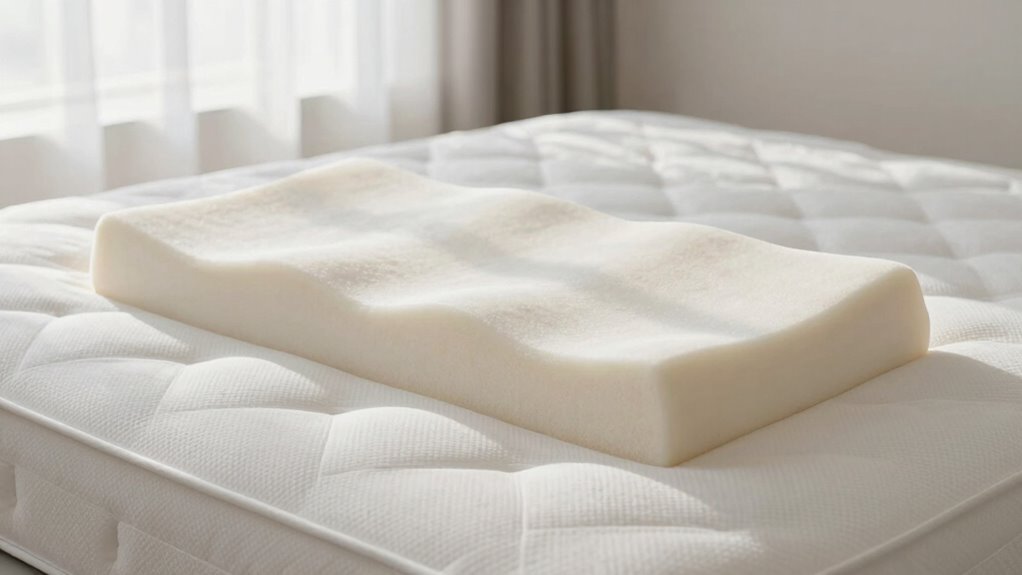
When it comes to staying cool at night, latex generally offers better breathability than memory foam. This means latex provides superior breathability benefits, helping air circulate more freely and reduce heat buildup. Memory foam, on the other hand, tends to trap heat because of its dense structure, which can make you feel warmer as you sleep. Latex’s open-cell design promotes better temperature regulation, keeping you cooler and more comfortable throughout the night. If overheating is a concern, latex’s natural airflow can make a noticeable difference. While memory foam molds closely to your body, it often compromises breathability, leading to more heat retention. Proper installation practices for both types of foam can also impact their breathability and overall comfort. So, if staying cool is a priority, latex is likely the better choice for effective temperature regulation and breathability benefits.
How Well Do Latex and Memory Foam Transfer Motion and Stay Quiet?
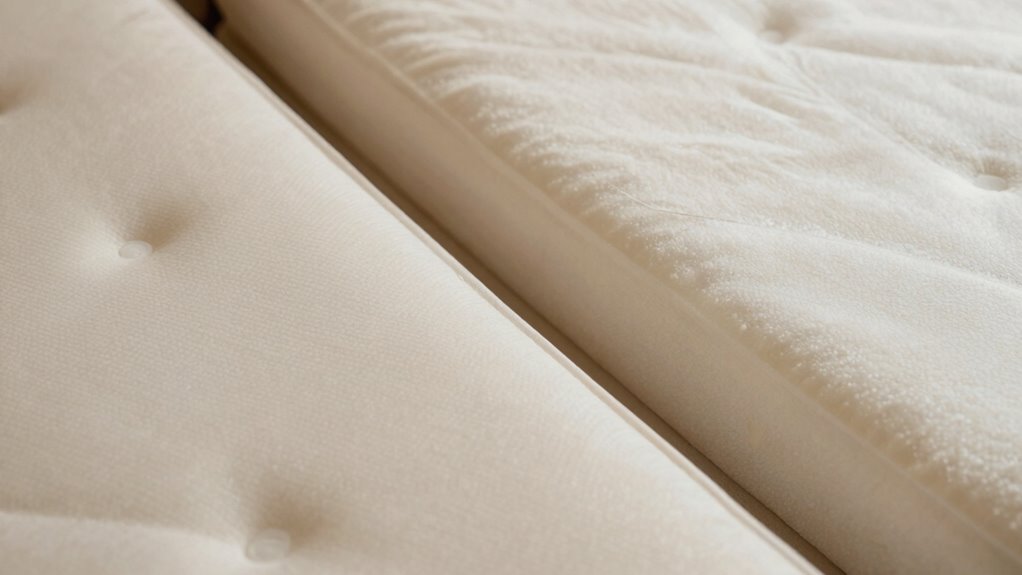
Latex and memory foam differ considerably in how they handle motion transfer and noise. Latex generally excels at reducing motion transfer, thanks to its resilient, bouncy nature, which helps keep you undisturbed if your partner moves. Memory foam, however, absorbs movement, providing better motion isolation, but may produce more noise during quick shifts. When it comes to noise comparison, latex tends to stay quieter overall, producing minimal sound during movement. Here’s a quick overview:
- Latex offers better bounce and less noise during movement.
- Memory foam provides superior motion isolation but can creak or squeak.
- Latex’s noise is almost inaudible compared to memory foam’s occasional squeaks.
- Both materials dampen sound, but latex’s natural resilience keeps it quieter in active scenarios.
This makes latex ideal for quiet sleep environments, while memory foam excels at isolating motion.
Are Latex and Memory Foam Durable? How Their Feel Changes Over Time

Both latex and memory foam are known for their durability, but their longevity depends on how you use and care for them over time. Durability concerns often arise with foam materials, but latex generally holds up better with consistent use. Over years, you might notice the feel longevity of memory foam diminishing as it develops permanent indentations or softens unevenly. Latex tends to maintain its firmness longer, resisting sagging and indentations. However, improper care—like exposing your mattress to moisture or direct sunlight—can accelerate wear for both types. Regularly rotating your mattress and using a proper foundation can extend their lifespan. Ultimately, while both materials are durable, latex often offers a slight edge in maintaining its feel over the years.
Which Mattress Feel Fits Your Sleep Style and Preferences?

Choosing the right mattress feel depends on your sleep style and personal preferences. Your ideal choice influences comfort, support, and how well the mattress integrates with your bed frame. Consider these factors:
- Firmness preference – Do you need a soft, medium, or firm feel? Memory foam offers contouring, while latex provides more bounce.
- Sleep position – Side sleepers may prefer softer feels, while back or stomach sleepers benefit from firmer options.
- Bed frame compatibility – Some mattresses work better with platform or slatted frames, especially latex, which tends to be more breathable.
- Mattress weight considerations – Heavier sleepers might need a sturdier feel, and lighter individuals may prefer softer options for comfort.
Matching your sleep style with these factors ensures better rest and mattress longevity.
Frequently Asked Questions
Which Mattress Type Is Better for Allergy Sufferers?
You should choose a latex mattress if you’re an allergy sufferer, as it’s naturally hypoallergenic and resists dust mites and mold. Memory foam can trap allergens more easily, which might trigger allergy symptoms. Look for hypoallergenic options with antimicrobial or antibacterial treatments to minimize allergy triggers. With the right mattress, you can enjoy better sleep and reduce allergy symptoms, making latex a smart choice for allergy sufferers.
How Do Latex and Memory Foam Mattresses Impact Spinal Alignment?
Think of your mattress as a gentle guardian for your spine. Latex mattresses offer firm, resilient spinal support that keeps your posture aligned, like a steady lighthouse guiding ships safely. Memory foam softly contours to your body, promoting proper posture alignment by cradling your curves. Both help maintain spinal health, but latex provides more consistent support, while memory foam adapts to your movements, ensuring your spine stays in harmonious alignment throughout the night.
Are There Environmental Concerns With Latex Versus Memory Foam?
You’ll find that latex mattresses are generally more eco-friendly because they’re made from natural, renewable materials like rubber tree sap, which reduces environmental impact. Memory foam, on the other hand, often involves synthetic, petrochemical-based ingredients that can have a higher manufacturing impact and contribute to pollution. If sustainability matters to you, latex offers a greener option, but be sure to check certifications for truly eco-conscious products.
Can You Test Latex and Memory Foam Mattresses at Home Before Buying?
Ever wonder if you can truly know how a mattress feels before buying? You definitely can do a home test or mattress trial. Most brands offer trial periods, so you can sleep on latex or memory foam beds for days or weeks. Take advantage of these options to see which material suits your sleep style best. Testing at home helps you make a confident decision, avoiding costly returns later.
How Do Price and Value Compare Between Latex and Memory Foam Options?
You’ll find latex mattresses usually have a higher pricing comparison due to their durability differences, offering long-lasting support that justifies the upfront cost. Memory foam options tend to be more affordable but may not last as long, meaning you’ll need to replace them sooner. Consider your budget and how long you want your mattress to last—latex provides better overall value through its durability, while memory foam offers a more budget-friendly choice.
Conclusion
Choosing between latex and memory foam ultimately depends on your sleep preferences. Latex offers a bouncier, cooler feel with quicker responsiveness, while memory foam provides superior contouring and pressure relief. Did you know that latex mattresses can last up to 15 years, maintaining their feel longer? Consider how each material aligns with your comfort needs and lifestyle. Whichever you pick, investing in the right mattress means better sleep and more mornings you’ll look forward to.
Halloween Picks
halloween
As an affiliate, we earn on qualifying purchases.