
Choosing a ventless heat pump dryer is about more than avoiding an exterior vent: capacity, electrical setup, laundry workflow, and maintenance all affect whether a model fits your home. I put the LG DLHC1455W first for its compact footprint, heat-pump drying, sensor controls, and Wi-Fi features. The Midea 4.4 cu. ft. is a strong alternative for buyers who want a larger stated capacity and wrinkle-reducing tumbling, while the Samsung Bespoke AI suits people who would rather wash and dry in one machine than move loads between appliances.

Get furniture and decor delivered free with Prime
- Fast, free delivery on millions of items
- Prime Video, Amazon Music and more included
- Member-only deals all year
The main tradeoff is convenience versus fit. Separate compact dryers can be easier to pair with an existing washer, but they need space for two appliances and may require a 240V connection. Samsung combines washing and drying in one 120V unit, but needs a water supply and drain and occupies a much larger footprint. I rank these five by how clearly their features serve distinct ventless-laundry needs, while accounting for installation demands, capacity, and everyday upkeep.
Complete the kit


Key Takeaways
- The LG DLHC1455W is my leading separate dryer pick for compact laundry rooms that can use a 24-inch-wide appliance and benefit from sensor drying and app controls.
- The Midea and Techomey both offer 4.4 cu. ft. capacity, but Midea adds post-cycle tumbling while Techomey lists 16 cycles and a 4-prong power cord.
- The Samsung Bespoke AI is the only washer-dryer combo here, so it can remove the need to transfer loads but requires a water line, drain hose, and substantially more floor space.
- The SMETA adds a reversible door and a stated 30-minute quick-dry cycle for a three-quarter load, though its fast-cycle claim should not be treated as a promise for every load.
- Ventless does not mean maintenance-free: buyers should plan for lint-filter cleaning and, on models with a water tank, regular tank emptying.
| LG DLHC1455W 24-Inch 4.2 Cu. Ft. Ventless Stackable Smart Electric Dryer | 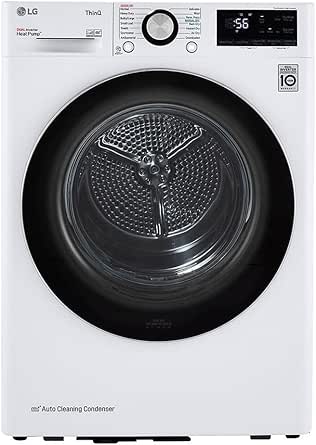 | Best Overall | Capacity: 4.2 cu. ft. | Dryer type: Ventless electric heat pump | Width: 24 in. | VIEW ON AMAZON | See Our Full Breakdown |
| Midea 4.4 Cu. Ft. Ventless Heat Pump Front-Load Dryer, White |  | Best for Capacity in a Compact Dryer | Capacity: 4.4 cu. ft. | Type: Ventless heat pump dryer | Voltage: 240V | VIEW ON AMAZON | See Our Full Breakdown |
| Samsung Bespoke AI 5.3 cu. ft. Ventless All-in-One Washer and Dryer, Dark Steel |  | Best All-in-One Ventless Laundry Option | Appliance type: All-in-one washer and ventless heat-pump dryer | Capacity: 5.3 cu. ft. | Voltage: 120V | VIEW ON AMAZON | See Our Full Breakdown |
| Techomey 4.4 Cu. Ft. Ventless Heat Pump Clothes Dryer, White |  | Best for a Straightforward Cycle Selection | Capacity: 4.4 cu. ft. | Model: HDF-100ALBMU(HP) | Dryer type: Ventless heat pump | VIEW ON AMAZON | See Our Full Breakdown |
| SMETA 4.4 Cu. Ft. Ventless Heat Pump Electric Dryer |  | Best for Cycle Flexibility and Door Placement | Capacity: 4.4 cu. ft. | Model: T-DDF-100ALBMU(HP)-US | Dryer type: Ventless heat-pump electric | VIEW ON AMAZON | See Our Full Breakdown |
| heat pump dryer ventless | Capacity | Dimensions | Warranty | Dryer type |
|---|---|---|---|---|
| LG DLHC1455W 24-Inch 4.2 Cu. F | 4.2 cu. ft. | 27.25 in. D × 24 in. W × 33.5 in. H | 1 year | Ventless electric heat pump |
| Midea 4.4 Cu. Ft. Ventless Hea | 4.4 cu. ft. | — | 1 year manufacturer | — |
| Samsung Bespoke AI 5.3 cu. ft. | 5.3 cu. ft. | 34.4 in. D × 27 in. W × 43.7 in. H | — | — |
| Techomey 4.4 Cu. Ft. Ventless | 4.4 cu. ft. | 23.4 in. W × 25.7 in. D × 33.5 in. H | 1 year | Ventless heat pump |
| SMETA 4.4 Cu. Ft. Ventless Hea | 4.4 cu. ft. | 25.7 in. D × 23.4 in. W × 33.5 in. H | 1 year | Ventless heat-pump electric |
More Details on Our Top Picks
LG DLHC1455W 24-Inch 4.2 Cu. Ft. Ventless Stackable Smart Electric Dryer
The LG DLHC1455W is my best overall choice for buyers looking for a dedicated ventless dryer that can fit a compact laundry setup. Its 24-inch width and stackable installation offer more placement flexibility than a full-size machine, while the Dual Inverter HeatPump system recycles heat instead of relying on an exterior exhaust route. Sensor Dry adjusts the cycle according to moisture, which helps avoid running clothes longer than needed.
Compared with the Midea and Techomey, the LG has a slightly smaller stated capacity at 4.2 cu. ft., so it is less compelling for households trying to fit the largest possible load into a compact dryer. Its distinction is control: Wi-Fi, remote start, and cycle alerts through LG ThinQ give it a more connected feature set than those two models. The tradeoff is that app access cannot compensate for a drum that is too small for your regular bedding or laundry volume.
I would choose the LG over the SMETA if remote monitoring and a 24-inch width matter more than a listed quick-dry cycle or reversible door. It is a dedicated dryer, unlike the Samsung combo, so it does not eliminate the washer-to-dryer transfer. The supplied details list a one-year manufacturer warranty; they do not specify a power connection, so I would confirm electrical requirements and stacking compatibility before ordering. Its compact capacity is the clearest reason some buyers should choose the larger Midea instead.
Pros:- Ventless heat-pump design avoids the need for an exterior dryer vent.
- Sensor Dry adjusts drying based on moisture in the load.
- Wi-Fi features include remote start and cycle alerts.
- Stackable or side-by-side installation supports compact laundry layouts.
Cons:- Its 4.2 cu. ft. capacity is smaller than the 4.4 cu. ft. Midea, Techomey, and SMETA.
- The supplied specifications do not state the required electrical connection, so buyers need to verify it.
Best for: Apartment households that need a separate, stackable ventless dryer with moisture sensing and remote cycle controls.
Not ideal for: Buyers who regularly dry bulky bedding or large family loads, or who want one appliance to wash and dry without transferring laundry.
- Capacity:4.2 cu. ft.
- Dryer type:Ventless electric heat pump
- Width:24 in.
- Dimensions:27.25 in. D × 24 in. W × 33.5 in. H
- Programs:14
- Smart features:Wi-Fi, remote start, and cycle alerts via LG ThinQ
- Installation:Stackable or side-by-side
- Warranty:1 year
Our verdict“I would start with the LG for a compact separate-dryer setup where sensor control and app features matter more than maximum capacity.”
Midea 4.4 Cu. Ft. Ventless Heat Pump Front-Load Dryer, White
The Midea 4.4 cu. ft. dryer is a good fit when a compact footprint still needs to handle more laundry than the LG’s 4.2 cu. ft. drum. It is a front-load, stackable 240V ventless heat pump model, so it can suit homes without an exterior vent but does not remove the need to check the electrical setup. The humidity sensor adjusts drying time, and the stated ENERGY STAR qualification is a helpful signal for buyers comparing energy use.
Its most practical distinction from Techomey is Wrinkle Care: the drum intermittently tumbles for about 90 minutes after a cycle to help reduce creasing if laundry cannot be unloaded right away. Techomey lists more cycles, but Midea’s after-cycle handling may matter more to someone who often gets pulled away from the laundry room. The LG offers app controls, while this Midea’s standout case is its combination of 4.4 cu. ft. capacity and wrinkle-care tumbling.
The tradeoffs are specific. It needs a 240V connection, and the power cord is sold separately, so a buyer should confirm the outlet and cord arrangement before installation. Like other separate dryers, it still requires transferring clothes from a washer. Its supplied dimensions give depth and width but not height, so I would check a full installation drawing before deciding whether it will fit beneath a counter or in a tight closet. Buyers wanting a standard 120V all-in-one should compare the Samsung, not assume this is interchangeable.
Pros:- 4.4 cu. ft. capacity is larger than the LG’s stated 4.2 cu. ft.
- Humidity sensing adjusts drying time to help prevent unnecessary drying.
- Wrinkle Care intermittently tumbles clothes for about 90 minutes after a cycle.
- Stackable front-load design and ventless operation allow flexible placement.
Cons:- Requires a 240V connection.
- Power cord is sold separately.
- The listed dimensions omit height, so fit needs further checking.
Best for: Buyers who want a 4.4 cu. ft. standalone ventless dryer, have 240V available, and value post-cycle tumbling.
Not ideal for: Homes without a suitable 240V connection, or buyers who want a power cord included or a single wash-and-dry appliance.
- Capacity:4.4 cu. ft.
- Type:Ventless heat pump dryer
- Voltage:240V
- Dimensions provided:22.5 in. D × 23.5 in. W
- Energy qualification:ENERGY STAR qualified
- Drying control:Humidity sensor
- Wrinkle care:Approximately 90 minutes of intermittent tumbling
- Warranty:1 year manufacturer
Our verdict“I would pick the Midea over the LG when its larger stated capacity and post-cycle tumbling outweigh app controls and the 240V requirement is already covered.”
Samsung Bespoke AI 5.3 cu. ft. Ventless All-in-One Washer and Dryer, Dark Steel
The Samsung Bespoke AI is the outlier in this group: it is a washer and ventless heat-pump dryer in one cabinet, not a standalone dryer to pair with an existing washing machine. That changes the routine more than any cycle feature. Clothes stay in the drum between washing and drying, which suits people who want to avoid a transfer step or have room for only one laundry appliance. It also plugs into a standard 120V outlet, unlike the 240V Midea.
Samsung lists a 5.3 cu. ft. capacity, 23 washing cycles, and AI Opti Wash & Dry settings that respond to fabric and soil level. The stated Super Speed result is 98 minutes for a 10 lb load under specified test conditions; I would treat that as a particular test result, not a typical promise for every load. Compared with the compact standalone models, its key advantage is the combined wash-and-dry workflow, not a smaller footprint. At 27 inches wide and 43.7 inches high, it is notably taller and heavier than the separate dryers listed here.
This pick makes the most sense when replacing or choosing both laundry functions together. It needs a water line and drain hose, so ventless placement still has plumbing requirements; it is not a plug-anywhere appliance. A 900 rpm maximum spin speed is also part of the listed specification, and buyers should evaluate the full wash-and-dry routine against their usual load size. If you already own a washer or prioritize a compact stacked pair, the LG, Midea, Techomey, or SMETA is a more direct fit.
Pros:- Combines washing and drying, so loads do not need to be moved between machines.
- Ventless heat-pump drying and a standard 120V plug avoid an exterior vent and 240V outlet requirement.
- AI Opti Wash & Dry adjusts settings based on fabric and soil level.
- Stated Super Speed result is 98 minutes for a 10 lb load under specified test conditions.
Cons:- Requires both a water line and drain hose at the installation location.
- Its 27-inch width, 43.7-inch height, and 317 lb weight demand substantial space and planning.
- The stated cycle time applies to a specific load and test conditions, not every laundry load.
Best for: Households choosing one appliance for both washing and ventless heat-pump drying, with water and drain hookups available.
Not ideal for: Buyers who already own a suitable washer, need a compact stacked dryer pair, or cannot provide a water line and drain hose.
- Appliance type:All-in-one washer and ventless heat-pump dryer
- Capacity:5.3 cu. ft.
- Voltage:120V
- Dimensions:34.4 in. D × 27 in. W × 43.7 in. H
- Weight:317 lb
- Washing cycles:23
- Maximum spin speed:900 rpm
- Installation requirements:Water line and drain hose
Our verdict“I would choose Samsung when eliminating the washer-to-dryer transfer matters more than having two separate, stackable appliances.”
Techomey 4.4 Cu. Ft. Ventless Heat Pump Clothes Dryer, White
The Techomey HDF-100ALBMU(HP) focuses on the basics that matter in a small ventless laundry setup: 4.4 cu. ft. capacity, a stackable front-load design, and sensor-based stopping. Its 16 drying cycles give it the broadest stated cycle count among these standalone dryers, making it a sensible option for buyers who prefer choosing a program for different clothing types rather than relying mainly on connected controls.
Against the similarly sized Midea, Techomey offers more listed cycles, while Midea adds a humidity sensor and post-cycle wrinkle-care tumbling. Against the LG, Techomey has a larger stated capacity but lacks the LG’s specified Wi-Fi and remote-start features. Those differences make the choice clearer: Techomey suits buyers who want a relatively direct compact dryer with a broad cycle menu; LG fits people who value app access, and Midea suits those who want clothes tumbled after a cycle.
The ventless heat-pump system is designed for homes where an exterior exhaust route is inconvenient, but there is routine care to factor in: the water tank needs emptying and the lint filter needs regular cleaning. Its listed 4-prong power cord may not match every existing outlet; the product information says a conversion adapter may be needed for a 3-prong outlet. I would check the home’s connection before purchase rather than assume an adapter solves every installation issue. A one-year warranty and compact size make this a practical, not feature-rich, alternative to the LG.
Pros:- Ventless heat-pump design suits locations without an exterior dryer vent.
- 16 cycles offer a broad selection for different laundry needs.
- Sensor drying pauses when clothes reach the desired condition.
- Stackable form helps save floor space.
Cons:- Water tank needs regular emptying, described as after each use.
- Lint filter needs routine cleaning.
- A conversion adapter may be needed for a 3-prong outlet.
Best for: Apartment or small-home buyers seeking a stackable 4.4 cu. ft. dryer with sensor stopping and a broad cycle menu.
Not ideal for: People who want app controls, do not want to empty a water tank, or have not verified their outlet and cord needs.
- Capacity:4.4 cu. ft.
- Model:HDF-100ALBMU(HP)
- Dryer type:Ventless heat pump
- Cycles:16
- Dimensions:23.4 in. W × 25.7 in. D × 33.5 in. H
- Access:Front load
- Power cord:4-prong
- Warranty:1 year
Our verdict“I would choose Techomey over the Midea when a larger cycle menu matters more than post-cycle tumbling or app features.”
SMETA 4.4 Cu. Ft. Ventless Heat Pump Electric Dryer
The SMETA 4.4 cu. ft. dryer earns its place through practical flexibility: it is stackable, has a reversible door, and includes 12 cycles, sensor drying, wrinkle care, and a quick-dry program. A reversible door can make a real difference when the dryer sits beside a wall or another appliance, where a fixed swing might make loading awkward. The stated quick cycle is 30 minutes for a three-quarter load, which gives buyers a short-cycle option when the load and program suit it.
Compared with Techomey, SMETA has four fewer listed cycles but adds a reversible door and a specified quick-dry claim. Compared with Midea, it provides a similar stated 4.4 cu. ft. capacity and wrinkle care, while Midea specifies intermittent tumbling for approximately 90 minutes after the cycle. The LG remains the stronger pick for app control, and the Samsung is the only one here that combines washing and drying. SMETA is best understood as a standalone dryer for buyers who value placement and cycle choices, not a replacement for those models’ distinctive features.
The quick-dry figure needs context: the stated 30 minutes applies to a three-quarter load, not every load or fabric. Its 4.4 cu. ft. capacity may also feel limiting for a larger household, and the listed weight is 50 kg, which makes moving or positioning it a job to plan. The supplied material lists a one-year warranty and front-load, stackable construction. Before installation, I would also confirm power requirements and the space needed for the reversible door to open in the chosen direction.
Pros:- Reversible door helps adapt the opening direction to the laundry layout.
- Sensor drying, wrinkle care, and 12 cycles support different laundry routines.
- Stackable ventless heat-pump design suits compact homes and apartments.
- Lists a 30-minute quick-dry cycle for a three-quarter load.
Cons:- The 30-minute claim applies to a stated three-quarter load, not every cycle or fabric.
- A 4.4 cu. ft. drum may not suit larger households or frequent bulky loads.
- Listed weight of 50 kg may make moving and installation more difficult.
Best for: Compact-home buyers who need a reversible door, stackable installation, and a selection of sensor and quick-dry cycles.
Not ideal for: Large households with bulky regular loads, or buyers who need a specified electrical setup before confirming details with the seller.
- Capacity:4.4 cu. ft.
- Model:T-DDF-100ALBMU(HP)-US
- Dryer type:Ventless heat-pump electric
- Cycles:12
- Dimensions:25.7 in. D × 23.4 in. W × 33.5 in. H
- Weight:50 kg
- Door:Reversible
- Quick-dry cycle:30 minutes for a three-quarter load
- Warranty:1 year
Our verdict“I would choose SMETA when door direction and a stated quick-dry option matter more than LG’s app controls or Midea’s after-cycle tumbling.”

How We Picked
I ranked these appliances around the needs implied by ventless heat-pump drying: a home without a practical exterior vent route, limited laundry space, or a preference for a more energy-conscious drying method. I gave weight to the stated capacity, footprint, drying controls, installation requirements, and features that change everyday handling, such as wrinkle care or an all-in-one wash-and-dry cycle. A long feature list alone did not earn a higher position; the feature had to make a meaningful difference for a particular buyer.
I also separated products by their actual role. The LG leads among standalone compact dryers because it combines a 4.2 cu. ft. drum with sensor drying and remote controls. Midea ranks as the flexible-capacity alternative, while Techomey earns the value-oriented role through a straightforward feature set and 16 cycles. SMETA is the cycle-flexibility pick, and Samsung ranks as the best appliance-combining option rather than a direct substitute for a small standalone dryer. I considered drawbacks alongside strengths, including electrical requirements, required hookups, upkeep, stated capacity, and the limits of advertised cycle claims. The supplied details do not establish comparative drying tests, so I do not claim that one dries faster or more thoroughly across all loads.
| heat pump dryer ventless | Dryer type |
|---|---|
| LG DLHC1455W 24-Inch 4.2 Cu. F | Ventless electric heat pump |
| Midea 4.4 Cu. Ft. Ventless Hea | — |
| Samsung Bespoke AI 5.3 cu. ft. | — |
| Techomey 4.4 Cu. Ft. Ventless | Ventless heat pump |
| SMETA 4.4 Cu. Ft. Ventless Hea | Ventless heat-pump electric |
Factors to Consider When Choosing Heat Pump Dryer Ventless
I would narrow the choice by installation first, then decide whether you need a separate dryer or a combined laundry appliance. Capacity and cycle features matter, but they cannot overcome a mismatched outlet, insufficient clearance, or unavailable plumbing.Start with venting, power, and hookups
All five choices are described as ventless heat-pump appliances, so they avoid the need to route a traditional exhaust duct outdoors. That does not mean every model can go anywhere. Midea specifies 240V and sells its power cord separately; Techomey lists a 4-prong cord and notes an adapter may be needed for a 3-prong outlet. Samsung plugs into 120V but requires a water line and drain hose because it also washes clothes. The supplied LG and SMETA details do not fully specify their electrical requirements, so check the model installation instructions and the outlet before buying.
Measure the full path into the laundry area, not just the space between cabinets. Include door swing, hose routing, room to service the unit, and any clearance required by the manufacturer. Ventless removes one installation constraint, but power, drainage, access, and stacking hardware still matter.
Choose capacity around your regular loads
The four standalone dryers list capacities from 4.2 to 4.4 cu. ft., a fairly narrow range. Midea, Techomey, and SMETA list 4.4 cu. ft., compared with 4.2 cu. ft. for the LG. This difference can help when fitting a routine load, but it should not be read as a promise that every comforter or family-sized wash will fit. Match the dryer to the washer and to the bulkiest items you regularly dry, and leave room for clothes to tumble rather than packing the drum tightly.
Samsung’s 5.3 cu. ft. figure belongs to an all-in-one washer-dryer and should not be compared as though it were simply a larger standalone dryer. Its washing and drying share one appliance and one workflow. If you need a dedicated dryer for an existing washer, the standalone models are the relevant comparison.
Decide how much automation you will use
Sensor or humidity-based drying helps adjust cycle duration to the load rather than relying only on a fixed timer. LG, Midea, Techomey, and SMETA list sensor-related drying features, while Samsung adds AI-based wash and dry adjustments. These controls can help reduce unnecessary drying, though actual results vary with load size, fabric, and settings.
Added convenience takes different forms across the group. LG supplies Wi-Fi controls and cycle alerts; Midea has about 90 minutes of intermittent tumbling after a cycle; SMETA offers a reversible door and a stated quick-dry option for a three-quarter load. Techomey’s 16 cycles may appeal to someone who wants more program choices. I would favor the feature that solves a repeated household annoyance rather than choosing by the longest feature list.
Plan for routine care and cycle expectations
Ventless heat-pump dryers still need lint-filter cleaning, and a model with a water tank requires emptying it according to the instructions. Techomey’s supplied details specifically call for regular filter cleaning and tank emptying after each use. Review each model’s care guidance before installation and make sure the drain or tank arrangement works for your routine. Maintenance is a normal part of keeping a ventless dryer operating as intended, not a sign that the appliance has an exterior vent.
Treat short cycle claims as conditional. SMETA’s 30-minute quick-dry figure is for a three-quarter load; Samsung’s 98-minute Super Speed result is for a 10 lb load under stated test conditions. Neither figure describes every fabric, load size, or selected program. If predictable turnaround is your priority, compare the exact cycle conditions and your typical laundry volume rather than assuming a headline time applies to a full mixed load.
Choose standalone or all-in-one
A separate dryer such as the LG, Midea, Techomey, or SMETA is the more direct choice if you already own a washer or want a stackable pair. You can run a new wash load while another load dries, but you must transfer laundry between appliances. Samsung removes that transfer step and combines both functions, at the cost of needing plumbing and a bigger, heavier cabinet. I would choose based on the actual floor plan and household routine: one appliance is not automatically more convenient if it cannot fit the space or if simultaneous wash and dry cycles are useful.
Frequently Asked Questions
Does a ventless heat pump dryer need any outdoor vent?
No exterior dryer exhaust vent is needed for these ventless heat-pump models. They use a heat-pump drying system rather than sending moist air through a conventional outdoor duct. Installation still depends on each model’s requirements: electrical connection, available space, and, for the Samsung all-in-one, a water line and drain hose. Check the manufacturer’s installation instructions before choosing a location.
Which model is the best fit for a small apartment?
For a dedicated dryer, I would compare the 24-inch-wide LG with the similarly compact Midea, Techomey, and SMETA, then decide based on outlet, capacity, and features. The LG adds Wi-Fi controls and sensor drying; the 4.4 cu. ft. alternatives list slightly more capacity. If the apartment needs one machine for both laundry steps, Samsung may suit the routine, but its 27-inch width, 43.7-inch height, 317 lb weight, water line, and drain requirement call for careful planning.
Do these dryers need a special electrical connection?
Requirements vary by model. Midea specifies 240V and says its power cord is sold separately. Techomey lists a 4-prong cord and notes that a conversion adapter may be needed for a 3-prong outlet. Samsung uses a standard 120V plug, while the supplied information for LG and SMETA does not state a complete electrical requirement. Confirm the exact model instructions and your outlet before purchase; do not assume that ventless operation means a standard plug will work.
Are ventless heat pump dryers maintenance-free?
No. The lint filter needs regular cleaning, and some models also require a water tank to be emptied. Techomey’s product information specifically calls for tank emptying after each use and regular lint-filter care. Follow the care instructions for the exact appliance you choose, including any guidance for moisture collection and airflow. A ventless design changes how moisture is handled; it does not remove routine maintenance.
Should I buy a standalone dryer or the Samsung all-in-one?
I would choose a standalone dryer if you already have a washer, want a stackable pair, or value running separate loads at the same time. The LG, Midea, Techomey, and SMETA all fill that role. Samsung makes more sense if avoiding the washer-to-dryer transfer is your priority and you have room, a water line, and a drain. Its 120V connection is distinct from Midea’s stated 240V requirement, but the combined appliance is larger and much heavier than the compact dryer-only options.
Conclusion
For most buyers seeking a dedicated compact ventless dryer, I would begin with the LG DLHC1455W for its sensor controls, app features, and 24-inch width, provided its 4.2 cu. ft. capacity fits the household. Choose the Midea instead if you want 4.4 cu. ft. and post-cycle tumbling and already have a suitable 240V connection. The Techomey is my pick for a broad cycle menu, while the SMETA suits buyers who need a reversible door and want its stated quick-dry option.
If your priority is eliminating the transfer between washing and drying, the Samsung Bespoke AI is the clear choice in this lineup, as long as the larger cabinet and plumbing hookups work for your home. Before ordering any model, I would verify dimensions, outlet requirements, installation clearances, and maintenance steps. The best ventless heat-pump dryer is the one whose capacity and setup match your actual laundry routine—not simply the one with the most cycles or the shortest advertised program.