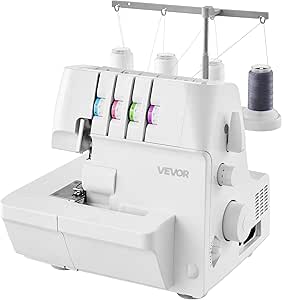
If you want a beginner serger with differential feed, my best overall pick is the American Home Serger, which combines differential feed with 2-, 3-, and 4-thread options. The Janome MOD-8933 is another strong match for beginners who want lay-in threading, while the Brother 1034D stands out as a widely recognized entry-level alternative. The main tradeoff is between easy threading and setup, broader stitch and thread options, and the controls needed to adjust fabric feeding. Not every model in this roundup confirms differential feed in its listed name or features, so check the exact model specifications before buying. Read on for the full comparison and guidance on choosing a serger that suits your first projects.
Complete the kit


Key Takeaways
- The American Home Serger leads this comparison for the stated need: its listing specifically names differential feed alongside 2-, 3-, and 4-thread options, so buyers can verify the key feature without relying on assumptions.
- Janome’s MOD-8933 and American Home emphasize different beginner needs: the MOD-8933 highlights lay-in threading and differential feed, while American Home explicitly pairs differential feed with several thread configurations.
- Threading convenience is a recurring differentiator: the Janome MyLock 634D lists a self-threading lower looper, and the 360 model highlights wide-open threading, but those conveniences do not by themselves confirm differential feed.
- Several models advertise speed or heavy-duty positioning, including VEVOR, MILLEPUNTI, and SINGER Heavy Duty options; these labels do not replace checking differential feed, adjustment controls, or beginner setup support.
- Feature verification matters more than brand or stitch count: many listings mention overlocking or multiple thread options without stating differential feed in the product name, so confirm it in the manufacturer’s specifications before choosing.




| serger for beginners with differential feed | Differential feed | Weight | Dimensions | Model |
|---|---|---|---|---|
| Serger Sewing Machine by Ameri | Yes | 14.8 pounds | 12.75 × 10 × 11.5 inches | AH100 |
| FEIYUE FY503 Serger Overlock M | Adjustable | 18 pounds | 11.92 × 13.89 × 10.62 inches | FY503 |
| Juki MO-50E 3 or 4 Thread Serg | Adjustable | 16 pounds | 11.5 × 11.5 × 9.84 inches | MO-50E/UL |
| Janome MyLock 634D Overlock Se | Adjustable | 20 pounds | 13 × 15.4 × 14.4 inches | 634D |
| 360 Upgraded Serger Overlock M | Yes | — | — | 360 |
| VEVOR Serger Overlock Sewing M | 0.7–2.0 | 16.5 pounds | 11" D × 12.6" W × 12.6" H | — |
| SINGER Heavy Duty 0460 Serger | Yes | — | — | — |
| SINGER S0230 Navy Blue High Sp | Yes | — | — | — |
| SINGER S0100 High Speed Serger | Yes | — | — | — |
| Brother 1034D Serger Overlock | — | 8 pounds | 10" D × 11" W × 13" H | — |
| SINGER HD0500S Heavy Duty Serg | Yes | 7.2 kg | — | — |
| Juki MO-80CB Free-Arm Serger O | Yes | 14 lb | 12 × 11 × 12 in | MO-80CB |
| MILLEPUNTI MLD41 Metal Frame S | Yes | 18 lb | 11.22 × 11.02 × 13.78 in | MLD41 |
| Janome MOD-8933 Serger with La | Yes | 14.3 lb | 11 × 12 × 10.7 in | 0018933D |
| SINGER S0080 Serger Next Evolu | Yes | — | — | — |
More Details on Our Top Picks
Serger Sewing Machine by American Home, Portable Stitching Machine with 4/3/2 Thread Options and Differential Feed, Includes Accessory Kit
The American Home AH100 is a practical first serger for someone who wants differential feed and several thread configurations without committing to a larger machine. Its color-coded threading and included tweezers, tools, and extra feet give a new owner useful setup aids and room to try different finishes. Compared with the Juki MO-50E, it offers 2-thread capability and a broader accessory list, while the Juki adds an automatic lower looper threader that may reduce one of the more frustrating setup steps. The AH100’s lighter 14.8-pound build is easier to move or store, but its feature set is aimed at basic home serging rather than more advanced work. Threading still needs care, so beginners should expect to follow the guides closely to avoid tangles.
Pros:- Color-coded threading helps beginners follow the setup path.
- 2/3/4-thread options support a range of basic seam finishes.
- Differential feed and adjustable stitch settings help manage fabric edges.
- Included accessory kit adds feet and tools for common home tasks.
Cons:- Careful threading is still needed to avoid tangles.
- Basic feature set offers less room for advanced serging techniques.
- Warranty details are not specified in the supplied product information.
Best for: Beginners who want a relatively lightweight serger, 2/3/4-thread options, and included feet for hemming and simple home projects.
Not ideal for: Sewists who want an automatic looper threader, advanced controls, or a machine intended for demanding production work.
- Brand:American Home
- Model:AH100
- Thread options:2, 3, or 4
- Differential feed:Yes
- Power source:AC
- Dimensions:12.75 × 10 × 11.5 inches
- Weight:14.8 pounds
- Included components:Accessory case, extra blade, subsidiary looper, all-purpose foot, elastic foot, blind hem foot, and tools
Our verdict“Choose the AH100 if portability and a useful starter accessory kit matter more than automated threading or advanced controls.”
FEIYUE FY503 Serger Overlock Machine, 2/3/4-Thread Capability
The FEIYUE FY503 suits beginners who expect to sew more than lightweight knits and want a serger described for materials ranging from light fabrics to denim. Its adjustable differential feed can help control stretching or puckering as fabric moves under the presser foot, while color-coded guides make threading less of a guessing game. The built-in cutter and rolled-hem function give it useful everyday versatility. Against the American Home AH100, the FY503’s metal frame and stated 1100-stitch-per-minute speed suggest a more substantial setup, but it weighs more and has fewer listed accessories. It offers the familiar 2/3/4-thread range rather than specialized or industrial capacity, so its appeal is home sewing flexibility, not heavy production. Its 18-pound weight also makes it less convenient to carry between workspaces.
Pros:- Adjustable differential feed helps handle fabrics with different stretch and feed needs.
- Color-coded threading guides support a more approachable setup.
- Built-in cutting system trims fabric edges during serging.
- Rolled-hem capability adds a useful finish without a separate machine.
Cons:- At 18 pounds, it is less portable than the American Home AH100.
- The supplied information lists few accessories beyond an embroiderer plate.
- Its 2/3/4-thread setup is intended for household sewing, not industrial workloads.
Best for: Home sewists learning on mixed fabrics who want differential-feed adjustment and expect to finish both lightweight materials and denim.
Not ideal for: Buyers who need a lightweight machine to move frequently, extensive included feet, or industrial-duty performance.
- Brand:FEIYUE
- Model:FY503
- Thread options:2, 3, or 4
- Differential feed:Adjustable
- Maximum sewing speed:1100 stitches per minute
- Built-in rolled hem:Yes
- Frame:Metal
- Dimensions:11.92 × 13.89 × 10.62 inches
- Weight:18 pounds
Our verdict“Pick the FY503 if fabric versatility matters more than low weight or a generous accessory bundle.”
Juki MO-50E 3 or 4 Thread Serger with Lay-In Tensions and Built-In Rolled Hem
The Juki MO-50E is the clearest fit here for beginners who are willing to give up 2-thread stitching in exchange for a more guided threading feature. Its automatic lower looper threader addresses a tricky part of serger setup, and lay-in tensions make thread placement more accessible than less clearly guided tension arrangements. The machine still supplies the key beginner control: adjustable differential feed, useful for reducing waviness or stretching as fabric feeds through. Compared with the American Home AH100, the Juki has fewer thread configurations and a shorter accessory list in the supplied data, but the threader makes setup its distinctive strength. A built-in rolled hem and retractable upper knife add flexibility. At 16 pounds it is not the lightest option, and the listed warranty covers parts and electronics for different periods.
Pros:- Automatic lower looper threader helps with a difficult setup task.
- Lay-in tensions make thread placement more approachable.
- Adjustable differential feed supports more controlled fabric handling.
- Built-in rolled hem and retractable upper knife add finishing flexibility.
Cons:- Supports only 3- or 4-thread stitching, unlike the American Home AH100’s 2/3/4 options.
- No included accessories or specialty feet are listed in the supplied data.
- Warranty excludes consumable parts and has separate coverage periods for parts and electronics.
Best for: New serger owners who plan to use 3- or 4-thread seams and want help with lower-looper threading.
Not ideal for: Buyers who need 2-thread stitching, a broad bundle of included feet, or the easiest machine to carry around.
- Brand:Juki
- Model:MO-50E/UL
- Thread options:3 or 4
- Tension system:Lay-in
- Differential feed:Adjustable
- Lower looper threader:Automatic
- Dimensions:11.5 × 11.5 × 9.84 inches
- Weight:16 pounds
- Warranty:Limited; 5 years on parts and 2 years on electronics
Our verdict“Choose the MO-50E if simpler lower-looper threading matters more than 2-thread versatility or included accessories.”
Janome MyLock 634D Overlock Serger with Self Threading Lower Looper and Bonus Kit
The Janome MyLock 634D is suited to a beginner who expects to keep learning and wants room to adjust stitch formation rather than rely on a narrow starter feature set. Its 2/3/4-thread options, adjustable differential feed, stitch settings, and cutting width give the user several ways to adapt finishes as projects change. The self-threading lower looper and color-coded guides also target a common source of setup frustration. Compared with the Juki MO-50E, the Janome accepts 2-thread configurations and includes a bonus kit, while the Juki is smaller and lighter and lists an automatic lower looper threader. The Janome’s 20-pound weight and larger footprint make it less suited to frequent storage or relocation. Its range of adjustments may also take longer to learn than a simpler first machine.
Pros:- 2/3/4-thread capability covers a broad range of home seam finishes.
- Self-threading lower looper and color-coded guides ease setup.
- Adjustable differential feed, stitch length, and cutting width offer control as skills develop.
- Bonus kit adds accessories for varied projects.
Cons:- At 20 pounds, it is the heaviest option among these five.
- Its larger footprint takes more dedicated workspace than the Juki MO-50E.
- Multiple setup and adjustment choices may feel demanding to a first-time serger owner.
Best for: Beginners who sew regularly, want 2/3/4-thread flexibility, and are ready to learn stitch and cutting adjustments.
Not ideal for: Sewists with limited storage or those who need a lightweight machine that is quick to move and simple to set up.
- Model:634D
- Thread options:2, 3, or 4
- Differential feed:Adjustable
- Maximum speed:1300 stitches per minute
- Lower looper threading:Self-threading
- Power source:AC
- Material:Metal
- Dimensions:13 × 15.4 × 14.4 inches
- Weight:20 pounds
Our verdict“Choose the MyLock 634D if you want a skill-building machine with broad adjustment options and can give it a stable workspace.”
360 Upgraded Serger Overlock Machine with Wide-Open Threading
The SewLaVie 360 makes its case with wide-open threading access and a broad set of stated stitch options, giving beginners room to inspect the threading path and try different finishes. It supports 2/3/4-thread sewing, differential feed, rolled hems, and a stated 12 stitch types, so it reaches beyond the basic setup offered by the American Home AH100 on listed stitch variety. Its 1300-stitch-per-minute speed can help when finishing long seams, though speed alone does not make a machine easier to learn. The open access may help with troubleshooting, but the supplied description also warns that its controls can feel complex for complete beginners. Compared with the Juki MO-50E, it lists more thread configurations and higher speed, while the Juki provides a named automatic lower looper threader. The SewLaVie’s care routine and home-use scope are further limits.
Pros:- Wide-open threading access can make inspection and troubleshooting easier.
- 2/3/4-thread capability supports different seam finishes.
- Twelve stated stitch types and rolled-hem capability broaden home sewing options.
- Listed LED light and safety features support visibility and operation.
Cons:- The range of functions may feel complex to a first-time serger user.
- The supplied information describes it for home sewing rather than industrial workloads.
- Regular maintenance is needed, and its threading access is not the same as an automatic looper threader.
Best for: Home sewists who want multiple stitch choices and an accessible threading area, and are comfortable following a manual as they learn.
Not ideal for: Complete beginners seeking the simplest possible setup, or users who need an industrial machine for sustained heavy work.
- Brand:SewLaVie
- Model:360
- Thread options:2, 3, or 4
- Stitch types:12
- Stitch speed:1300 stitches per minute
- Differential feed:Yes
- Warranty:2 years
- Included components:Machine, dust bag, manual, and toolkit
- Year manufactured:2026
Our verdict“Pick the SewLaVie 360 if you value visible threading access and stitch variety, but prefer the Juki MO-50E if automatic lower-looper threading is your priority.”
VEVOR Serger Overlock Sewing Machine 1250 SPM 2/3/4 Thread, White
The VEVOR is a good match for beginners who want to experiment with different edge finishes: it supports 2-, 3-, and 4-thread stitching, including rolled and lettuce hems. Its 0.7–2.0 differential-feed range gives more adjustment room for stretchy or delicate fabric than the SINGER S0230 listing, which confirms differential feed but provides no range. Color-coded threading and LED lighting help with setup, though they do not remove the learning curve of threading and tension adjustments. At 1,250 stitches per minute, it is quick enough for regular garment work, but it is not the fastest option here; the SINGER S0230 and S0100 are listed at 1,300. I’d favor the VEVOR for finish flexibility, not for someone expecting a fully guided first-serger experience.
Pros:- 2-, 3-, and 4-thread options support several seam and edge-finishing styles.
- Differential-feed adjustment from 0.7 to 2.0 offers flexibility for stretchy and delicate fabrics.
- Color-coded threading and LED lighting make setup easier to follow.
- Compact listed dimensions and 16.5-pound weight suit a home sewing station.
Cons:- Threading and operation may still be challenging for someone new to sewing.
- Its 1,250 SPM rating is below the listed 1,300 SPM of the SINGER S0230 and S0100.
- The listed 120V input limits straightforward use in regions with different household voltage.
Best for: Home sewists who already know basic sewing and want one serger for stretch fabrics, rolled hems, and decorative edge finishes.
Not ideal for: Complete sewing newcomers who need extensive setup guidance, or buyers outside 120V regions who cannot use a suitable converter.
- Thread capability:2/3/4 threads
- Stitch speed:Up to 1,250 stitches per minute
- Differential feed:0.7–2.0
- Power input:120 volts
- Materials:Iron and plastic
- Dimensions:11″ D × 12.6″ W × 12.6″ H
- Weight:16.5 pounds
- Color:White
Our verdict“Choose the VEVOR if stitch variety and a stated differential-feed range matter more to you than the fastest listed speed or beginner-focused guidance.”
SINGER Heavy Duty 0460 Serger Overlock Machine
The SINGER Heavy Duty 0460 puts fabric handling and durability ahead of the simplest possible first setup. Its full metal interior frame, heavy-duty motor, and large cutting blade suit frequent edge finishing across a wider range of fabric weights. For beginners, 13 built-in stitches and 2-, 3-, or 4-thread capability leave room to grow, while LED lighting helps illuminate the looper area. Compared with the SINGER S0100, the 0460 offers more stitch choices and a sturdier stated frame, but the S0100 gives clearer beginner conveniences in its listing, including pre-threading and a defined accessory set. The 0460’s differential feed is a useful feature for managing stretch, though no adjustment range is provided. Its complexity and separately sold presser feet can add friction for a first-time owner.
Pros:- Full metal interior frame is suited to regular use.
- Heavy-duty motor and large cutting blade support sewing and trimming in one pass.
- Thirteen built-in stitches provide more variety than the SINGER S0100’s six listed stitches.
- LED lighting and 2-, 3-, and 4-thread capability support flexible setup and finishing.
Cons:- The threading and stitch options may feel complex to a complete beginner.
- Differential-feed adjustment range is not stated in the supplied product details.
- Additional presser feet are sold separately, limiting out-of-box specialty work.
Best for: Frequent home sewists who plan to finish garments in varied fabrics and value a metal-framed machine with multiple stitch options.
Not ideal for: First-time serger owners who want a simple, clearly documented setup or buyers who need specialty presser feet included.
- Built-in stitches:13
- Thread capability:2/3/4 threads
- Motor:Heavy duty
- Frame:Full metal interior
- Differential feed:Yes
- Lighting:LED
- Included accessories:Spool holders, tweezers, 2-thread converter, screwdriver, lint brush, sewing machine oil, lower cutter blade, needles, waste tray, dust cover, accessory storage box
Our verdict“Pick the 0460 if sturdier construction and stitch variety matter more than the easiest beginner setup or included specialty feet.”
SINGER S0230 Navy Blue High Speed Overlock Serger, 2-3-4 Thread Capability
The SINGER S0230 suits beginners who want to move quickly through garment seams without giving up the flexibility of 2-, 3-, and 4-thread options. Its listed 1,300-stitches-per-minute speed matches the SINGER S0100 and exceeds the VEVOR’s 1,250, so it is a stronger fit for longer runs than for a cautious, slow-paced learning process. Color-coded threading, differential feed, and a free arm address practical needs: easier threading cues, fabric control, and access around smaller garment openings. The description calls it beginner-friendly, but it provides fewer setup details than the S0100 listing, which specifies pre-threading and included accessories. I’d choose the S0230 for speed and garment access; skip it if you want a clearly itemized starter kit or more explicit stitch-count information.
Pros:- Listed 1,300 SPM speed supports efficient finishing on longer projects.
- 2-, 3-, and 4-thread capability covers a range of seam and edge-finishing needs.
- Color-coded threading gives new users a visual setup aid.
- Differential feed and a built-in free arm suit stretch fabric and garment details.
Cons:- The product information does not specify a differential-feed adjustment range or built-in stitch count.
- A serger complements rather than replaces a conventional sewing machine.
- The listed color is navy blue, which offers little choice for buyers seeking another finish.
Best for: Garment sewists who want a fast 2-, 3-, and 4-thread machine with a free arm for cuffs, sleeves, and other smaller openings.
Not ideal for: Beginners who want a clearly described pre-threaded setup, a detailed accessory list, or a machine that can also perform ordinary sewing-machine tasks.
- Model number:S0230
- Thread capability:2/3/4 threads
- Stitch speed:Up to 1,300 stitches per minute
- Differential feed:Yes
- Threading aid:Color-coded threading
- Free arm:Built in
- Included components:Serger and accessories
- Color:Navy blue
Our verdict“Choose the S0230 if fast garment finishing and free-arm access are your priorities, but favor the S0100 if pre-threading and a specified accessory list matter more.”
SINGER S0100 High Speed Serger Overlock Machine, 2-3-4 Thread Capability
The SINGER S0100 is the most straightforward fit here for a beginner who wants useful setup aids rather than an expanded stitch menu. It arrives pre-threaded, uses color-coded guides, and includes core tools such as tweezers, needles, cone adapters, and a foot controller. That gives a new owner a clearer starting point than the SINGER Heavy Duty 0460, whose listing emphasizes its frame and stitch count but notes that additional presser feet are sold separately. The S0100’s differential feed and free arm suit stretch fabric and garment openings, while its 1,300 SPM rating keeps it capable as skills grow. The tradeoff is a relatively focused set of six built-in stitches and no digital display or advanced controls.
Pros:- Pre-threading and color-coded guides lower the setup barrier for a first-time owner.
- Differential feed and a built-in free arm support stretch sewing and garment details.
- Six built-in stitches and 2-, 3-, and 4-thread capability cover common finishing tasks.
- Includes a general-purpose foot, tweezers, extra needles, cone adapters, screwdriver, and foot controller.
Cons:- Six built-in stitches offer less variety than the SINGER Heavy Duty 0460’s 13.
- No digital display or advanced features are listed.
- The product details say it needs space for setup and storage but provide no dimensions.
Best for: New serger owners who want a pre-threaded starting point, basic accessories, and differential feed for garments and stretch fabrics.
Not ideal for: Sewists who want a broad stitch menu, advanced electronic controls, or a compact machine that can stay set up in very limited space.
- Thread capability:2/3/4 threads
- Stitch speed:Up to 1,300 stitches per minute
- Built-in stitches:6
- Differential feed:Yes
- Threading:Color-coded; pre-threaded
- Free arm:Built in
- Frame material:Metal
- Warranty:1 year
Our verdict“The S0100 is a sensible first serger if easy setup and included essentials outweigh a larger stitch selection or advanced controls.”
Brother 1034D Serger Overlock Sewing Machine
The Brother 1034D stands apart for buyers who need a capable serger that is easier to move and store than the heavier VEVOR. At 8 pounds and 10 × 11 × 13 inches, it has a notably compact listed footprint, while its 1,300-stitches-per-minute speed keeps project work moving. Color-coded guides help with threading, and the included three snap-on feet give beginners more options from the start than the SINGER S0230 listing, which does not name its included accessories. The supplied details confirm three- or four-thread operation, but unlike the other picks, they do not explicitly mention differential feed. That gap matters for a roundup centered on fabric control: I’d verify the feature and adjustment details before buying if stretch sewing is a main goal. It is also limited to 120V.
Pros:- At 8 pounds, it is lighter than the listed VEVOR and easier to store or reposition.
- The 1,300 SPM rating supports quick seam finishing.
- Color-coded threading guides provide a useful visual aid for beginners.
- Three snap-on feet and an accessory bag are included.
Cons:- The supplied product details do not confirm differential feed, a key feature for this roundup.
- It offers three- or four-thread capability, not the two-thread option listed for the SINGER S0100 and S0230.
- The 120V power requirement restricts use in regions with different household voltage.
Best for: Home sewists who want a compact, lightweight serger with included accessory feet for routine three- or four-thread finishing.
Not ideal for: Buyers who need a confirmed differential-feed specification for frequent stretch-fabric work, or those outside 120V regions without suitable voltage support.
- Model number:1034D
- Stitch speed:Up to 1,300 stitches per minute
- Thread capability:3 or 4 threads
- Power source:Corded electric
- Input voltage:120 volts
- Dimensions:10″ D × 11″ W × 13″ H
- Weight:8 pounds
- Included accessories:3 snap-on feet, thread spools, accessory bag, instruction manual
- Warranty:5 years limited parts; 90 days labor
Our verdict“Consider the Brother 1034D for a light, compact setup, but confirm its differential-feed capability before choosing it for stretch-fabric work.”
SINGER HD0500S Heavy Duty Serger Overlock Machine, 2-3-4 Thread, Black
The SINGER HD0500S pairs differential feed with a metal frame and a maximum speed of 1,300 stitches per minute, making it a strong fit for beginners who expect to sew substantial batches rather than occasional hems. Its LED threading light and color-coded paths can make setup easier to follow, while 2-, 3-, and 4-thread options leave room to try different seam finishes. Compared with the Janome MOD-8933, it offers a stated top speed and more stitch types, but the Janome is lighter and has a much longer stated warranty. The HD0500S’s 7.2 kg weight may make it less convenient to move, and its features remain focused on core serging rather than advanced techniques. New users should be ready to learn threading and tension adjustments.
Pros:- Differential feed helps manage fabric movement and reduce puckering or stretching.
- Up to 1,300 stitches per minute suits longer project runs.
- LED light and color-coded threading paths support setup.
- Metal frame adds stability during sewing.
Cons:- At 7.2 kg, it is less convenient to move than the lighter Janome MOD-8933.
- Six stitch types and basic serging functions may limit users seeking specialized techniques.
- Beginners still need to learn threading and machine adjustments.
Best for: Beginners who plan to sew frequent projects and want a sturdy 2-, 3-, and 4-thread machine with a stated high sewing speed.
Not ideal for: Sewists who need a lightweight machine to store or carry often, or who want advanced stitch functions beyond basic serging.
- Thread options:2, 3, or 4 threads
- Stitch types:6
- Maximum speed:1,300 stitches per minute
- Differential feed:Yes
- Lighting:LED threading light
- Frame:Heavy-duty metal
- Free arm:Yes
- Weight:7.2 kg
- Warranty:1 year
Our verdict“Choose the HD0500S if you want a sturdy beginner serger with differential feed and speed for regular sewing, and can accept its weight and learning curve.”
Juki MO-80CB Free-Arm Serger Overlock Machine
The Juki MO-80CB earns its place for a beginner whose projects include sleeves, cuffs, and other tubular pieces: its free-arm design gives fabric more room to move around small openings than a flat sewing surface does. Differential feed, adjustable foot pressure, and adjustable cutting width add useful ways to respond to different fabrics and seam finishes. Compared with the SINGER HD0500S, the Juki’s clearest advantage is access to cylindrical sewing and fabric adjustments; the SINGER provides more published specifics on thread options, stitch count, and speed. That missing detail makes it harder to predict how broadly the MO-80CB will suit a beginner’s projects. Its lower-looper threading lever is a practical aid, but setup may still feel less straightforward than a model with more documented threading guidance.
Pros:- Free arm is useful for tubular garment sections.
- Differential feed and adjustable foot pressure offer fabric-handling control.
- Adjustable cutting width provides another way to tailor seam finishing.
- Lower-looper threading lever can simplify a tricky setup step.
Cons:- The supplied information does not specify stitch options or sewing speed.
- No included accessories or additional presser feet are described.
- Its adjustments and setup may be challenging for a first-time serger user.
Best for: Garment beginners who expect to sew sleeves, cuffs, and other circular pieces and want adjustable fabric handling.
Not ideal for: First-time serger owners who want clearly listed stitch and speed specifications before choosing, or shoppers seeking a supplied accessory and presser-foot package.
- Model:MO-80CB
- Differential feed:Yes
- Free arm:Yes
- Adjustments:Cutting width and presser-foot pressure
- Looper threading:Lower-looper threading lever
- Dimensions:12 × 11 × 12 in
- Weight:14 lb
- Power source:Corded electric
- Warranty:5-year limited
Our verdict“Pick the MO-80CB for free-arm garment work and adjustable fabric handling, but look elsewhere if documented stitch details are a priority.”
MILLEPUNTI MLD41 Metal Frame Serger Overlock Sewing Machine, 1250 SPM, 7 Stitches
The MILLEPUNTI MLD41 is a practical entry-level choice for a beginner who wants useful setup tools included, not just a serger. Its accessory kit lists needles, tweezers, a screwdriver, an Allen wrench, spool holders, thread, and a cleaning brush, helping a new owner get started with basic setup and care. Differential feed, seven stitches, and a metal frame cover the core needs of everyday seam finishing. Compared with the Janome MOD-8933, the MLD41 lists a faster 1,250-stitch-per-minute rate and more included tools, while the Janome is lighter and carries a much longer stated warranty. The MLD41 weighs 18 pounds, so it is a less appealing choice for sewing spaces that need frequent packing away. Its 120V specification also limits suitability outside compatible electrical systems.
Pros:- Accessory kit includes tools and supplies for setup and routine cleaning.
- Differential feed supports better handling of fabrics prone to stretching or gathering.
- Seven stitches give beginners several core finishing options.
- Metal frame and 1,250-stitch-per-minute speed suit regular project work.
Cons:- At 18 pounds, it is heavier than the Janome MOD-8933.
- The seven-stitch selection may not meet advanced or specialty sewing needs.
- Specified for AC 120V, which restricts use where that supply is unavailable.
Best for: New serger owners who want a listed set of basic maintenance and setup tools alongside differential feed and several stitch choices.
Not ideal for: Sewists who need a lightweight machine to store frequently, advanced stitch variety, or compatibility with non-120V electrical systems.
- Model:MLD41
- Thread options:3 or 4 threads
- Built-in stitches:7
- Maximum speed:1,250 stitches per minute
- Differential feed:Yes
- Frame material:Metal
- Power:AC 120V
- Dimensions:11.22 × 11.02 × 13.78 in
- Weight:18 lb
Our verdict“Choose the MLD41 if a supplied accessory kit and core serger functions matter more than low weight or a broad stitch range.”
Janome MOD-8933 Serger with Lay-In Threading, 3 and 4 Thread Convertible with Differential Feed
For a first-time serger owner, the Janome MOD-8933 puts setup clarity ahead of a long feature list. Its lay-in threading and color-coded guides give beginners visible cues when following the thread paths, and the 3- and 4-thread configuration covers common seam-finishing tasks. Differential feed is especially relevant for knits and other fabrics that can stretch or ripple under the presser foot. Compared with the SINGER HD0500S, the Janome is lighter at 14.3 pounds and has a longer stated limited warranty; the SINGER, by contrast, specifies six stitch types and a 1,300-stitch-per-minute speed. The MOD-8933 is centered on core serging, with no advanced features described, so sewists wanting more specialized functions may outgrow it. Its relatively compact dimensions also suit a smaller work area.
Pros:- Lay-in threading and color-coded guides provide clear setup cues.
- Differential feed helps manage stretchy or delicate fabric movement.
- 3- and 4-thread options suit common seam-finishing jobs.
- 14.3-pound weight and compact dimensions make it easier to accommodate than the MILLEPUNTI MLD41.
Cons:- The listed features focus on basic serging rather than advanced techniques.
- Stitch count and maximum speed are not provided in the supplied specifications.
- Requires access to an AC power outlet.
Best for: New sewists who value clear threading guides, a manageable machine size, and standard 3- or 4-thread finishing for garments and knits.
Not ideal for: Experienced users seeking advanced serger functions, or buyers who want a published stitch count and maximum speed before choosing.
- Model:0018933D
- Thread options:3 or 4 threads
- Threading:Lay-in system with color-coded guides
- Differential feed:Yes
- Material:Metal
- Dimensions:11 × 12 × 10.7 in
- Weight:14.3 lb
- Power source:AC
- Warranty:25-year limited
Our verdict“The MOD-8933 is a sensible pick for beginners who want guided threading and core differential-feed functions in a relatively compact machine.”
SINGER S0080 Serger Next Evolution Overlock Machine, 8 Built-in Stitches
The SINGER S0080 offers eight built-in stitches, the largest stated selection among these five picks, giving beginners room to try trimming, overcasting, and hemming without moving straight to a more specialized machine. Its differential feed is designed to help prevent puckering, while color-coded threading, LED lighting, and a free arm address common setup and garment-sewing needs. Compared with the Janome MOD-8933, the S0080 lists more stitch choices and includes accessories such as tweezers, a lint brush, and a dust cover; the Janome provides a stated warranty and a more explicit 3- and 4-thread configuration. The S0080’s supplied details do not specify sewing speed or weight, making those practical comparisons difficult. Threading issues are noted in the product information, so beginners should be prepared to follow the guides carefully.
Pros:- Eight built-in stitches cover trimming, overcasting, and hemming tasks.
- Differential feed is intended to help prevent puckering across varied fabrics.
- Color-coded threading and LED lighting support setup and visibility.
- Free arm and included maintenance tools add garment-sewing and care convenience.
Cons:- Threading issues are reported in the supplied product information, which may frustrate beginners.
- The listed details do not include a maximum sewing speed or machine weight.
- Eight stitches may still fall short for users seeking advanced or decorative options.
Best for: Beginners who want a broad set of everyday stitch types, differential feed, and a free arm for garment projects.
Not ideal for: Buyers who prioritize simple, well-documented threading performance, or who need a stated speed, weight, or advanced decorative stitches.
- Built-in stitches:8
- Thread capability:3 or 4 threads
- Differential feed:Yes
- Threading:Color-coded
- Frame material:Metal
- Lighting:LED
- Free arm:Yes
- Included accessories:Presser foot, spool holders, tweezers, screwdriver, lint brush, machine oil, and dust cover
Our verdict“Choose the S0080 if stitch variety and a free arm matter most, but favor a more fully documented option if threading ease is your main concern.”

How We Picked
I ranked these machines around the specific needs behind beginner serger with differential feed: whether the listing identifies differential feed, how approachable threading and setup appear from the stated features, and whether the thread options give a new user room to learn. I also weighed practical fit, including free-arm access, built-in rolled hemming, construction claims, and the distinction between a stated feature and one that still needs verification. A speed figure or a long stitch list did not earn a higher position on its own.
The American Home Serger and Janome MOD-8933 rank ahead because their listings explicitly name differential feed; the American Home also specifies 2-, 3-, and 4-thread capability, while the Janome calls out lay-in threading. Other machines remain in the roundup for potentially useful beginner features, such as the Juki MO-50E’s lay-in tensions and rolled hem or the Janome MyLock 634D’s self-threading lower looper. Since several listings do not confirm differential feed, I treat them as alternatives to investigate rather than verified matches for the central requirement.
Factors to Consider When Choosing Serger For Beginners With Differential Feed
The best first serger is not necessarily the one with the most stitches or the highest stated speed. I would start by confirming the feature that brought you here, then match the machine’s setup demands and capabilities to the fabrics and projects you actually plan to sew.
Confirm Differential Feed on the Exact Model
Differential feed uses separately controlled feed dogs to move fabric at different rates, which can help manage stretching or gathering as material passes through the machine. Do not infer that a serger has it because the listing mentions overlocking, multiple threads, or knit fabrics. Check the manufacturer’s specifications and instruction manual for a differential-feed control and adjustment guidance. Also verify the exact model number: similar names within a brand’s lineup may have different features. If this function is your main reason for buying, treat an unclear listing as a reason to pause rather than a minor detail.
Choose Thread Options You Will Actually Use
Two-, three-, and four-thread configurations can support different seam finishes and construction needs, but more configurations also mean more setup choices to learn. A 4-thread overlock is a common starting point for joining seams, while 3-thread setups can suit some edge-finishing tasks. Read the manual or stitch chart before purchase to see which configurations are supported and how the machine changes between them. Beginners can benefit from versatility when it comes with clear instructions, but a longer feature list is less useful if the threading and tension process feels opaque. Prioritize the stitches your projects need over a count of built-in options.
Treat Threading Aids as Setup Help, Not a Cure-All
Lay-in paths, open access, and lower-looper aids can make threading less fiddly, but they do not remove the need to follow the correct sequence. A beginner should look for a clearly labeled threading diagram, accessible looper paths, and instructions that explain how to recover after a thread breaks. Before buying, check whether the manual is available and whether it covers rethreading, tension adjustments, and test stitching. One common mistake is choosing a machine based on a single threading feature while overlooking how easy it is to see and reach the full thread path. Setup support can save frustration, but practice still matters.
Match the Machine to Your Fabric and Projects
Light knits, stable wovens, slippery materials, and thicker layered seams can behave differently under the presser foot. Differential feed can help adjust how fabric is handled, but it does not guarantee a perfect result on every material. Check the manual for recommended fabrics, needle guidance, and adjustment instructions, then plan to test settings on scraps from the project itself. If you mainly want to finish garment seams, prioritize reliable overlocking and accessible feed controls. If you expect to sew cuffs, sleeves, or other small openings, a free arm may matter more than an extra stitch option.
Weigh Speed Against Control
High stated stitches-per-minute figures describe a machine’s potential pace, not the speed a beginner should sew. At first, slower stitching can make it easier to guide fabric and watch the seam allowance. Consider whether the machine offers a controllable pedal response and whether the work area gives you a clear view of the cutting and stitching line. A fast machine may suit someone who already handles fabric confidently, but speed alone does not make a serger easier or more capable. Do not pay extra for a headline speed figure if threading, differential-feed adjustment, or instruction quality is the bigger concern.
Budget for Needles, Thread, and Practice
A serger needs suitable needles and multiple thread cones, and learning to balance stitch formation may use more thread than expected. Check what accessories come with the machine, but do not assume an included kit covers every future need. Keep scraps for practicing threading and tension changes so you can record what works with a particular fabric. Before choosing a machine, look at how replacement parts and compatible needles are identified in its documentation. Spending more may make sense for a feature you will use often, but basic supplies and accessible instructions can matter more than a premium-sounding label.
Frequently Asked Questions
Which machines in this roundup explicitly list differential feed?
The product names supplied here explicitly identify differential feed on the American Home Serger and Janome MOD-8933. For the other models, the provided names do not confirm that feature, even when they list multiple thread options or other beginner-friendly details. Check the manufacturer’s specifications for the exact model before treating any of them as a match. This distinction matters because thread count and differential feed are separate capabilities. If you cannot verify the control in official documentation, ask the seller or manufacturer before ordering.
Is lay-in threading the same as differential feed?
No. Lay-in threading describes how thread is placed into the machine’s tension paths, while differential feed controls how the feed dogs move fabric. Lay-in threading may make setup less awkward, but it does not indicate whether the machine can adjust feed for stretching or gathering. Look for both features separately in the specifications. The Janome MOD-8933 listing names both lay-in threading and differential feed, but on other models one feature should not be assumed from the other.
Should I choose a 2-, 3-, or 4-thread serger as my first machine?
Choose based on the seams and finishes you plan to make, not on the largest number in a product title. A four-thread setup is useful for many garment seams, while three-thread configurations can suit some edge-finishing tasks; two-thread options may support particular finishing methods depending on the model. The machine’s manual should explain which stitch combinations it offers and how to set them up. More options can extend a machine’s use, but they also add configurations to learn. A clear stitch chart and approachable threading instructions are valuable when you are new.
Will differential feed prevent knit fabric from stretching or rippling?
Differential feed gives you a way to adjust how fabric moves under the presser foot, which can help address stretching or rippling. It is not an automatic fix: results also depend on the fabric, needle, thread, stitch settings, and handling. Test on a scrap of the same material and change one setting at a time so you can see the effect. Follow the machine manual for the adjustment range and recommended starting points. If you sew varied knits, treat differential feed as a useful control rather than a promise of perfect seams without practice.
What should I verify before buying a model that does not name differential feed?
Find the official manual or feature list for the exact model and look for a differential-feed adjustment control, not just a general reference to fabric handling. Confirm that the product number in the documentation matches the listing, since similar model names can refer to different machines. Check whether the manual explains how to adjust the feed and which fabrics or effects the setting supports. If documentation is missing or unclear, contact the manufacturer before purchase. That small check is more useful than relying on brand reputation, speed claims, or a high stitch count.
Conclusion
For the clearest match to this roundup’s main requirement, I recommend the American Home Serger as best overall: its listing explicitly names differential feed and 2-, 3-, and 4-thread options. The Janome MOD-8933 is my best beginner-focused alternative for buyers who value stated lay-in threading alongside differential feed. For a best value choice, compare the exact included accessories and confirmed features of the American Home and other verified models before deciding; the supplied product details do not support a price-based value claim. I cannot label a best premium pick from these listings alone because they provide no verified pricing or enough comparative build information. If free-arm access matters most, investigate the Juki MO-80CB; if threading assistance is your priority, compare the Janome MyLock 634D and 360 model, while verifying differential feed separately. Choose a machine only after its exact specifications confirm the feature you need.