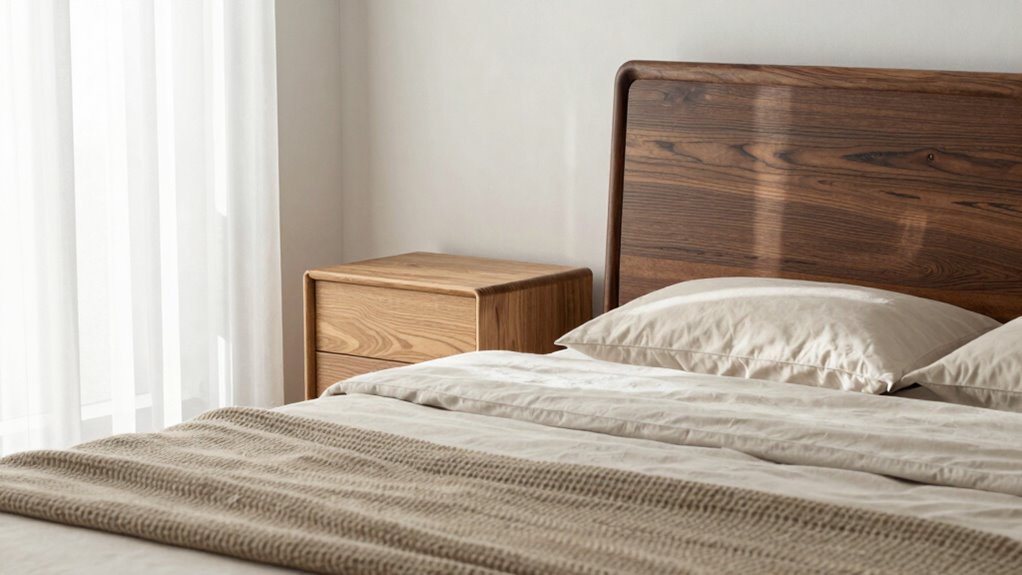

To mix wood tones in your bedroom without regret, keep a cohesive palette by choosing darker woods for larger pieces and lighter woods for accents. Incorporate vintage and modern elements to add character and contrast, ensuring each piece complements the others. Vary grain patterns and textures for depth, and pay attention to proportion and scale for balance. A thoughtful, unified approach will create a stylish, welcoming space—continue to explore for more tips to perfect your design.
Key Takeaways
- Maintain a cohesive color palette by using similar tones across different wood finishes for harmony.
- Incorporate varied grain patterns and textures to add visual interest without clashing.
- Balance larger dark wood pieces with lighter, smaller accents for proportion and contrast.
- Combine vintage distressed furniture with sleek modern pieces for a timeless, layered look.
- Trust your eye, experiment, and aim for a balanced mix that feels intentional and welcoming.
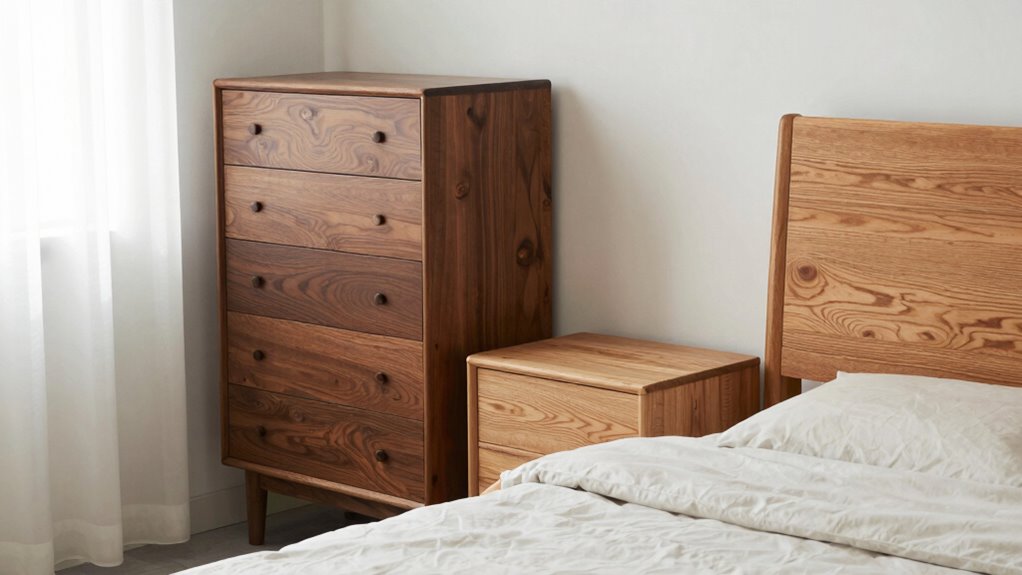
If you’re aiming for a vintage charm, consider incorporating distressed or antique-finished wood furniture. These pieces bring character and a sense of history, adding warmth and personality. To prevent the vintage elements from overwhelming the room, pair them with sleek, modern accents. For example, a weathered nightstand can sit beside a contemporary bed frame with clean lines and a lighter wood tone. This contrast creates a dynamic look that feels both timeless and fresh.
When mixing wood tones, it’s essential to keep a cohesive palette. Think of your room as a visual story, where each piece complements the others. You might choose a darker wood for your bed frame, then add lighter wood accents through a dresser or side tables. These variations bring visual interest without looking mismatched. To tie everything together, consider using accessories—like lamps, picture frames, or throws—in similar colors or materials that echo the wood tones. This helps your room feel unified despite the mix of finishes.
Keep a cohesive palette with matching accessories to unify mixed wood tones seamlessly.
Another tip is to vary the grain pattern and texture, which adds subtle complexity. A piece with a pronounced grain can stand next to a smoother, more refined surface, highlighting the differences without clashing. When selecting furniture, think about proportion and scale too. Larger, heavier pieces in dark wood can anchor the space, while smaller, lighter items provide contrast and breathing room. Additionally, understanding wood species diversity can help you choose pieces that naturally complement each other in tone and texture, and exploring wood grain patterns can further enhance your design choices. Incorporating different wood species can also introduce a visual variety that enhances the overall aesthetic. Being aware of grain direction can further improve your ability to create a harmonious look, as it influences how light interacts with the surface.
Ultimately, mixing wood tones isn’t about matching everything perfectly but creating a balanced, intentional look. Trust your eye and don’t be afraid to experiment. Whether you embrace vintage charm or modern contrast, the goal is to craft a bedroom that feels personalized and welcoming. With a little planning, you’ll avoid regret and enjoy a space that’s both stylish and harmonious.
wood bedroom furniture set
As an affiliate, we earn on qualifying purchases.
As an affiliate, we earn on qualifying purchases.
Frequently Asked Questions
Can Different Wood Tones Affect Bedroom Temperature Perception?
Different wood tones can influence how you perceive your bedroom’s temperature. Lighter wood colors tend to make a space feel cooler and more airy, while darker tones can create a warmer, cozier atmosphere. When mixing wood tones, consider how the color impacts temperature perception, ensuring the overall look feels balanced. You’ll enjoy a harmonious space that feels just right, regardless of the actual temperature, by thoughtfully choosing and combining your wood furniture.
How Do Wood Tones Influence Bedroom Acoustics?
You might notice that different wood tones subtly influence your bedroom’s acoustics. Warm, dense woods absorb sound better, reducing echo and creating a cozy atmosphere. Conversely, lighter or glossier finishes reflect sound, possibly increasing echoes and making the room feel livelier. By choosing varied wood tones, you can naturally manage sound absorption and acoustic reflections, enhancing your comfort and privacy without needing extra soundproofing.
Are There Specific Lighting Conditions That Enhance Mixed Wood Tones?
Yes, specific lighting conditions enhance mixed wood tones. You should focus on creating a warm lighting ambiance with soft, warm bulbs to highlight the richness of different woods. Natural light works beautifully during the day, making the tones appear more vibrant and cohesive. At night, use layered lighting like table lamps or sconces to add warmth and depth, ensuring your bedroom feels inviting and your wood tones harmonize perfectly.
What Are Common Mistakes to Avoid When Combining Wood Tones?
Like a master chef avoiding a bland dish, you should steer clear of mismatched grain patterns and jarring finish contrasts. Avoid mixing too many wood tones that clash or choosing pieces with overly different textures. Keep the overall look cohesive by balancing light and dark woods, and pay attention to grain directions. This prevents the space from feeling chaotic and guarantees your bedroom feels harmonious, not haphazard.
How Do Mixed Wood Tones Impact Resale Value of the Bedroom?
Mixed wood tones can enhance your bedroom’s resale value if you achieve wood harmony and visual balance. When your furniture blends well, it makes the space look cohesive and inviting, appealing to potential buyers. However, mismatched or chaotic wood tones might confuse or turn off buyers, potentially lowering value. So, carefully plan your wood combinations to create a harmonious, balanced look, boosting your bedroom’s overall appeal and resale potential.
distressed vintage wood nightstand
As an affiliate, we earn on qualifying purchases.
As an affiliate, we earn on qualifying purchases.
Conclusion
Just like a master painter blending shades on a canvas, you can harmonize different wood tones in your bedroom to create a cozy, inviting retreat. Think of your space as a symphony where each instrument — or piece of furniture — plays its part in perfect harmony. When you embrace balance and contrast, you craft a room that’s both lively and soothing. Trust your eye, and let your unique style be the guiding melody in your design masterpiece.
modern light wood dresser
As an affiliate, we earn on qualifying purchases.
As an affiliate, we earn on qualifying purchases.
mixed wood tone bedroom furniture
As an affiliate, we earn on qualifying purchases.
As an affiliate, we earn on qualifying purchases.