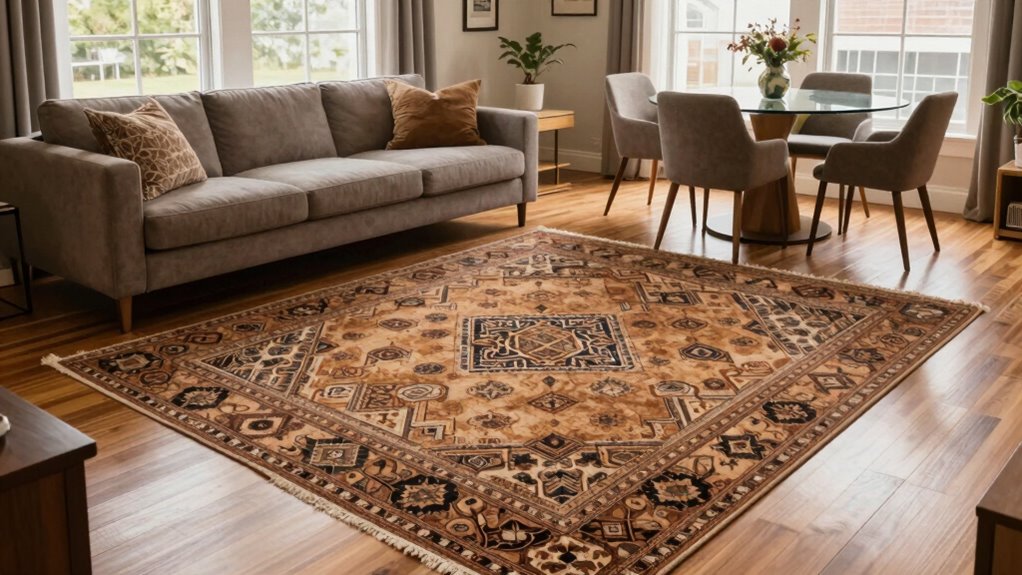

To connect your living and dining areas with a rug, choose one that complements the overall color scheme for a seamless flow. Place the rug so that it anchors key furniture in each zone, like the sofas and dining table, creating clear boundaries without harsh lines. Use contrast or shared tones to enhance cohesion, and guarantee the rug size supports functional placement. For more tips on creating a unified space, keep exploring how strategic choices make a big difference.
Key Takeaways
- Choose a large rug that spans both areas to create a visual link and define the overall space.
- Coordinate colors and patterns with furniture and accessories for seamless integration.
- Position the rug so that main furniture pieces in each zone sit comfortably on it.
- Use consistent or complementary hues to enhance cohesion between living and dining zones.
- Ensure the rug placement allows easy movement and maintains clear boundaries without disrupting flow.
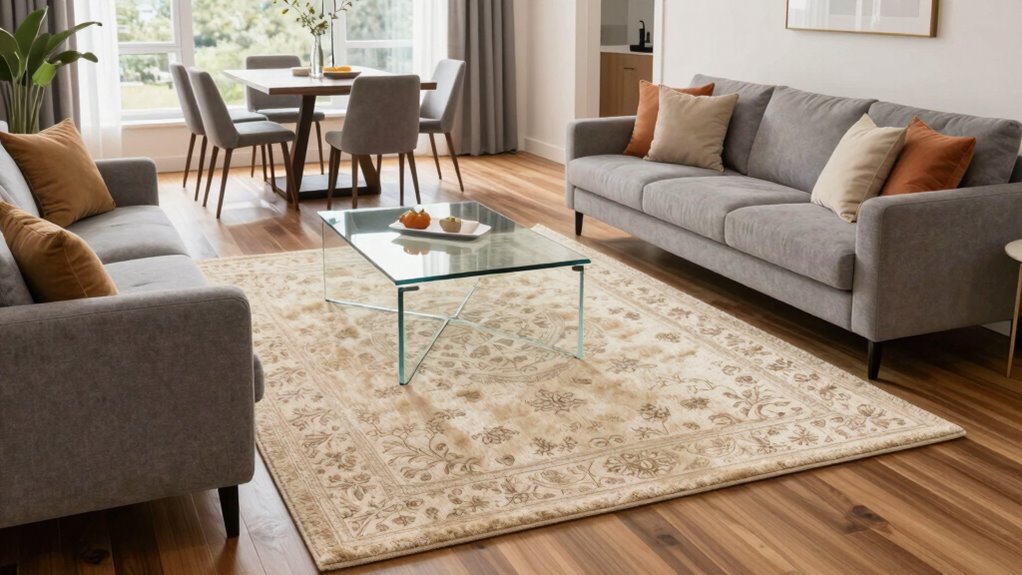
Using a rug to connect living and dining areas can create a seamless and inviting flow in your open-concept space. The key to achieving this lies in thoughtful color coordination and strategic rug placement. When selecting a rug, consider how its colors will complement the overall palette of your rooms. You want the rug to serve as a visual bridge, so choose hues that harmonize with your furniture, walls, and accessories. If your living room features neutral tones, a rug in a bold or patterned design can add interest without overwhelming the space. Conversely, if your space is already vibrant, opt for a more subdued rug that echoes existing colors to create cohesion.
Choose rugs that harmonize with your palette to create a seamless, inviting flow between living and dining areas.
Rug placement is equally important in defining the zones without creating abrupt boundaries. Position the rug so that it anchors the main furniture pieces in each area. For the living space, guarantee the front legs of your sofa and chairs rest on the rug, establishing a unified seating area. In the dining zone, the rug should be large enough so that, when chairs are pulled out, they remain on the rug, preventing them from slipping or damaging the floor. This not only enhances functionality but also visually ties the spaces together. You may choose to use one large rug that spans both zones or two smaller rugs placed adjacent to each other, as long as their edges align neatly and maintain a consistent flow.
Color coordination also guides your choices in rug placement. A rug that contrasts sharply with the surrounding furniture can create a defined boundary, which might work if you want to emphasize separation. However, for a smooth transition, aim for a rug that shares tones with adjacent furniture or accessories. This subtle connection pulls the areas together visually, making the entire space feel cohesive. If you’re uncertain, layering rugs with similar color schemes or patterns can also help unify the zones while adding texture and depth. Paying attention to rug size, placement techniques, and color harmony can further optimize the visual connection between zones. Additionally, understanding biodiversity can greatly influence how well the zones blend together, especially when incorporating natural elements or eco-friendly materials. Incorporating natural materials into your rugs can also enhance the overall harmony and ecological balance within your space.
In essence, connecting your living and dining areas through a well-chosen rug hinges on balancing color harmony with strategic placement. By paying attention to these details, you’ll craft a space that feels open, organized, and inviting—an effortless flow that invites you and your guests to relax and enjoy.
large area rug for living and dining room
As an affiliate, we earn on qualifying purchases.
As an affiliate, we earn on qualifying purchases.
Frequently Asked Questions
What Rug Size Works Best for Small Spaces?
For small spaces, a rug size around 5×7 feet usually works best. You should focus on proper rug placement, ensuring it defines your living or dining area without overwhelming the space. Opt for a pattern that adds visual interest but stays proportionate to the room’s size. Keep the edges visible, and avoid covering the entire floor, which can make the room feel cramped.
How Do I Choose a Rug Color That Matches My Decor?
Imagine your rug as a canvas that ties your room’s story together. To choose a rug color that matches your decor, focus on color coordination—pick hues that echo your existing palette for harmony. Don’t shy away from pattern mixing; a bold, patterned rug can add personality. Opt for colors that evoke the mood you want, whether calming neutrals or vibrant accents, ensuring your space feels unified and inviting.
Can I Use Different Rugs in the Same Area?
Yes, you can definitely use different rugs in the same area. To create a cohesive look, layer textures and mix patterns thoughtfully. Choose rugs with complementary colors or similar tones to unify the space, even if the patterns differ. This approach adds visual interest and depth without overwhelming the room. Just make certain the rugs’ sizes work well together and don’t clutter the overall design.
How Do I Maintain and Clean Area Rugs?
To maintain and clean your area rugs, vacuum regularly to prevent dirt buildup and maintain their look. For stain removal, act quickly by blotting the stain with a clean cloth and using a mild cleaning solution suited for your rug’s material. Avoid harsh chemicals, and always test in a small area first. Regular vacuum maintenance and prompt stain removal keep your rugs fresh, vibrant, and long-lasting.
What Materials Are Best for High-Traffic Zones?
For high-traffic zones, durable materials like wool, nylon, or polypropylene are your best choices, balancing durability considerations with a soft, inviting material feel. These materials withstand frequent use without showing wear or stains, making them ideal for busy areas. Wool offers natural resilience and a plush feel, while nylon and polypropylene provide affordability and stain resistance. Opt for tightly woven rugs to guarantee longevity and maintain their appearance over time.
Conclusion
Think of your rug as the gentle bridge between your living and dining spaces, weaving them into one harmonious tapestry. It grounds each area like a steady heartbeat, guiding your footsteps seamlessly from one zone to the next. With the right rug, you’ll create a visual melody that sings unity and style. So, lay down that perfect piece and watch your home transform into a beautifully connected symphony of comfort and design.