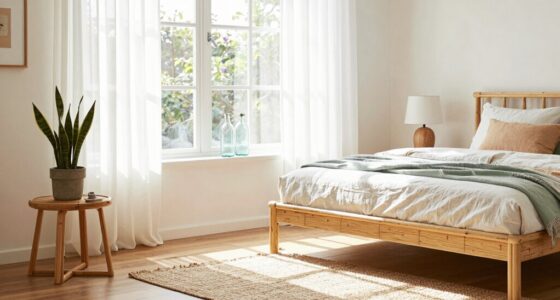
You can use reclaimed materials throughout your home to add warmth, character, and sustainability. Ideal spaces include floors and accent walls with reclaimed wood, brick, or stone for texture and visual interest. In kitchens and bathrooms, try reclaimed wood cabinets, vintage fixtures, and decor accents that tell a story. Furniture made from reclaimed wood or metal also brings personality, while thoughtfully chosen accessories elevate your style. Keep exploring to discover even more ideas for eco-friendly home improvements.

Get furniture and decor delivered free — and shop member deals
- Fast, free delivery on millions of items
- Access to Prime Big Deal Days deals on October 6–7
- Prime Video, Amazon Music and more included
Key Takeaways
- Accent walls in living rooms or kitchens with reclaimed brick or stone for visual interest.
- Kitchen and bathroom cabinetry or open shelves made from reclaimed wood for warmth and character.
- Durable reclaimed wood furniture pieces like dining tables or sideboards as statement accents.
- Decor accents such as vintage picture frames or decorative objects to add personality and sustainability.
- Flooring and wall surfaces using reclaimed hardwood for a rustic, eco-friendly foundation.
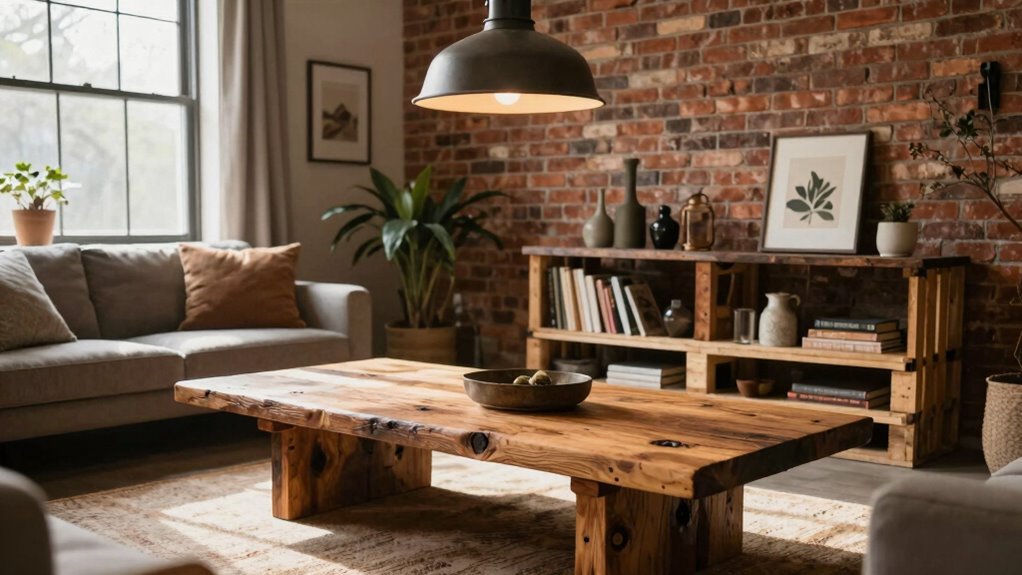
Reclaimed materials are transforming the way you can design and decorate your home, offering sustainable and unique options that add character to any space. When you incorporate reclaimed wood, bricks, or metal, you bring a touch of history and craftsmanship into your everyday environment. These materials aren’t just eco-friendly; they also infuse your home with a sense of authenticity and charm that new, mass-produced items can’t replicate. Using reclaimed materials for eco-friendly renovations isn’t just good for the planet—it’s a way to create a warm, inviting space that reflects your commitment to sustainability. You’ll find that vintage decor accents, like aged wood beams or antique fixtures, serve as focal points that elevate your interior design with timeless appeal.
Reclaimed materials add character, authenticity, and sustainability to your home, creating timeless, eco-friendly spaces with charm and craftsmanship.
One of the best places to use reclaimed materials is on your floors or walls. Reclaimed hardwood flooring instantly adds warmth and texture, giving your space a rustic, lived-in feel that’s hard to achieve with new wood. If you’re feeling adventurous, consider installing reclaimed brick or stone for accent walls. These elements work particularly well in living rooms or kitchens, where they add depth and visual interest. Choosing reclaimed materials for these surfaces supports eco friendly renovations by reducing waste and conserving resources, all while creating a stunning backdrop for your decor. Additionally, selecting sustainable materials helps promote environmentally responsible choices in your home projects. Incorporating reclaimed building materials can also increase the durability and longevity of your design choices, making them both stylish and practical. When you prioritize reclaimed materials, you also benefit from their proven durability, which often exceeds that of newer, less seasoned options.
In your kitchen, vintage decor accents shine when incorporated into cabinetry or shelving. Reclaimed wood cabinets or open shelves with a weathered finish provide both function and style. They evoke a sense of history and craftsmanship, making your kitchen feel welcoming and authentic. For your bathroom or entryway, consider vintage fixtures—faucets, mirrors, or lighting—that complement the reclaimed aesthetic. These details add a layer of personality and charm, making your space truly one-of-a-kind. Embracing biodiversity by choosing sustainable materials also helps support the preservation of diverse ecosystems, which is essential for maintaining the natural balance.
Furniture is another prime spot for reclaimed materials. Thrifted or custom-built pieces from reclaimed wood or metal can serve as statement items, blending sustainability with style. Whether it’s a dining table, coffee table, or sideboard, these pieces carry stories and character that add warmth and personality to your home. Incorporating vintage decor accents through accessories, picture frames, or decorative objects also heightens the visual interest and reinforces your eco-conscious approach. Furthermore, using reclaimed materials in furniture design can inspire innovative creations that reflect your personal style.
Ultimately, reclaimed materials are versatile and impactful, allowing you to craft a space that’s both stylish and sustainable. From floors and walls to furniture and decor accents, they help you create a home that’s rich in history, environmentally friendly, and uniquely yours.
As an affiliate, we earn on qualifying purchases.
Frequently Asked Questions
How Do I Ensure Reclaimed Materials Are Safe and Non-Toxic?
You can guarantee reclaimed materials are safe by verifying material certification and requesting documentation of toxic chemical removal. Always choose sources that test for hazardous substances, like lead or formaldehyde, and ask about the material’s history. Properly cleaning and sealing reclaimed items also helps reduce any residual toxins. Taking these steps guarantees you’re using non-toxic, environmentally friendly materials that are safe for your home.
What Tools Are Needed to Work With Reclaimed Materials?
To work with reclaimed materials, you’ll need basic tools like a saw, hammer, drill, and measuring tape. For more advanced projects, consider a jigsaw or sander. Use upcycling techniques to transform old pieces, and sourcing tips help you find quality materials. Always wear safety gear and plan your cuts carefully. These tools and methods make your reclaimed projects efficient, safe, and eco-friendly, ensuring your creative reuse is successful.
How Do I Match Reclaimed Materials With Modern Decor?
To match reclaimed materials with modern decor, focus on blending vintage aesthetics with sleek, eco-friendly finishes. You can pair reclaimed wood with minimalist furniture for a balanced look, or use reclaimed bricks as accent walls against contemporary art. Choose finishes that highlight the material’s natural character while maintaining a clean, modern vibe. This combination creates a warm, inviting space that’s both stylish and environmentally conscious.
What Is the Average Cost of Incorporating Reclaimed Materials?
The cost of incorporating reclaimed materials can seem like a tiny expense compared to their impact, but it varies widely. On average, you might spend $1,000 to $5,000, depending on project size and materials chosen. To stay within budget, consider cost considerations and budgeting tips like sourcing locally or repurposing existing pieces. Remember, smart planning guarantees you get stunning results without breaking the bank.
How Do I Maintain and Clean Reclaimed Wood Surfaces?
To maintain and clean reclaimed wood surfaces, you should regularly dust with a soft cloth to preserve their vintage charm. Use eco-friendly finishes and gentle cleaners to prevent damage and keep the wood looking its best. Avoid harsh chemicals and excessive water, which can harm the wood. Periodically, apply a natural oil or sealant to enhance durability, ensuring your reclaimed wood stays beautiful and eco-friendly for years to come.
Conclusion
Using reclaimed materials at home isn’t just a trend; it’s a smart way to breathe new life into your space while helping the environment. From stunning furniture to charming accents, these pieces tell a story and add character that mass-produced items simply can’t match. Remember, when you incorporate reclaimed materials, you’re not just saving money—you’re making a statement. So go ahead, take the plunge, because sometimes, the best things come from thinking outside the box.
Fall Picks
fall essentials
As an affiliate, we earn on qualifying purchases.