To save stress later, start with a detailed guest list and confirm attendance early, so you can plan food and seating accordingly. Choose your menu, prep ingredients ahead of time, and make a shopping list to stay organized. Set up your space and entertainment in advance, including beverages and lighting. Keep a checklist of tasks to stay on track, and focus on creating a welcoming environment. If you want to discover more tips to make hosting smoother, keep going!
Key Takeaways
- Confirm guest list and dietary needs early to plan food, seating, and accommodations effectively.
- Prepare and shop from a detailed checklist, pre-prepping meals days ahead to save time.
- Organize space, seating, and serving stations in advance to reduce last-minute chaos.
- Plan entertainment and ambiance early, including music and eco-friendly practices, to enhance the atmosphere.
- Use a comprehensive checklist to track completed tasks and remain relaxed during the event.
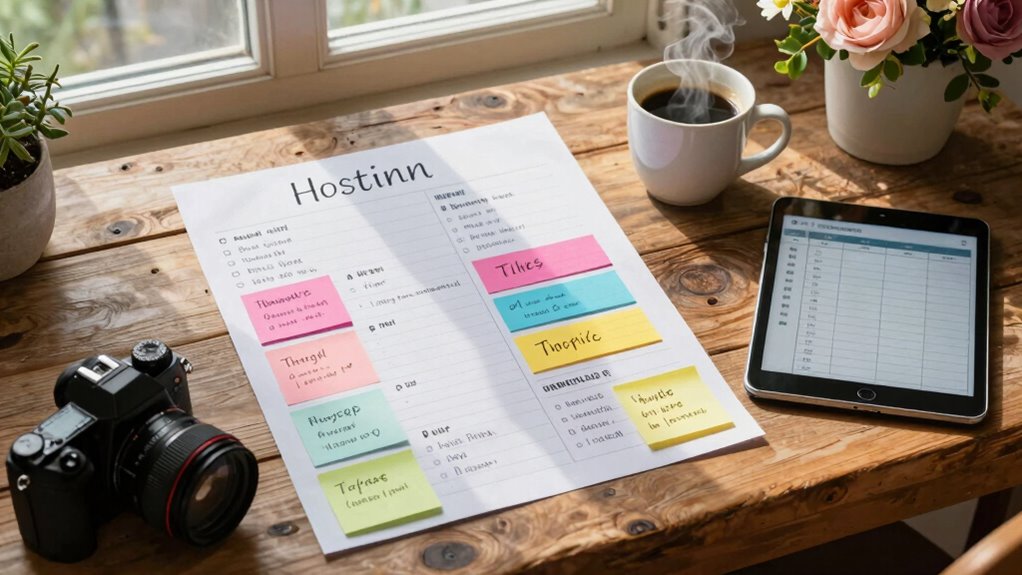
Are you ready to host a successful gathering? The key to a smooth event starts long before your guests arrive. It all begins with creating a thorough hosting prep list that keeps you organized and minimizes stress. The first step is drafting a solid guest list. Knowing exactly who’s coming helps you plan everything else, from how much food and drink you’ll need to arranging seating. Be sure to confirm the number of guests early on, so you can adjust your plans accordingly. Consider any dietary restrictions or preferences your guests might have. This way, you won’t be caught off guard when it’s time to serve the meal or snacks. Once your guest list is set, move on to menu planning. Think about what type of gathering it is and what kind of food fits the occasion. Will you serve a full dinner, or just finger foods and desserts? Keep in mind the variety of tastes and dietary needs. Planning a balanced menu ensures everyone leaves satisfied. Make a detailed shopping list based on your menu, and check your pantry for ingredients you already have. This saves you from last-minute trips to the store. When it comes to shopping, stick to your list to avoid impulse buys that can throw off your budget or clutter your space. As you gather ingredients, start prepping components that can be made ahead of time. Chop vegetables, prepare sauces, or bake desserts a day or two in advance. This way, on the day of the event, you’ll spend less time in the kitchen and more time enjoying your guests. Set up your space early—arrange seating, set the table, and organize your serving stations. Having everything in place helps you feel more in control and less rushed when guests arrive. Don’t forget to prepare beverages and have plenty of ice on hand. If you’re serving alcohol, stock a variety of options to accommodate different preferences. Also, plan some easy entertainment or background music to keep the mood lively. Additionally, incorporating eco-friendly sustainable living practices can make your gathering more environmentally conscious and memorable. Throughout the process, keep a checklist to track what’s done and what still needs attention. This prevents important tasks from slipping through the cracks. Additionally, staying updated on latest technology and gadgets can help you streamline your hosting experience, such as using smart devices for music or lighting. Being aware of current kitchen appliances can also save you time and effort during your prep. Remember, the goal isn’t perfection but creating an environment where everyone feels comfortable and welcome. By following this hosting prep list—starting with your guest list and menu planning—you set yourself up for a stress-free, successful gathering. When the day comes, you’ll be able to relax and enjoy the company, knowing that you’ve taken care of every detail in advance. That sense of preparedness makes all the difference and lets you truly savor your event.
party planning checklist organizer
As an affiliate, we earn on qualifying purchases.
As an affiliate, we earn on qualifying purchases.
Frequently Asked Questions
How Early Should I Start Preparing for My Event?
You should start preparing at least four to six weeks before your event. Begin by finalizing your guest list and confirming RSVPs early. This helps you plan your seating arrangements and order supplies on time. As the date approaches, focus on sending reminders and organizing details. Starting early guarantees you have ample time to handle unexpected issues, making the event smoother and less stressful for you.
What Budget Should I Allocate for Hosting Supplies?
You should allocate a flexible budget for hosting supplies, usually around 10-15% of your total event budget. When doing your supply shopping, keep a close eye on essentials like tableware, decorations, and refreshments. Budget planning helps prevent money from slipping through your fingers, so stick to your list and avoid impulse purchases. Remember, it’s better to be over-prepared than under, so plan ahead to keep things running smoothly.
How Do I Handle Last-Minute Guest Cancellations?
When handling last-minute guest cancellations, you should communicate promptly and clearly. Contact your guests to confirm their cancellation and inform them of your cancellation policies. Stay flexible if possible, offering alternative dates or partial refunds to maintain goodwill. Updating your guest communication plan beforehand helps manage expectations. Having clear cancellation policies in place ensures you’re protected and can handle cancellations smoothly, reducing stress and maintaining a positive hosting experience.
Should I Prepare a Backup Plan for Bad Weather?
Yes, you should prepare a backup plan for bad weather. Create a weather contingency plan that includes moving indoors or setting up tents, and keep an emergency kit ready with essentials like blankets, rain gear, and flashlights. By planning ahead, you guarantee your guests stay comfortable and safe, turning potential weather setbacks into managed moments of hospitality. Stay flexible and keep safety a priority to host confidently regardless of forecast surprises.
How Can I Make My Hosting Eco-Friendly?
You can make your hosting eco-friendly by choosing sustainable decorations like reusable or biodegradable options. Opt for eco-friendly tableware such as compostable plates and utensils to reduce waste. Encourage guests to bring reusable cups and containers. Turn off unnecessary lights and use energy-efficient bulbs. Serving locally sourced, organic food also minimizes your carbon footprint. These small changes make a big difference in creating a greener, more sustainable event.
Conclusion
By following this hosting prep list, you’ll feel confident and stress-free on the big day. It’s easy to believe that last-minute details can derail your plans, but with proper preparation, you’ll handle surprises smoothly. Imagine enjoying your event, relaxed and present, instead of panicked about the small stuff. Trust this list, stay organized, and focus on making memories. After all, a well-prepared host creates the best celebration—so get ready to shine!