To create a home that feels layered, focus on balancing textures, colors, and furniture without overcrowding. Use a neutral color palette with subtle variations, mix different materials like linen, velvet, and woven fabrics, and arrange furniture around a focal point to promote flow. Incorporate varied heights and define zones with rugs while keeping some spaces open for visual breathing room. Stick to meaningful, functional pieces, and layer accents thoughtfully—this approach helps you achieve a sophisticated, inviting space that feels intentionally curated.

Get furniture and decor delivered free — and shop member deals
- Fast, free delivery on millions of items
- Access to Prime Big Deal Days deals on October 6–7
- Prime Video, Amazon Music and more included
Key Takeaways
- Use a neutral color palette with subtle variations to create depth without visual clutter.
- Incorporate layered textures and materials to add interest while maintaining cohesion.
- Arrange furniture around a focal point with clear pathways to promote an inviting flow.
- Limit accessories and decor to thoughtfully placed, meaningful pieces to prevent overcrowding.
- Leave intentional negative space to allow each element to stand out and breathe.
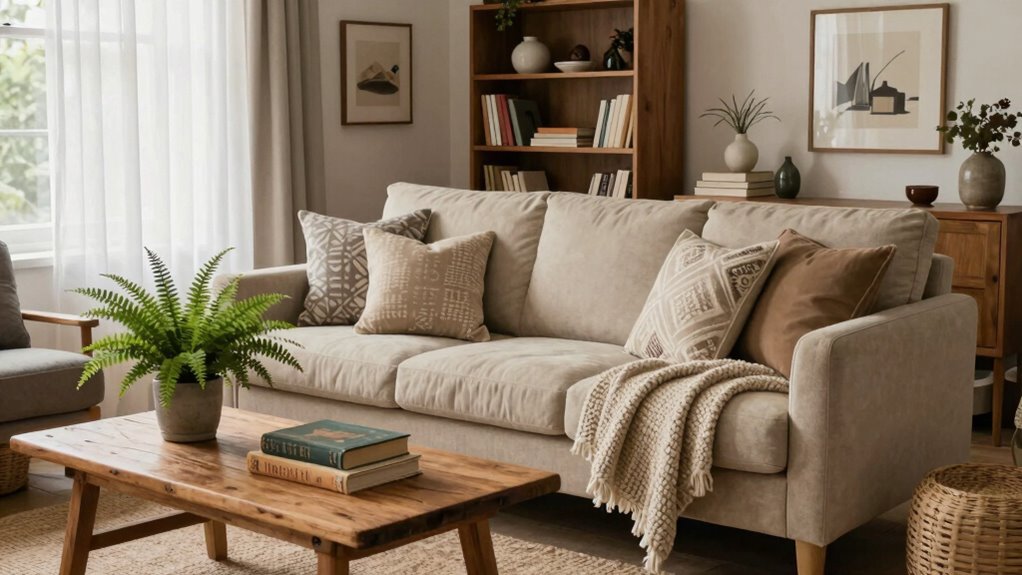
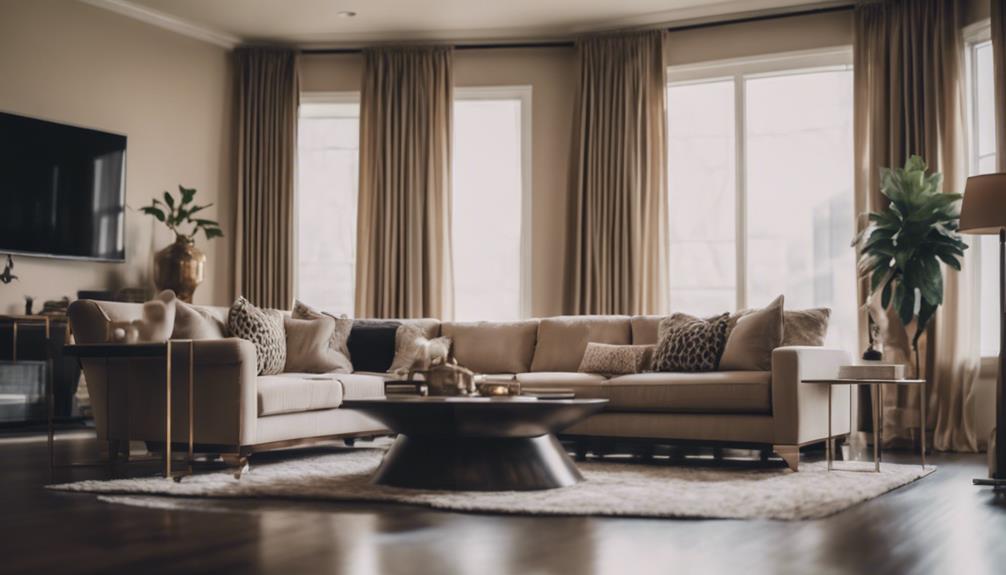
Creating a home that feels layered rather than busy starts with intentional design choices that add depth without overwhelming the space. One of the first steps is to carefully select your color schemes. Instead of opting for bold, clashing hues, choose a neutral base like soft beiges, warm grays, or muted pastels. These colors provide a calm backdrop that allows layered textures and accents to stand out without creating visual chaos. Incorporate varied shades within the same color family to add subtle dimension—think a light taupe wall with darker throw pillows or a slate gray rug paired with charcoal furniture. This approach creates a cohesive, sophisticated look that invites the eye to explore without feeling cluttered.
Next, pay close attention to furniture arrangements. The goal is to craft a layout that feels natural and inviting, rather than chaotic or cramped. Start by establishing a clear focal point, like a sofa or a fireplace, and arrange your furniture around it to foster conversation and flow. Avoid overcrowding the space with too many pieces; instead, select a few meaningful items that serve both function and aesthetic. Opt for furniture with varied heights and textures—think a low-profile coffee table paired with a tall bookshelf—to add visual interest without clutter. Use rugs to define different zones within open-plan rooms, which subtly separates spaces while maintaining a sense of unity.
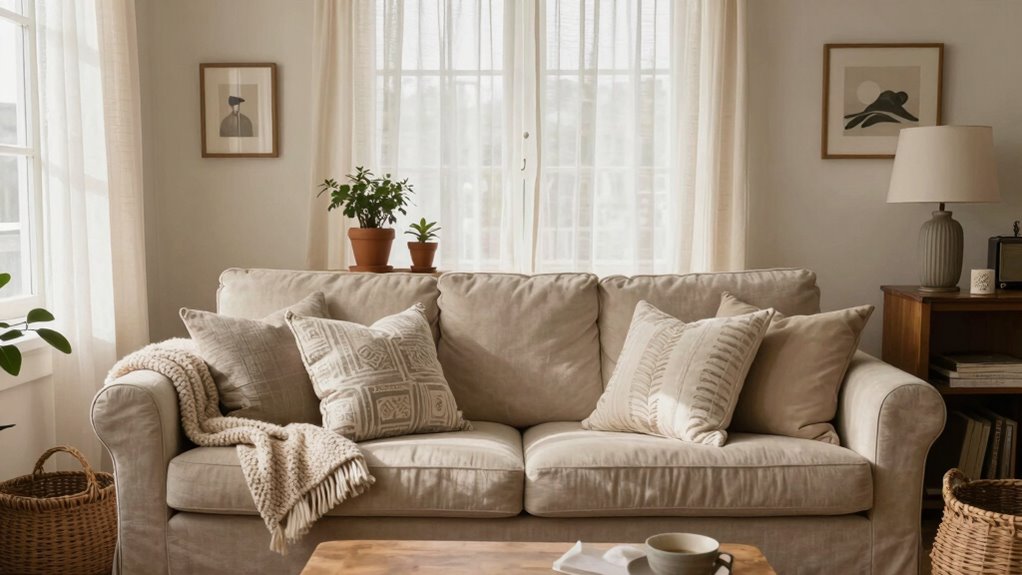
Layering in accessories and textiles also plays a crucial role. Add throw blankets, pillows, and curtains in different textures—linen, velvet, woven fabrics—to create tactile depth. Keep accessories minimal but thoughtfully placed; a well-chosen piece of art, a vase with fresh flowers, or a decorative tray can add personality without making the space feel busy. When arranging furniture and decor, consider the balance of negative space—leaving some areas intentionally empty helps prevent the room from feeling overcrowded. This negative space acts as visual breathing room, letting each element stand out without competing.
neutral color palette throw pillows
As an affiliate, we earn on qualifying purchases.
As an affiliate, we earn on qualifying purchases.
Frequently Asked Questions
How Do I Choose a Cohesive Color Palette for Layering?
To choose a cohesive color palette for layering, focus on color harmony by selecting shades that complement each other. Use a limited palette to guarantee smooth palette coordination, avoiding overwhelming variety. Incorporate different tones and textures within your chosen colors to add depth without busy visuals. Stick to a core set of hues and build from there, creating a balanced, layered look that feels intentional and harmonious.
What Are Some Budget-Friendly Ways to Add Texture?
You can add texture affordably by incorporating textiles like throw blankets, cushions, and curtains made from different fabrics. Look for affordable textiles at thrift stores or discount shops. DIY wall decor, such as painted canvases or fabric-covered panels, also adds depth. Mix and match these elements to create a layered look without clutter. These simple, budget-friendly ideas bring warmth and tactile interest to your space, making it feel inviting and thoughtfully styled.
How Can I Incorporate Personal Style Without Clutter?
Did you know that personalized spaces increase comfort and satisfaction by 70%? To incorporate your personal style without clutter, focus on selective display. Use a few meaningful items like artwork or keepsakes and rotate them regularly. Keep surfaces clear by storing other pieces out of sight. This approach allows your personality to shine through personal expression while maintaining clutter control, creating a cozy, layered home that feels authentic and inviting.
When Should I Update or Change My Layered Decor?
You should update or change your layered decor seasonally or whenever your furniture arrangement feels off. Incorporate seasonal updates by swapping out textiles, accessories, or artwork to refresh the space. Consider furniture rearrangement to improve flow and balance, making certain your layers still feel intentional rather than cluttered. Regularly assess your decor to guarantee it reflects your evolving style and keeps the space feeling fresh and inviting.
How Do I Balance Statement Pieces With Subtle Elements?
Think of your home as a symphony, where statement accessories are the bold brass, and subtle accents are the soft strings. To balance them, give the statement pieces a prominent spot, like a focal point, while letting subtle accents gently fill the space. Use neutral tones or small details to avoid overpowering, ensuring each element complements rather than competes. This harmony creates a layered look that’s interesting but never chaotic.
Conclusion
By thoughtfully layering textures, colors, and accessories, you’ll craft a home that’s rich and inviting without overwhelming. Remember, less is often more—your space shouldn’t scream for attention, but whisper elegance at every turn. With a keen eye for balance, your home will feel as timeless as the stars, effortlessly blending personality with serenity. So go ahead, embrace the art of layering—your sanctuary will thank you for it, shining brighter than the sun itself.
Fall Picks
fall essentials
As an affiliate, we earn on qualifying purchases.