
TL;DR

Get furniture and decor delivered free — and shop member deals
- Fast, free delivery on millions of items
- Access to Prime Big Deal Days deals on October 6–7
- Prime Video, Amazon Music and more included
A Livingetc report describes growing interest among British designers in centuries-old Swedish ceramic stoves, known as kakelugnar, and related tiled heaters. Experts interviewed by the magazine say these stoves can release heat for 12 to 24 hours after one hot burn, while designers value their sculptural presence. The report does not provide independent emissions comparisons or detailed cost and installation data.
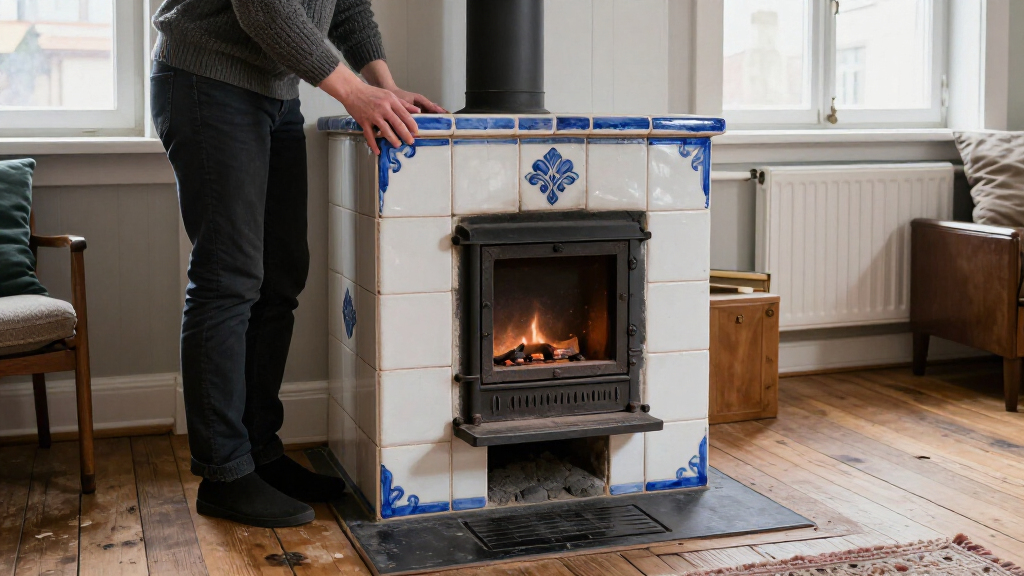
British interior designers are adopting Swedish ceramic stoves as both heating appliances and decorative focal points, according to a Livingetc report. The article says these centuries-old tiled heaters, known as kakelugnar in Swedish, can store heat from a single burn and release it over many hours, offering an alternative to conventional wood-burning appliances.
Alan Hills, director of The Ceramic Stove Company, told Livingetc that a ceramic stove can provide heat for 12 to 24 hours after one hot burn, using fewer logs than a conventional wood burner. Hills also said the hotter fire combusts particulates inside the firebox and produces fewer emissions. The report does not include independent testing or figures that quantify those comparisons.
Designers cited in the report describe the stoves as substantial, crafted objects made with ceramic tiles, sometimes decorated with intricate patterns. Interior designer Henri Fitzwilliam-Lay called them “beautiful objects” that can become a room’s focal point. The article notes installations by designers including Adam Bray, Beata Heuman and Veere Grenney, alongside projects in Britain and elsewhere.
The examples range from a custom pink stove in a Finnish home to a gas-fitted model installed in an east London terrace. Designer Olivia Outred said her clients wanted a heat source that would also be sculptural without blocking windows. She told Livingetc the stove was fitted with gas to meet London’s air-quality rules. The report says installation can involve assembling a brick structure and applying tiles on site; some models are modular, and a reinforced base may be needed.
Heat Storage Meets Interior Design
The report points to a practical and design-led reason for renewed interest: ceramic stoves are presented not simply as a replacement for an open fire, but as heat-storing appliances that also shape a room. Their capacity to release warmth after the fire has gone out may appeal to households seeking longer-lasting heat from a limited amount of fuel, while their custom finishes let designers treat them as permanent architectural features.
That potential comes with important limits. The Livingetc article offers comments from industry professionals and examples of individual projects, rather than a controlled comparison of efficiency, emissions or household running costs. It also gives no full price range beyond saying costs start at several thousand pounds. Readers weighing a purchase would need appliance-specific performance information, installation costs and advice on local rules.
As an affiliate, we earn on qualifying purchases.
A Northern European Heating Tradition
Ceramic stoves have a long history in northern Europe. The German term is “kachelofen”; the Swedish name is “kakelugn.” Livingetc describes them as large tiled structures that have traditionally served as sources of warmth and are now being considered by British design studios. The article contrasts their heat-storage approach with the open hearths familiar in many UK homes.
The report links interest in the appliances to tighter attention to clean-air rules and changing tastes in interiors. It does not describe a new regulation or a formal industry announcement. Instead, the development it documents is a design trend illustrated by recent installations, including homes where stoves have been built into a room and others where an existing-style tiled form has been adapted with gas.
“Ceramic stoves work by generating heat for 12 to 24 hours from one hot burn, using far fewer logs than a conventional wood burner.”
— Alan Hills, director of The Ceramic Stove Company, speaking to Livingetc
Performance and Costs Still Vary
The Livingetc report does not identify independent studies behind claims that ceramic stoves use fewer logs or produce fewer emissions than conventional wood burners. It gives no figures for particulate emissions, fuel consumption, heat output or efficiency across different models. The stated 12-to-24-hour heat period comes from the company representative quoted in the article and should not be treated as a guaranteed result for every installation.
It is also unclear how common these stoves are in Britain, how quickly adoption is changing, or what a typical complete installation costs. The article says prices start at several thousand pounds but does not break down appliance, building work or maintenance expenses. Local suitability and emissions requirements can differ, and the source provides no universal guidance for homeowners.
Check Local Rules Before Installation
The report does not announce a policy decision, product launch or scheduled next milestone. For prospective buyers, the next steps are practical: compare the specifications of individual models, confirm what fuels they use, and ask installers how the appliance will be built and vented. Homeowners should check local clean-air requirements before choosing a wood- or gas-fitted model and obtain a clear estimate for any structural work, including whether the floor needs reinforcement.
Further reporting would be needed to establish how the stoves perform against conventional appliances under comparable conditions. Until that information is available, the reported benefits are best understood as claims from industry sources alongside examples of designers using the stoves as room features.
Key Questions
What is a Swedish ceramic stove?
A Swedish ceramic stove, or kakelugn, is a tiled heating appliance associated with northern European homes. The Livingetc report describes it as a heat-storing structure that can also serve as a prominent interior feature.
How long can one burn provide heat?
Alan Hills of The Ceramic Stove Company told Livingetc that a ceramic stove can release heat for 12 to 24 hours after one hot burn. The article does not provide independent testing or establish that every model will achieve that duration.
Are ceramic stoves confirmed to emit less pollution?
Hills told Livingetc that a hotter fire combusts particulates in the firebox and produces fewer emissions. The report includes no independent emissions measurements, so the comparison cannot be verified from the material provided.
How much does a ceramic stove cost?
Livingetc says prices start at several thousand pounds, but gives no exact range or complete installation estimate. The total may depend on the stove, building work and site requirements.
Can a ceramic stove be fitted in a city home?
The report describes a gas-fitted stove in an east London home, selected to meet local air-quality rules. Suitability depends on the specific appliance, installation and local requirements; the article does not provide rules that apply to every city or property.
Source: rss
Evergreen bestsellers Picks
bestsellers
As an affiliate, we earn on qualifying purchases.