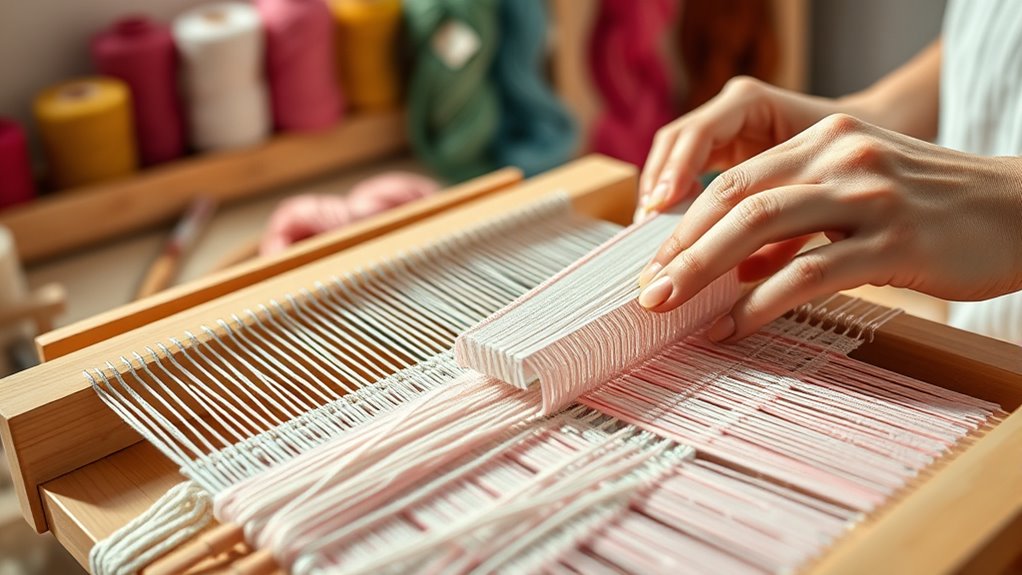

Starting loom weaving is simple when you choose a small, easy-to-use loom like a tabletop or frame loom. Gather basic tools such as a shuttle, scissors, and fibers like wool or cotton. Learn foundational techniques like maintaining even tension and experimenting with colors and patterns through small projects like coasters or bookmarks. Keep your woven pieces well-maintained by proper storage and finishing touches. Keep exploring these tips, and you’ll discover more skills to create beautiful woven items.
Key Takeaways
- Start with small, simple loom types like frame or tabletop looms for easy handling.
- Gather essential fibers such as wool or cotton and basic tools like a shuttle and scissors.
- Learn fundamental techniques like maintaining even tension and planning simple patterns.
- Practice with beginner projects like coasters or bookmarks to build confidence.
- Properly finish and care for woven pieces to ensure durability and a polished look.
Choosing the Right Loom for Beginners
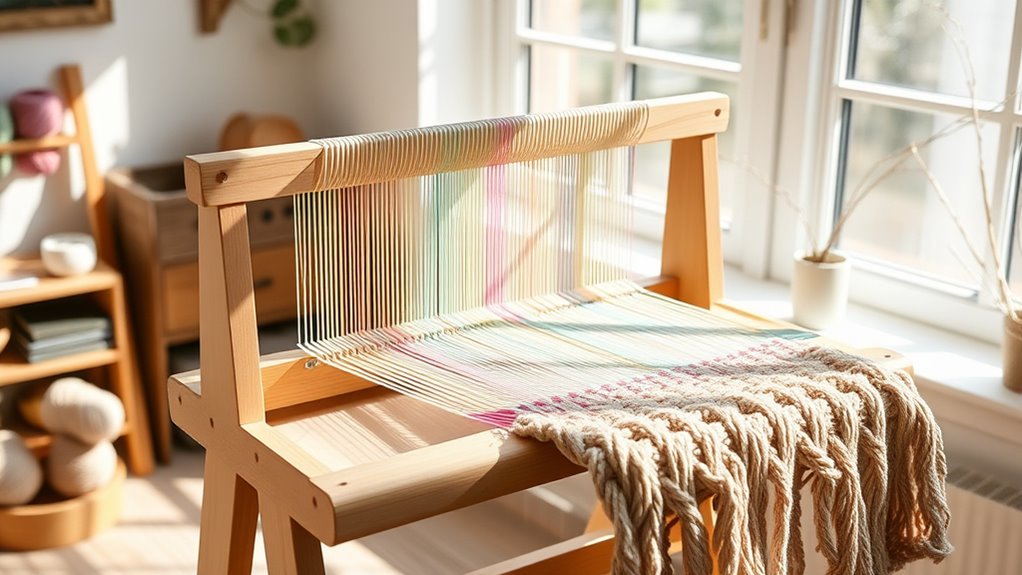
When starting with loom weaving, choosing the right loom is essential for a smooth beginner experience. You’ll want to ponder the different loom types available, such as frame looms, card looms, or tabletop looms. Each type influences the woven patterns you can create and how easy it is to learn the craft. For beginners, a small, simple loom like a frame or tabletop loom is ideal because it’s lightweight, affordable, and straightforward to set up. These looms allow you to experiment with basic woven patterns without feeling overwhelmed. As you gain experience, you can explore more complex loom types. Selecting a loom with appropriate tension control ensures better results and easier handling as you develop your skills. Picking the right loom sets a solid foundation, making your weaving journey enjoyable and successful from the start.
Essential Tools and Materials for Loom Weaving
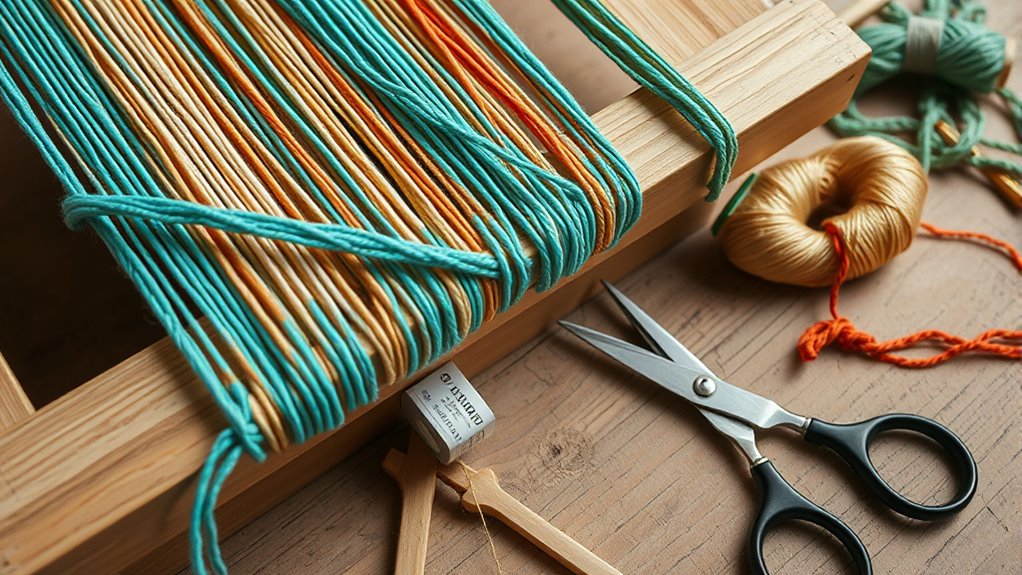
Getting started with loom weaving requires gathering the right tools and materials to create a smooth and enjoyable experience. You’ll need a variety of fibers, such as wool, cotton, or silk, depending on the look and texture you want. Choosing the right fiber type influences thread tension, so select fibers that are strong yet manageable. A steady thread tension is essential for even weaving and consistent results; some tools, like tension rods or adjustable warping boards, help maintain this. Basic tools include a shuttle for passing the weft, heddles or heddle sticks for controlling warp threads, and scissors for trimming. Having these essential tools and understanding fiber types ensures your weaving process is efficient, enjoyable, and produces quality finished pieces. Additionally, understanding the importance of diversification strategies can help you create more resilient and interesting woven textiles.
Basic Techniques to Get Started
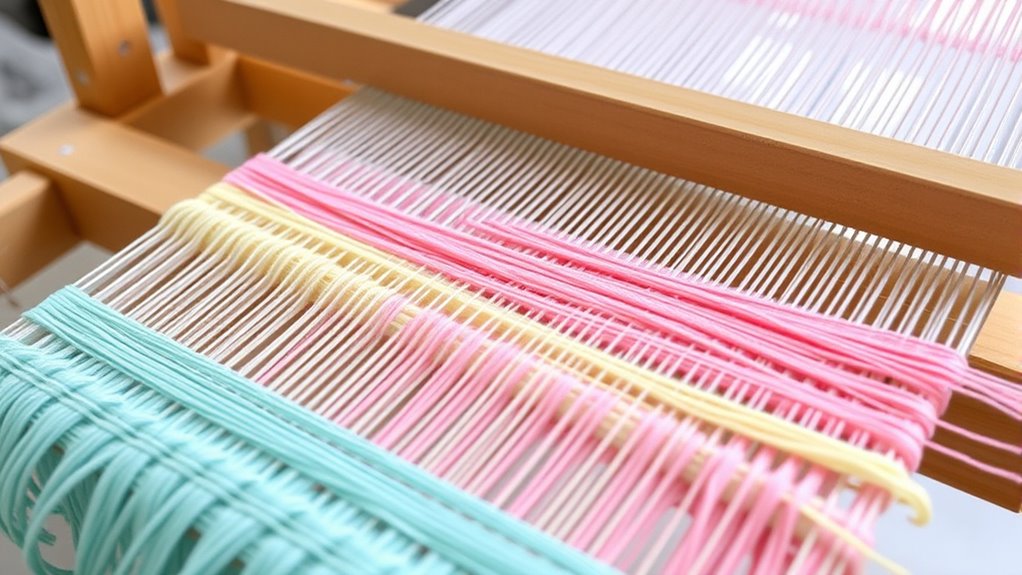
To begin weaving, you need to learn some basic techniques that form the foundation of your work. Start by understanding color theory, which helps you choose harmonious color combinations and create visual interest in your woven pieces. Experiment with different color pairings to see how they interact and influence the overall pattern. Next, focus on pattern design—planning your weave layout and deciding on textures and motifs. This planning step guides your weaving process, ensuring consistency and clarity. Basic techniques like maintaining even tension, selecting the right yarns, and following your pattern plan will help you develop your skills. Mastering these fundamentals will make weaving more intuitive and enjoyable as you progress. Additionally, incorporating natural materials such as linen or wool can add authenticity and texture to your woven creations.
Simple Projects to Practice Your Skills
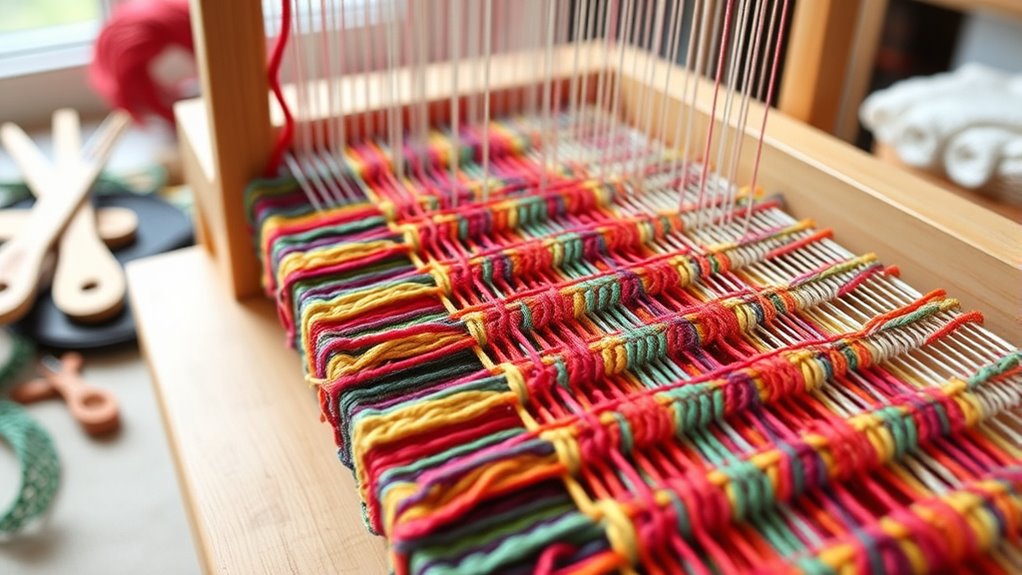
Starting with simple projects allows you to practice your weaving skills in a manageable way while building confidence. Begin with small items like coasters or bookmarks to focus on mastering basic techniques. When choosing your projects, experiment with different color combinations to see how they interact and enhance your design. Playing with pattern design, such as stripes or simple geometric shapes, helps you understand how the weave structure affects the overall look. Keep your projects straightforward at first, so you can easily identify areas for improvement. As you grow more comfortable, you can try combining colors and patterns to create more complex pieces. These beginner projects serve as a foundation for developing your skills and discovering your personal weaving style. Incorporating goal setting into your practice routine can also motivate you to progress steadily and celebrate your achievements along the way.
Tips for Maintaining and Finishing Your Weaving
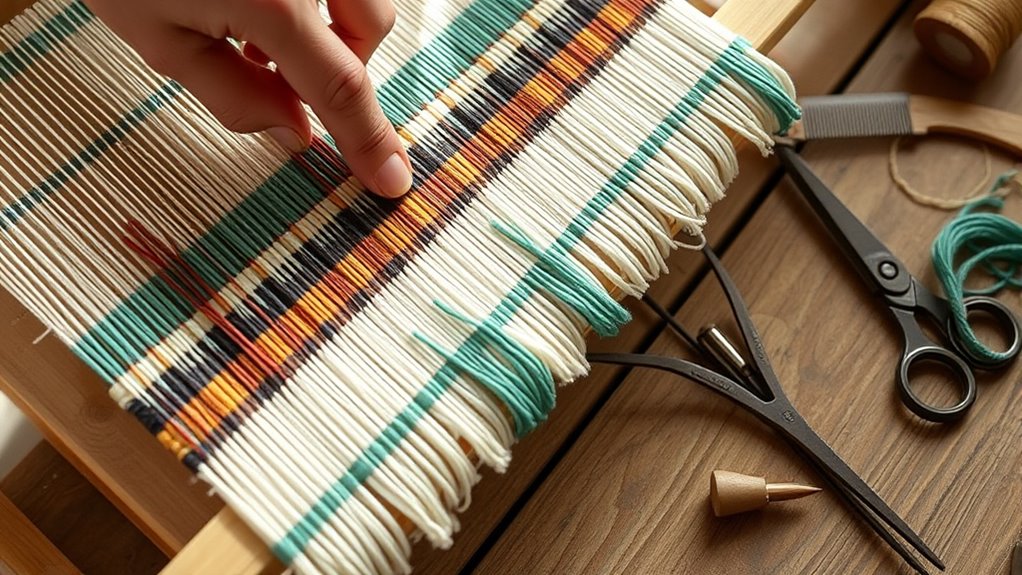
Proper maintenance and finishing techniques are essential for ensuring your woven projects last and look polished. To care for your weaving, store it in a dry, cool place away from direct sunlight to prevent fading and damage. When finishing, use techniques like hemming or binding edges to create a clean look and prevent unraveling. Visualize your weaving as a table:
| Care & Storage | Finishing Techniques | Result |
|---|---|---|
| Keep dry | Hem edges | Durable, polished edges |
| Avoid sunlight | Bind loose ends | Neat, professional look |
| Store flat | Wash gently | Preserves fibers and shape |
Additionally, adjusting the optimal angles can further enhance the longevity and appearance of your woven piece.
Frequently Asked Questions
How Long Does It Take to Become Proficient in Loom Weaving?
It usually takes a few weeks to a few months to become proficient in loom weaving, depending on your learning curve and how much you practice. As you dedicate regular time, your skill development accelerates, and you’ll get comfortable with different techniques. Patience is key—early on, mistakes are normal, but consistent effort helps you improve quickly. Keep weaving, and you’ll gain confidence and mastery faster than you expect.
Can Loom Weaving Be Done With Recycled or Eco-Friendly Materials?
Yes, you can definitely do loom weaving with recycled fibers and eco-friendly dyes. You’ll find plenty of options like recycled cotton, wool, or nylon, which help reduce waste. Using eco-friendly dyes guarantees your project stays sustainable and non-toxic. Just make sure to choose high-quality recycled materials and dyes, and you’ll create beautiful, environmentally conscious woven pieces that reflect your commitment to sustainability.
What Are Common Mistakes Beginners Make in Loom Weaving?
You often make mistakes with weaving terminology and using beginner tools, which can lead to uneven tension or dropped weft threads. To avoid these issues, double-check your warp alignment and keep your tension consistent. Don’t rush; take your time to learn the basic techniques. Using proper beginner tools like a shed stick or bobbin can help, and practicing patience guarantees smoother weaving and better results over time.
Is Loom Weaving Suitable for All Age Groups?
Loom weaving is suitable for most age groups, but you should consider age appropriateness and accessibility considerations. Younger children need supervision and simplified tools, while older individuals can handle more complex projects. It’s a versatile craft that can be adapted for different skill levels and physical abilities. Always choose age-appropriate equipment and guarantee safety measures are in place to make weaving enjoyable and accessible for everyone.
How Can I Troubleshoot Tension Issues in My Weaving?
You can troubleshoot tension issues by first checking your warp tension; imagine it like tuning a guitar string, ensuring it’s even across the loom. If tension varies, adjust the warp threads to manage the fringe and keep the tension uniform. Regularly inspect your warp and tighten or loosen as needed. Proper fringe management and consistent warp tension create a smooth weaving experience, preventing loose or tight spots in your fabric.
Conclusion
As you weave your first projects, you’ll discover that patience and practice turn threads into art. Just like the unexpected beauty of sunlight catching on your finished piece, your skills will develop in surprising ways. With each stitch, you’re building a story woven from your creativity and effort. So keep your loom close—sometimes, the best moments happen when your hands and heart work together, creating something truly unique and meaningful.