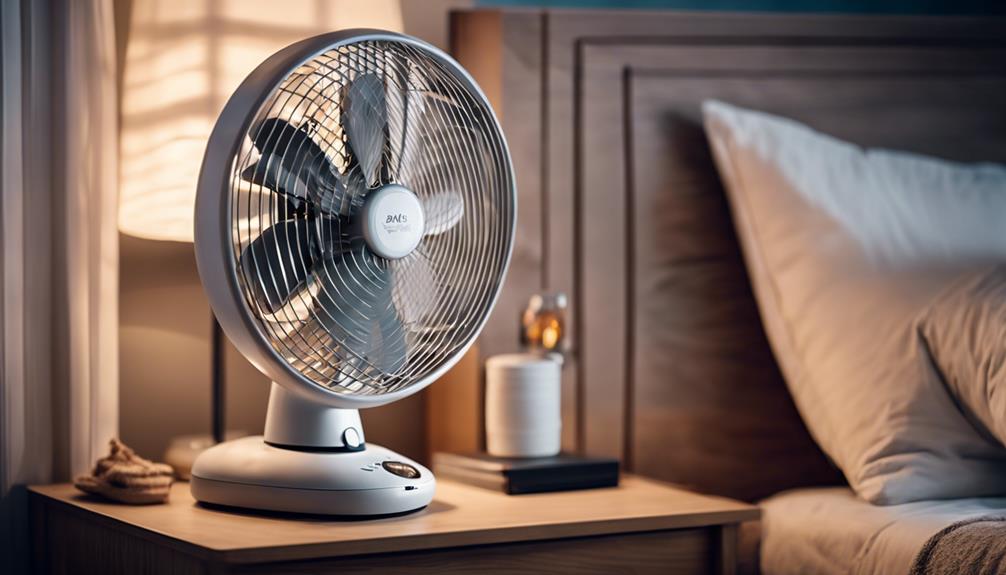

For most bedrooms, I’d start with the DREO Fan for Bedroom with a DC motor: its broad oscillation, adjustable height, and many speed settings offer more control over airflow than a basic fan. The Levoit Tower Fan is a strong alternative if you want a slim design and remote, while the Amazon Basics 3-Speed Air Circulator suits a smaller room or a tighter budget. The main tradeoff is between direct, focused airflow and broader circulation, along with how much you value quiet operation, remote controls, and adjustable height. A tower fan saves floor space, while a pedestal or circulator can offer more flexible positioning. Read on for the full breakdown and help matching a fan to your room and sleep habits.

Get furniture and decor delivered free with Prime
- Fast, free delivery on millions of items
- Prime Video, Amazon Music and more included
- Member-only deals all year
Complete the kit


Key Takeaways
- The DREO bedroom standing fan stands out for flexible airflow: a DC motor, nine speeds, adjustable height, and 120-degree oscillation give sleepers more ways to tune coverage than the simpler three-speed options.
- Tower fans prioritize a slim footprint; the Levoit and two DREO 36-inch models offer remote control, while the Amazon Basics 28-inch tower uses mechanical controls for a more straightforward setup.
- Circulators are better suited to targeted airflow or room mixing than wide, sweeping coverage. The compact Amazon Basics 7-inch model and Honeywell HT900 are easier to place than a full-height fan, but their airflow is more localized.
- Pedestal fans offer height and direction flexibility, but they occupy more visible floor space. The Lasko 2520 and Amazon Basics pedestal models cover basic needs, while the DREO oscillating pedestal adds a more feature-rich alternative.
- More speeds and modes create finer adjustment, not automatic bedroom comfort. A simple three-speed fan may suit someone who wants uncomplicated airflow, while extra controls matter most to sleepers sensitive to direction, intensity, or operating noise.
| Levoit Tower Fan with Remote, 5 Speeds, Oscillation, and 12-Hour Timer |  | Best Overall for Bedroom Convenience | Type: Tower fan | Mounting: Floor mount | Power: 39 W, corded electric | VIEW ON AMAZON | See Our Full Breakdown |
| Amazon Basics 3-Speed 7-Inch Air Circulator Fan |  | Best Compact Bedside Pick | Type: Freestanding air circulator | Dimensions: 6.3 × 11.1 × 10.9 inches | Blade diameter: 7 inches | VIEW ON AMAZON | See Our Full Breakdown |
| Lasko 2520 16-Inch Oscillating Pedestal Fan, White | 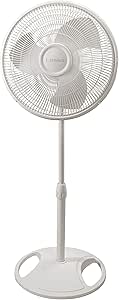 | Best Simple Height-Adjustable Fan | Type: Pedestal fan | Fan diameter: 16 inches | Maximum height: 47 inches | VIEW ON AMAZON | See Our Full Breakdown |
| Amazon Basics 16-Inch Pedestal Fan with Remote, Adjustable Height and Tilt, 3 Speeds, 3 Modes, Timer, Black |  | Best Value Remote-Controlled Pedestal | Type: Pedestal fan | Fan size: 16 inches | Dimensions: 15.75 × 17.72 × 53.15 inches | VIEW ON AMAZON | See Our Full Breakdown |
| Lasko Cyclone Oscillating Pedestal Fan – Adjustable to 54″ – Black |  | Best for High-Reach Airflow | Type: Oscillating pedestal fan | Maximum height: 54 inches | Speeds: 3 | VIEW ON AMAZON | See Our Full Breakdown |
| DREO 36-Inch Tower Fan with Remote |  | Best Quiet Tower Fan for Sleep | Height: 36 inches | Airflow reach: Up to 33 feet | Oscillation: 90° | VIEW ON AMAZON | See Our Full Breakdown |
| Honeywell TurboForce HT900 Air Circulator Fan, 3 Speeds, 90° Pivoting Head, Black |  | Best Compact Desk or Wall-Mount Pick | Speeds: 3 | Pivoting head: 90° | Airflow capacity: 185 CFM | VIEW ON AMAZON | See Our Full Breakdown |
| Dreo 12-Inch Air Circulator Fan |  | Best for Quiet, Long-Reach Air Circulation | Dimensions: 10.8 × 9.5 × 11.8 inches | Blade diameter: 7 inches | Airflow distance: Up to 70 feet | VIEW ON AMAZON | See Our Full Breakdown |
| DREO DR-HPF013 Oscillating Pedestal Fan |  | Best Adjustable Pedestal Fan | Height range: 38–42 inches | Airflow capacity: 1000 CFM | Airflow distance: Up to 90 feet | VIEW ON AMAZON | See Our Full Breakdown |
| Amazon Basics 28-Inch Oscillating Tower Fan with 3 Speeds, Mechanical Controls, 35W, Black |  | Best Simple, Compact Tower | Fan height: 27.8 inches | Dimensions: 9.4 × 9.4 × 27.8 inches | Speeds: 3 | VIEW ON AMAZON | See Our Full Breakdown |
| Antarctic Star 37-Inch Tower Fan with Remote, 6 Speeds, 4 Modes, 80° Oscillation, Timer, White |  | Best Simple Tower Fan for Nighttime | Height: 37 inches | Maximum wind speed: 23 ft/s | Oscillation: 80° | VIEW ON AMAZON | See Our Full Breakdown |
| DREO Fan for Bedroom, 120° Oscillating Standing Fan with DC Motor, 9 Speeds, 4 Modes, 20dB Noise Level, Adjustable Height, 8H Timer |  | Best for Quiet, Wide-Area Airflow | Oscillation and tilt: 120° horizontal oscillation; 120° vertical tilt | Speeds: 9 | Modes: 4 | VIEW ON AMAZON | See Our Full Breakdown |
| DREO 36-Inch Tower Fan with Remote, 8 Speeds and 90° Oscillation |  | Best Tower Fan for Adjustable Airflow | Height: 36.22 inches | Dimensions: 11.81 x 11.81 x 36.22 inches | Weight: 9 pounds | VIEW ON AMAZON | See Our Full Breakdown |
| fans for bedroom | Speeds | Power | Noise level |
|---|---|---|---|
| Levoit Tower Fan with Remote | — | 39 W, corded electric | 28 dB |
| Amazon Basics 3-Speed 7-Inch A | 3 | 35 W, corded electric | 30 dB |
| Lasko 2520 16-Inch Oscillating | 3 | 91 W, corded electric | — |
| Amazon Basics 16-Inch Pedestal | — | 60 W, 120 V AC motor | — |
| Lasko Cyclone Oscillating Pede | 3 | — | — |
| DREO 36-Inch Tower Fan with Re | 4 | 65 watts | 28 dB |
| Honeywell TurboForce HT900 Air | 3 | 35 watts | — |
| Dreo 12-Inch Air Circulator Fa | 3 | 35 watts | 25 dB |
| DREO DR-HPF013 Oscillating Ped | 8 | — | 28.2 dB |
| Amazon Basics 28-Inch Oscillat | 3 | 35 watts in title; 100 watts in specifications | — |
| Antarctic Star 37-Inch Tower F | 6 | — | 39 dB |
| DREO Fan for Bedroom | 9 | — | 20 dB |
| DREO 36-Inch Tower Fan with Re | — | — | — |
More Details on Our Top Picks
Levoit Tower Fan with Remote, 5 Speeds, Oscillation, and 12-Hour Timer
For a bedroom where airflow needs to reach across the room without a bulky pedestal base, the Levoit tower fan offers the most balanced mix of reach and controls in this group. Its wide oscillation, airflow up to 28 ft/s, and temperature-sensing Auto mode make it more adaptable than the simpler Lasko 2520, which has only three speeds and manual controls. Sleep mode, a remote, and a 12-hour timer also make nighttime adjustments easier without getting out of bed. The 28 dB noise rating is a useful bedroom-friendly spec, though the product data does not say how that figure varies by speed. Its plastic construction is less substantial than the metal-and-plastic Amazon Basics pedestal fan, and Sleep mode delays oscillation for its first hour. Choose it for flexible, room-wide airflow; skip it if you want a sturdier build or immediate oscillation in Sleep mode.
Pros:- Wide oscillation and airflow up to 28 ft/s support circulation across a bedroom
- Auto mode uses a temperature sensor to adjust fan speed
- Remote, five speeds, four modes, and a 12-hour timer offer flexible nighttime control
- Removable rear grille makes cleaning easier
Cons:- Plastic construction may feel less durable than the Amazon Basics pedestal fan’s metal-and-plastic body
- Sleep mode delays oscillation during its first hour
- Tower format does not offer the adjustable head height and tilt of pedestal models
Best for: Bedroom sleepers who want oscillating airflow, remote adjustments, and automatic speed changes based on room temperature
Not ideal for: Buyers who prioritize a metal-heavy build or want oscillation to begin immediately in Sleep mode
- Type:Tower fan
- Mounting:Floor mount
- Power:39 W, corded electric
- Noise level:28 dB
- Airflow:Up to 28 ft/s; 1044 CFM
- Speeds and modes:5 speeds; Normal, Turbo, Sleep, and Auto
- Controls and timer:Touchpad and remote; 12-hour timer
- Other features:Oscillation; temperature sensor; removable rear grille
Our verdict“Choose the Levoit for bedroom-wide airflow and convenient automatic controls, but pick a pedestal fan if height and directional tilt matter more.”
Amazon Basics 3-Speed 7-Inch Air Circulator Fan
This compact air circulator is the practical choice when a bedroom has little floor space or you want to aim airflow at a bed rather than sweep it across the whole room. At 3 pounds, it is easier to move between a desk, nightstand, and floor than the 8.1-pound Lasko 2520 pedestal fan. Its 90-degree tilt helps direct the breeze, while three speeds provide a basic degree of control. Unlike the Levoit tower fan, it has no oscillation, remote, or timer, so it is better for targeted airflow than hands-off nighttime use. The small 7-inch blade diameter also limits its reach compared with the 16-inch pedestal models. Plastic construction and a corded connection are straightforward tradeoffs for its portable size; choose it for a nearby cooling spot, not for circulating air throughout a larger bedroom.
Pros:- Compact footprint suits a bedside table, desk, or floor
- Three-pound weight makes it easy to carry between rooms
- 90-degree tilt directs airflow toward a specific spot
- Three speed settings provide simple airflow adjustment
Cons:- No oscillation, unlike the Levoit tower and pedestal options
- Seven-inch blade diameter is less suited to cooling a larger bedroom
- Corded design requires an outlet near the chosen placement
Best for: People in small bedrooms who want a lightweight fan they can place nearby and angle toward a bed or desk
Not ideal for: Anyone seeking room-wide oscillation, remote control, or a timer for nighttime operation
- Type:Freestanding air circulator
- Dimensions:6.3 × 11.1 × 10.9 inches
- Blade diameter:7 inches
- Weight:3 pounds
- Speeds:3
- Tilt:90 degrees
- Power:35 W, corded electric
- Noise level:30 dB
Our verdict“Pick this circulator for portable, aimed airflow in a small bedroom, not for broad coverage or remote-controlled convenience.”
Lasko 2520 16-Inch Oscillating Pedestal Fan, White
The Lasko 2520 suits bedrooms where a fan needs to send air over furniture or toward a bed from a raised position. Its adjustable height up to 47 inches, tilt-back head, and wide-area oscillation give it more placement flexibility than the compact Amazon Basics 7-inch circulator, which is designed to aim airflow from a nearby surface. Three speeds keep operation simple, and tool-free assembly reduces setup fuss. The tradeoff is a deliberately basic control setup: manual controls only, with no remote or timer listed, so adjustments may mean getting up. At 91 watts, it also draws more power than the 60-watt Amazon Basics remote pedestal fan. Its plastic body and blades are less substantial than that model’s metal-and-plastic construction. This is a straightforward choice for shoppers who value adjustable reach over bedroom convenience features.
Pros:- Height adjusts up to 47 inches, with a tilt-back head for directing airflow
- Wide-area oscillation helps distribute air across a bedroom
- Three speeds offer basic control without complicated settings
- Tool-free assembly and a fused safety plug are included
Cons:- Manual controls lack the remote and timer found on the Amazon Basics FS40-10BR
- Plastic body and blades feel less substantial than the FS40-10BR’s metal-and-plastic construction
- 91-watt power draw is higher than the 60-watt Amazon Basics pedestal fan
Best for: Buyers who want a simple oscillating fan that can be raised and tilted to direct airflow over a bed or furniture
Not ideal for: Sleepers who want remote operation or a timer, or buyers seeking a lower-wattage pedestal option
- Type:Pedestal fan
- Fan diameter:16 inches
- Maximum height:47 inches
- Dimensions:17 × 18 × 47 inches
- Weight:8.1 pounds
- Speeds:3
- Power:91 W, corded electric
- Controls and movement:Manual pull-chain or push-button controls; wide-area oscillation and tilt-back head
Our verdict“Choose the Lasko 2520 for adjustable height and uncomplicated oscillation, but opt for the Amazon Basics FS40-10BR if remote control and a timer matter.”
Amazon Basics 16-Inch Pedestal Fan with Remote, Adjustable Height and Tilt, 3 Speeds, 3 Modes, Timer, Black
The FS40-10BR is the more convenient pedestal option for bedrooms where height and directional airflow matter but manual controls feel inconvenient. Its remote operates speed, mode, and timer settings, a clear step up from the manual-only Lasko 2520. Three modes—nature, sleep, and normal—add more variation than the Lasko’s three-speed setup, while adjustable height, tilt, and oscillation help spread air around a medium or large room. At 60 watts, it also uses less power than the Lasko 2520’s listed 91 watts. The costs of that flexibility are physical: it weighs 12.3 pounds and stands over 53 inches at its listed dimensions, so it takes more room and is less convenient to relocate than the 3-pound Amazon Basics circulator. Plastic blades and indoor-only use also narrow its appeal. It makes sense for buyers who want bedside control and broad reach, not a compact fan.
Pros:- Remote controls speed, mode, and timer settings from across the room
- Adjustable height and tilt help direct airflow toward a bed or seating area
- Oscillation supports air distribution around a room
- Three modes and three speeds give more operating choices than the Lasko 2520
Cons:- At 12.3 pounds and over 53 inches tall, it takes more space than the compact Amazon Basics circulator
- Plastic blades may be less durable than metal alternatives
- Listed for indoor use only
Best for: Bedroom users who want an adjustable pedestal fan with remote-operated modes and timer settings
Not ideal for: People with tight floor space or anyone who wants a lightweight fan to move often between rooms
- Type:Pedestal fan
- Fan size:16 inches
- Dimensions:15.75 × 17.72 × 53.15 inches
- Weight:12.3 pounds
- Power:60 W, 120 V AC motor
- Speeds and modes:3 speeds; nature, sleep, and normal modes
- Controls:Remote control for speed, mode, and timer
- Adjustment and airflow:Oscillating; adjustable height and tilt
Our verdict“Choose the FS40-10BR for a bedroom pedestal fan with remote, modes, and timer; skip it if you need a compact or easily moved option.”
Lasko Cyclone Oscillating Pedestal Fan – Adjustable to 54″ – Black
Among these pedestal picks, the Lasko Cyclone is the one to choose when the fan needs to sit higher than a bedside table or standard-height stand. Its adjustable height up to 54 inches exceeds both the Lasko 2520’s 47-inch maximum and the Amazon Basics FS40-10BR’s listed height of 53.15 inches. Widespread oscillation and a tilt-back head let buyers choose between moving air around the room and aiming it toward a particular area. Three speeds keep settings simple, while the included remote and timer offer a convenience advantage over the manual Lasko 2520. The product details, however, provide less technical depth than the other pedestal models: no wattage, weight, or fan diameter is specified. Its larger adjustable reach may also be awkward in a small bedroom, and three speeds offer fewer fine-grained choices than some of the tower fans in the roundup.
Pros:- Adjusts up to 54 inches, taller than the Lasko 2520 and Amazon Basics FS40-10BR
- Widespread oscillation helps move air across a room
- Tilt-back head allows more directed airflow
- Remote and timer support convenient bedroom operation
Cons:- Its height and pedestal format may be bulky in a small bedroom
- Only three speeds are listed, offering less adjustment than the Levoit tower fan’s five
- Product data does not specify wattage, weight, or fan diameter
Best for: Bedroom buyers who need a tall pedestal fan with oscillation, tilt, and remote operation to reach over furniture
Not ideal for: People with limited floor space or shoppers who need detailed specifications such as wattage, weight, or fan diameter before choosing
- Type:Oscillating pedestal fan
- Maximum height:54 inches
- Speeds:3
- Oscillation:Widespread
- Head adjustment:Tilt-back
- Controls:Remote control
- Timer:Included; duration not specified
- Color:Black
Our verdict“Choose the Cyclone when extra height and remote-controlled pedestal airflow are priorities, but compare dimensions and power needs before buying.”
DREO 36-Inch Tower Fan with Remote
For a bedroom where floor space is limited and airflow needs to reach beyond the immediate bedside, this DREO tower fan is the strongest fit in this group. Its 28 dB stated noise level, Sleep mode, and remote let you adjust settings without getting up, while 90° oscillation spreads air across more of the room than a fixed tabletop fan. Compared with the Amazon Basics 28-Inch Oscillating Tower Fan, it offers a taller profile, a longer stated airflow reach, and more modes, but the Amazon Basics model has simpler mechanical controls and a smaller height. The tradeoff here is its plastic construction and four-speed limit; buyers wanting more granular settings should compare it with the DREO 36-Inch Tower Fan with 8 Speeds. I’d choose this model for quiet, remote-controlled bedroom circulation, not for a premium-feeling build.
Pros:- Stated 28 dB noise level and a Sleep mode suit nighttime use
- 90° oscillation and airflow reach up to 33 feet help distribute air around a bedroom
- Remote, touch controls, and an 8-hour timer allow convenient adjustments
- Slim footprint and 8.4-pound weight make it easier to place than a pedestal fan
Cons:- Plastic construction may feel less substantial than a metal fan
- Four speed settings offer less fine control than the DREO 36-Inch Tower Fan with 8 Speeds
- Corded indoor design limits placement to locations near an outlet
Best for: Bedroom sleepers who want a compact tower, remote adjustments, and a dedicated Sleep mode for nighttime use
Not ideal for: Buyers who want more than four speed settings, a metal-bodied fan, or airflow focused only on one spot
- Height:36 inches
- Airflow reach:Up to 33 feet
- Oscillation:90°
- Speeds:4
- Modes:Normal, Sleep, Natural
- Noise level:28 dB
- Timer:Up to 8 hours
- Power:65 watts
Our verdict“Choose this DREO if you want a slim, quiet tower with a sleep mode and remote, but skip it if extensive speed control matters most.”
Honeywell TurboForce HT900 Air Circulator Fan, 3 Speeds, 90° Pivoting Head, Black
The Honeywell TurboForce makes the most sense for a bedroom where a full-size floor fan would crowd the walkway. It can sit on a desk or mount on a wall, and its 90° pivoting head lets you aim airflow toward a bed or across a smaller room. Unlike the oscillating DREO 36-Inch Tower Fan, this is a compact circulator rather than a tall fan that sweeps air from side to side; that makes it easier to place, but it won’t cover the same broad area through oscillation. Its three speeds keep operation straightforward, though the supplied data gives no noise level or sleep-specific mode, so noise-sensitive sleepers have less guidance than with the DREO 12-Inch Air Circulator Fan, which states 25 dB. I’d pick the HT900 for targeted airflow and flexible mounting, not as the most feature-rich bedside option.
Pros:- Tabletop and wall-mount options suit bedrooms with limited floor space
- Three speeds make airflow easy to adjust
- 90° pivoting head directs air toward a chosen area
- 35-watt power rating is lower than the 65-watt DREO tower in this roundup
Cons:- No oscillation is specified, so broad side-to-side room coverage is limited
- No noise level or sleep mode is listed for choosing a nighttime setting
- Corded power restricts placement to spots near an outlet
Best for: People in small bedrooms who need a compact fan for a desk, shelf, or wall and prefer aimable airflow
Not ideal for: Sleepers who need a stated low-noise level, a sleep mode, or wide oscillating coverage across a larger bedroom
- Speeds:3
- Pivoting head:90°
- Airflow capacity:185 CFM
- Power:35 watts
- Mounting:Tabletop or wall mount
- Blades:3 plastic blades
- Power source:Corded electric
Our verdict“Pick the HT900 for compact, directional bedroom airflow and flexible mounting, but choose an oscillating model for broader coverage.”
Dreo 12-Inch Air Circulator Fan
For buyers who want a small fan to move air across a bedroom without taking up much floor space, this Dreo circulator offers a useful alternative to tower designs. Its standout combination is a 25 dB stated noise level and airflow distance of up to 70 feet, making it more suited to broad circulation than the compact Honeywell TurboForce HT900, whose listed reach is shorter. The tabletop or wall-mount setup also gives it placement flexibility, though it lacks the DREO 36-Inch Tower Fan’s 90° oscillation and remote control. Three speeds and manual tilt adjustment keep the controls simple, but they limit fine tuning and require repositioning by hand. The long reach describes airflow, not a guarantee of even cooling in every room; I’d choose it for quiet circulation, not for hands-off directional changes.
Pros:- Stated 25 dB noise level is the lowest listed among these five products
- Airflow distance of up to 70 feet supports circulation beyond the bedside
- Tabletop and wall-mount options reduce dependence on floor space
- Removable parts support cleaning
Cons:- Only three speed settings, with no finer speed adjustment listed
- Tilt angle requires manual adjustment, unlike remote-controlled tower options
- Plastic construction may feel less substantial than metal alternatives
Best for: Light sleepers and bedroom occupants who want a quiet compact circulator with tabletop or wall placement
Not ideal for: Buyers who want remote control, oscillation, or frequent automatic changes to airflow direction
- Dimensions:10.8 × 9.5 × 11.8 inches
- Blade diameter:7 inches
- Airflow distance:Up to 70 feet
- Noise level:25 dB
- Speeds:3
- Mounting:Tabletop or wall mount
- Motor:Brushless
- Power:35 watts
Our verdict“Choose this Dreo for quiet, compact circulation with flexible mounting, but opt for an oscillating fan if you want airflow to sweep automatically.”
DREO DR-HPF013 Oscillating Pedestal Fan
This DREO pedestal fan is the most adjustable option here for a bedroom where airflow needs to reach both across the room and toward different heights. Its 38–42-inch height range, 90° horizontal oscillation, and 105° manual vertical pivot make positioning more flexible than with the DREO 12-Inch Air Circulator Fan, which sits on a tabletop or mounts to a wall. Eight speeds and an auto mode also give it more control than the four-speed DREO 36-Inch Tower Fan. The stated 28.2 dB noise level and remote are useful at bedtime, while the detachable grille and blade simplify cleaning. The tradeoff is a freestanding footprint and plastic construction; buyers seeking a slim, enclosed tower should choose the 36-inch DREO instead. Its aroma pad is an extra, not a substitute for bedroom airflow control.
Pros:- Eight speeds and auto mode offer more adjustment than the four-speed DREO tower
- Adjustable height, 90° oscillation, and 105° manual tilt help direct airflow
- Remote and 8-hour timer support convenient bedtime operation
- Detachable grille and blade make cleaning easier
Cons:- Freestanding base takes more bedroom floor space than a wall-mounted circulator
- Plastic construction may not suit buyers seeking a metal-bodied fan
- Vertical tilt is manual rather than remote-controlled
Best for: Bedroom users who want adjustable floor-standing airflow, broad oscillation, and multiple speed choices
Not ideal for: People with very limited floor space or buyers who prefer a slim tower with an enclosed fan head
- Height range:38–42 inches
- Airflow capacity:1000 CFM
- Airflow distance:Up to 90 feet
- Speeds:8
- Oscillation:90° horizontal
- Head tilt:105° manual vertical pivot
- Noise level:28.2 dB
- Timer:Up to 8 hours
Our verdict“Choose this DREO for a highly adjustable pedestal fan with remote control, but pick a tower or wall-mounted circulator if floor space is scarce.”
Amazon Basics 28-Inch Oscillating Tower Fan with 3 Speeds, Mechanical Controls, 35W, Black
The Amazon Basics tower is the straightforward choice for a smaller bedroom where basic oscillation matters more than remote features or sleep-focused settings. Its 27.8-inch height and compact footprint suit tight corners, while three speeds and mechanical push-button controls avoid the added controls found on the DREO 36-Inch Tower Fan. That DREO is taller, has 90° oscillation, a remote, and Sleep mode; this Amazon Basics model lists 60° oscillation and no timer or noise figure, so it is a more limited choice for nighttime use. There is also a power-spec discrepancy: the title says 35 watts, while the specifications say 100 watts. I would not treat its energy draw as settled without checking the product labeling. Pick it for uncomplicated room circulation, not for detailed bedroom comfort features.
Pros:- Compact tower dimensions suit smaller rooms and tight placement spots
- Three speeds provide basic airflow adjustment
- 60° oscillation spreads air beyond one fixed direction
- Mechanical push-button controls keep operation simple
Cons:- Power rating conflicts between the 35-watt title and 100-watt specifications
- No noise level, timer, or sleep mode is listed
- 60° oscillation is narrower than the 90° coverage of the DREO 36-Inch Tower Fan
Best for: Budget-conscious buyers furnishing a compact bedroom who want a basic oscillating tower with physical controls
Not ideal for: Light sleepers who need a stated noise level, a timer, remote operation, or confidence in the listed power draw
- Fan height:27.8 inches
- Dimensions:9.4 × 9.4 × 27.8 inches
- Speeds:3
- Oscillation:60°
- Power:35 watts in title; 100 watts in specifications
- Voltage:120 V AC
- Controls:Mechanical push-button
Our verdict“Choose this Amazon Basics tower for simple, compact oscillating airflow, but skip it if bedroom sleep features or clear power specifications are priorities.”
Antarctic Star 37-Inch Tower Fan with Remote, 6 Speeds, 4 Modes, 80° Oscillation, Timer, White
The Antarctic Star is a straightforward bedroom pick for shoppers who want remote-controlled cooling without a long feature-learning curve. Its 39 dB noise level, four modes, and 12-hour timer support overnight use, while the slim 37-inch body fits beside a bed or dresser more easily than a pedestal fan. Compared with the DREO 36-Inch Tower Fan, it offers a longer timer but fewer speeds and a narrower 80° sweep, so it gives up some airflow fine-tuning and side-to-side coverage. The stated 23 ft/s maximum wind speed suits personal or medium-room cooling, though the description cautions against relying on it for larger spaces. Choose it for accessible controls and space-saving placement; skip it if you want smart-home features or the broadest circulation.
Pros:- 12-hour timer supports overnight use without requiring a manual shutoff
- Remote control makes speed and mode changes convenient from bed
- Slim 37-inch tower takes up less floor space than a pedestal fan
- Six speeds and four modes provide several ways to tailor airflow
Cons:- 80° oscillation covers less side-to-side area than the DREO 36-Inch Tower Fan’s 90° sweep
- The stated capacity is limited to medium-sized rooms
- No smart-home integration is listed
Best for: Bedroom shoppers who want a slim tower fan, a remote, and a long timer for overnight cooling in a medium-sized room
Not ideal for: People cooling a large or open-plan bedroom, or buyers who want smart-home controls and wider oscillation
- Height:37 inches
- Maximum wind speed:23 ft/s
- Oscillation:80°
- Speeds:6
- Modes:4
- Timer:12 hours
- Noise level:39 dB
- Color:White
Our verdict“Choose the Antarctic Star for a compact bedroom tower with a long timer and remote, but look elsewhere for broader room coverage or connected controls.”
DREO Fan for Bedroom, 120° Oscillating Standing Fan with DC Motor, 9 Speeds, 4 Modes, 20dB Noise Level, Adjustable Height, 8H Timer
For light sleepers who want air to reach more than one side of the bed, this DREO combines a listed 20 dB noise level with 120° horizontal oscillation and 120° vertical tilt. Its 37–42-inch adjustable height also makes it easier to direct airflow around furniture than a fixed-height tower such as the Antarctic Star. Nine speeds offer finer adjustment than that model’s six, while the DC brushless motor is described as energy-efficient. The tradeoff is a shorter 8-hour timer, and vertical direction requires manual adjustment rather than automatic tilt. Four modes and broad coverage add flexibility, but the controls may take longer to learn than a simpler fan. This is the stronger fit for quiet, adaptable circulation; the Antarctic Star suits buyers who prefer a longer timer and simpler setup.
Pros:- Listed 20 dB noise level suits bedrooms and quiet workspaces
- 120° horizontal oscillation and 120° vertical tilt give broad directional coverage
- Adjustable 37–42-inch height helps position airflow around furniture
- Nine speeds and four modes allow detailed airflow adjustment
Cons:- Eight-hour timer is shorter than the Antarctic Star’s 12-hour timer
- Vertical tilt must be adjusted manually
- Multiple functions and settings may take time to learn
Best for: Light sleepers and bedroom users who want quiet operation, broad airflow direction, and an adjustable fan height
Not ideal for: Buyers who need a timer longer than eight hours, automatic vertical tilting, or especially simple controls
- Oscillation and tilt:120° horizontal oscillation; 120° vertical tilt
- Speeds:9
- Modes:4
- Noise level:20 dB
- Height range:37–42 inches
- Timer:8 hours
- Motor:DC brushless
- Air circulation distance:100 ft
- Remote control:Yes
Our verdict“Pick this DREO for quiet, adjustable airflow across a wide area, provided its shorter timer and more involved controls fit your routine.”
DREO 36-Inch Tower Fan with Remote, 8 Speeds and 90° Oscillation
This DREO makes the most sense for bedroom buyers who want a compact tower with more airflow choices than the Antarctic Star. Its eight speeds and Normal, Natural, Sleep, and Auto modes allow more adjustment, while 90° oscillation sweeps a wider area than the Antarctic Star’s 80°. The brushless DC motor is rated for airflow up to 28 ft/s, with projection up to 34 ft, but the listed noise level is 31 dB—higher than the other DREO in this group, which is rated at 20 dB. That other model also offers wider oscillation and adjustable height; this tower’s advantage is a narrower, freestanding footprint and easier cleaning, thanks to its removable rear grille and impeller. It needs a wall outlet and is for indoor use, but touch controls and a remote keep everyday adjustments convenient.
Pros:- Eight speeds and four modes offer more adjustment than the Antarctic Star’s six speeds
- 90° oscillation provides a wider sweep than the Antarctic Star’s 80°
- Remote and touchpad allow convenient operation from bed or nearby
- Removable rear grille and impeller simplify cleaning
Cons:- Listed 31 dB noise level is higher than the other DREO model’s 20 dB rating
- Requires a corded connection to a wall outlet
- Fixed height offers less placement flexibility than the adjustable-height DREO
Best for: Bedroom users who want a slim tower, several airflow settings, and removable parts for easier cleaning
Not ideal for: Light sleepers prioritizing the lowest stated noise level, or people who need adjustable height or cordless operation
- Height:36.22 inches
- Dimensions:11.81 x 11.81 x 36.22 inches
- Weight:9 pounds
- Motor:Brushless DC
- Maximum airflow speed:28 ft/s
- Air projection distance:Up to 34 ft
- Airflow capacity:1158 cfm
- Speeds and modes:8 speeds; Normal, Natural, Sleep, and Auto
- Oscillation and noise:90°; 31 dB
Our verdict“Choose this DREO tower for flexible settings and easier cleaning in a compact bedroom footprint, but favor the other DREO for quieter operation and adjustable height.”
How We Picked
I compared the 13 options for bedroom-specific needs: the kind of airflow each design provides, how easily it can be aimed or spread around a room, and whether its controls make nighttime adjustments practical. I also weighed footprint, height adjustment, timer and remote features, speed choices, and the likely effort involved in positioning and maintaining each style. A fan’s advertised noise figure can help with comparison, but it does not describe every speed or bedroom setup, so I treated quietness as one part of the decision rather than a guarantee.
The ranking favors models that combine useful airflow control with bedroom-friendly operation and flexibility. That puts the DREO DC-motor standing fan near the top for its broad adjustment range, with the Levoit and DREO tower fans appealing to buyers who want compact placement and remote control. Simpler circulators and pedestal fans rank lower not because they lack a use, but because their more focused airflow, fewer controls, or larger footprint suit narrower needs. I also separate similar models by their listed features rather than treating a shared product family as interchangeable.
Factors to Consider When Choosing Fans For Bedroom
Choosing a bedroom fan is less about maximum airflow than matching the fan’s shape and controls to the room, bed position, and sleep routine. I’d narrow the options by deciding how air should reach you, where the fan can sit, and which adjustments you’ll actually use at night.
Choose Airflow That Matches Your Room
A circulator sends air in a more focused direction and can help move air through a room, while an oscillating tower or pedestal sweeps airflow across a wider area. These styles are not interchangeable: a fan aimed directly at the bed may feel too forceful, while a broad sweep may not reach a particular corner as strongly. Think about whether you want air on your face, movement across the room, or a mix of both. A common mistake is choosing by fan height or number of speeds without checking whether its airflow pattern suits the bed and room layout. If you share a bedroom, broader movement can be less intrusive than a strong stream aimed at one sleeper. For a small room, a compact fan may provide enough relief without taking up the space of a stand or tower.
Match the Fan’s Footprint to Available Floor Space
Tower fans use a narrow vertical footprint, which can make them easier to place beside furniture or in a tight bedroom. Pedestal fans need more open floor area, but their height and tilt can help direct air over a bed or other obstacles. Compact circulators are easier to tuck onto a surface, though their position may limit how widely they reach. Measure the intended spot, including room for oscillation and access to controls, rather than judging only the base width. A fan squeezed against a wall may lose some practical coverage even if the specifications sound generous. If the floor is already crowded, paying for adjustable height may not help as much as choosing a slim tower design.
Treat Noise as a Sleep Preference, Not a Single Number
Noise tolerance varies: some sleepers prefer a nearly unobtrusive fan, while others find steady airflow sound helpful. A listed low-noise figure may apply under specific conditions and should not be assumed to describe every speed, setting, or distance from the bed. Higher speeds often move more air but can also make the fan more noticeable, so look for enough speed choices to run it gently when you sleep. If you are sensitive to sound, prioritize fine control and a timer so the fan does not have to run at a strong setting all night. Avoid assuming that a tower is quieter than a circulator just because it looks less exposed. When possible, check the maker’s sound information alongside the fan’s airflow options and return terms.
Pay for Controls You Will Use
A remote is useful when the fan sits across the room or you want to change settings without getting out of bed. A timer can help limit runtime, while several speeds and modes offer more precise adjustment than a basic low-medium-high switch. These features add little value if you set the fan once and rarely touch it, so a simpler mechanical model may be the better fit. Check whether the controls are easy to reach from bed and whether the remote has a clear place to store it. Do not confuse a long feature list with better sleep comfort: straightforward controls can be an advantage when you want a quick adjustment in the dark. Spend more on controls only when they address a routine you actually have.
Consider Height, Tilt, and Oscillation Together
Height adjustment helps when the bed, desk, or furniture blocks a low airflow path, while tilt changes where the stream lands. Oscillation widens coverage, but a wide sweep may send air away from the person who needs it during part of each cycle. A fan with several of these adjustments gives more placement options, though it can also require more setup and floor clearance. Before buying, trace the likely airflow path from the fan to the bed and note anything that could obstruct it. A common misstep is relying on oscillation to solve a positioning problem that a simple height or angle change would fix. If only one person needs direct airflow, adjustability may matter more than the widest possible sweep.
Plan for Cleaning and Long-Term Placement
Bedroom fans collect dust, and the design affects how easy it is to reach the areas that need cleaning. Before choosing, check the product instructions for cleaning access and whether the grille or other parts can be cleaned without special tools. A tall tower may fit neatly into a corner, but its narrow body can make access different from that of an exposed circulator. A compact fan is easier to move for cleaning, though it may need a stable surface and a safe cable route. Decide whether the fan will stay in one place year-round or move into storage when the weather changes. A model that is simple to clean and reposition can be a better everyday fit than one with extra modes you rarely use.
Frequently Asked Questions
Is a tower fan or a pedestal fan better for a bedroom?
I’d choose a tower fan when floor space and a slim profile matter most, especially if you want remote control and broad oscillating airflow. A pedestal fan makes more sense when you need to raise or tilt the airflow over furniture or toward a particular part of the bed. Pedestal models can occupy more floor space and may be more visually prominent. Tower models are not automatically quieter or stronger, so compare their speed options and airflow pattern rather than relying on the shape alone. Your room layout and preferred airflow direction should decide between them.
Do I need a fan with a DC motor for sleeping?
A DC motor can be appealing if you want a wider range of speed adjustments and more control over low airflow, as shown by the DREO bedroom standing fan in this roundup. It is not a requirement for comfortable sleep, and the motor type alone does not tell you how loud a fan will be at every setting. If you tend to run a fan at one simple speed, a basic model may meet your needs without extra adjustment options. Compare the controls, noise information, and airflow behavior together. Choose a DC-motor model when its range of settings solves a real comfort problem for you.
Should I use a tower fan or an air circulator in a small bedroom?
A compact circulator can be a practical choice when you need targeted airflow and have a stable surface or a clear spot for its base. A tower fan is a better fit when you want a taller, oscillating source of airflow without taking up much floor width. The circulator’s smaller size does not mean it will spread air evenly across the whole room, and the tower’s sweep may be unnecessary if only one area needs cooling. Think about whether you want to feel a direct stream or move air across a broader area. Also check where the fan can sit without its airflow being blocked by furniture.
How many fan speeds do I need for a bedroom?
Three speeds are enough for many people who want a clear low, medium, and high choice. More settings can help if you are sensitive to airflow strength or want a subtle setting for sleep without giving up stronger airflow during the day. Extra modes only help when they make an adjustment you will use; they should not outweigh the fan’s placement or airflow pattern. The DREO models with more listed speed choices offer finer control than the simpler Amazon Basics options. Pick the range that matches your habits rather than treating a higher number of speeds as a measure of overall quality.
What bedroom fan features are worth paying more for?
I’d pay extra for a feature that makes the fan easier to live with every night: remote access if the controls are out of reach, a timer if you prefer limited runtime, or adjustable height and oscillation if the bed is hard to reach with direct airflow. A broader range of speeds can also matter to light sleepers who need fine adjustments. If you already know the fan will stay beside the bed and run on one setting, those additions may not improve your routine. Compare the specific feature set rather than assuming that a premium-looking design delivers better comfort. It is also sensible to check cleaning instructions and the fan’s footprint before spending more.
Conclusion
For the best overall mix of bedroom flexibility and airflow control, I’d choose the DREO bedroom standing fan with DC motor. The best value depends on the room: the Amazon Basics 3-Speed 7-Inch Air Circulator is a straightforward compact pick, while the Amazon Basics 16-Inch Pedestal Fan offers a different fit for buyers who want height adjustment and remote control. If you want a best premium-style feature set, compare the DREO models with more speeds and oscillation options against the simpler Levoit tower, choosing by the adjustments you will use rather than by feature count alone. For beginners, the three-speed Amazon Basics circulator or Lasko 2520 keeps operation simple. For tight floor space, choose a tower such as the Levoit; for direct, focused airflow, look at the Honeywell HT900 or a compact circulator. Match the airflow style and placement to your bedroom first, then choose the controls that make nightly use easier.