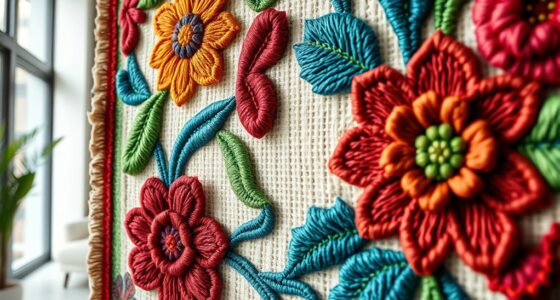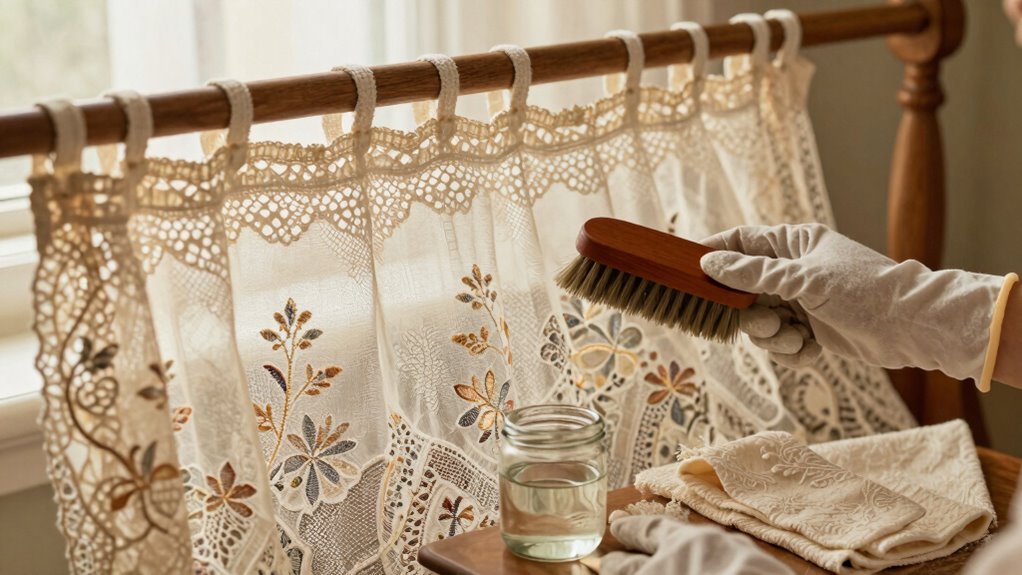

To care for delicate decorative textiles at home, handle them gently with clean hands or cotton gloves, and avoid harsh chemicals or vigorous scrubbing. Store them in a cool, dry place away from direct sunlight, using acid-free tissue to prevent friction and damage. Use padded supports or wide hangers if hanging, and keep environmental conditions stable, with proper humidity and temperature. For more helpful tips on preserving your textiles, continue exploring effective care practices.

Get furniture and decor delivered free with Prime
- Fast, free delivery on millions of items
- Prime Video, Amazon Music and more included
- Member-only deals all year
Key Takeaways
- Handle textiles with clean hands or cotton gloves to prevent oils and dirt transfer.
- Store in a cool, dry, and dark environment, wrapping with acid-free tissue paper.
- Use gentle cleaning methods, avoiding harsh chemicals or vigorous scrubbing.
- Keep textiles away from sunlight, humidity, and pests to prevent deterioration.
- Use proper supports or padded hangers for hanging to avoid stretching or tearing.
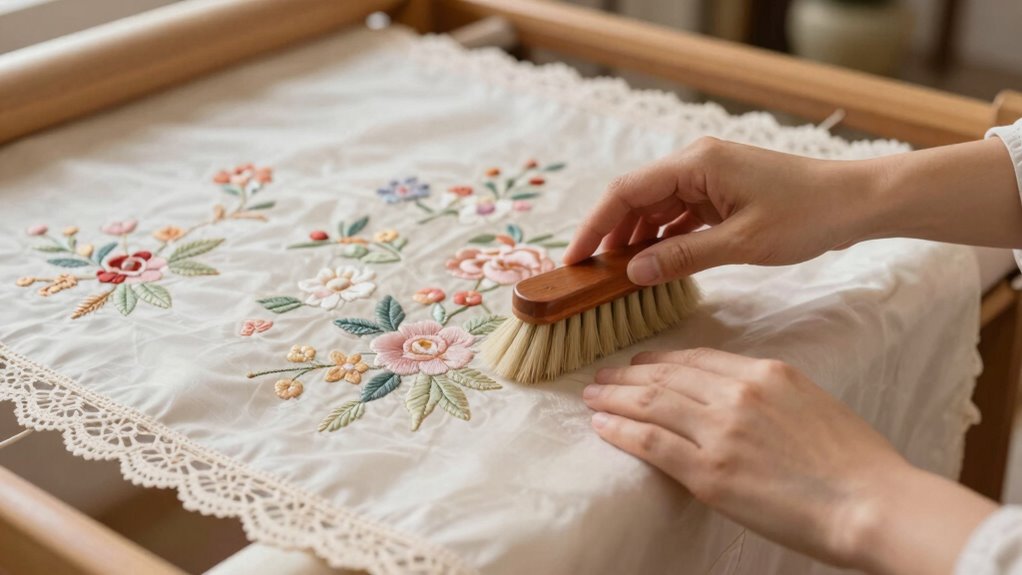
Caring for delicate decorative textiles requires careful attention to preserve their beauty and integrity. These textiles, whether vintage lace, embroidered silk, or fine tapestry, demand gentle handling and specific methods to keep them looking their best. When it comes to cleaning techniques, you should avoid harsh chemicals and vigorous scrubbing. Instead, opt for light dusting with a soft brush or a gentle vacuum with a brush attachment to remove surface dirt. If the textile needs more than dusting, spot cleaning with a damp cloth and mild soap is usually safe, but always test a small, inconspicuous area first to ensure no damage or discoloration occurs. For more stubborn stains, consider consulting a professional conservator rather than attempting to clean it yourself, as improper cleaning can cause irreversible harm. Proper storage solutions are equally essential in maintaining these textiles. You want to protect them from environmental factors like sunlight, humidity, and pests. Store your delicate textiles in a cool, dry place away from direct sunlight, which can fade colors and weaken fibers over time. Use acid-free tissue paper to gently wrap each piece, preventing friction and preserving its shape. Avoid plastic containers or bags, as they trap moisture and can promote mold growth. Instead, choose breathable storage containers or boxes lined with acid-free tissue or cotton fabric. When stacking textiles, place tissue between layers to prevent creases and reduce pressure that could distort their form. Hanging delicate textiles can be risky unless done with padded supports or wide, non-abrasive hangers to avoid stretching or tearing. Additionally, proper environmental controls such as stable temperature and humidity help maintain textile quality over time. Maintaining a controlled environment is also crucial. Keep the storage area at a stable temperature and humidity level—ideally around 65-70°F and 50% humidity. Regularly inspect your textiles for signs of deterioration, such as discoloration, mold, or pest activity. If you notice any issues, address them promptly, whether that means adjusting environmental conditions or seeking professional conservation advice. Remember, improper handling or storage can lead to irreversible damage, so always handle your textiles with clean hands or wear cotton gloves. To further ensure their longevity, consider consulting resources on textile preservation techniques, which can offer valuable guidance. Proper handling techniques are also vital, as even slight mishandling can lead to damage over time. Additionally, learning about environmental factors and their impact on textiles can help you create the optimal conditions for preservation.
acid-free tissue paper for textile storage
As an affiliate, we earn on qualifying purchases.
As an affiliate, we earn on qualifying purchases.
Frequently Asked Questions
Can I Use Regular Laundry Detergent on Delicate Textiles?
You shouldn’t use regular laundry detergent on delicate textiles because it’s often too harsh. Instead, opt for gentle detergents designed for delicate fabrics, and avoid fabric softeners and bleach, which can damage the fibers. Use bleach alternatives if needed, and always test a small area first. This approach helps preserve your delicate textiles, keeping them soft, vibrant, and intact for longer.
How Often Should I Clean or Wash Decorative Textiles?
You should wash your decorative textiles based on their usage and level of exposure to dirt or dust, typically every few months or when visibly dirty. Establish a cleaning schedule that suits the textile’s material and environment, avoiding excessive washing that can cause wear. Regular light dusting or spot cleaning can extend the time between full washes, helping maintain their appearance and longevity.
Are There Any Specific Storage Tips to Prevent Damage?
Think of your textiles as precious treasures, safeguarded in a castle. Use sturdy storage containers to shield them from dust and pests, and keep humidity levels in check to prevent mold and mildew. Store textiles in a cool, dry place, away from direct sunlight. Wrap delicate pieces in acid-free tissue paper for extra protection. These steps guarantee your treasures stay beautiful and intact, ready to impress whenever displayed.
What Are Common Mistakes to Avoid When Caring for Delicate Fabrics?
You should avoid overhandling delicate fabrics, as their fragility makes them prone to tears or damage. Don’t use harsh cleaning methods or aggressive scrubbing, which can weaken fibers. Be cautious of color bleeding—test for colorfastness before washing. Also, skip strong detergents or bleach, as they can harm fabric integrity. Always handle with care, follow proper cleaning instructions, and keep textiles away from direct sunlight to preserve their beauty.
Can Professional Cleaning Sometimes Damage Delicate Decorative Textiles?
Is professional cleaning a gamble? It can be, because professional cleaning risks textile damage if the wrong techniques or chemicals are used. While experts aim to preserve delicate textiles, mishandling or unsuitable methods might cause harm, turning a potential safeguard into a threat. You should always choose experienced cleaners who understand the specific needs of delicate decorative textiles, ensuring your treasures stay beautiful without suffering unnecessary damage.
Conclusion
Now that you know the careful steps to preserve your delicate textiles, imagine revealing a hidden stain or a subtle change over time. Will you notice it in time to react? The secrets of their longevity depend on your vigilance and gentle touch. With each cautious cleaning, you safeguard more than fabric—you protect memories, artistry, and history. Are you ready to become the guardian of these fragile treasures, opening their stories for generations to come?
Halloween Picks
halloween
As an affiliate, we earn on qualifying purchases.