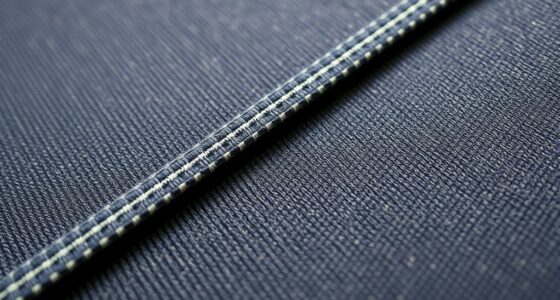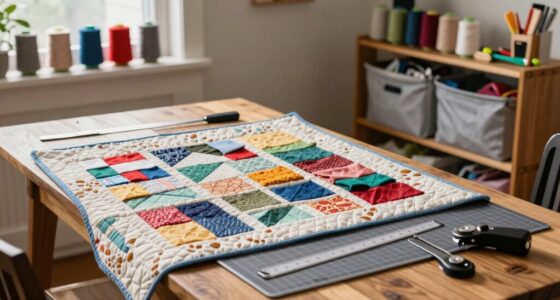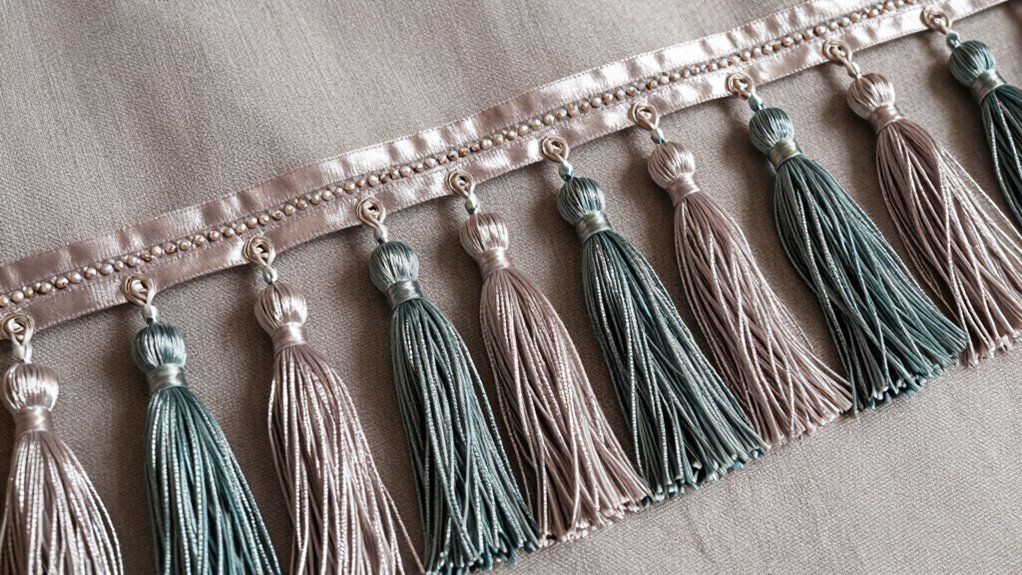

To use trim, tassels, and fringe without overdoing it, focus on a balanced approach. Limit yourself to one or two key accents, and place them strategically along hemlines, edges, or seams to amplify rather than clutter the design. Choose trims that complement your fabric’s texture and color, ensuring they don’t clash. Pay attention to scale—small trims suit light fabrics, while bold fringe fits heavier textiles. Keep it simple, and discover how subtle details can elevate your project seamlessly.

Get furniture and decor delivered free with Prime
- Fast, free delivery on millions of items
- Prime Video, Amazon Music and more included
- Member-only deals all year
Key Takeaways
- Limit trims to one or two key accents to maintain a clean, sophisticated look.
- Choose trims proportionate to the size and style of the project for balanced visual appeal.
- Use contrasting textures and colors sparingly to create interest without overwhelming the design.
- Strategically place embellishments along hems or seams for maximum impact with minimal clutter.
- Focus on quality and subtlety, ensuring trims enhance rather than overpower the overall aesthetic.
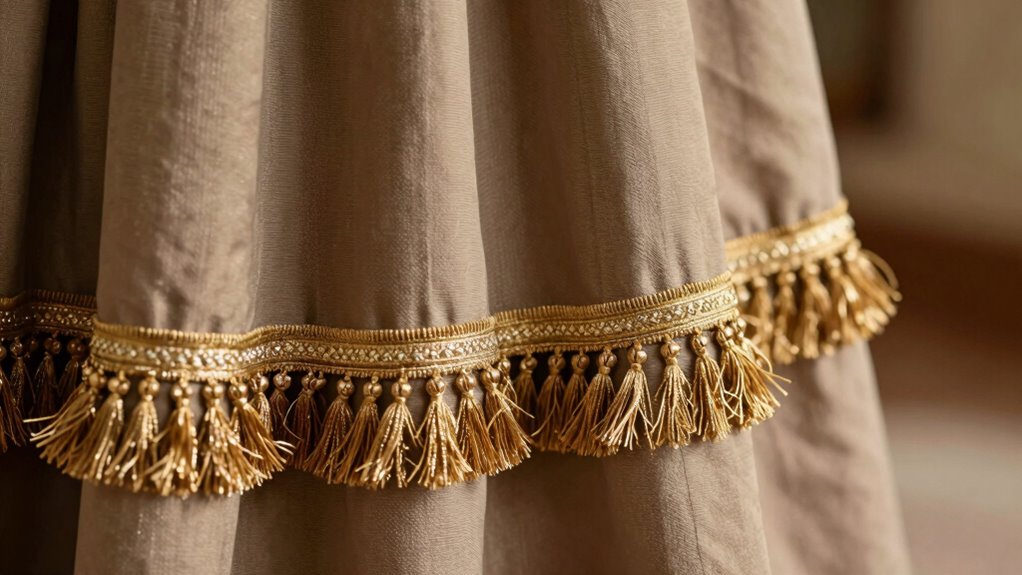
Have you ever wondered how to elevate your sewing or decorating projects with just a few simple touches? Using trim, tassels, and fringe can add that extra flair, but the key is to do it thoughtfully. The goal isn’t to overwhelm your design but to enhance it subtly. One of the most effective ways to do this is by paying attention to fabric textures. Different textures can create visual interest and depth when combined correctly. For instance, pairing a smooth silk with a lush, textured velvet can make the trim stand out without clashing. Similarly, a rougher burlap or linen can serve as an interesting backdrop for delicate, shiny tassels or fringe. By considering fabric textures, you assure your embellishments complement rather than compete with your main fabric. Understanding fabric textures is essential for creating balanced and visually appealing projects. Additionally, exploring fabric composition can help you select materials that age well together and maintain their appearance over time. To further refine your project, understanding color coordination techniques can help you choose trims that enhance your overall design. Paying attention to fabric durability can also ensure that your embellishments hold up over time, especially if the project will see regular use. color coordination is equally crucial. It might be tempting to choose trims or tassels based solely on contrast, but harmony often provides a more polished look. Think about selecting trims that match or subtly contrast with the primary fabric’s color palette. For example, if you’re working with a muted pastel fabric, pick a trim in a slightly darker or lighter shade for a cohesive effect. If you want a pop of color, choose a hue that’s within the same color family but offers enough contrast to catch the eye. This creates a balanced, unified appearance rather than an overly busy or jarring one. When in doubt, neutral tones like beige, ivory, or gray can serve as versatile options that go well with almost any fabric color. When applying trim, tassels, or fringe, keep the scale in mind. Small, delicate trimmings work perfectly on lightweight fabrics, while bold, chunky fringes suit heavier textiles. The size of your embellishments should also depend on the project’s overall style—sleek and minimal or bohemian and eclectic. To avoid overdoing it, consider incorporating visual balance** by limiting the number of different trims or tassels you use in a single piece. Instead, focus on one or two key accents to avoid clutter. For example, a single row of fringe along a hemline or a couple of tassels on a throw pillow can make a big impact without overwhelming the design. In the end, the trick to using trim, tassels, and fringe without overdoing it is balance. Pay attention to fabric textures and color coordination, and choose your embellishments thoughtfully. When done correctly, these simple touches can transform your projects into sophisticated, eye-catching pieces that reflect your personal style**.
decorative trim for sewing projects
As an affiliate, we earn on qualifying purchases.
As an affiliate, we earn on qualifying purchases.
Frequently Asked Questions
Can Trim, Tassels, and Fringe Be Used on Modern, Minimalist Designs?
Yes, you can definitely incorporate trim, tassels, and fringe into modern, minimalist designs. Focus on subtle details inspired by vintage aesthetics and cultural influences to add personality without clutter. Use these embellishments sparingly on key pieces like cushions or curtains, keeping clean lines intact. This balance creates a sophisticated look that blends contemporary minimalism with a touch of vintage charm, making your space feel unique yet uncluttered.
What Materials Work Best for Durable Trim and Fringe?
Did you know that nylon and polyester are among the most durable trim material options? For long-lasting trim and fringe, opt for nylon, polyester, or even leather, as they offer excellent material durability. These materials withstand wear and tear better than natural fibers, making them ideal for high-traffic or frequently used items. Selecting the right trim material options guarantees your decorative accents stay beautiful and intact over time.
How Do I Clean and Maintain Tassels and Fringe?
To clean and maintain tassels and fringe, you should regularly dust them with a soft brush or vacuum with a gentle attachment to avoid damage. For stains, use a damp cloth with mild soap, making sure you don’t oversaturate the material. Always test cleaning techniques on a small area first to guarantee material preservation. Keep them away from direct sunlight to prevent fading and maintain their vibrant look over time.
Are There Specific Color Combinations to Avoid?
You should avoid color clash and risky pattern pairing when choosing trim, tassels, or fringe. Stick to complementary or neutral shades to keep your look balanced. Bright or contrasting colors can overwhelm your outfit, making it appear busy or mismatched. Instead, opt for subtle tones or matching hues that enhance your style without overpowering it. This way, you’ll maintain a chic, coordinated appearance without overdoing the trim details.
Can Trims Be Diy-Made Instead of Buying Pre-Made?
Back in the day, DIY trim ideas were the craft world’s secret weapon. You can absolutely make trims yourself using handmade tassel techniques and simple materials like embroidery floss, fabric scraps, or even yarn. Get creative and experiment with different textures and colors. DIY trims add a personalized touch to your projects, and you’ll love the satisfaction of creating something unique. Just remember, a little goes a long way!
Conclusion
Think of trim, tassels, and fringe as the seasoning to your decor recipe—they add flavor without overpowering. When used thoughtfully, they dance along your fabrics like gentle waves caressing a shoreline, enhancing beauty without drowning it. Keep your eye on balance, and you’ll craft a space where every detail sings in harmony. With a little restraint, your design becomes a tapestry of subtle elegance—rich, inviting, and perfectly poised.
Columbus Day / Indigenous Peoples' Day Picks
long weekend sales
As an affiliate, we earn on qualifying purchases.