When printing repeat patterns digitally, choose the right technology by matching fabric type and ink compatibility, ensuring vibrant colors and sharp details. Design seamless, well-scaled repeats using software that helps align elements perfectly, and prepare your files with accurate color profiles for consistent results. Address common issues through regular equipment maintenance and optimizing fabric choices. To master creating flawless repeat patterns and troubleshoot effectively, explore the essential tips that follow.
Key Takeaways
- Use design software with seamless tiling capabilities to create continuous repeat patterns.
- Ensure pattern elements align perfectly at edges to avoid visible seams in repeats.
- Adjust pattern scaling within design software to maintain proportion and overall visual balance.
- Embed correct color profiles and calibrate monitors for accurate color matching before printing.
- Conduct test prints to verify pattern alignment, color fidelity, and detail sharpness prior to full production.
Choosing the Right Digital Printing Technology for Repeat Patterns
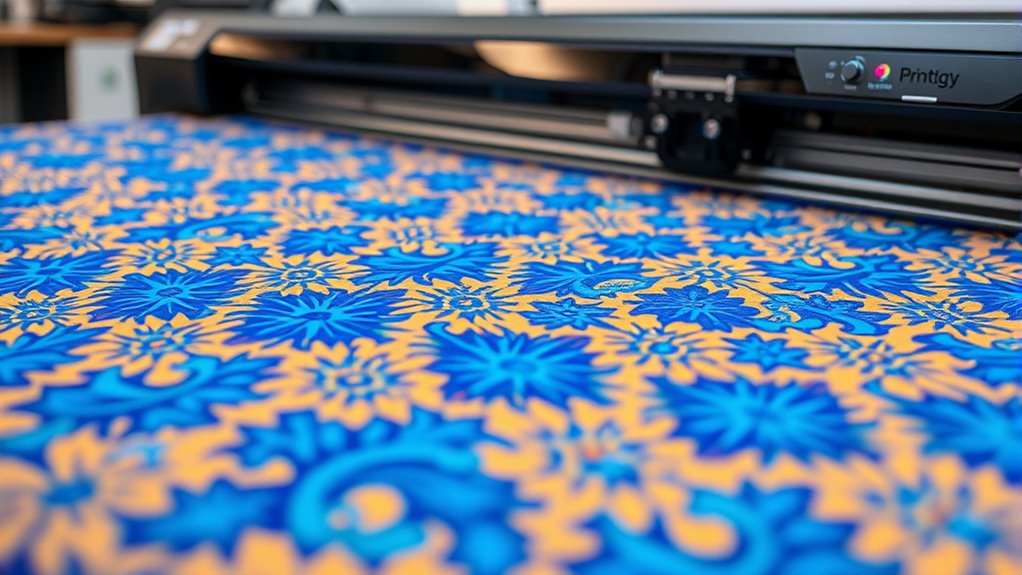
Selecting the appropriate digital printing technology is crucial when creating repeat patterns, as it directly impacts the quality, efficiency, and cost of your production. When choosing, consider the fabric types you’ll work with, since different materials respond better to specific printing methods. For example, cotton may suit dye sublimation or direct-to-fabric printing, while polyester often works best with sublimation inks. Ink compatibility is equally important; ensure the inks used are compatible with your fabric and desired color vibrancy. Some inks are better for delicate or natural fibers, while others are designed for synthetic fabrics. Additionally, understanding the printing process involved can help you select the most suitable method for your project. By matching fabric types with compatible inks and suitable printing technology, you’ll achieve sharper, more durable patterns and optimize your workflow, saving time and money in the long run.
Designing Seamless Repeat Patterns for Digital Printing
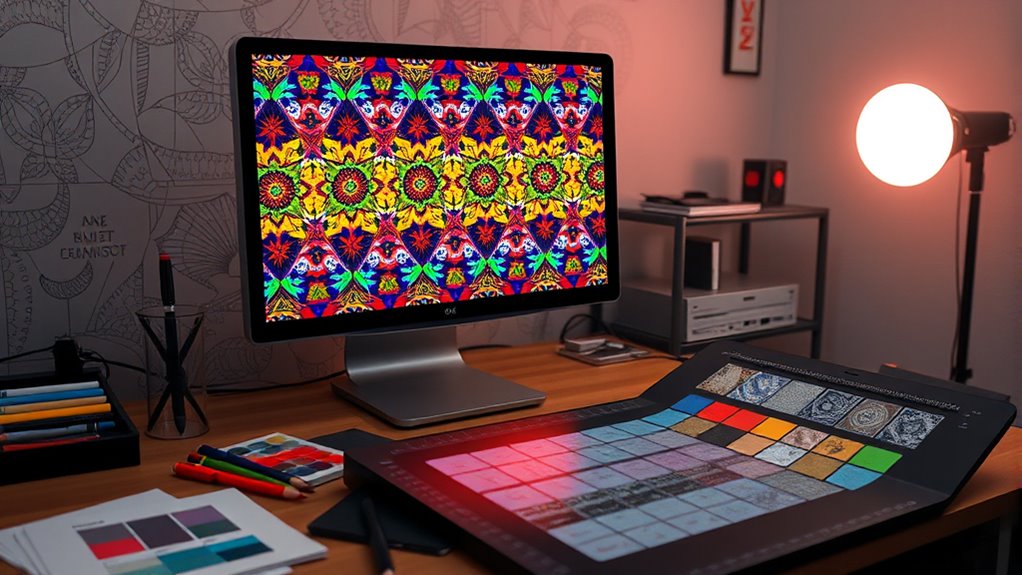
Have you ever wondered how seamless repeat patterns are created to guarantee continuous, unbroken designs? It starts with understanding how pattern scaling affects the overall look. You need to verify that the pattern elements align perfectly at the edges, so when repeated, they form a continuous flow. Pay close attention to fabric texture, as it influences how the pattern appears once printed; a textured surface can enhance or distort certain details. When designing, use software that allows you to tile your pattern seamlessly, adjusting pattern scaling to fit the fabric size without losing detail or clarity. Consistent pattern scaling and careful alignment are key to avoiding visible seams, creating a smooth, professional finish. Mastering these elements ensures your digital prints will look flawless and cohesive. Additionally, understanding how printing techniques impact pattern clarity can help you optimize your designs for the best possible results.
Preparing Files and Color Management for Optimal Results

To achieve vibrant and accurate digital prints, preparing your files with proper color management is essential. Start by ensuring your monitor is color calibrated, so what you see on screen matches the final print. This step helps you make precise color decisions and avoid surprises. When preparing your files, check ink compatibility with your printer and inks, as different systems may require specific color profiles or adjustments. Use consistent color profiles, such as RGB or CMYK, to maintain color integrity across devices. Additionally, embed these profiles in your files to ensure the printer interprets colors correctly. Proper color calibration and understanding ink compatibility prevent dull or mismatched colors, resulting in a more professional, vibrant, and true-to-design print. Being aware of regional legal resources can also assist in understanding intellectual property rights related to your designs.
Tips for Achieving Vibrant Colors and Fine Details
Achieving vibrant colors and fine details in digital prints requires careful attention to your image quality and file settings. Start by selecting a versatile color palette that enhances color depth and contrast without oversaturating. Adjust your color profiles to match your printer and fabric compatibility, ensuring colors print accurately. Use high-resolution images—at least 300 DPI—to capture fine details sharply. Optimize your file format for quality and compatibility, such as TIFF or PNG. Be mindful of the fabric you choose, as different materials absorb inks differently, affecting vibrancy. Conduct test prints on your fabric to fine-tune color settings and ensure the final result meets your expectations. Additionally, understanding how digital art techniques influence print quality can help you produce more precise and vibrant repeat patterns. With precise adjustments, you’ll produce vivid, detailed repeat patterns that truly stand out.
Troubleshooting Common Issues in Digital Repeat Pattern Printing
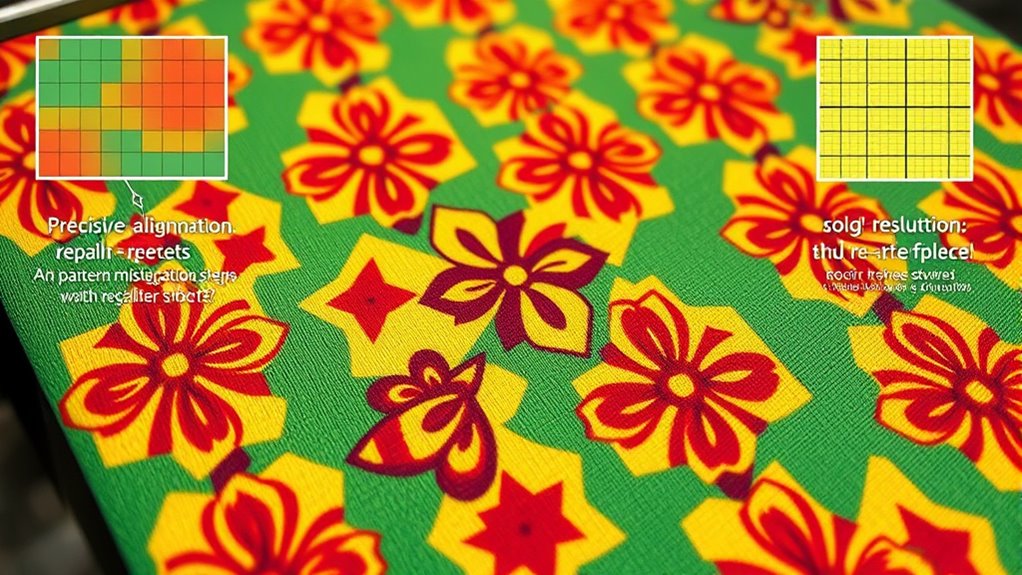
When you encounter issues with your digital repeat pattern prints, identifying the root cause quickly can save you time and materials. Inkjet consistency is key to sharp, uniform designs; uneven ink flow or clogged nozzles can cause blurry or faded repeats. Check your printer heads regularly and run cleaning cycles as needed. Fabric compatibility also plays a major role—using incompatible fabrics can lead to color bleeding, poor adhesion, or dull prints. Guarantee your chosen fabric is suitable for digital printing and matches the manufacturer’s recommendations. Adjust your color profiles and ink settings if colors appear off. Troubleshooting these common issues involves maintaining your equipment, selecting the right fabric, and fine-tuning your settings to achieve flawless repeat patterns every time. Additionally, understanding the importance of best airless paint sprayers can help ensure your equipment remains in optimal condition, preventing issues caused by equipment malfunction or improper maintenance.
Frequently Asked Questions
What Are the Environmental Impacts of Digital Repeat Pattern Printing?
Digital repeat pattern printing can reduce environmental impacts if you choose sustainable materials and manage energy consumption wisely. It uses less water and creates less waste compared to traditional methods, but it still consumes energy, especially with large-scale production. To minimize your footprint, opt for eco-friendly inks, energy-efficient equipment, and sustainable textiles. This way, you can enjoy vibrant designs while supporting environmentally responsible practices.
How Can I Customize Repeat Patterns for Different Fabric Types?
Imagine your fabric as a blank canvas, ready for your unique design. To customize repeat patterns for different fabric types, you adjust the pattern’s scale, ensuring it complements fabric texture and drape. Use color matching tools to select dyes that enhance the pattern’s vibrancy without overwhelming delicate textures. By tailoring the pattern’s complexity and palette, you create a seamless look that elevates each fabric’s natural qualities.
What Are the Best Practices for Storing Digital Pattern Files?
You should prioritize good file management by organizing your digital pattern files into clearly labeled folders for different projects and fabric types. Use version control to track changes, saving incremental updates so you can revert if needed. Regularly back up your files to an external drive or cloud storage. This way, your patterns stay safe, organized, and easy to access, reducing frustration and improving your workflow.
How Does Digital Printing Compare to Traditional Screen Printing?
Digital printing offers sharper print resolution and vibrant digital color, making it easier to achieve complex designs with fine details. Unlike traditional screen printing, digital methods are faster and more cost-effective for small runs, with less setup time. You can easily modify colors and patterns without creating new screens. Overall, digital printing provides high-quality results and greater flexibility, but traditional screen printing still excels for large quantities and specific ink effects.
What Are Emerging Trends in Digital Repeat Pattern Design?
You’ll notice emerging trends in digital repeat pattern design include innovative motifs that push creative boundaries and the integration of augmented reality to enhance user interaction. These trends allow you to create dynamic, engaging designs that stand out. By combining cutting-edge technology with fresh, imaginative concepts, you can captivate your audience and set your work apart in a rapidly evolving industry, making your patterns more immersive and memorable.
Conclusion
By mastering digital printing techniques for repeat patterns, you can create stunning, vibrant designs that captivate your audience. Did you know that digital textile printing sales are projected to reach $3.8 billion by 2025? This growth reflects how accessible and innovative digital methods are becoming. Embrace these tips, experiment with colors, and troubleshoot issues early to guarantee your patterns stand out. With the right approach, your designs will leave a lasting impression and elevate your creative projects.