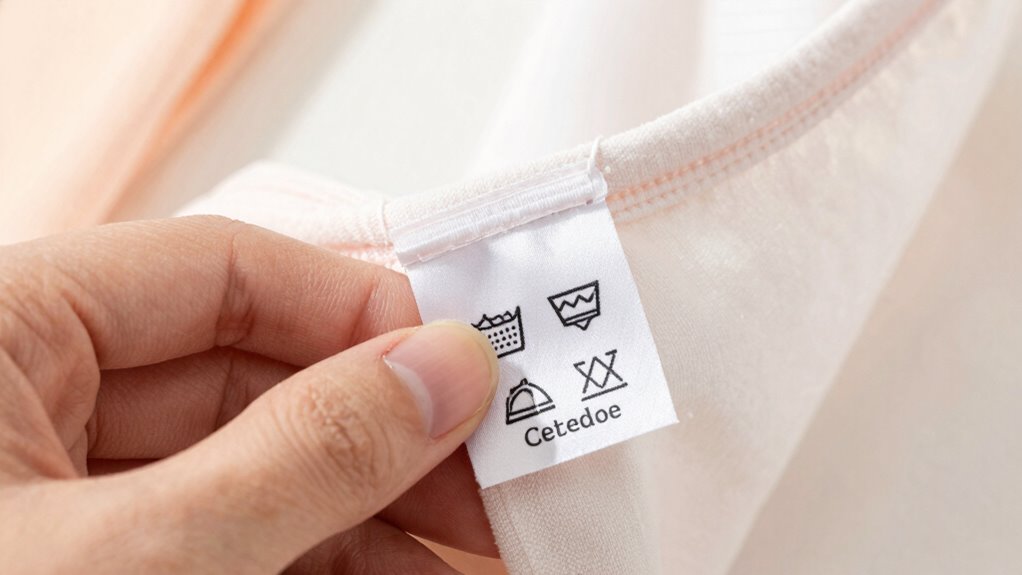

To understand fabric care labels without guessing, start by familiarizing yourself with the symbols representing washing, drying, bleaching, ironing, and dry cleaning instructions. Check the symbols carefully to determine the proper method and temperature for each garment. Pay attention to fabric types, as delicate fabrics need gentle care, while sturdier ones can handle more aggressive cleaning. If you want to get the most out of your clothes, continue exploring how to interpret each detail for better maintenance.

Get furniture and decor delivered free with Prime
- Fast, free delivery on millions of items
- Prime Video, Amazon Music and more included
- Member-only deals all year
Key Takeaways
- Familiarize yourself with common symbols: triangles, circles, squares, and iron icons, and their meanings.
- Always check the fabric type to determine suitable cleaning and drying methods.
- Read the accompanying text or numbers for specific instructions on temperature and treatment.
- Observe color coding and symbols to avoid bleaching or improper drying.
- Refer to professional cleaning labels for garments requiring dry cleaning or special care.
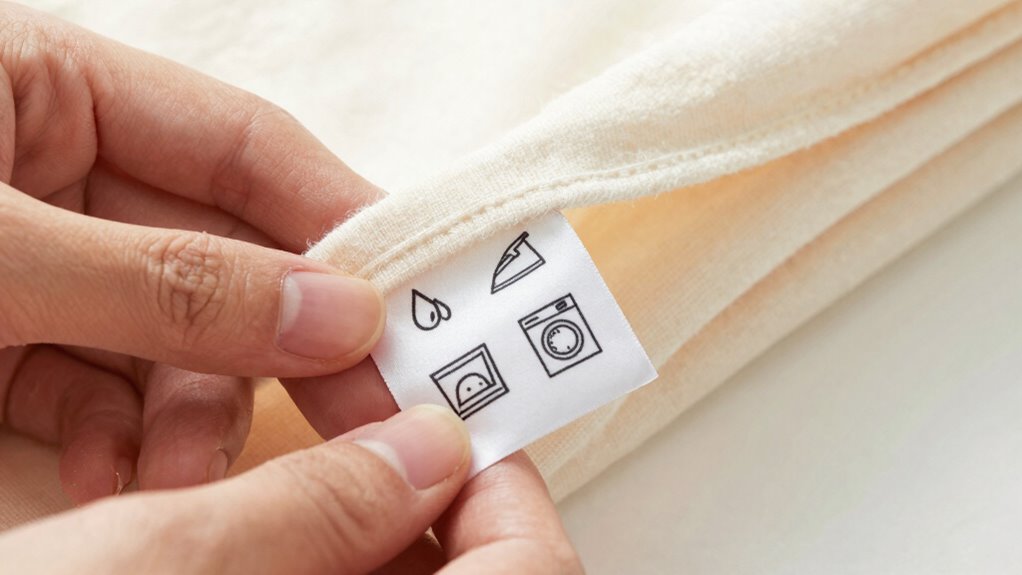
Have you ever looked at a fabric care label and felt confused about what all those symbols and instructions mean? You’re not alone. Care labels can seem overwhelming at first, especially when you’re trying to figure out how to properly clean your clothes without damaging them. But understanding these labels is essential for maintaining your garments’ quality and longevity, especially when it comes to stain removal and handling different fabric types.
Decoding fabric care labels helps you protect your clothes and keep them looking their best longer.
The symbols on care labels are designed to give you specific guidance, but they can be tricky if you’re unfamiliar with them. For example, a triangle indicates whether you can bleach the fabric, while a circle shows if dry cleaning is safe. When it comes to stain removal, knowing the fabric type is crucial because some fabrics are delicate and require special treatment. For instance, a silk or wool item might need gentle hand washing or dry cleaning, while a cotton shirt can usually be washed more aggressively. Recognizing the fabric type helps you decide whether to treat stains with harsh chemicals or opt for natural solutions like baking soda or vinegar, which are gentler but effective.
To decode the labels, start by examining the symbols for washing, bleaching, drying, and ironing. These instructions directly influence how you approach stain removal. If you see a symbol indicating machine washing, you can safely use stain removers and detergents designed for that method. But if the label warns against bleaching, avoid using chlorine or other harsh whiteners, especially on colored or delicate fabrics, since they can cause discoloration or weaken the fibers. When it comes to drying, some clothes can be tumble dried, while others should be air-dried to prevent shrinking or damage. Ironing symbols tell you whether pressing your garment is safe and what temperature to use—important for fabrics like polyester or silk that can scorch easily. Interpreting care symbols can help you avoid costly mistakes and ensure proper maintenance. Additionally, learning to read care labels properly can save you time and money by preventing unnecessary damage. Being aware of these symbols also helps you choose the right stain removal methods, which can vary depending on the fabric’s chemical composition.
Understanding these symbols also helps you make smarter choices about stain removal. For instance, if a fabric type is labeled as suitable for dry cleaning only, you’ll want to avoid aggressive stain treatments that could ruin it. Instead, consult a professional cleaner or use gentle products designed specifically for that fabric. Recognizing the fabric type from the label also helps you determine the best cleaning method—whether to hand wash, machine wash, or dry clean—saving you time, money, and frustration. In addition, being aware of the different care symbols can help you better interpret instructions and avoid costly mistakes. Paying close attention to these instructions is especially important because fabric care labels are designed to protect the integrity of your garments over time. In the end, paying close attention to these instructions allows you to care for your clothes properly, preserving their look and feel for years to come.
As an affiliate, we earn on qualifying purchases.
Frequently Asked Questions
What Do the Symbols on Fabric Labels Actually Mean?
The symbols on fabric labels are shortcuts for washing instructions and fabric dyeing tips. You’ll see icons like a tub for washing, a triangle for bleaching, and a square for drying, each with specific markings. These symbols help you care for your clothes properly, preventing damage and color fading. Learning what each symbol means makes certain you follow the right fabric dyeing techniques and washing instructions, keeping your items looking their best longer.
Are There Differences in Care Labels Internationally?
Yes, there are differences in care labels internationally due to varying standards and regulations. International standards like ISO aim to unify symbols, but label variations still exist among countries. You might notice different symbols, languages, or instructions depending on where you’re shopping or washing. Always check the symbols carefully, and if you’re unsure, consult local guidelines or manufacturer instructions to guarantee proper care for your garments.
How Can I Identify Fabric Types From the Label?
You might worry about fabric identification from labels, but it’s simpler than you think. Focus on key words like “cotton,” “polyester,” or “silk” for accurate label interpretation. Look for symbols or text that specify fiber content, often listed in percentages. This info helps you understand the fabric type, guiding proper care. By mastering label interpretation, you’ll confidently identify fabrics and keep your clothes looking their best without guesswork.
What Should I Do if Labels Are Missing or Damaged?
If labels are missing or damaged, don’t worry. You can try label removal techniques carefully if the label is partially attached, but avoid damaging the fabric. For damaged labels, consider using a fabric marker or a small, discreet tag with care instructions. Alternatively, search for care details online by identifying the fabric type or garment brand. These damaged label solutions help you maintain your clothing properly without guesswork.
Can Care Labels Be Misleading or Incorrect?
Don’t judge a book by its cover, and don’t fully trust care labels either. They can be misleading or incorrect due to inconsistent manufacturing or labeling errors. While labels aim to guide you on textile durability and dye fastness, they’re not foolproof. Always test a small, hidden area first and consider fabric type and dye stability. Rely on your judgment alongside label instructions for the best results.
Conclusion
By understanding how to read fabric care labels, you can confidently care for your clothes and keep them looking their best. Remember, these labels are there to guide you — so why guess and risk damage? Next time you’re unsure, take a moment to decode the symbols. Isn’t it worth the effort to preserve your wardrobe’s longevity? Mastering this simple skill guarantees your clothes stay beautiful and last longer.
Fall Picks
fall essentials
As an affiliate, we earn on qualifying purchases.