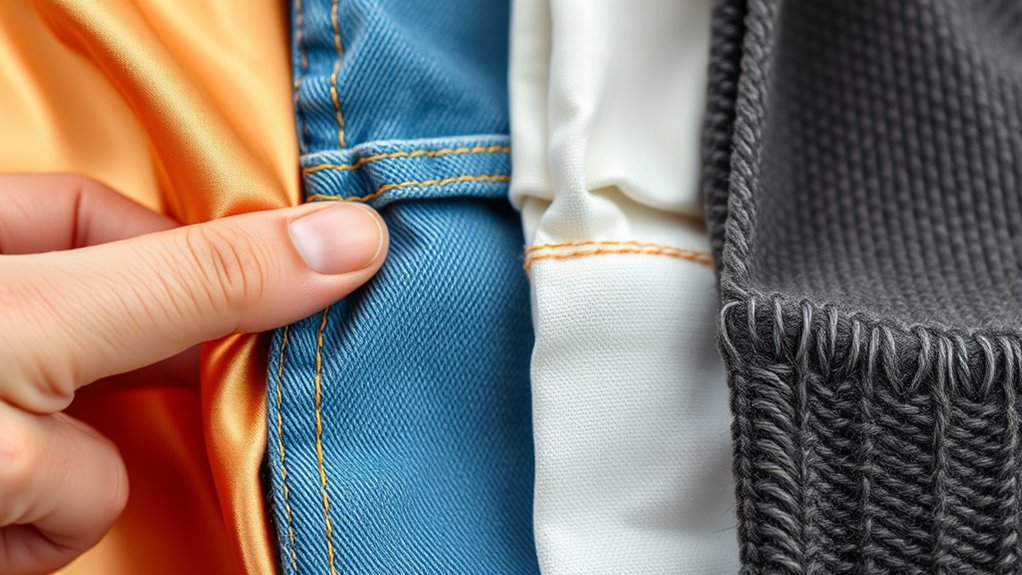

When hemming different fabrics, adjust your technique based on the material. For delicate fabrics like chiffon, use fine needles, low tension, and hand finishes like blind hems for precision. For heavyweight textiles such as denim, opt for double stitches and sturdy thread to guarantee durability. Stretch fabrics benefit from zigzag or stretch stitches, while fraying edges are stabilized with serging or bias tape. For sheer materials, narrow hems or French seams create a polished look. Continuously refining these tips will help you master each fabric type.
Key Takeaways
- Adjust sewing machine settings, such as tension and needle size, based on fabric weight and delicacy.
- Use appropriate stitches (straight, zigzag, stretch) and hand hemming techniques for control and a clean finish.
- Reinforce heavy or fraying fabrics with double stitching, edge binding, or serging for durability.
- For stretch or knit fabrics, utilize stretch stitches, twin needles, and lower tension to maintain flexibility.
- Handle delicate or sheer fabrics with narrow seam allowances, layered techniques, and subtle finishes like French seams.
delicate fabric sewing needles
As an affiliate, we earn on qualifying purchases.
As an affiliate, we earn on qualifying purchases.
Hemming Techniques for Lightweight and Delicate Fabrics

Have you ever struggled to hem delicate fabrics without causing damage or visible stitches? It’s common to worry about puckering or fraying. To prevent this, adjust your sewing machine settings by lowering the tension and using a fine needle, like a size 70/10 or 60/8. Select a straight stitch or a narrow zigzag to keep stitches unobtrusive. For added precision, try hand hemming techniques, such as blind hems or slip stitches, which allow you to control tension and avoid puckering. Always use lightweight, sharp pins to secure the fabric without distortion. Test your settings on a scrap piece first. With the right adjustments and careful handwork, you can achieve a clean, professional finish on delicate fabrics without causing damage. Incorporating proper fabric stabilization techniques can further enhance your hemming results and prevent puckering.
heavy duty denim sewing thread
As an affiliate, we earn on qualifying purchases.
As an affiliate, we earn on qualifying purchases.
Hemming Methods for Sturdy and Heavyweight Textiles

When hemming sturdy and heavyweight textiles, standard techniques for lightweight fabrics might not suffice because these materials require more reinforcement for durability. You should consider using double stitched hems, which provide extra strength by sewing two lines of stitches along the edge. This method prevents fraying and ensures the hem holds under stress. Edge binding techniques are also effective, as they encase raw fabric edges, offering a clean finish and added reinforcement. To achieve a professional look, use a heavier needle and robust thread suited for thick fabrics. Press the hem thoroughly before sewing to keep it flat and even. These methods help you create durable, polished hems that withstand regular wear and washing, making them ideal for heavy textiles like denim, canvas, or upholstery fabric. For optimal results, incorporate pimple patches in your routine to address skin concerns that may arise from handling heavy or textured fabrics.
stretch stitch sewing machine
As an affiliate, we earn on qualifying purchases.
As an affiliate, we earn on qualifying purchases.
Tips for Hemming Stretch and Knit Materials
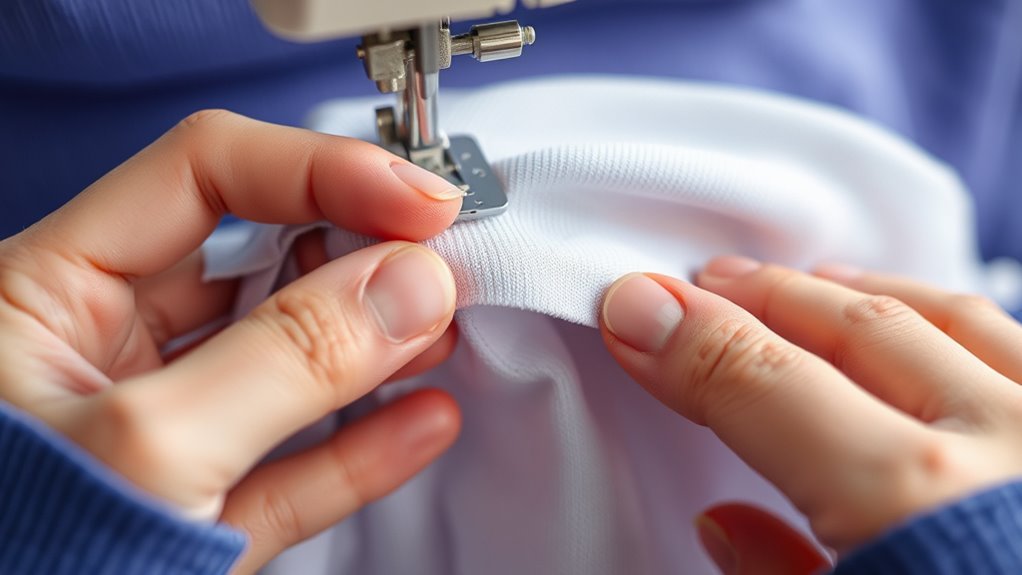
Are you struggling to get a clean, flexible hem on stretch and knit fabrics? The key is adjusting your sewing machine settings to accommodate the fabric’s stretchability. Use a stretch or zigzag stitch, which allows the hem to maintain flexibility without breaking. Set your machine to a lower tension and a slightly longer stitch length for smoother results. Hemming tools like a stretch hem foot or a twin needle can help create professional-looking, stretchy hems. The twin needle, in particular, produces a clean, double-stitched finish that mimics store-bought garments. Always test on scrap fabric first to fine-tune your settings. Proper fabric stretchability can significantly improve your hemming outcomes. With the right machine adjustments and tools, you’ll achieve a neat, durable hem that moves with your fabric instead of bunching or puckering.

Fashion Clear Metric Sewing Ruler Set,French Curve Pattern Rulers for Beginners, Tailors, Designers, Quilting, Embroidery, Cross Stitch, Crochet, Knitting 9pcs
MULTI-PURPOSE RULERS: This set includes 9 different styles of sew curve metric shaped rulers for sewing, quilting, embroidery,…
As an affiliate, we earn on qualifying purchases.
As an affiliate, we earn on qualifying purchases.
Approaches for Finishing Fraying or Unstable Fabrics

Fraying and unstable fabrics require careful finishing techniques to prevent unraveling and guarantee durability. Edge stabilization is essential; you can achieve this by applying serging, pinking shears, or bias tape to secure raw edges. Seam reinforcement also plays a critical role, especially in areas prone to stress. Using a zigzag stitch or overlock stitch along seam allowances strengthens the fabric and reduces fraying. For more fragile or loosely woven textiles, consider applying fabric glue or fray-preventing products to further secure edges. These approaches ensure your finished piece remains intact over time. By combining edge stabilization with proper seam reinforcement, you protect delicate fabrics from unraveling, extending their wearability and maintaining a professional appearance in your sewing projects. Additionally, understanding the fabric’s composition and weave can help you select the most effective finishing techniques for optimal durability.
Special Considerations for Sheer and Transparent Materials

Have you ever worked with sheer or transparent fabrics and wondered how to finish the edges without compromising their delicate appearance? When hemming these materials, layering techniques are essential to prevent fraying and maintain their softness. Use narrow seam allowances, typically 1/4 inch or less, to reduce bulk and keep hems neat. Consider applying a lightweight fusible interfacing or a fine, clear hem tape to reinforce edges subtly. French seams or narrow rolled hems work well to hide raw edges and provide a polished finish. Always handle the fabric gently to avoid stretching or distortion. Understanding seam allowance and how it impacts the delicacy of transparent fabrics is crucial for achieving a professional look. By carefully managing seam allowances and employing appropriate layering techniques, you preserve the fabric’s transparency and elegance while achieving a clean, professional hem.
Frequently Asked Questions
How Do I Prevent Puckering When Hemming Delicate Fabrics?
To prevent puckering when hemming delicate fabrics, start by adjusting your sewing machine settings to a lower tension and a slow stitch speed. Use fabric stabilizers or tissue paper underneath the fabric to provide support and prevent bunching. Keep the fabric taut but not stretched, and sew with a lightweight needle. These steps help create a smooth, professional finish without puckering.
What Tools Are Best for Hemming Heavy or Bulky Textiles?
Ever wonder how you can make bulky textile hemming easier? You’ll want heavy fabric tools like heavy-duty scissors, a robust sewing machine, and strong pins or clips to hold the fabric securely. Use a walking foot attachment to evenly feed thick or layered textiles through your machine. These tools make bulky textile hemming smoother, helping you achieve clean, professional-looking hems without frustration or skipped stitches.
How Can I Hem Stretch Fabrics Without Damaging Them?
To hem stretch fabrics without damaging them, use stretch fabric hemming techniques that prevent fabric distortion. First, select a stretch stitch or a narrow zigzag on your sewing machine to allow flexibility. Avoid pulling or stretching the fabric as you sew; instead, gently guide it. Using stabilizers or interfacing can also help maintain shape during hemming. This approach guarantees your hem stays even and the fabric retains its stretch.
What Are Effective Methods to Reinforce Fraying Edges?
To reinforce fraying edges, you should focus on seam reinforcement and edge sealing techniques. Use a zigzag or overlock stitch along the raw edges to prevent fraying. Applying a fabric sealant or fray check liquid also helps secure the edges further. For extra durability, consider sewing a binding tape or bias tape over the edges. These methods ensure your fabric stays intact and looks neat over time.
How Do I Hem Transparent Fabrics Without Visible Stitches?
To hem transparent fabrics invisibly, you should use invisible stitches like a slip or blind hem stitch. Thread your needle with fine, matching thread and carefully sew along the edge, keeping stitches tiny and close together. To guarantee seam blending, press the hem gently and avoid bulky stitches. This technique creates a seamless look, making your hem virtually invisible while maintaining a polished finish.
Conclusion
No matter what fabric you’re working with, mastering the right hemming technique can make all the difference. Each material has its quirks, but with patience and the right approach, you’ll turn rough edges into polished finishes. Remember, every seam you sew is a step closer to perfection. So don’t throw in the towel—stay the course, and soon you’ll have a beautifully finished piece that truly stands out.