In real homes, linen often wins when it comes to durability, breathability, and eco-friendliness, especially in warm or humid climates. Linen’s natural fibers keep you cool, soften over time, and last longer with proper care. Cotton feels softer initially and is more affordable, but it may fade faster and isn’t as breathable in hot weather. Want to discover how each fabric suits your style and maintenance needs? Keep exploring to find the best fit for your home.
Key Takeaways
- Linen is more breathable and ideal for hot, humid climates, while cotton offers a softer feel and better comfort in moderate temperatures.
- Cotton generally costs less upfront and resists fading better, making it suitable for everyday use in many homes.
- Linen’s durability and resistance to pilling make it better for frequent use, but it wrinkles easily and requires careful maintenance.
- Organic cotton and linen are eco-friendly options that support sustainability and reduce environmental impact.
- Style preferences vary: linen provides a rustic, textured look, whereas cotton offers a sleek, smooth appearance suitable for modern decor.
The Comfort and Feel of Linen Versus Cotton
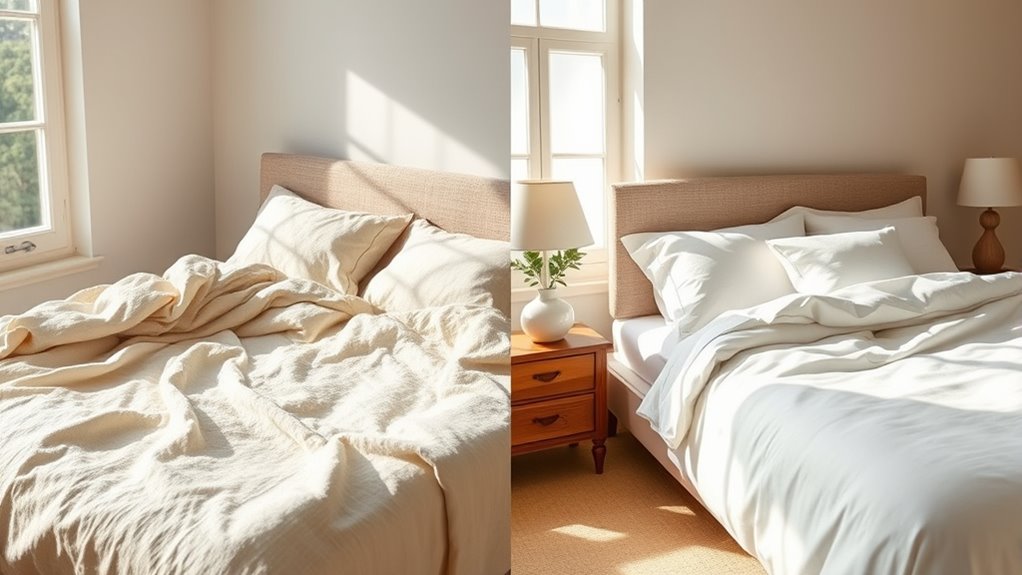
When it comes to comfort, linen and cotton feel quite different against your skin. Linen’s fabric weight tends to be lighter and more breathable, making it ideal for warm weather. Its texture is slightly coarse initially but softens over time, offering a cool, crisp sensation. Cotton, on the other hand, often features a higher thread count, which can make it feel smoother and more luxurious. A higher thread count generally means a denser, softer fabric that drapes well. You’ll notice that cotton bedding feels plush and cozy, while linen provides a more airy, textured feel. Your choice depends on whether you prefer the cool, crisp touch of linen or the soft, smooth comfort of cotton. Both fabrics deliver unique sensations that influence your sleeping experience. Additionally, linen’s moisture-wicking properties help keep you dry and comfortable throughout the night.
Durability and Longevity in Everyday Use

When it comes to durability, you’ll want fabrics that resist wear and tear over time. Linen tends to soften with use but may wrinkle easily, while cotton is often more resistant to fading after multiple washes. Considering how well each fabric holds up in everyday situations helps you choose which lasts longer for your needs. Additionally, the choice of fabric can be influenced by the type of indoor gardening accessories, such as planters and watering tools, that are used regularly in your home.
Wear and Tear Resistance
Linen and cotton each have distinct qualities that affect how well they withstand everyday wear and tear. Linen’s higher fabric weight makes it more durable, resisting pilling and damage over time. Cotton, being softer and lighter, may show signs of wear faster but often offers better stain resistance initially. Your choice depends on your needs: linen handles frequent use better, while cotton may require more careful maintenance. To understand their durability better, consider this:
| Aspect | Linen | Cotton |
|---|---|---|
| Fabric weight | Heavier, more durable | Lighter, more prone to wear |
| Stain resistance | Less resistant, stains may set | More resistant, easier to clean |
| Wear and tear | Better for longevity | Less durable in high use |
This table highlights key differences in wear and tear resistance.
Fade and Color Retention
Have you ever wondered which fabric maintains its vibrant color longer with regular use? Fabric thickness plays a role here; thicker fabrics often hold dye better, improving dye fastness. Cotton typically has good dye fastness due to its soft fibers, but its thinner varieties may fade sooner with frequent washing. Linen, on the other hand, has a denser weave that can improve color retention, but its natural fibers tend to fade over time if not properly treated. Both fabrics can retain their hues well if dyed with high-quality dyes designed for durability. However, cotton generally offers better fade resistance, especially with proper care, thanks to its dye fastness. Additionally, fabric tuning through proper dyeing processes can significantly enhance color longevity. Ultimately, your choice will depend on the fabric’s treatment and how often you wash it.
Breathability and Climate Suitability
Understanding the breathability and climate suitability of fabrics is essential when choosing between linen and cotton. Linen excels in moisture absorption, wicking away sweat and keeping you cool in hot weather. Its open weave promotes airflow, enhancing thermal regulation, so you stay comfortable during warm months. Cotton, while also breathable, tends to trap heat more than linen, making it better suited for moderate climates. It absorbs moisture but doesn’t dry as quickly, which can lead to a feeling of dampness in humid conditions. If you live in a hot, humid climate, linen is your best choice for breathability and thermal regulation. Cotton works well in temperate environments but might not provide the same cooling benefits during peak heat. Your climate plays a vital role in determining which fabric keeps you most comfortable. Additionally, understanding fabric breathability can help you make more informed choices for comfort and durability.
Ease of Care and Maintenance

When it comes to ease of care and maintenance, linen requires a bit more attention than cotton. Linen tends to need more frequent laundry to stay fresh and may require careful ironing to remove wrinkles. Cotton, on the other hand, is more forgiving and easier to care for overall. Additionally, material durability plays a role in how well each fabric withstands regular washing and use.
Cost and Value for Money

Choosing between linen and cotton depends heavily on your budget and how much value you expect to get. When considering price comparison and budget considerations, you’ll notice differences in initial cost and longevity.
Here are key points to evaluate:
- Linen tends to have a higher upfront price but offers durability and longer lifespan.
- Cotton usually costs less initially but may wear out faster with frequent washing.
- For budget-conscious buyers, cotton provides affordability, but linen offers better long-term value.
- Consider maintenance costs—linen’s durability may reduce replacement expenses over time.
- Proper fabric maintenance can significantly extend the lifespan of both materials, affecting overall value.
Ultimately, weigh the upfront price against durability and longevity to determine which fabric offers better value for your money.
Style and Aesthetic Versatility
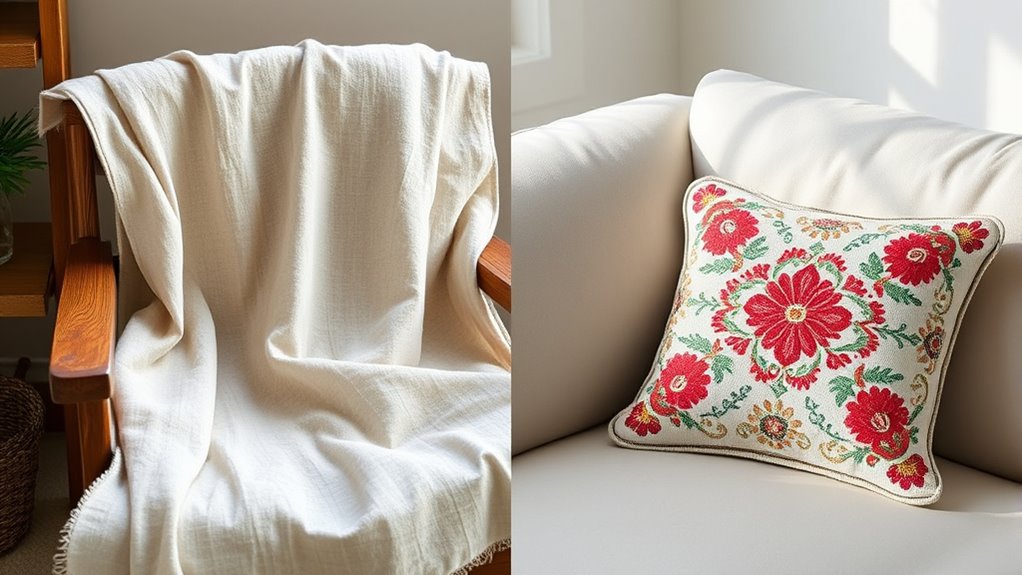
Both linen and cotton offer distinct aesthetic qualities that can complement a variety of interior styles. Linen’s natural, slightly textured appearance lends a relaxed, rustic charm, while cotton’s smooth surface provides a clean, polished look. When it comes to dye fastness, linen often holds color longer, maintaining vibrant hues over time, which enhances its versatility across different decor themes. Texture variation plays a key role in style; linen’s inherent irregularities add visual interest, perfect for bohemian or farmhouse settings. Cotton’s consistent, soft surface suits modern or minimalist interiors. Whether you prefer the laid-back elegance of linen or the sleek simplicity of cotton, both fabrics can adapt to your design vision, making them highly versatile choices for your home’s aesthetic. Additionally, natural materials like linen and cotton contribute to creating a warm and inviting bedroom atmosphere, especially in farmhouse-inspired spaces.
Environmental Impact and Sustainability
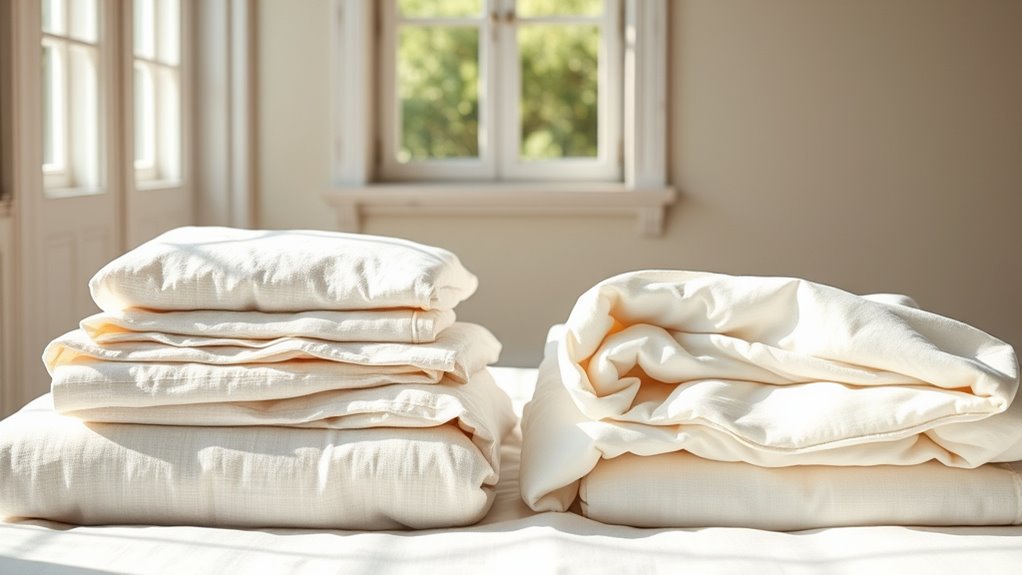
Linen and cotton differ particularly in their environmental impacts, influencing how sustainable they are choices for eco-conscious consumers. Linen, made from flax, typically requires fewer resources, making it more eco-friendly. Cotton’s sustainability depends on factors like organic certification and recyclability factors. Here’s what you should consider:
- Linen often has a lower water footprint than conventional cotton.
- Organic cotton is grown without harmful pesticides, reducing environmental harm.
- Recyclability factors matter; linen fibers are biodegradable and easily recycled.
- Certification labels help identify sustainable options, whether linen or organic cotton.
- Additionally, choosing linen or organic cotton can help reduce deforestation and habitat destruction associated with conventional cotton farming and non-sustainable flax cultivation.
Ultimately, choosing linen or organic cotton aligns with reducing your ecological footprint, but always check for organic certification to ensure genuine sustainability.
Frequently Asked Questions
Which Fabric Is Better Suited for Allergy Sufferers?
You should choose cotton if you’re an allergy sufferer, as it generally has better hypoallergenic qualities and lower irritant potential. Cotton’s smooth fibers resist dust mites and allergens better than linen, which can trap more irritants. Additionally, cotton fabrics are breathable and easier to wash thoroughly, reducing allergy triggers. So, for a healthier sleep environment, cotton is often the safer, more comfortable choice for allergy sufferers.
How Do Linen and Cotton Perform in Different Climate Zones?
In different climate zones, linen and cotton adapt well, but linen excels in hot, humid climates thanks to its superior climate adaptation and breathability. It stays cool and dries quickly, making it perfect for summer. Cotton, on the other hand, offers great textile durability and comfort in milder or cooler environments. Your choice depends on your climate—linen keeps you cool, while cotton provides lasting comfort year-round.
Can Linen or Cotton Fabrics Be Naturally Dyed?
Like a painter’s brush on a blank canvas, you can naturally dye linen and cotton fabrics. Both are great for eco-friendly fabrics and respond beautifully to natural dyeing methods using plants, roots, and minerals. This process creates vibrant, unique colors without chemicals, making your textiles environmentally friendly. Whether you choose linen or cotton, natural dyeing lets you personalize your fabrics while staying eco-conscious, turning everyday materials into art.
Are There Health Benefits Associated With Linen or Cotton Bedding?
You’ll find that linen bedding offers better breathability, helping you stay cool and dry throughout the night, which can improve sleep quality. Cotton, on the other hand, is also breathable but tends to be softer and more durable over time. Both fabrics are natural, reducing skin irritation, but linen’s durability means it lasts longer, making it a healthier choice for those seeking long-term comfort and reduced exposure to synthetic chemicals.
How Do Linen and Cotton Compare in Antimicrobial Properties?
Linen and cotton fabrics differ in their antimicrobial properties, but neither is inherently antimicrobial. Fabric treatment effects, like antimicrobial finishes, can enhance resistance to bacteria and fungi. Linen’s natural fibers resist microbial growth better than untreated cotton, which can harbor more microbes over time. However, antimicrobial resistance is a concern with chemical treatments, so choosing fabrics with natural or safe treatments helps maintain health benefits without contributing to resistance.
Conclusion
When choosing between linen and cotton, consider your lifestyle and priorities. Linen offers a cooler, more durable option, while cotton provides softness and easy care. Did you know that cotton accounts for over 30% of the world’s textile production? Whichever you pick, investing in quality guarantees your home stays cozy and stylish for years. Ultimately, your choice reflects your style and values—so go with what feels right for your everyday life.