To fix pilling, snags, and pulls fast, use a fabric shaver or a fine-tooth comb to gently remove pills and smooth out pulls. Dampen a cloth with diluted fabric softener to relax fibers around pulls or snags, and carefully tuck loose threads back into the fabric with a needle. To prevent future issues, follow proper washing and storage guidelines. Keep going to discover more tips that will help your clothes stay fresh and snag-free longer.
Key Takeaways
- Use a fabric shaver or fine-tooth comb to gently remove pills and restore fabric smoothness.
- Smooth out snags or pulls with your fingers or dampen fibers with diluted fabric softener for easier fixing.
- Tuck loose threads back into the fabric with a needle for minor pulls to prevent further damage.
- Follow garment care labels and wash clothes inside out on gentle cycles to prevent pilling, snags, and pulls.
- Store clothes properly, inspect regularly, and address small issues early to maintain fabric appearance and longevity.
Quick and Easy Pilling Removal Techniques
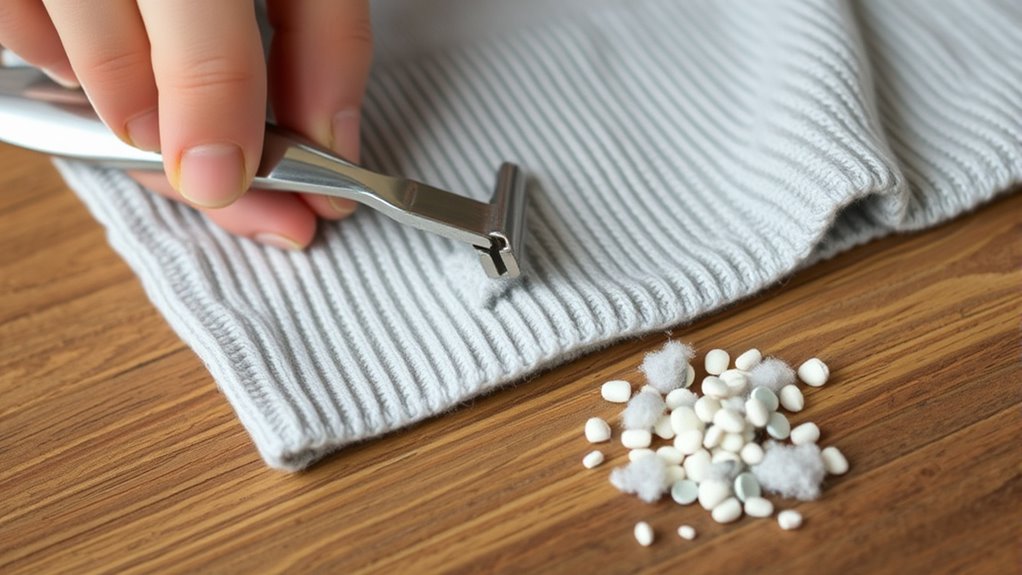
When pilling occurs, it can quickly make your fabric look worn and untidy, but thankfully, removing pills is straightforward. Start by gently using a fabric shaver or a fine-tooth comb to lift and remove pills without damaging the fabric. To prevent future pilling, consider using fabric softeners during laundry; they help reduce friction and fiber breakage. Proper storage solutions also play a role—store delicate items folded or hanging properly to avoid excessive rubbing that causes pilling. Always wash clothing inside out on gentle cycles to minimize friction. Regularly inspecting your clothes and removing pills early keeps them looking fresh. Using high-quality fabrics can also help reduce the likelihood of pilling over time. With these simple techniques, you can maintain your wardrobe’s appearance and extend the life of your fabrics easily.
Fixing Snags and Pulls With Household Items

If you notice a snag or pull in your fabric, don’t panic—many small repairs can be handled with common household items. First, try gently smoothing the fabric with your fingers to realign the fibers. For stubborn pulls, dampen a clean cloth with a little fabric softener diluted in water, then carefully press around the pull to relax the fibers. Once the fabric softener loosens the fibers, use a lint roller to remove any loose threads or fuzz around the pull. If the pull is minor, you can also use a needle to carefully tuck the loose threads back into the fabric, avoiding further damage. These simple household tricks can often fix snags and pulls without professional help. Understanding fabric care can help prevent future issues and keep your clothes looking their best.
Preventive Tips to Keep Your Clothes Looking Fresh
To keep your clothes looking fresh and prevent damage, adopting simple preventive habits makes a big difference. Always read and follow garment labels to understand washing and drying instructions, which helps avoid unnecessary wear. Using fabric softeners can reduce friction between fibers, minimizing pilling and snags. Wash delicate items separately or inside out to protect their surface. Avoid overloading your washing machine, as it causes excessive friction that can damage fabrics. Opt for gentle cycles when possible. Store clothes properly, folding or hanging items to prevent stretching and pulls. Regularly check your wardrobe for loose threads or small tears, addressing issues early. Being mindful of fabric properties and how they respond to washing methods can further extend the lifespan of your clothing. These small steps help maintain your clothes’ appearance longer, keeping them looking fresh and new for more wears.
Frequently Asked Questions
Can Pilling Occur on All Fabric Types Equally?
No, pilling doesn’t occur equally on all fabric types. Fabrics with smoother textures, like silk or satin, are less prone to pilling, while those with rougher textures, such as wool or fleece, are more vulnerable. To minimize pilling, focus on fabric textures and pilling prevention techniques. Proper care and gentle handling help prevent pills from forming, keeping your garments looking fresh and smooth longer.
Are Professional Repairs Necessary for Deep Snags?
Oh, of course, you should run to a pro for deep snags—because who doesn’t trust fabric dyeing experts with delicate repairs? Deep snags often require specialized tools and skills, and your clothing label probably advises professional repair for perfect results. Trying DIY fixes might worsen the damage or compromise the garment’s integrity. When in doubt, a professional guarantees your clothes stay looking their best without risking more harm.
How Often Should I Check for Snags and Pulls?
You should check for snags and pulls regularly, ideally every few wears, especially if you use fabric softeners that can weaken fibers. Always follow garment labels for care instructions, as some fabrics are more prone to damage. Inspect your clothing after washing or wearing, so you catch snags early. Quick detection lets you fix minor pulls yourself or decide if professional repairs are needed, saving your clothes from further damage.
Do Specific Detergents Cause More Pilling?
Detergent chemicals can be like a rough wind for your fabrics, causing more pilling. Some detergents contain harsh chemicals that accelerate fiber degradation, making pills and pulls more common. To keep your clothes looking fresh, choose gentle, mild detergents designed for delicate fibers. Always check labels and avoid those with strong bleach or harsh additives, which can weaken fibers and lead to unwanted pilling over time.
Can Excessive Washing Damage Fabric Fibers Over Time?
Excessive washing can indeed damage fabric fibers over time, especially if you use harsh detergents or fabric softeners. The constant agitation in your washing machine wears down fibers, leading to weakening and eventual thinning. To protect your clothes, use gentle cycles and avoid over-washing. Also, choose mild detergents and skip fabric softeners when possible, as they can build up and affect fiber integrity, shortening your garment’s lifespan.
Conclusion
Now that you know how to fix pilling, snags, and pulls quickly, your clothes can stay fresh and flawless. Think of it like a battle—you’ve got the tools; you just need to act fast. While these quick fixes save your wardrobe, remember prevention keeps clothes looking new longer. So, embrace the little repairs as a secret weapon, and enjoy the confidence of always stepping out in pristine, well-maintained apparel. Your wardrobe’s new best friend starts here.