

Thread count is mostly a marketing trick that distracts from what truly makes sheets comfortable and durable. Higher numbers don’t automatically mean better quality because other factors like fabric weave, fiber length, and yarn thickness matter more. Natural fibers, breathable weaves, and high-quality threads last longer and feel better. If you want to find sheets that truly perform, paying attention to these details will help you pick the right ones—more info ahead.
Key Takeaways
- Thread count alone doesn’t determine sheet quality; fabric fiber, weave, and finishing are more important.
- Higher ply and thicker yarns contribute to durability more than just increasing thread count.
- Fabric weave (e.g., percale, sateen) impacts softness, breathability, and longevity, regardless of thread number.
- Natural fibers like long-staple cotton and linen offer better durability and comfort than high thread count synthetics.
- Proper care and quality materials are key factors for long-lasting, comfortable sheets beyond thread count numbers.

Shilucheng 100% Cotton Queen Size Sheets Set – 600 Thread Count,Luxury Egyptian Cotton Bed Sheets,5-Star Hotel Quality Sheets, Breathable & Cooling, 16 Inch Deep Pocket – 4 Piece (White, Queen)
LUXURY COTTON EXPERIENCE: Enjoy the softness of our 600 thread count cotton sheets, providing a modern and sleek…
As an affiliate, we earn on qualifying purchases.
As an affiliate, we earn on qualifying purchases.
The Origins of Thread Count and Its Popularity
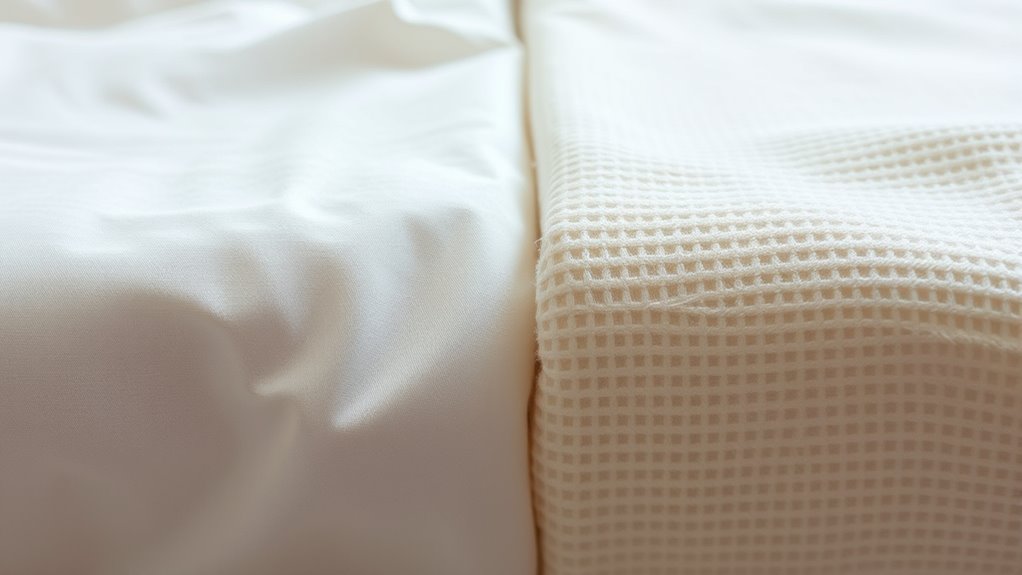
The concept of thread count gained popularity in the bedding industry because manufacturers and marketers promoted higher numbers as the key to better quality sheets. This fueled thread count myths, making consumers believe that more threads automatically mean superior comfort. To understand this better, you should know fabric weave basics—how threads are woven influences softness and durability. In reality, a higher thread count can sometimes indicate thinner threads or less breathable fabrics, not better quality. Marketers focused on counting threads per square inch to boost sales, but this oversimplifies what makes sheets comfortable. It’s essential to look beyond thread count and consider how the fabric is woven, the material used, and overall craftsmanship to truly assess sheet quality. Additionally, understanding fabric decorating markers and their impact on fabric can help you evaluate the fabric’s surface qualities and breathability.

California Design Den Natural 100% Cotton Sheets Queen Size Bed Set – Soft 400 Thread Count Sateen, Queen Sheets, Deep Pockets with All Around Elastic for a Snug Fit, Durable Bedding – White
Winner of the 2026 Good Housekeeping Best Bedding Award – Everyday Ease Cotton Sheets: Our 400 thread count…
As an affiliate, we earn on qualifying purchases.
As an affiliate, we earn on qualifying purchases.
Why Higher Thread Counts Don’t Always Mean Better Quality
While higher thread counts are often marketed as a sign of superior quality, this isn’t always the case. Luxury branding and marketing strategies tend to emphasize thread count to suggest exclusivity, but it can be misleading. A high thread count might indicate dense fabric, but it doesn’t guarantee softness, durability, or comfort. Manufacturers can inflate thread counts through multi-ply threads or misleading labeling, giving consumers the impression of premium quality. Instead, focus on fabric quality, fiber type, and weave. A lower thread count with high-quality cotton or linen can outperform a higher thread count fabric that’s made with cheaper materials. Remember, marketing tactics often prioritize numbers over actual fabric performance, so don’t rely solely on thread count when choosing bedding.

LANE LINEN 100% Organic Cotton Sheets Set Pure Long- Staple Percale Weave – Bedding for Bed Fits Mattress Upto 15" Deep Pocket (Queen Taupe)
Pure Organic Comfort: Experience the luxurious comfort of our Lane Linen queen size sheet, meticulously crafted from OEKO-TEX…
As an affiliate, we earn on qualifying purchases.
As an affiliate, we earn on qualifying purchases.
Understanding Fabric Weaves and Their Impact on Feel

Understanding fabric weaves is essential because it directly influences how your sheets feel against your skin. The way threads are woven affects fabric softness and overall comfort. Different weave patterns create distinct textures and durability levels. For example, percale has a tight, matte finish, offering crispness, while sateen feels silky and smooth. The choice of weave impacts breathability and moisture-wicking, too. Here’s a quick look at common weave patterns:
| Weave Pattern | Feel | Durability |
|---|---|---|
| Percale | Crisp, cool | High |
| Sateen | Silky, smooth | Moderate |
| Twill | Soft, draped | Very durable |
| Jacquard | Textured, intricate | Varies |
Additionally, understanding fabric breathability can help you choose sheets that keep you comfortable throughout the night.

SONORO KATE 100% French Pure Linen Sheets, Breathable and Durable Linen King Size Sheets, Anti-Tear Linen Bed Sheets, Machine Washable, 16 Inch Deep Pocket – 4 Piece (Natural Linen, King)
100% FRENCH PURE LINEN: This 4 piece sheet set is made of 100% French pure linen, a natural…
As an affiliate, we earn on qualifying purchases.
As an affiliate, we earn on qualifying purchases.
The Role of Material Types in Bedding Comfort

The material type of your bedding greatly influences how comfortable and durable it feels. Natural fibers like cotton and linen offer breathability and moisture control, while synthetic options can provide durability and ease of care. Choosing the right fabric depends on your priorities for comfort, longevity, and maintenance. Additionally, considering best small wood stoves can ensure you select efficient heating solutions for your space.
Fabric Durability and Feel
Choosing the right fabric can considerably impact both how long your bedding lasts and how it feels against your skin. Durability depends on the material’s fiber strength and how well it resists wear and tear. For example, tightly woven cotton or linen tends to hold up longer, maintaining their feel over time. Additionally, quality fabrics exhibit excellent dye fastness, meaning their colors stay vibrant and don’t fade easily, preserving color brightness even after multiple washes. The longevity of a fabric is also influenced by its resistance to pilling and fraying, which are key factors in maintaining overall durability. The feel of the fabric is also vital—smooth, soft materials like sateen or high-thread-count cotton can enhance comfort, while rougher fabrics may cause irritation. Investing in durable, well-made fabrics ensures your bedding remains cozy, maintains its appearance, and provides a luxurious feel, making it worth the initial effort.
Breathability and Moisture Control
Material choice directly impacts how well your bedding breathes and manages moisture, affecting overall comfort night after night. Breathable fabrics allow air to circulate, helping to keep you cool and dry, especially if you tend to sweat at night. Moisture-wicking materials draw sweat away from your skin, maintaining a comfortable surface and preventing dampness. Fabric softness enhances comfort, making your sleep surface inviting and pleasant to touch. Additionally, the aesthetic appeal of the fabric plays a role in your overall satisfaction, as appealing textures and finishes can make your bedding feel more luxurious. Choosing the right material ensures better airflow, moisture regulation, and comfort, helping you wake up feeling refreshed and rested, regardless of external conditions or how much you move during sleep. Understanding fabric properties can further assist in selecting the most suitable bedding for your needs.
Natural vs. Synthetic Fibers
Have you ever wondered how natural and synthetic fibers differ in delivering comfort during sleep? Natural fibers like cotton and linen are prized for their excellent dye fastness, meaning their colors stay vibrant after multiple washes. They also tend to wrinkle more, which can require regular ironing but offers a classic look. Synthetic fibers such as polyester and microfiber often boast superior wrinkle resistance, keeping bedding smooth and low-maintenance. While synthetics may not breathe as well as natural options, advances have improved their moisture-wicking capabilities. Additionally, innovations in automation technology are enhancing manufacturing processes for bedding materials, leading to better quality and durability. When choosing bedding, consider these material traits: natural fibers provide comfort and breathability but may require more care, whereas synthetics offer durability, color retention, and wrinkle resistance, making them a practical choice for long-lasting comfort.
The Importance of Thread Quality and Fiber Length

While thread count often gets all the attention, the real quality lies in the thread’s fiber length and overall quality. Longer fibers create stronger, smoother threads that resist pilling and tearing. This enhances fiber elasticity, allowing your sheets to maintain their shape and feel over time. Additionally, high-quality fibers improve dye fastness, meaning the colors stay vibrant and don’t fade after washing. Shorter fibers tend to trap more impurities, weakening the thread and reducing its durability. When choosing bedding, focus on the fiber length and the quality of the fibers used, not just the number of threads per inch. Recognizing the WWE Raw’s Financial Impact can help you understand how high-quality materials contribute to long-lasting, valuable sheets. Better fiber quality results in softer, more durable sheets that retain their appearance and comfort longer.
How Ply and Yarn Thickness Affect Durability

Ply strength and yarn thickness play a key role in how long your bedding lasts. Thicker yarns generally add durability, while multiple plies can reinforce the fabric. Understanding these factors helps you choose sheets that stand up to daily use. Additionally, incorporating various yoga styles into your routine can improve overall physical health and mental well-being, supporting a balanced lifestyle.
Ply Strength and Longevity
The strength and durability of a bedding depend considerably on its ply and yarn thickness. Thicker yarns and higher ply counts generally lead to stronger fabrics that last longer. This can enhance pillow softness over time without sacrificing durability. If your bed frame is sturdy, investing in properly reinforced bedding becomes even more important to prevent wear. Consider the table below to understand how ply and yarn thickness influence longevity:
| Ply Count | Yarn Thickness | Impact on Durability |
|---|---|---|
| Higher | Thicker | Increases strength and lifespan |
| Lower | Thinner | May wear out faster |
| Moderate | Medium | Balances softness and durability |
Ensuring proper fabric quality can also help maintain the longevity and comfort of your bedding.
Choosing the right combination ensures your bedding stays comfortable and durable for years.
Yarn Thickness Impact
Yarn thickness plays a significant role in determining how long your bedding lasts. Thicker yarns typically create more durable fabric because they resist wear and tear better over time. When you choose bedding made from dyed fibers, the yarn thickness can also influence how well the colors hold up, especially with eco-friendly materials that often use natural dyes. Thicker yarns tend to be sturdier, making the bedding more resilient against frequent washing. Additionally, eco-friendly materials like organic cotton or bamboo often come in thicker yarns, which enhances their durability while supporting sustainable practices. Durability factors should also be considered when selecting bedding to ensure long-lasting quality. Ultimately, opting for yarns with the right thickness guarantees your bedding remains soft, strong, and vibrant longer, regardless of thread count or fiber type.
Factors That Influence Bedding Longevity and Comfort
While thread count often garners attention, other factors substantially impact bedding’s longevity and comfort. Fabric softness plays a key role—you want sheets that feel smooth and inviting over time. The quality of the fibers and how they’re woven influence this softness, not just the thread count. Additionally, dye fading affects both appearance and durability; lower-quality dyes may wash out quickly, making sheets look dull and worn. Proper fabric selection, such as long-staple cotton or linen, enhances both comfort and lifespan. Care habits also matter—using gentle washes and avoiding high heat can preserve fabric integrity. Ultimately, focusing on fiber quality, dye stability, and proper maintenance guarantees your bedding remains comfortable and visually appealing for years.
Tips for Choosing the Right Sheets Beyond Thread Count
Choosing the right sheets involves more than just looking at the thread count; you should also consider factors like fabric type, weave, and dye quality. Opt for sheets made from sustainably farmed cotton or linen to support sustainable farming practices. Check if the sheets are ethically sourced, ensuring fair labor conditions and environmentally friendly processes. A tighter, balanced weave—like percale or sateen—can improve durability and comfort without relying solely on thread count. Also, look for natural dyes or low-impact coloring methods to reduce chemical exposure and environmental impact. By prioritizing sustainable farming and ethical sourcing, you not only get better-quality sheets but also contribute to a healthier planet and fairer supply chains. These considerations ensure your bedding choices align with values beyond mere numbers.
Frequently Asked Questions
How Does Daily Use Affect Sheet Longevity Regardless of Thread Count?
Daily use can wear down your sheets over time, no matter the thread count. Using fabric softeners regularly can weaken fibers, and improper drying techniques—like high heat—speed up deterioration. To prolong your sheets’ life, opt for gentle wash cycles, skip softeners or use natural alternatives, and air dry when possible. These steps help maintain fabric integrity and keep your sheets feeling fresh longer.
Can Washing Methods Alter the Perceived Quality of Bedding?
Yes, washing methods can alter the perceived quality of your bedding. Using harsh detergents or hot water can damage fabric softness, making sheets feel rougher over time. Additionally, aggressive washing can cause dye fading, dulling colors and reducing overall appearance. To maintain fabric softness and vibrant colors, opt for gentle cycles, cold water, and mild detergents. Proper care keeps your bedding looking fresh and feeling comfortable longer.
What Environmental Factors Influence Fabric Durability Over Time?
Environmental factors like sunlight, humidity, and pollution substantially impact fabric durability over time. You should consider fabric treatments that resist UV damage and moisture, as these protect your bedding from wear. Environmental exposure causes fibers to weaken and fade, so keeping your textiles in a cool, dry, and shaded area helps preserve their integrity. Proper care and protective treatments ensure your bedding remains comfortable and durable longer.
Are There Specific Brands Known for High-Quality Sheets Beyond Thread Count?
Yes, some luxury brands are known for high-quality sheets beyond just thread count. Look for brands that prioritize organic certifications, ensuring you get sustainable, toxin-free bedding. Companies like Boll & Branch, Coyuchi, and Frette focus on premium materials and ethical production standards. These brands often use long-staple cotton or organic linen, providing durability, softness, and eco-friendliness that surpass mere thread count.
How Do Allergies Impact the Choice of Bedding Materials?
Like a shield protecting you, allergies make choosing the right bedding vital. You should look for hypoallergenic fabrics and allergy-friendly materials that resist dust mites, mold, and pet dander. These options help reduce allergic reactions and improve sleep quality. Opting for natural fibers like organic cotton or bamboo, which are less likely to harbor allergens, guarantees you stay comfortable and allergy-free all night long.
Conclusion
So, next time you shop for sheets, remember that thread count isn’t everything. Focus on fabric quality, weave, and material type to find bedding that truly feels luxurious and lasts. Why settle for a number when you can choose sheets that offer real comfort and durability? Ultimately, the best sheets are those that suit your preferences and stand the test of time. Isn’t that the real measure of quality?


