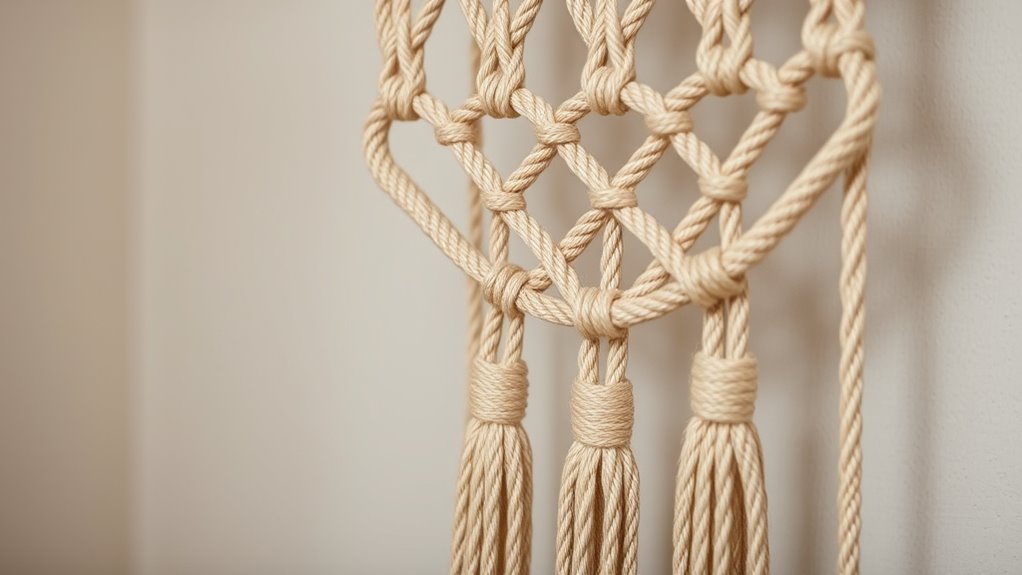

To create stunning wall hangings, start by mastering essential knots like the Lark’s Head for the base, the basic Square Knot for structure, and Half Hitch knots for details. Add texture with Spiral and Gathering knots, and use variations of the Square Knot for decorative accents. Finish with fringing and neat edges for a polished look. Keep exploring these knots, and you’ll discover endless design possibilities to craft unique, beautiful pieces.
Key Takeaways
- Start with foundational knots like the Lark’s Head and Square Knot for a strong, customizable base.
- Use Half Hitches and Double Half Hitches to create geometric patterns and textured details.
- Incorporate Spiral Knots for added movement and visual interest within your wall hanging.
- Finish edges with fringing, wrapping, or beads to enhance texture and ensure a polished look.
- Practice tension and knot technique to achieve consistent, professional-looking results.

FREEBLOSS DIY Macrame Kit for Adults Beginners Bohemian Macrame Wall Hanging Ornament Creative Boho Macrame Wall Art Macrame Tapestry Gift for Mom Girls
Macrame Wall Hanging Kit: Package contains a wooden stick(40cm), white cotton cord*100m/109 yards, wooden beads*5pcs, a crochet hook…
As an affiliate, we earn on qualifying purchases.
As an affiliate, we earn on qualifying purchases.
Basic Square Knot

The Basic Square Knot is the foundation of many macramé wall hangings. When you master this knot, you control knot tension easily, ensuring your design remains even and professional-looking. Keep consistent tension as you tie, so your pattern stays uniform. This knot also offers excellent opportunities for color blending. By alternating different colored cords within the knot, you create striking visual effects and depth in your piece. Practice maintaining even tension while switching colors to achieve seamless transitions. The simplicity of the square knot makes it versatile for various patterns, but its proper tension is key to a polished look. With patience, you’ll find that mastering this knot enhances your design control and releases endless creative possibilities for your wall hangings.

Adult DIY Craft Keychain Making Kit Boho Macrame Keychain Kit Includes Key Rings Precut Macrame Cord Instructions to Make Cute Keychains and Lanyards Kids Crafts Projects Kits Macrame Beginners
【Beginner – Friendly – Easy DIY Craft Kits】Our macrame kits for adults beginners contain step by step instruction…
As an affiliate, we earn on qualifying purchases.
As an affiliate, we earn on qualifying purchases.
Lark’s Head Knot
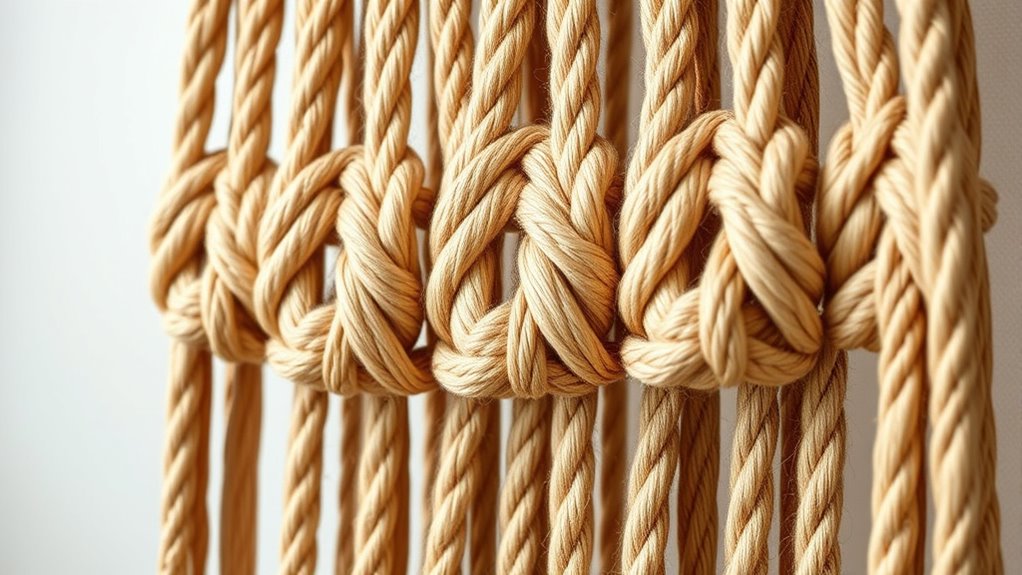
The Lark’s Head Knot is a fundamental technique that forms the foundation of many macramé projects. It’s perfect for starting your design securely and neatly. Once you master this knot, you’ll find it much easier to create balanced, professional-looking wall hangings. Additionally, understanding knot variations can help you customize your designs further.
Basic Knot Technique
A Lark’s Head Knot is a fundamental technique that forms the foundation of many macramé wall hangings. This knot secures your cords to a dowel or ring, setting the stage for creative designs. As you master this knot, consider how color combinations and fiber choices impact your piece’s mood. Vibrant hues create energy, while muted tones evoke calmness. Soft cotton fibers provide flexibility, whereas jute adds texture and rustic appeal. Your selection influences not only appearance but also how the knot feels in your hands. Use this technique to build your confidence, experimenting with different fiber combinations and color palettes. Remember, the strength of your knot determines your project’s durability and beauty. With practice, this simple knot release endless creative possibilities.
| Color Combinations | Fiber Choices |
|---|---|
| Bright & Bold | Soft Cotton |
| Neutral & Calm | Jute or Hemp |
| Warm & Cozy | Wool |
| Cool & Fresh | Raffia |
Starting Your Design
Starting your design with a Lark’s Head Knot is simple and effective. It anchors your project securely and sets the foundation for your wall hanging. When choosing material, consider your desired texture and color combinations; soft cotton creates a relaxed look, while jute adds rustic charm. Selecting the right color palette can dramatically influence your piece’s vibe—mix neutrals for elegance or bold hues for vibrancy. To keep your design cohesive, think about how different colors and materials complement each other. Keep these tips in mind:
- Experiment with contrasting or harmonious color combinations
- Choose materials based on texture and durability
- Start with a sturdy base cord for stability
- Plan your layout before tying to visualize your pattern
- Be aware of cookie types and how they might impact your browsing experience
These steps will help you craft a stunning and personalized wall hanging.

NOANTA Natural Macrame Cord 3mm x 109Yards, Beige Macrame Rope, Cotton Cord for Wall Hanging, Plant Hangers, Christmas Crafts, Knitting
Made from Quality Cotton Fiber: People demand soft, durability, and strength for their macrame needs, and we keep…
As an affiliate, we earn on qualifying purchases.
As an affiliate, we earn on qualifying purchases.
Half Hitch and Double Half Hitch Knots
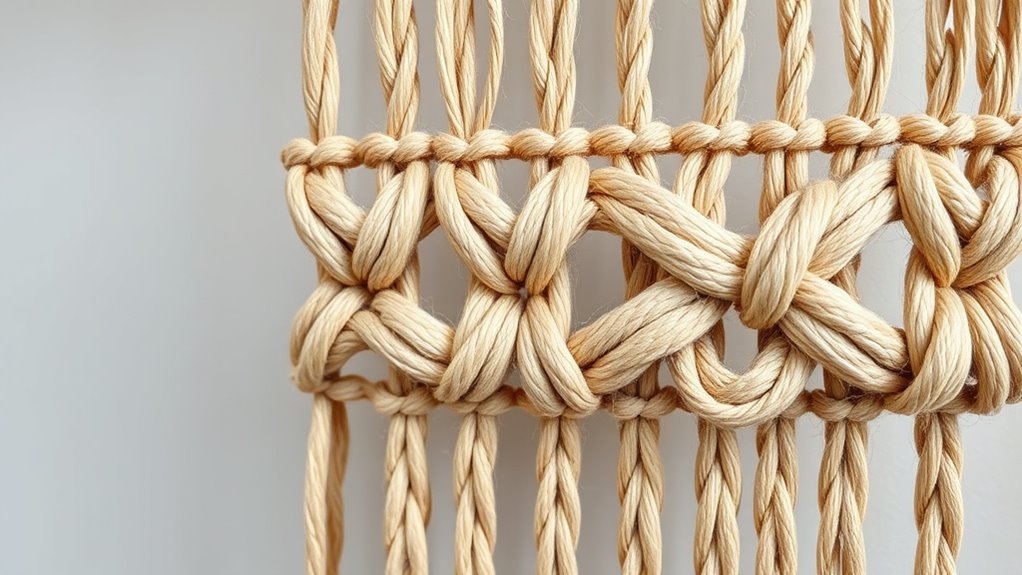
Now that you’ve mastered the Lark’s Head Knot, it’s time to explore Half Hitch and Double Half Hitch knots. These knotting techniques are essential for creating structure and detail in your wall hangings. Understanding their practical uses will help you improve your macramé projects with confidence.
Knotting Techniques Overview
Mastering knotting techniques is essential for creating sturdy and visually appealing macramé wall hangings. The Half Hitch and Double Half Hitch knots are fundamental skills that allow you to build intricate patterns and structure. These knots are versatile, enabling you to create geometric designs, fringes, and textured effects. When choosing your material, consider your color palette to enhance the visual impact and select cords that complement each other. Proper technique guarantees your knots stay tight and uniform, giving your wall hanging a professional look. Experiment with different combinations to develop your style. Remember, consistent tension and precise knotting are key to achieving a polished finish. These foundational techniques open the door to endless creative possibilities in your macramé projects. Incorporating sound design principles can even inspire innovative approaches to pattern creation and texture visualization in your work.
Practical Wall Hanging Tips
Practicing the Half Hitch and Double Half Hitch knots regularly helps guarantee your wall hangings look neat and professional. These knots are fundamental for creating clean, structured designs, so mastering them boosts your overall craft. When choosing material, consider the texture and durability; natural fibers like cotton or jute work well, but synthetic options can add shine or color vibrancy. Pay attention to color combinations—contrast can make your patterns pop, while harmonious hues create a calming effect. Consistent tension during knotting ensures uniformity, and selecting the right material enhances the visual appeal. Keep your workspace organized, and test different material and color combinations to see what best fits your style. Additionally, understanding the significance of knot tension can greatly improve the quality of your wall hangings. With practice, you’ll craft stunning wall hangings that showcase your skill and creativity.
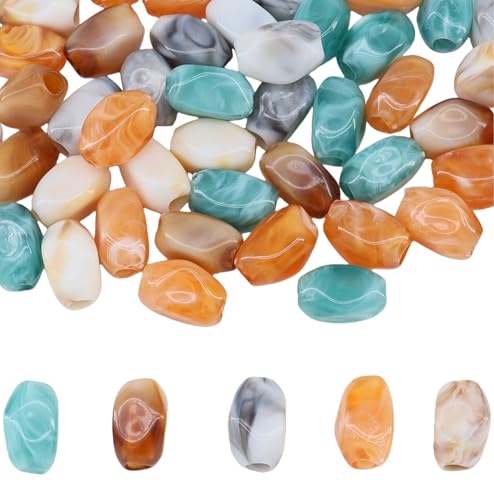
100pcs Macrame Specially Shaped Spacer Beads for Clothing and Bags Craft 5Colors Imitation of Stone Texture
Complete Set: Size:19*15mm.Hole:5mm.Package includes 100 pieces of high quality specially shaped macrame beads in 5 different colors, perfect…
As an affiliate, we earn on qualifying purchases.
As an affiliate, we earn on qualifying purchases.
Spiral Knot
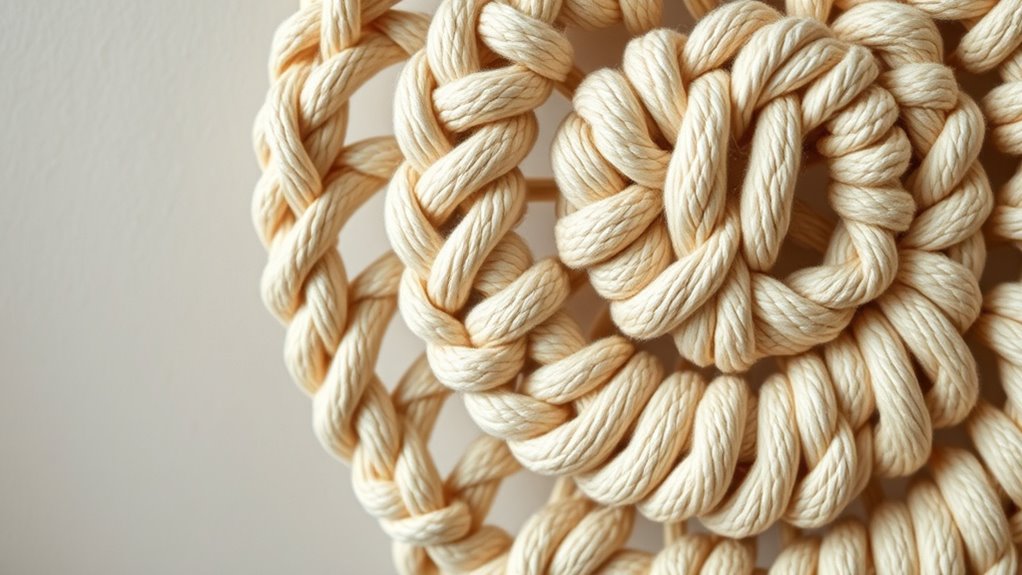
The spiral knot is a versatile and visually appealing technique that adds texture and movement to your macramé wall hangings. Its distinctive spiral pattern creates dynamic visual interest and can serve as a focal point or decorative accent. By mastering this knot, you can incorporate flowing, organic shapes into your design, making your piece stand out. The spiral knot is perfect for adding depth and complexity to your work without requiring complicated steps. You can also combine it with other knots to craft intricate textures and patterns. Whether you use it as a central feature or as a border detail, this knot enhances your wall hanging’s overall aesthetic. Understanding self watering plant pots can inspire creative design elements that emphasize function and form in your projects. Explore its applications to bring a unique, handcrafted touch to your home decor.
Gathering Knot
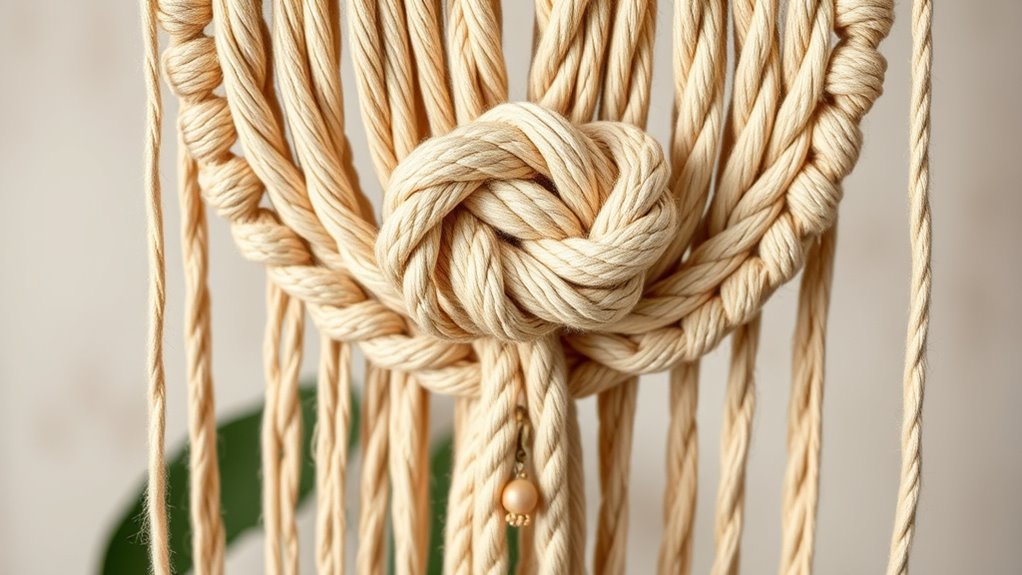
Have you ever needed to securely gather multiple cords or strands in your macramé project? The Gathering Knot is perfect for this. It creates a tight, secure hold while allowing you to control knot tension, preventing loose or uneven sections. This knot is also helpful for blending colors smoothly, as it keeps different strands aligned. When working with multiple cords, consider how knot tension affects the overall look and stability. To illustrate, here’s a comparison:
| Aspect | Effect |
|---|---|
| Knot tension | Determines tightness and stability |
| Color blending | Achieved through even cord placement |
| Cord organization | Keeps strands neat and aligned |
| Project durability | Ensures long-lasting wall hangings |
| Visual consistency | Creates a polished, professional look |
Additionally, understanding color accuracy can help in selecting the right yarns or cords to enhance visual appeal and harmony in your wall hanging.
Square Knot Variation
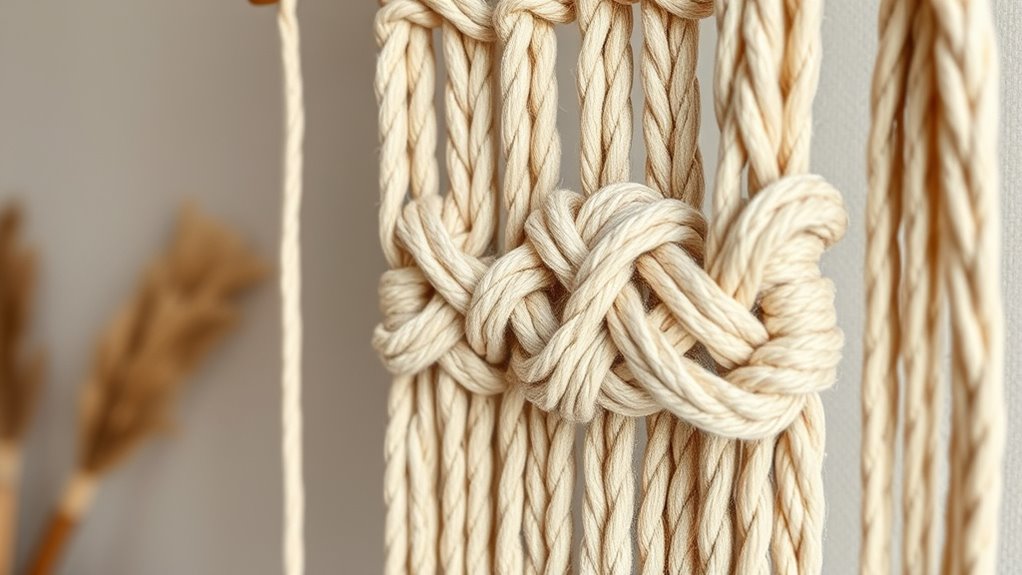
A Square Knot Variation offers a simple yet versatile way to add decorative or functional elements to your macramé wall hangings. This variation enhances textile textures, creating unique visual effects and tactile interest. You can use it to symbolize unity or strength, as knot symbolism often represents connection and stability. Experimenting with this knot allows you to craft intricate patterns that stand out. It’s perfect for creating borders, motifs, or accent details in your design. By varying tension and spacing, you can achieve different textures and visual depth. Incorporating this knot variation into your projects keeps your work dynamic and meaningful. Additionally, understanding knot symbolism can deepen your appreciation and intentionality in your designs. Whether you’re adding subtle details or bold statements, the square knot variation is essential in elevating your macramé artistry.
Fringing and Finishing Techniques
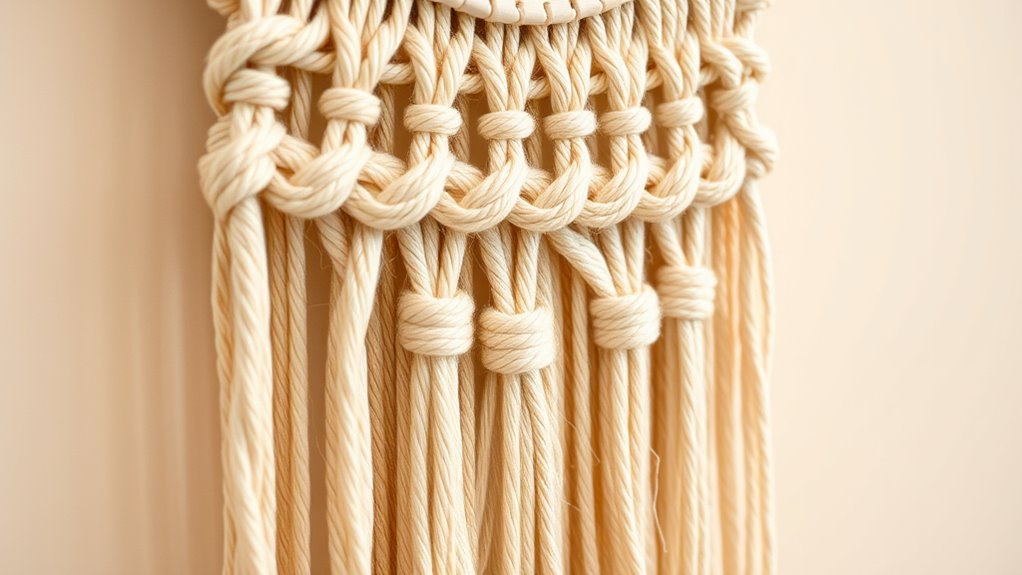
Finishing your macramé wall hanging with neat fringing and clean edges elevates its overall appearance. To add interest, experiment with texture variations by varying fringing lengths or using different knot styles. Incorporate color blending by combining fibers in complementary shades, creating a seamless transition between hues. Proper finishing techniques ensure your piece looks polished and professional. Use scissors to trim fringing evenly or add beads for extra dimension. You can also secure the edges with a wrapping knot for stability. Additionally, understanding retail hours can help you plan your shopping for supplies efficiently. Here’s a quick overview:
| Technique | Effect | Tips |
|---|---|---|
| Fringing | Adds texture variations | Use different lengths for depth |
| Color Blending | Creates visual interest | Mix shades gradually for smooth transition |
| Edge Finishing | Polished look | Wrap or knot edges for clean finish |
| Bead Accents | Adds dimension | Incorporate beads into fringe |
| Trimming | Neat edges | Trim evenly for symmetry |
Frequently Asked Questions
What Are the Best Types of Cords for Macramé Wall Hangings?
You should choose cotton or jute cords for macramé wall hangings, as they’re popular options. Cotton cords offer soft texture and easy handling, while jute provides a rustic look. Consider durability factors like strength and resistance to wear; synthetic cords like nylon can also work if you want extra durability. Whichever you choose, guarantee the cords suit your project’s style and will hold up over time.
How Do I Prevent Knots From Slipping or Loosening Over Time?
To prevent knots from slipping or loosening over time, make certain your knot tension is firm but not too tight. Use high-quality cords, as they hold knots better and resist slipping. When tying, double-check your knots and consider adding a small amount of glue or clear nail polish for extra security. Regularly inspect your piece, and re-tighten knots if needed, to keep your wall hanging looking neat and stable.
Can I Combine Different Knots for More Intricate Designs?
Imagine opening new creative doors—yes, you can combine different knots for more intricate designs. Mixing knot combinations allows you to explore design complexity, adding unique textures and patterns to your wall hangings. Feel free to experiment, blending simple with complex knots, to craft personalized art pieces. This approach not only enhances your craftsmanship but also keeps the process exciting and rewarding—your wall hangings become true reflections of your artistic journey.
What Tools Are Essential for Macramé Knotting?
To start macramé knotting, you need essential tools like sharp scissors for clean cuts and safety, preventing frayed ends. Choose your cord color carefully, considering your design and room decor, as color selection impacts the final look. Keep a measuring tape handy for accurate lengths, and use a sturdy surface or hoop to work on. These tools help you create neat, beautiful wall hangings efficiently.
How Do I Maintain and Clean My Macramé Wall Hangings?
To keep your macramé wall hanging looking fresh, follow simple cleaning techniques like gently dusting with a soft brush or using a vacuum with a brush attachment. For stains, spot clean with a damp cloth and mild soap. Regular maintenance tips include avoiding direct sunlight to prevent fading and keeping it away from moisture. These steps make certain your piece stays vibrant and beautiful over time.
Conclusion
Now that you’ve learned these essential macramé knots, you’re ready to create stunning wall hangings that even a medieval bard would envy. Think of each knot as a secret spell, transforming simple cords into art. With a little practice, you’ll be weaving masterpieces faster than a knight can draw his sword. So grab your cords, channel your inner artisan, and turn your space into a cozy castle—no enchanted forest required!