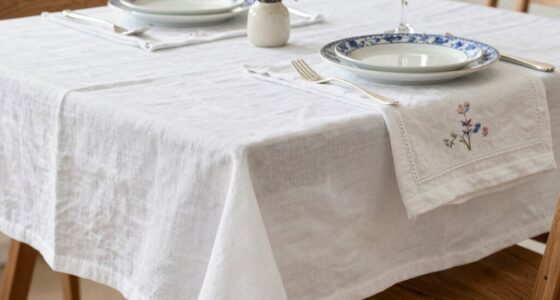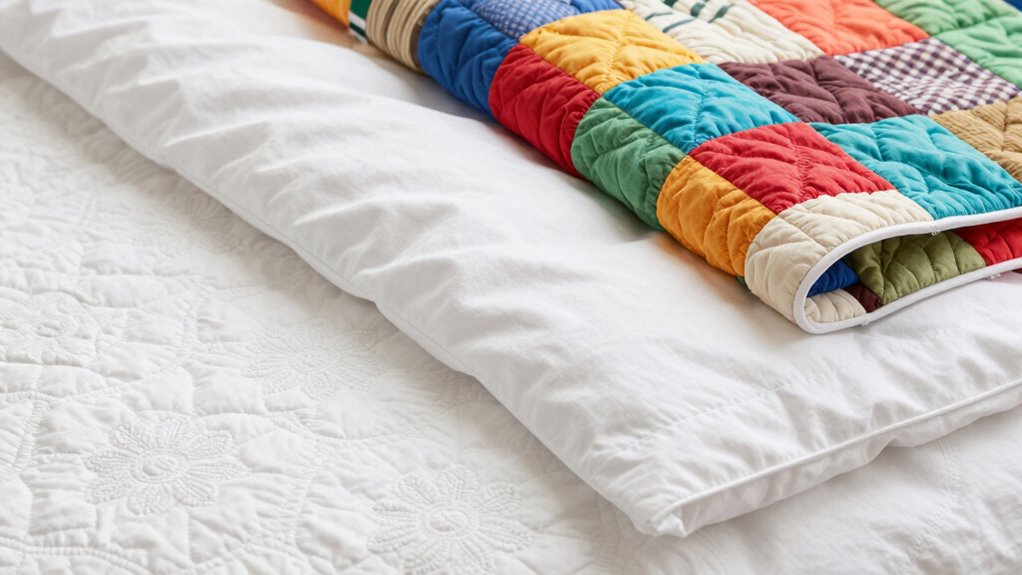

Matelassé features a plush, textured look created through weaving or stitching, giving it a luxurious feel, while quilts are layered and often patchworked with colorful designs, offering warmth and artistic variety. Coverlets are smooth, decorative woven fabrics mainly used for aesthetic appeal. Each serves a different purpose, with matelassé being durable, quilts multifunctional, and coverlets primarily decorative. To discover the unique qualities of each, explore the details that set them apart.

Get furniture and decor delivered free with Prime
- Fast, free delivery on millions of items
- Prime Video, Amazon Music and more included
- Member-only deals all year
Key Takeaways
- Matelassé features a textured, padded appearance created through weaving or stitching, offering a plush, three-dimensional look.
- Quilts are layered fabrics with visible quilting stitches, often colorful and patchwork in design.
- Coverlets are smooth, finely woven decorative fabrics primarily used for aesthetic enhancement.
- Matelassé is durable, often made from silk or cotton, combining style and longevity; quilts and coverlets vary in material and purpose.
- Quilts serve as warm, decorative bedding, while coverlets are lightweight, decorative layers; matelassé provides a plush, textured alternative.
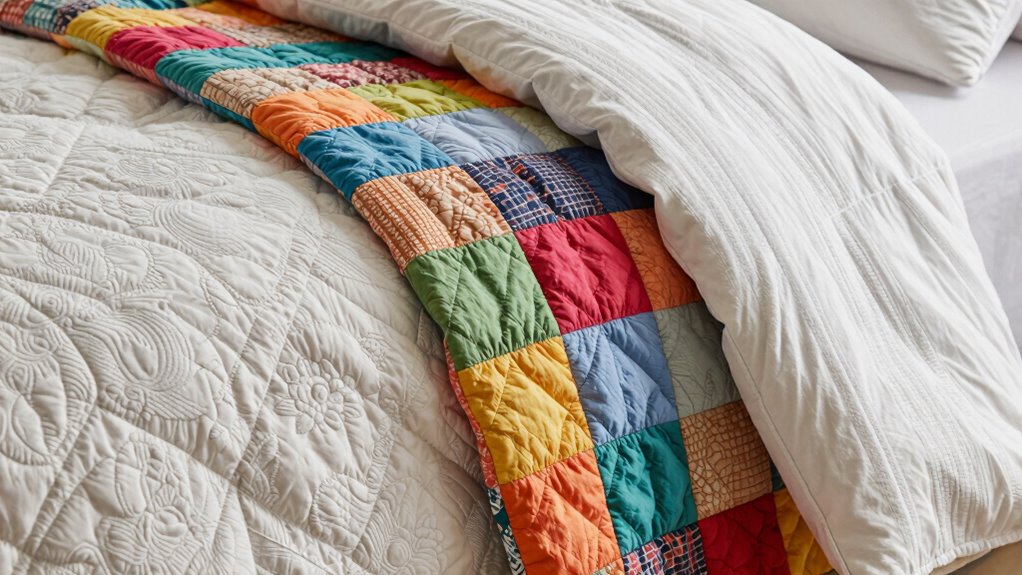
Ever wondered what sets apart a matelassé, a quilt, and a coverlet? These bedding types each have unique fabric textures and historical origins that influence their design and purpose. Understanding these differences helps you choose the right piece for your bedroom style and comfort needs.
Discover the unique textures and histories of matelassé, quilts, and coverlets to find your perfect bedroom style.
A matelassé is distinguished by its distinct fabric textures created through a quilting technique that produces a padded, three-dimensional effect. Unlike a typical quilt, which involves sewing multiple layers of fabric together with visible stitches, a matelassé fabric is woven or stitched in a way that gives it a plush, textured appearance without extra layers being added later. This technique dates back centuries, with roots in European textile traditions, especially in France and Italy. Historically, matelassé fabrics were made using silk or cotton, often in luxurious designs for the wealthy. Today, you’ll find these fabrics in more affordable materials, but the rich textures and intricate patterns remain a hallmark. The technique lends a sophisticated, textured look to the bedding, making it a stylish yet functional choice. The intricate weaving process helps to distinguish matelassé from other textured fabrics, emphasizing craftsmanship and durability. Additionally, the durability of woven or stitched fabric enhances its longevity over time.
On the other hand, a quilt is a layered fabric piece with a patchwork design that emphasizes craftsmanship. Its fabric textures can vary widely, from smooth cotton to more textured materials, depending on the style and purpose. Quilts have a rich history rooted in many cultures worldwide, often associated with warmth and comfort. Historically, quilts originated in North America, where early settlers used scraps of fabric to create warm coverings, turning a practical necessity into a form of artistic expression. The quilting process involves sewing together three layers: the top, batting, and backing, with decorative stitches that can be both functional and ornamental. Quilts are often characterized by their intricate patterns and vibrant colors, making them both a practical blanket and a display of skill and tradition. The patchwork design allows for endless creativity, reflecting cultural stories and personal memories.
A coverlet, by contrast, is typically a lightweight, decorative layer that covers the bed without the need for additional blankets. Its fabric textures tend to be smooth and finely woven, often made from cotton, linen, or silk. The historical origins of coverlets trace back to European textiles, where they served as decorative accents rather than primary bedding. They often feature embroidered or woven patterns, emphasizing aesthetic appeal over insulation. Modern coverlets are usually less bulky than quilts and are chosen more for their visual impact than for warmth, making them perfect for layering or for warmer climates. Their elegant fabrics and delicate designs make them a popular choice for adding visual interest to a bedroom decor.
As an affiliate, we earn on qualifying purchases.
Frequently Asked Questions
Which Material Is Most Durable for Daily Use?
For daily use, you’ll find that quilts made from cotton or polyester blends are the most durable. When considering material comparison, these fabrics withstand frequent washing and regular wear better than delicate fabrics. Durability factors include fabric strength, weave tightness, and resistance to pilling or shrinking. Opt for tightly woven cotton or polyester blends to guarantee longevity, comfort, and ease of maintenance, making them ideal choices for everyday bedding.
Are Matelassé, Quilt, and Coverlet Suitable for All Seasons?
Yes, matelassé, quilt, and coverlet are suitable for all seasons due to their seasonal versatility. You can use decorative accents like layering or adding throws to adapt each piece for warmer or cooler months. Matelassé offers warmth in winter, while quilts and coverlets can be lightweight or thick, making it easy to adjust your bedding for comfort and style year-round.
How Do I Care for and Clean Each Type?
Ironically, caring for your decorative layers isn’t as complicated as understanding their historical origins. For matelassé, gently hand wash or dry clean to maintain its textured look. Quilts often benefit from gentle machine washing on a delicate cycle; avoid harsh detergents. Coverlets can usually be spot cleaned or washed on a gentle cycle. Whichever style you choose, follow care labels to guarantee your pieces reflect their rich decorating styles and history.
Can These Bedding Types Be Layered Together?
Yes, you can layer matelassé, quilts, and coverlets to enhance your bedroom’s decor and design versatility. Combining these bedding types adds depth and texture, creating a cozy, stylish look. Use decorative accents like throw pillows or blankets to tie the layers together. Mixing different textures and weights allows you to customize your space, making it both functional and visually appealing. Just guarantee the layers complement each other for a harmonious appearance.
What Are the Typical Price Ranges for Each?
Prices for these bedding beauties vary widely. Matelassé, known for its intricate, textured decorative patterns, typically costs between $100 and $500, reflecting its luxurious craftsmanship and historical origins. Quilts, cherished for their cozy, colorful designs, range from $50 to $300. Coverlets, often simple but stylish, usually start at $50 and go up to $200. Your choice depends on your budget and the beauty you desire.
Conclusion
Now that you’ve unraveled the differences between matelassé, quilt, and coverlet, you’re armed with the knowledge to choose the perfect piece for your space. Think of each as a different melody in the symphony of your bedroom decor—each adding its unique tune. Whether you prefer the plush warmth of a quilt, the textured elegance of matelassé, or the lightweight grace of a coverlet, your bedding choices can beautifully compose your personal sanctuary.
Columbus Day / Indigenous Peoples' Day Picks
long weekend sales
As an affiliate, we earn on qualifying purchases.