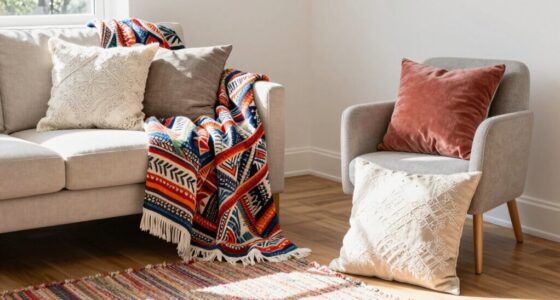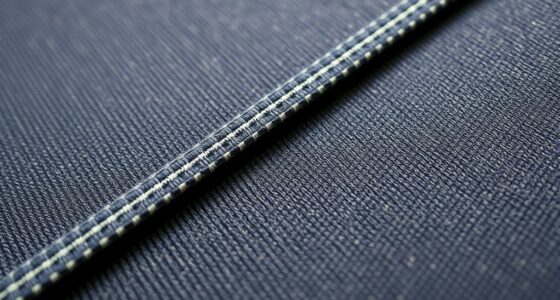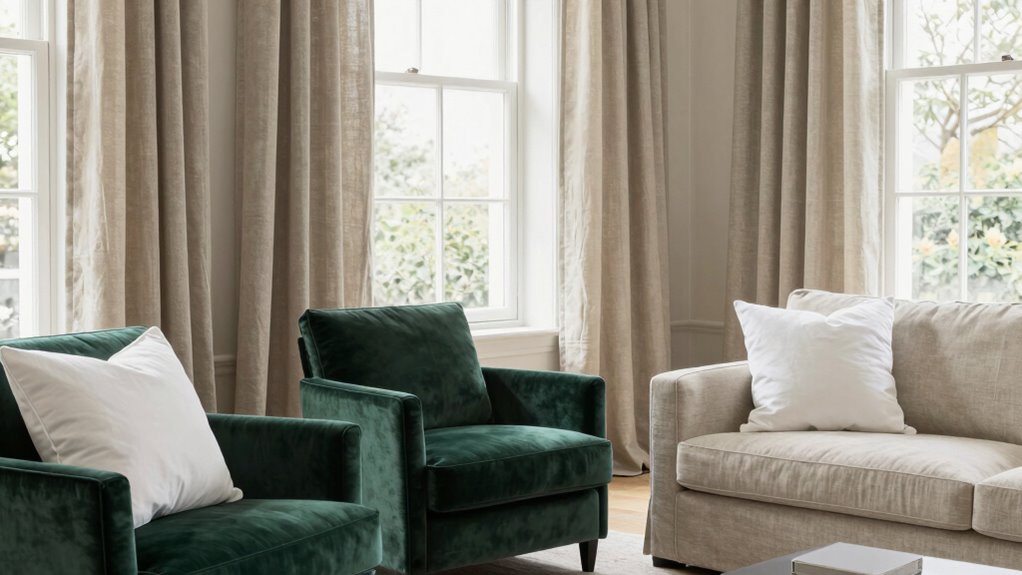

To mix linen, cotton, and velvet in one room, start by choosing a cohesive color palette with neutral base shades and complementary hues. Use larger pieces like a velvet sofa or linen drapes as the foundation, then add smaller accents like cotton pillows or velvet ottomans for variety. Balance textures by contrasting plush velvet with breezy linen and casual cotton. Incorporate layered lighting to highlight these materials, and select accessories that enhance the overall harmony. Keep exploring for more tips to perfect your space.

Get furniture and decor delivered free — and shop member deals
- Fast, free delivery on millions of items
- Access to Prime Big Deal Days deals on October 6–7
- Prime Video, Amazon Music and more included
Key Takeaways
- Establish a cohesive color palette with neutrals and complementary shades to unify linen, cotton, and velvet textures.
- Use large, foundational pieces like velvet sofas and linen drapes to set the tone and balance smaller cotton accents.
- Vary fabric weights and textures intentionally, combining plush velvet with breezy linen and soft cotton for visual interest.
- Enhance textiles with layered, warm lighting to highlight their unique qualities and create inviting ambiance.
- Select accessories that echo the color and texture mix, maintaining harmony without overwhelming the space.
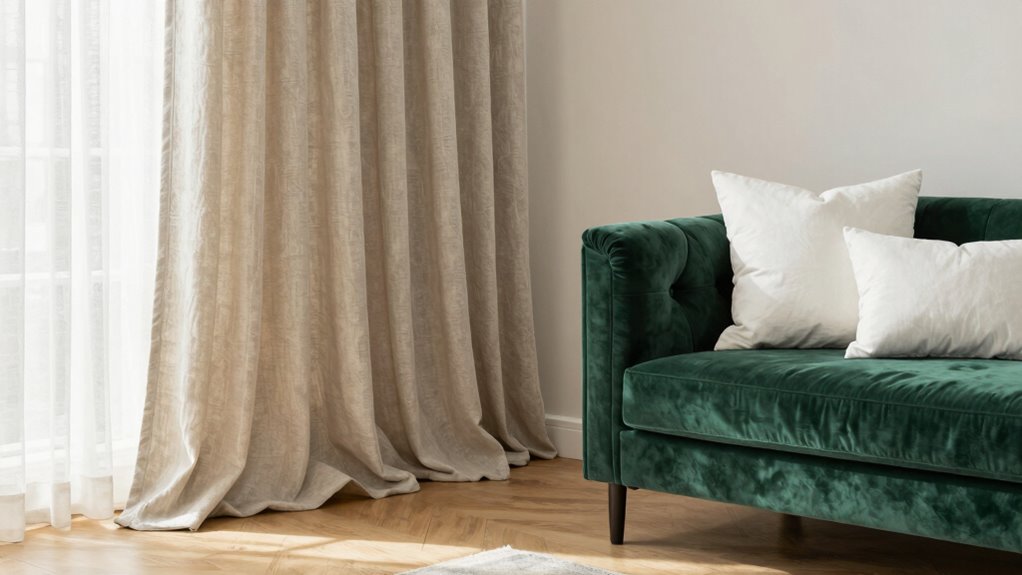
Mixing linen, cotton, and velvet in one room can create a sophisticated and inviting space, but it requires a thoughtful approach to balance textures and colors. When you consider textile layering, you’re blending different materials to add depth and visual interest without overwhelming the senses. Start by choosing a unifying color palette that ties all the elements together. This could be a neutral base like beige, gray, or soft pastels, which allows the textures to stand out without clashing. Focus on color coordination by selecting shades that complement each other, ensuring that the mix of textiles creates harmony rather than chaos. For example, pairing a dusty rose velvet with a light gray linen and crisp white cotton can evoke both elegance and freshness.
Mix linen, cotton, and velvet with a neutral palette for a balanced, elegant, and inviting space.
When layering textiles, consider the size and scale of each piece. Larger items like a velvet sofa or a linen drape set the foundation, providing a soft backdrop. Smaller accents like cotton throw pillows or a velvet ottoman add variety and tactile richness. By varying the weight and thickness of these fabrics, you create a dynamic yet cohesive environment. Velvet, with its plush feel, anchors the space with luxury, while linen offers a breezy, casual touch. Cotton acts as a versatile middle ground, balancing comfort and structure. Keep in mind that mixing textures should be intentional; don’t shy away from contrasting rough and smooth surfaces, but make sure they complement each other within your chosen color scheme.
Lighting plays an essential role in enhancing your textile layering. Soft, warm lighting can accentuate the richness of velvet and the natural fibers of linen and cotton. Use layered lighting—such as table lamps, floor lamps, and natural daylight—to highlight different textures throughout the day and night. This will make the textiles appear more vibrant and inviting, emphasizing their unique qualities. Incorporating texture contrast can further elevate the visual interest and depth of your space. When selecting accessories and décor, choose pieces that echo the color palette and texture mix. For instance, a velvet cushion paired with a linen throw blanket creates a tactile dialogue that’s both inviting and sophisticated. Additionally, paying attention to material durability ensures that your textiles will maintain their beauty over time and daily use.
Ultimately, the key to successfully mixing linen, cotton, and velvet lies in your ability to balance and coordinate. Pay close attention to color coordination and textile layering, ensuring each piece enhances the overall harmony of the room. When done thoughtfully, your space will feel layered, lively, and effortlessly stylish—an inviting refuge that showcases your eye for detail.
As an affiliate, we earn on qualifying purchases.
Frequently Asked Questions
What Color Schemes Work Best With Mixed Fabrics?
You’ll want to choose color schemes that highlight the texture differences in your mixed fabrics. Neutral palettes with shades like beige, gray, or cream work well, creating a calm, cohesive look. Incorporate color contrast through accessories or accents to add visual interest without overwhelming the space. These strategies help your linen, cotton, and velvet blend harmoniously, giving your room a stylish, balanced feel.
How Do I Clean and Maintain Velvet Upholstery?
To keep your velvet upholstery looking its best, adopt gentle cleaning routines that protect its delicate fibers. Regularly vacuum using a soft brush attachment to remove dust and prevent buildup. For spills, dab immediately with a clean, damp cloth—avoid rubbing. Using specialized velvet cleaners occasionally can help preserve fabric longevity. By treating your velvet with care, you guarantee it remains plush and beautiful for years to come.
Can These Fabrics Be Used in High-Humidity Areas?
In high-humidity areas, linen and cotton are better choices because they’re naturally breathable and moisture-resistant, helping prevent mold and mildew. Velvet, however, isn’t ideal due to its fabric durability issues in damp environments; it can absorb moisture and become damaged. To guarantee longevity, choose fabrics with moisture resistance and durability, and consider applying protective treatments or using dehumidifiers to keep your space comfortable and well-maintained.
What Accessories Complement a Mixed-Fabric Room?
Your room’s style can be elevated to legendary status with perfectly chosen accessories. Decorative throw pillows in contrasting fabrics add texture and visual interest, while statement wall art ties the entire look together. Opt for metallic accents or elegant vases to enhance the luxe feel of your mixed-fabric space. These accessories not only complement linen, cotton, and velvet but also create a balanced, sophisticated ambiance that feels both inviting and refined.
How Do I Balance Textures Without Overwhelming the Space?
To balance textures without overwhelming your space, layer patterns thoughtfully and mix different fabric weights. Use lighting techniques like soft, warm lighting to create a cozy atmosphere that highlights each material’s unique qualities. Keep a neutral palette to prevent visual clutter, and incorporate subtle accessories to add depth. This approach guarantees your linen, cotton, and velvet coexist harmoniously, creating a stylish, inviting room without feeling chaotic.
Conclusion
Mixing linen, cotton, and velvet in one room creates a tapestry of textures that tell a story, much like a well-loved novel. By balancing these fabrics thoughtfully, you craft a space that’s both inviting and sophisticated—your own personal fairy tale. Embrace the contrast and harmony, and let your room be a stage where comfort and elegance dance together. After all, as in any good story, it’s the details that make the magic.
Evergreen bestsellers Picks
bestsellers
As an affiliate, we earn on qualifying purchases.