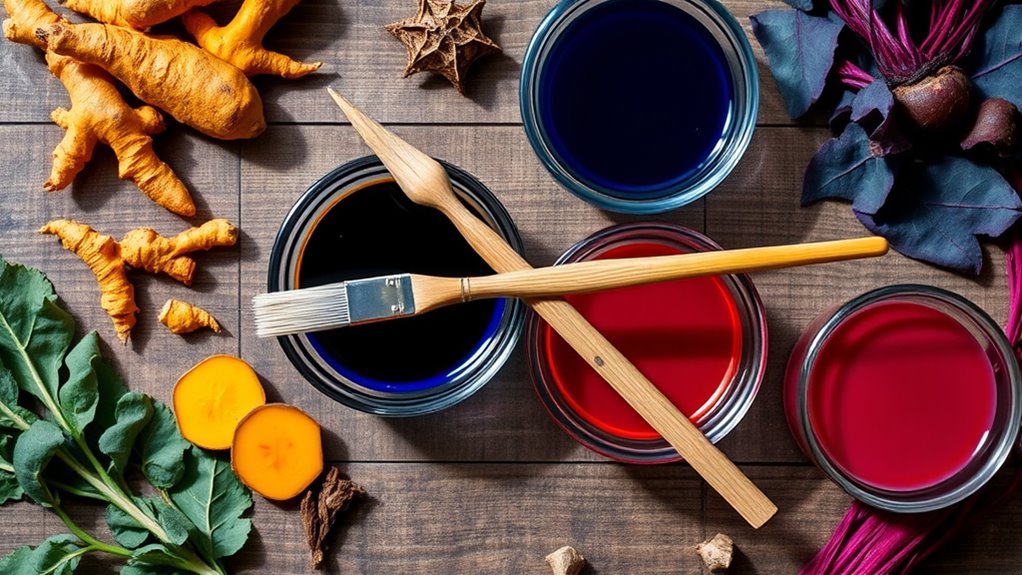

Natural dyes from kitchen ingredients offer an eco-friendly way to color fabrics and crafts using fruits, vegetables, and spices like beets, turmeric, onion skins, and berries. You can extract vibrant pigments by simmering or soaking these ingredients in water, then fix the colors with simple mordants or vinegar. With some basic techniques, you’ll turn everyday foods into beautiful, sustainable dyes. Keep exploring to discover creative tips and inspired projects using kitchen-based natural dyes.
Key Takeaways
- Natural dyes are derived from kitchen ingredients like fruits, vegetables, and spices, offering eco-friendly coloring options.
- Proper extraction involves simmering or soaking ingredients in non-reactive pots to release vibrant pigments.
- Pre-treat fabrics with mordants such as alum to enhance dye adherence and improve color longevity.
- Fix and set dyes using vinegar, salt, or sunlight exposure to ensure vibrant, long-lasting colors.
- Natural dyes support sustainability, are biodegradable, and allow for creative, chemical-free textile and craft projects.
Understanding Natural Dyes and Their Benefits

Have you ever wondered why natural dyes are gaining popularity among artists and crafters? Their historical significance is truly fascinating—they’ve been used for centuries across cultures, connecting us to ancient traditions and craftsmanship. Beyond history, natural dyes offer notable environmental benefits. Unlike synthetic dyes, they are biodegradable, non-toxic, and require less energy to produce. This means fewer chemicals pollute our waterways and less harm is done to ecosystems. Using natural dyes also supports sustainable practices, as many ingredients can be harvested responsibly from nature. Additionally, natural dye techniques promote creativity and experimentation with various plant-based ingredients. By choosing natural dyes, you’re not only honoring a rich cultural heritage, but you’re also making eco-friendly choices that reduce your carbon footprint. It’s a meaningful way to create art while respecting the planet.
Common Kitchen Ingredients Used for Natural Coloring

You can find natural dyes in your kitchen with fruits and vegetable peels, spices, and herbs. These ingredients are easy to use and offer a range of vibrant colors. Let’s explore how each of these common items can be transformed into beautiful, natural dyes. Utilizing responsible forestry practices when sourcing certain plant materials can also help ensure sustainable and eco-friendly dyeing processes.
Fruits and Vegetable Peels
Fruits and vegetable peels are popular natural coloring agents because they contain vibrant pigments that can be easily extracted and used in dyes. You can repurpose fruit peels and vegetable scraps to create beautiful, eco-friendly colors for fabrics or crafts. The colorful skins of citrus fruits like oranges and lemons are rich in flavonoids, which produce bright hues. Apple peels and onion skins also yield warm tones, while beetroot peels give deep reds. These peels can be boiled or soaked to extract their pigments efficiently. Using fruit peels and vegetable scraps not only reduces waste but also offers a simple way to experiment with natural dyes at home. With a little preparation, these kitchen ingredients can transform your projects with stunning, natural colors.
- Citrus peels for bright yellows and oranges
- Onion skins for golden and brown shades
- Beetroot peels for rich reds
- Apple peels for soft pinks and tans
Spices and Roots
Spices and roots are some of the most accessible natural coloring agents found in your kitchen. You can experiment with spice blending to create unique shades—turmeric adds vibrant yellow, paprika yields warm reds, and cumin offers earthy tones. Roots like beet, turmeric, and ginger are excellent for root carving, where you extract concentrated pigments for deeper, richer colors. These ingredients are easy to prepare: simmer them in water to release their dyes or dry and grind them into powders. The intense hues you achieve depend on the type and duration of extraction. Incorporating spices and roots into your natural dye projects is straightforward and versatile, enabling you to craft a wide spectrum of colors without synthetic additives.
Herbs and Leaves
Have you ever considered how everyday herbs and leaves can transform your natural dye projects? Fresh herbs and leaves are versatile sources of vibrant colors. By experimenting with herb combinations, you can create unique shades for your textiles. When leaf harvesting, choose healthy, mature leaves for the best pigment extraction. Some popular options include spinach, nettles, and bay leaves. These leaves produce soft greens, yellows, and browns, adding depth to your dyes. Remember to dry or use fresh leaves promptly for maximum color. Combining different herbs and leaves can give you a broader palette and richer hues. The key is in harvesting the right leaves at the right time and blending herb combinations to achieve your desired shades. Using dried and fresh materials can also influence the intensity and quality of your natural dyes.
Preparing and Extracting Dye From Food Sources

To get vibrant dyes from food sources, you need to choose the right ingredients, like berries or turmeric. Using proper extraction techniques, such as simmering or soaking, helps release the color effectively. You can also improve the dye’s intensity by adjusting factors like cooking time and concentration. Additionally, understanding Dynamic Communication Exercises for Couples can help you share your process and results more effectively with others.
Selecting Natural Food Sources
Choosing the right food sources is a crucial step in natural dyeing because many fruits, vegetables, and herbs contain pigments that can produce vibrant colors. To get the best results, focus on choosing seasonal ingredients, which are often fresher and more potent. Sourcing organic produce helps guarantee your dyes are free from chemicals that could alter the color or affect your project’s safety. Selecting ripe, healthy produce maximizes pigment extraction, giving you brighter and more consistent colors. Consider these tips:
- Use fresh, ripe fruits and vegetables
- Opt for organic options when possible
- Select seasonal ingredients for peak pigment strength
- Avoid produce with blemishes or mold
Proper Extraction Techniques
Proper extraction techniques are essential for maximizing the pigment yield from your food sources. To achieve this, start by gently simmering your ingredients in water, which encourages beneficial chemical reactions that release the dye molecules. Avoid boiling vigorously, as excessive heat can break down the pigments and reduce dye stability. Use a non-reactive pot, like stainless steel or glass, to prevent unwanted chemical interactions that might alter the color. Strain the mixture carefully to separate solids from the liquid dye. Keep the extract at a consistent temperature and avoid prolonged exposure to light or air, which can degrade the dye. Properly handled, your extraction preserves vibrant color and ensures the dye remains stable during use. This careful process is key to successful natural dyeing. Incorporating proper extraction techniques can also enhance the overall quality and longevity of your dyed textiles.
Enhancing Color Intensity
Enhancing color intensity involves selecting the right food sources and optimizing the extraction process. To boost color saturation and dye concentration, start by choosing deeply pigmented ingredients like beets, blueberries, or turmeric. Chop or crush your food source thoroughly to maximize surface area, aiding better extraction. Use simmering or gentle boiling to release more pigment without degrading it. Adding a mordant like alum can improve dye uptake and increase overall dye concentration. Keep in mind that longer extraction times can deepen color, but avoid overcooking, which may dull the hue. For even richer results, strain the liquid carefully, ensuring no solids dilute the dye. Proper preparation and fine-tuning these steps are essential for achieving vibrant, lasting colors from simple kitchen ingredients.
Techniques for Dyeing Fabrics With Kitchen Ingredients
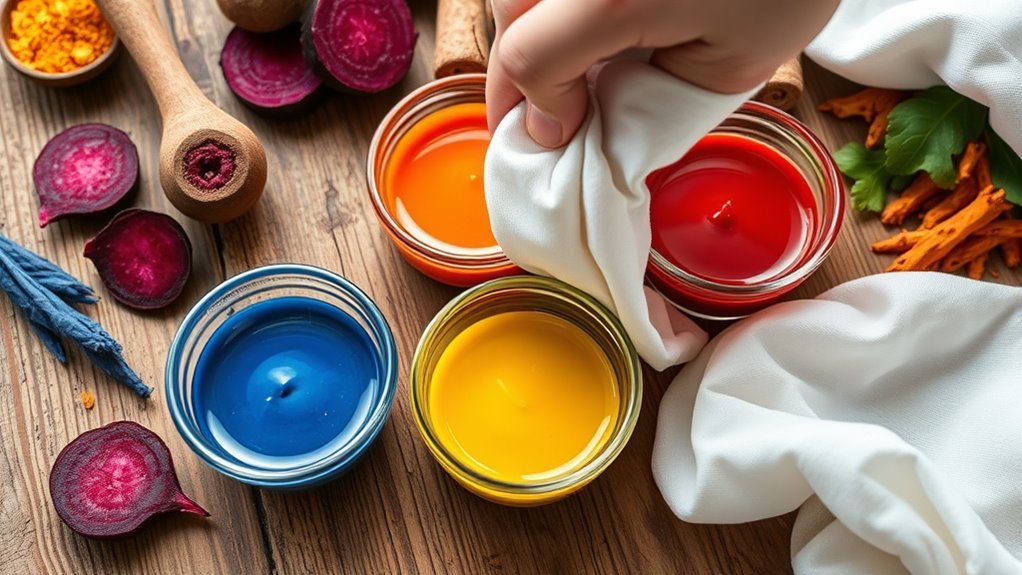
Dyeing fabrics with kitchen ingredients is an accessible and eco-friendly way to add color to your textiles. To achieve vibrant, lasting hues, start with fabric pre-treatment—soak your fabric in a mordant solution like alum or vinegar to help the dye bond better. Consider fiber blending; natural dyes work best on plant-based fibers such as cotton, linen, or silk. Before dyeing, guarantee your fabric is clean and free of any finishes that could hinder absorption. When ready, simmer your chosen ingredient—beetroot, turmeric, or onion skins—in water to create a dye bath. Submerge your fabric, stirring gently, and let it soak until the desired color develops. Rinse with cool water, and your naturally dyed fabric is ready for use.
Tips for Fixing and Enhancing Your Natural Colors

To guarantee your natural dyes stay vibrant and don’t fade over time, you should fix and enhance your colors with simple techniques. Fixing colors helps lock in the dye, preventing bleeding and fading. Boosting vibrancy involves adding ingredients that intensify the hue. First, use a mordant like alum or iron to fix colors effectively. Second, wash your fabric gently with cold water after dyeing to preserve brightness. Third, add a bit of vinegar or salt during the fixing process to improve color fixation. Fourth, considering the impact of state taxes on financial planning can help manage costs associated with natural dyeing projects. Finally, store your dyed items out of direct sunlight to prevent fading.
Fix and enhance natural dyes with mordants, cold water rinse, vinegar or salt, and sunlight protection.
- Use mordants to fix and brighten colors
- Rinse with cold water after dyeing
- Add vinegar or salt to boost vibrancy
- Keep dyed fabrics away from sunlight
Creative Ideas and Project Inspirations Using Kitchen Dyes
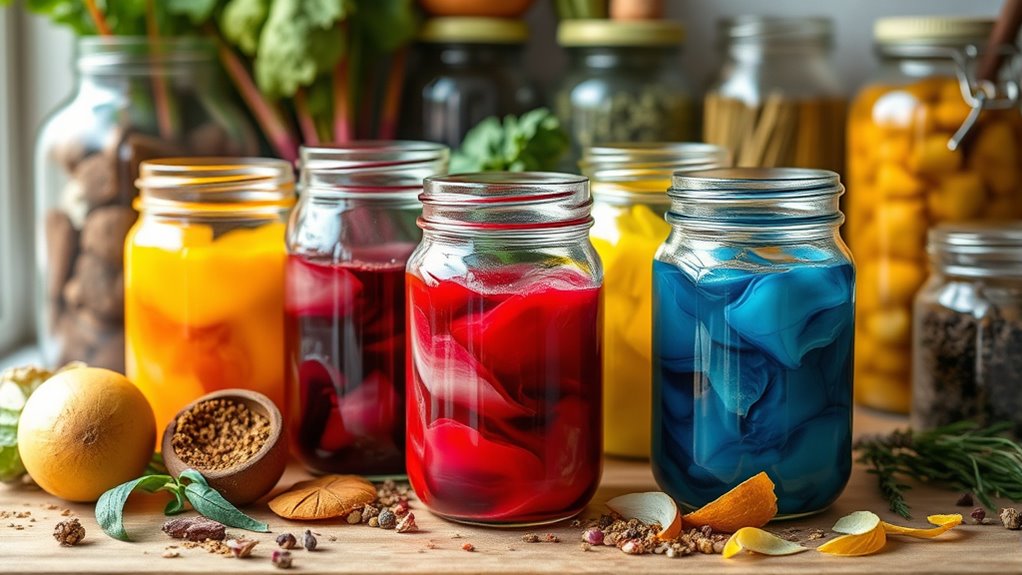
Natural dyes made from kitchen ingredients offer a fun and sustainable way to create vibrant textiles and crafts. You can experiment with color mixing to develop unique shades, blending different ingredients like beetroot and turmeric to achieve new hues. Use these eco-friendly crafts for home décor, like dyeing pillowcases, tablecloths, or tote bags, giving everyday items a personal touch. Try creating tie-dye patterns or ombré effects for eye-catching designs. You might also craft colorful paper or greeting cards using natural dyes, reducing chemical waste. These projects not only showcase your creativity but also promote eco-conscious living. With simple kitchen ingredients, you turn ordinary materials into beautiful, sustainable art that’s both expressive and environmentally friendly. Incorporating dental health benefits from raw food ingredients can further enhance your textile projects, such as using natural dyes derived from bones or fruits for vibrant, health-inspired colors.
Frequently Asked Questions
How Long Do Natural Dyes Typically Last on Fabrics?
Natural dyes typically last about 2 to 3 years on fabrics, depending on how you care for them. You might notice dye longevity varies with exposure to sunlight, washing, and fabric type. To prevent fabric fading, wash your dyed items in cold water and avoid harsh detergents. Proper care can help maintain vibrant colors longer, but natural dyes generally don’t have the same longevity as synthetic dyes.
Can Natural Dyes Be Used on All Fabric Types?
Imagine you’re dyeing a cotton shirt with turmeric; natural dyes can work on many fabrics, but fiber compatibility varies. Natural dyes generally bond well with protein fibers like wool and silk, offering good dye penetration. However, plant-based fibers like cotton or linen may require mordants to achieve vibrant, lasting colors. So, while you can use natural dyes on most fabrics, understanding fiber type helps guarantee successful, lasting results.
Are Natural Dyes Safe for Children and Pets?
Natural dyes are generally safe for children and pets, but you should still consider potential toxicity concerns and allergenic reactions. Always test a small area first, especially if someone has sensitive skin or allergies. Keep in mind that some natural ingredients, like certain plant extracts, can cause allergic reactions or be toxic if ingested in large amounts. Supervise children and pets around dyed fabrics to prevent accidental ingestion or contact.
How Do Seasons Affect the Availability of Dye Ingredients?
Seasons greatly impact the availability of dye ingredients due to seasonal variations. In spring and summer, you find fresh plants and flowers ideal for dyes, but in fall and winter, these become scarce. To guarantee year-round use, you should focus on ingredient preservation, like drying or freezing. This way, you can enjoy natural dyes regardless of seasonal changes and maintain a steady supply for your projects.
What Are Common Mistakes to Avoid When Dyeing With Kitchen Ingredients?
You should avoid common mistakes like using low-quality ingredients, which can lead to dull colors and inconsistent results. Be cautious of color bleeding, especially if you don’t rinse or fix the dye properly. Always test small fabric pieces first to prevent surprises. Keep in mind that overexposure or too much heat can damage dyes. By selecting fresh ingredients and monitoring your process, you’ll achieve vibrant, lasting colors.
Conclusion
Just like a pinch of salt enhances a dish, using kitchen ingredients for natural dyes adds depth and vibrancy to your creations. When I first tried dyeing with beet juice, I was amazed at how a simple vegetable transformed my fabric into a stunning piece of art. Remember, experimenting with these everyday ingredients is like opening a treasure chest—each color and technique offers endless possibilities. Embark on, get creative, and let your kitchen be your palette.