
Set up your quilting space with clear fabric storage and dedicated stations for cutting, assembly, and pressing. Keep your workspace organized with labeled bins, a spacious cutting table, and a flat surface for layout and assembly. Break large projects into smaller sections to stay focused and avoid feeling overwhelmed. Maintain a clutter-free environment and establish routines to keep momentum. If you keep exploring, you’ll discover even more ways to make big projects feel doable.

Get furniture and decor delivered free with Prime
- Fast, free delivery on millions of items
- Prime Video, Amazon Music and more included
- Member-only deals all year
Key Takeaways
- Organize fabrics by color, type, or project for quick access and reduced search time.
- Set up a spacious, well-lit cutting station with essential tools within arm’s reach.
- Break large projects into smaller sections, focusing on one part at a time to prevent overwhelm.
- Maintain a clutter-free, large workspace to lay out blocks and assess progress easily.
- Develop a routine that streamlines tasks and keeps the workspace organized for steady momentum.
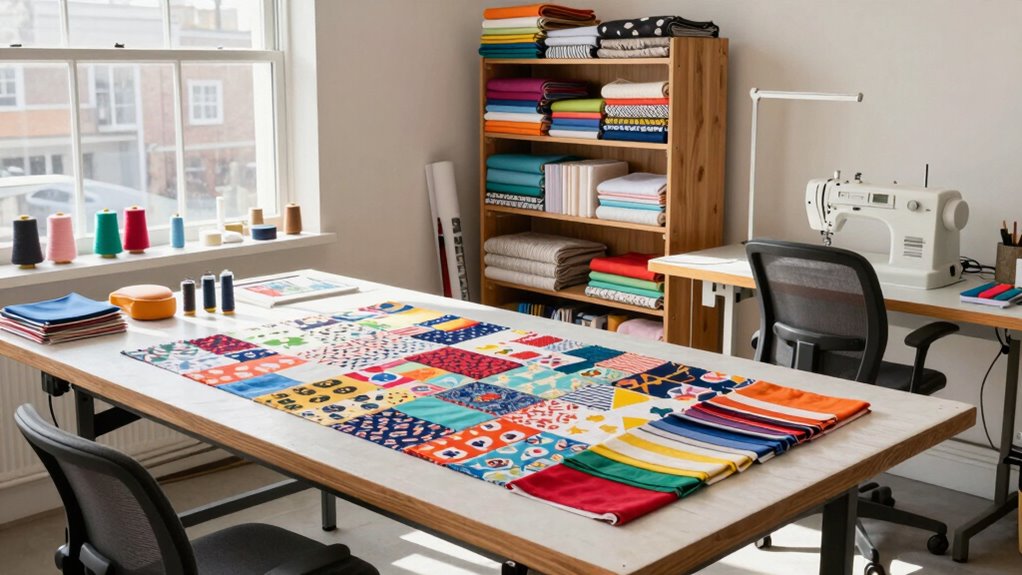
Have you ever felt overwhelmed by the size of a big quilting project? It’s common to feel a bit daunted when faced with large fabric pieces and complex patterns. The key to making these projects less intimidating lies in your setup. Start by organizing your fabric storage. Keep your fabrics sorted by color, type, or project. Use clear bins or labeled drawers so you can quickly find what you need without rummaging through piles. When fabrics are stored neatly, you’ll spend less time searching and more time sewing, which boosts your confidence and keeps you motivated.
Organize your fabric storage with clear bins and labels to save time and boost your sewing confidence.
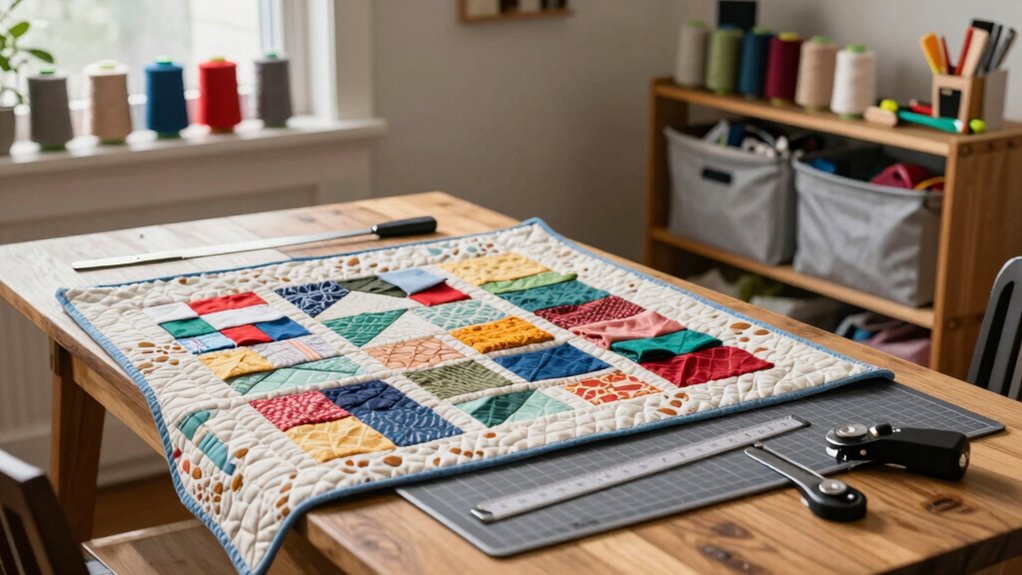
Next, establish a dedicated cutting station. This area should be spacious enough to handle large fabric pieces comfortably. Set up a sturdy cutting table with good lighting and a rotary cutter. Keep your rulers and scissors within arm’s reach, so you’re not constantly moving around. A well-organized cutting station not only speeds up your work but also reduces frustration. When you’re able to cut accurately on a smooth, clutter-free surface, the entire process feels more manageable and less stressful. Incorporating proper organization techniques can also help maintain a clutter-free environment and support your workflow.
As you work on your project, break it down into smaller, manageable sections. Use your organized fabric storage to pull out only the fabrics you need for each step. This prevents overwhelm and helps you focus. Keep your fabric pieces pressed and ready to go, so you don’t waste time on last-minute prep. Proper organization can significantly improve your efficiency and reduce stress. By setting up your space with easy access to everything, you minimize interruptions and keep your momentum going. Incorporating efficient workspace design can further streamline your quilting process and keep you focused on the creative aspects. Additionally, implementing a consistent routine can help you stay motivated and make the process feel more manageable over time.
Furthermore, creating a dedicated space for your quilt assembly can enhance your overall workflow. Having a large, flat surface where you can lay out blocks and sections makes it easier to see the overall design. When you can step back and view your progress, you’re less likely to feel overwhelmed. Keep your workspace free of clutter, so your focus stays on sewing rather than cleaning up. Creating an organized environment can also improve your overall workflow, making each step more efficient. This setup encourages steady progress, making even the biggest projects feel achievable.
As an affiliate, we earn on qualifying purchases.
Frequently Asked Questions
How Do I Store Large Quilting Fabrics Efficiently?
To store large quilting fabrics efficiently, fold them neatly and layer them by color coordination to keep your workspace organized. Use flat storage bins or wide drawers to prevent creases, and avoid stacking too high to prevent damage. Keep fabrics away from direct sunlight to guarantee fabric preservation. Label each container for easy access, so your big projects stay manageable and your fabrics remain in prime condition for your next quilting adventure.
What Tools Help Organize Multiple Quilt Blocks?
Imagine having a magic wand—your tools for organizing quilt blocks do just that. Use labeled plastic bins or stackable storage containers for quilt block storage, making it easy to access and identify each piece. A dedicated project organizer or a rolling cart keeps everything in place, ensuring your project stays neat and manageable. These tools streamline project organization, turn chaos into order, and help you stay inspired for each quilting session.
How Can I Prevent Fabric From Bunching During Quilting?
To prevent fabric from bunching during quilting, you should prioritize fabric stabilization by using spray baste or pins to keep layers smooth. Also, quilt slowly and evenly, guiding the fabric gently through your machine. Regularly adjust your fabric tension if needed, and consider using a walking foot for quilting smoothly. These steps help keep your layers aligned, reducing bunching and ensuring professional-looking results.
What Are the Best Lighting Options for Large Projects?
Think of your workspace as a lighthouse guiding your creativity. For large projects, opt for adjustable LED lamps with a high color temperature—around 5000K to 6500K—that mimic natural daylight. Combine this with ample ambient lighting to eliminate shadows and reduce eye strain. This setup guarantees you see true colors and fine details clearly, making your quilting journey smoother and more enjoyable, even on the biggest projects.
How Do I Manage Thread Tension With Big Quilts?
To manage thread tension with big quilts, start by adjusting your thread tension dial for even stitching. Make certain your quilting machine is properly calibrated, which guarantees consistent tension throughout your project. Regularly test on scrap fabric before quilting, especially after changing thread types or bobbins. This practice helps you spot tension issues early and make precise thread tension adjustments, keeping your big quilt looking smooth and professional.
Conclusion
With the right quilting setup, tackling bigger projects becomes less intimidating—like easing into a warm bath after a long day. Keep your workspace organized, gather all your tools beforehand, and set small, achievable goals. As you become more comfortable, your confidence will grow, and the project will feel less overwhelming. Remember, every stitch brings you closer to a stunning finished piece, making the journey just as rewarding as the final quilt.
Columbus Day / Indigenous Peoples' Day Picks
long weekend sales
As an affiliate, we earn on qualifying purchases.