Sashiko mending turns visible repairs into beautiful, intentional designs that showcase craftsmanship and cultural heritage. You’ll select durable fabrics and contrasting or matching threads, then use simple running stitches to create decorative patterns. By incorporating traditional motifs or modern designs, you add style and strength to your garments. If you continue exploring, you’ll discover step-by-step techniques and tips to make your sashiko repairs both functional and visually striking.
Key Takeaways
- Use contrasting thread colors to create decorative, visible repairs that enhance the fabric’s aesthetic.
- Select traditional sashiko patterns that complement or highlight the repair area for visual interest.
- Maintain even, deliberate stitches with proper tension to ensure durability and a cohesive look.
- Incorporate intricate motifs or geometric designs to turn mending into a decorative art form.
- Balance functional reinforcement with decorative stitching to achieve repairs that are both strong and visually appealing.
The Origins and Cultural Significance of Sashiko
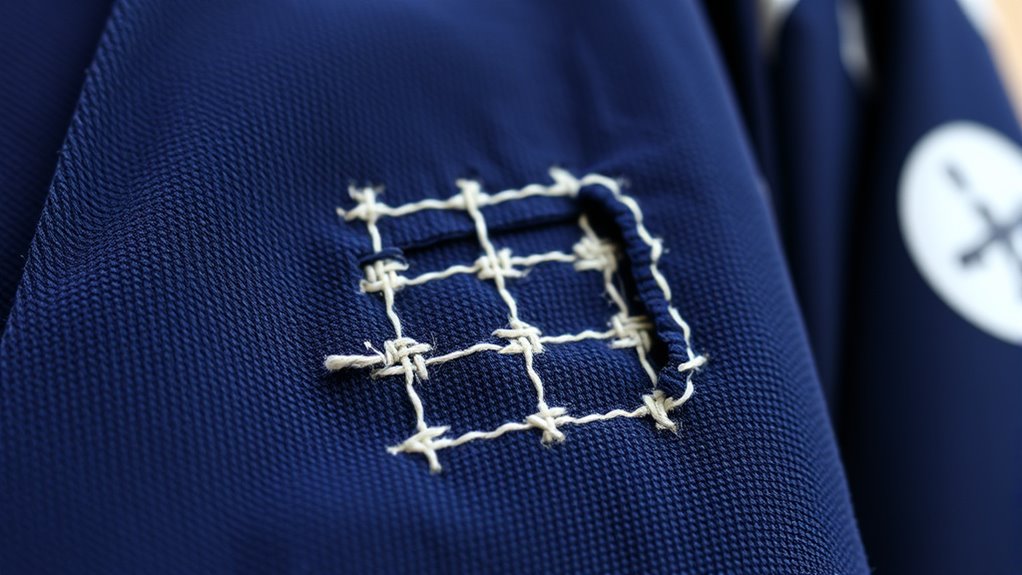
Sashiko, a traditional Japanese stitching technique, has deep roots that trace back to the Edo period (17th to 19th centuries). It’s more than just a practical craft; it’s an essential part of Japan’s cultural heritage. Originally, sashiko was used by farmers and fishermen to reinforce clothing and ensure durability in daily life. Over time, it evolved into an artistic expression, showcasing intricate patterns and craftsmanship. Each stitch tells a story of resourcefulness and community, reflecting values passed down through generations. Today, sashiko remains a meaningful symbol of cultural identity, blending utility with beauty. By practicing sashiko, you participate in preserving this cultural legacy and honoring its rich history. Your stitches connect you to centuries of tradition and artistic ingenuity. Sashiko’s technique and patterns continue to inspire modern textile arts worldwide.
Basic Tools and Materials Needed for Sashiko Mending

To start sashiko mending, gather a few essential tools and materials that will help you create durable and beautiful repairs. First, prepare your fabric by cleaning and trimming any frayed edges to ensure smooth fabric preparation. Next, choose the right needle; sashiko needles are typically longer and thicker with a sharp point, making them perfect for heavy fabrics and layered mending. You’ll also need sashiko thread, usually cotton, which provides strength and a distinctive texture. Having a thimble can protect your finger during stitching. Keep scissors or small snips handy for trimming loose threads. Additionally, understanding the yarn yardage needed for various projects can help you select the appropriate amount of thread for your sashiko work. These tools and materials set the foundation for effective fabric preparation and needle selection, guaranteeing your stitches are even, secure, and visually appealing.
Choosing Fabrics and Threads for Your Repairs

Choosing the right fabrics and threads is essential for creating strong, seamless repairs that blend well with your garment. Start by selecting fabrics with good durability, ensuring they can withstand washing and wear without further damage. For visible sashiko repairs, choose fabrics that match or complement the original material in weight and texture, so the repair looks intentional and cohesive. Thread selection is equally important; opt for sturdy, high-quality threads that won’t fray or break easily. Traditional sashiko threads are often made of cotton, but you can also choose silk or synthetic options depending on your project’s durability needs. Additionally, consider the compatibility of fabrics and threads to ensure your repair remains durable and visually harmonious over time. The right combination guarantees a repair that’s not only beautiful but also long-lasting, maintaining your garment’s integrity over time.
Step-by-Step Guide to Sashiko Stitching Techniques

Once you’ve selected the right fabrics and threads, it’s time to learn the basic stitches that form the foundation of sashiko mending. Start with the running stitch, which is simple yet essential for creating even, durable lines. Keep your stitches consistent in length and tension; this not only improves your technique but also aids in fiber dyeing, ensuring colors stay vibrant over time. As you sew, think about textile preservation—your stitching reinforces the fabric and extends its life. Practice on scrap fabric first to develop even spacing and smooth curves. Remember, sashiko isn’t just about repairing; it’s a mindful craft that celebrates the beauty of visible mending. Mastering these foundational stitches sets the stage for more intricate sashiko patterns and techniques. Additionally, understanding how to properly inflating Presta valve tires can help in maintaining your bicycle’s performance, ensuring you can get to your mending projects with ease.
Incorporating Traditional Patterns Into Your Repairs

Choosing the right patterns can make your repairs stand out, so consider how different designs suit your fabric and style. Understanding the cultural significance behind traditional motifs adds depth and meaning to your work. By selecting and customizing patterns thoughtfully, you can enhance both the beauty and storytelling of your mended garment. Incorporating traditional patterns can also inspire your creativity and help preserve cultural heritage in your craft.
Pattern Selection Techniques
Incorporating traditional sashiko patterns into your repairs adds both beauty and cultural significance to your mended item. When selecting patterns, consider fabric durability and how the design will complement the fabric’s strength. Simpler patterns work well on delicate textiles, while more intricate ones suit sturdy fabrics. Thread selection is vital; thicker threads highlight the pattern and add durability, whereas finer threads produce subtle, delicate stitches. Use this table to choose your pattern style:
| Fabric Type | Pattern Choice |
|---|---|
| Lightweight | Simple geometric or grid designs |
| Heavyweight | Complex motifs like waves or floral patterns |
| Worn or fragile | Minimal stitching, emphasizing reinforcement |
| Durable textiles | Elaborate, detailed patterns for aesthetic appeal |
Matching your pattern to fabric and thread guarantees a visually appealing, long-lasting repair. Additionally, considering fabric strength can help you select the most appropriate pattern to ensure the repair holds over time.
Cultural Significance of Designs
Traditional sashiko patterns carry deep cultural meanings that enhance the significance of your repairs. These embroidery patterns often symbolize protection, prosperity, and good luck, reflecting centuries of Japanese tradition. Incorporating specific designs into your mending process connects you to this rich history. The embroidery patterns are carefully chosen to convey meaning, making your repairs more than just functional; they become cultural expressions. Additionally, different fabric textures influence the appearance and interpretation of these patterns. For example, rougher textures may emphasize bold motifs, while smoother fabrics allow for intricate designs. By understanding the cultural significance behind these patterns, you enhance your sashiko work’s depth, transforming a simple repair into a meaningful act of cultural storytelling and preservation. Recognizing the traditional craftsmanship involved in sashiko further enriches your appreciation for this art form.
Enhancing Aesthetic Appeal
Adding specific patterns to your sashiko repairs not only reinforces their cultural significance but also elevates their visual appeal. You can enhance your mended fabric by thoughtfully selecting traditional embroidery techniques and integrating fabric dyeing methods. Consider incorporating motifs like waves, mountains, or flowers to create striking designs. Experiment with different embroidery techniques such as running stitch or decorative stitches to add texture and depth. Using fabric dyeing techniques like indigo or natural dyes can give your repairs a vibrant, authentic look. To make your repairs stand out, try combining patterned stitches with contrasting thread colors. This approach transforms a simple mend into a beautiful, meaningful piece that celebrates tradition while showcasing your personal style. Additionally, exploring vetted Halloween products can inspire thematic design elements or color choices that complement your sashiko work.
Tips for Making Your Repairs Both Functional and Artistic

To make your sashiko repairs both practical and beautiful, start by choosing thread colors that complement your fabric. Incorporate decorative stitches to add visual interest without sacrificing durability. Remember to balance the repair’s function with style, ensuring it looks intentional and enhances your garment. Using an appropriate safety of electric heated mattress pads can also inspire confidence in the durability of your repairs, knowing that both safety and longevity are prioritized.
Choose Complementary Thread Colors
Have you ever wondered how choosing the right thread color can transform a simple repair into a work of art? When selecting thread, consider color coordination to enhance your sashiko design. Using thread contrast can highlight or subdue stitches depending on your goal. Bright, contrasting threads draw attention to the repair, creating an artistic statement. Conversely, choosing a thread that matches the fabric offers a subtle, seamless look. Keep these tips in mind:
- Match thread to fabric for a discreet repair
- Use contrasting colors for decorative effect
- Think about the overall color palette
- Experiment with bold or muted shades
- Consider the garment’s style and purpose
- Pay attention to filter technology to ensure your choices complement your fabric’s texture and durability
Balancing these choices ensures your mending is both functional and visually appealing.
Incorporate Decorative Stitches
Incorporating decorative stitches into your sashiko mending can turn a simple repair into a striking piece of art. Use decorative stitches to create patterns that enhance the fabric’s appearance and add personality to your repair. Experiment with different stitch types, like motifs or geometric designs, that serve as fabric embellishments while reinforcing the fabric’s strength. Choose contrasting thread colors or subtle shades, depending on the aesthetic you want to achieve. Let your stitches follow the natural lines of the fabric, making the repair both functional and visually appealing. Keep your stitches even and deliberate, so they contribute to an overall cohesive design. Decorative stitches not only mend but also elevate your garment, transforming a fix into a unique expression of craftsmanship.
Balance Functionality and Style
Balancing functionality and style in sashiko mending requires thoughtful planning to guarantee your repairs are both durable and visually appealing. To achieve this, focus on maintaining fabric durability by selecting appropriate stitches and thread strength. Adjust thread tension carefully to ensure even stitches that hold well without puckering the fabric. Incorporate decorative patterns that enhance the garment’s look while reinforcing weak areas. Consider the color contrast: subtle shades for a refined appearance or bold hues for a statement. Keep these tips in mind:
- Use strong, high-quality thread for durability
- Maintain consistent thread tension for even stitches
- Choose patterns that blend or contrast effectively
- Reinforce areas prone to wear without over-stitching
- Balance decorative details with practical reinforcement
This approach ensures your repairs are both functional and beautifully styled.
Creative Ways to Use Sashiko on Different Garments

Sashiko isn’t just for traditional garments; it offers a versatile way to add decorative and functional touches to various clothing items. You can transform plain shirts or jackets with simple embroidery embellishments, turning them into unique statement pieces. Experiment with fabric dyeing techniques before or after stitching to create interesting contrasts and textures. For example, using indigo dyeing paired with white sashiko patterns enhances the visual appeal. You might also add sashiko accents to denim jeans or tote bags for a handcrafted look. The technique isn’t limited to repair; it’s a creative tool for customizing your wardrobe. By combining embroidery embellishments with fabric dyeing techniques, you personalize each item, making it distinctive and expressive. Sashiko becomes an artistic way to refresh and individualize your clothing collection.
Maintaining and Preserving Sashiko-Enhanced Items
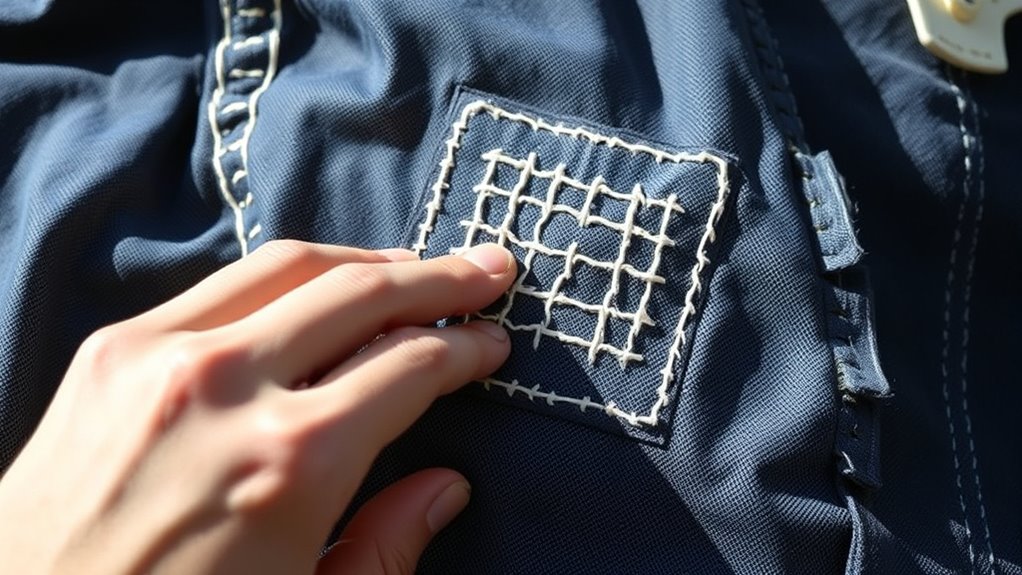
To keep your sashiko-enhanced items looking their best, proper maintenance is essential. Regular gentle cleaning helps preserve fabric durability and keeps the stitches intact. Store items away from direct sunlight to prevent fading and color deterioration, ensuring color coordination stays vibrant over time. Handle your sashiko pieces with care to avoid snags or tears that could compromise the embroidery. Consider these tips:
- Wash by hand or use a delicate cycle with mild detergent
- Air dry flat to prevent stretching or distortion
- Keep away from harsh chemicals or bleach
- Store in a cool, dry place, preferably folded or flat
- Rotate use to minimize wear and tear
Following these practices will help your sashiko-enhanced items remain beautiful and resilient for years to come.
Inspiring Examples of Sashiko Mending in Modern Fashion
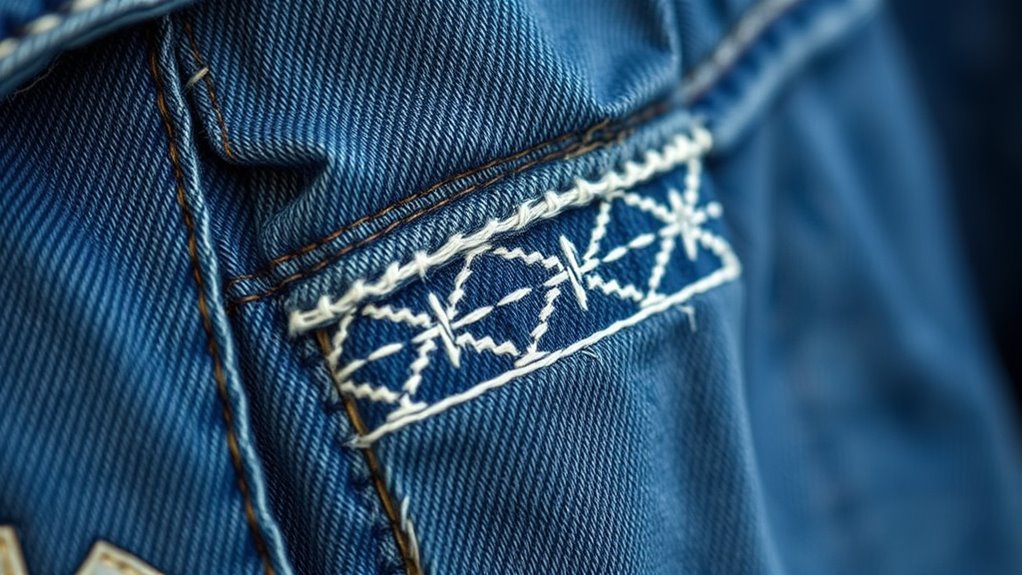
Modern fashion designers are increasingly turning to sashiko mending as a way to create unique, sustainable, and visually striking garments. They incorporate traditional sashiko patterns into contemporary designs, transforming simple repairs into artful statements. You might see jackets, jeans, or even accessories featuring intricate sashiko stitches that serve both functional and aesthetic purposes. These patterns add texture and depth, making visible mending a central design element rather than a flaw. Designers embrace sashiko’s bold geometric motifs, blending them seamlessly with modern fashion trends. This approach not only highlights craftsmanship but also promotes sustainability by extending the life of clothing. As a result, sashiko mending has become a powerful tool for creating innovative, eco-conscious fashion that celebrates heritage while appealing to current tastes.
Combining Sashiko With Other Mending and Embellishment Styles

Many designers and crafters are now blending sashiko with other mending and embellishment techniques to create personalized and layered effects. This approach not only enhances textile preservation but also deepens cultural symbolism. Combining sashiko with embroidery, appliqué, or fabric painting allows you to tell a story or showcase your unique style. You might add colorful stitches over traditional patterns or incorporate modern motifs to update classic designs. This fusion respects the history behind sashiko while making it relevant today. It also encourages you to experiment with textures and colors, transforming repairs into artistic statements. By merging techniques, you’re preserving cultural heritage while showcasing your creativity through layered, meaningful embellishments.
Frequently Asked Questions
Can Sashiko Be Used on Synthetic Fabrics?
Yes, you can use sashiko on synthetic fabrics, but you should be cautious. Synthetic fibers often have durability concerns; sashiko stitches might not hold as well over time. When applying sashiko to synthetic materials, use appropriate needles and thread to prevent damage. Keep in mind that the visible stitches will add a decorative touch while also reinforcing the fabric, but the longevity depends on the quality of the synthetic fibers and your stitching technique.
How Long Does a Typical Sashiko Repair Last?
A typical sashiko repair can last anywhere from several years to decades, depending on fabric durability and thread longevity. Studies show that well-executed sashiko on sturdy fabrics can endure over 10 years of regular wear. Your repair’s longevity relies on how you maintain the garment and the quality of thread used. With proper care, sashiko mended pieces remain functional and beautiful for a long time, often outlasting the original fabric.
Is Sashiko Suitable for All Garment Types?
Sashiko is suitable for most garment types, especially those made from durable fabrics like denim or canvas, because it enhances their fabric durability. Its intricate stitch patterns add aesthetic appeal, making your clothing unique and stylish. However, for delicate fabrics like silk or chiffon, sashiko might be too heavy or visible, so consider the fabric’s strength and look when deciding if sashiko fits your garment.
Can I Wash Sashiko-Mended Clothing?
Yes, you can wash sashiko-mended clothing, but follow care instructions carefully to maintain its appearance and colorfastness. Use gentle or cold water cycles and avoid harsh detergents that could fade the stitches. Turn your garment inside out to safeguard the sashiko work. Air dry whenever possible to prevent damage from heat. Proper care guarantees your sashiko repairs stay vibrant and intact through many washes.
Are There Modern Tools That Simplify Sashiko Mending?
Like a guiding compass in a vast sea, modern tools illuminate your sashiko journey, making traditional techniques more accessible. You can find specialized sashiko needles, pre-printed patterns, and sewing aids that streamline your work without losing cultural significance. These innovations simplify precision, helping you preserve the art while embracing contemporary ease. With them, you deepen your connection to tradition and craft, turning repair into a meaningful act of cultural homage.
Conclusion
By embracing sashiko mending, you turn repairs into art, making visible patches a statement of craftsmanship and history. Think of each stitch as a thread weaving stories of tradition into modern life—like a tapestry of resilience and beauty. When you repair with sashiko, you’re not just fixing fabric; you’re preserving a cultural legacy that’s as enduring as the stitches themselves. Your visible mends become a proof to the beauty of mindful, intentional craft.