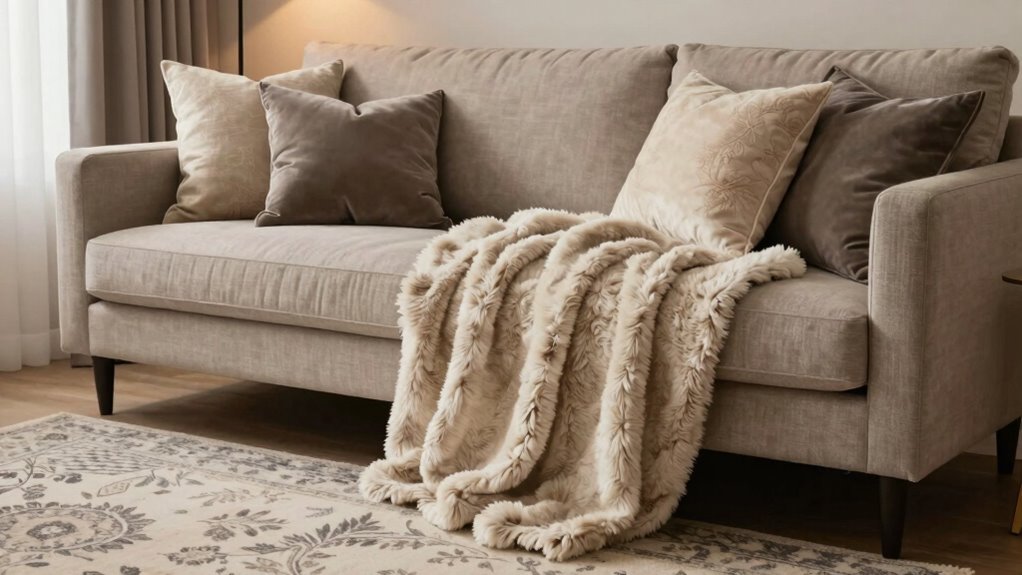

To make your room feel finished, focus on balancing color and texture through strategic layering. Start with larger textiles like rugs and curtains to anchor the space, then add smaller pieces like pillows and throws for visual interest. Mix smooth fabrics with rough textures, using neutral tones in busy rooms or bold accents elsewhere. Carefully consider placement to create harmony without overwhelming. Keep experimenting, and you’ll discover how thoughtful layering creates a cozy, polished environment—if you explore further, you’ll learn even more.

Get furniture and decor delivered free with Prime
- Fast, free delivery on millions of items
- Prime Video, Amazon Music and more included
- Member-only deals all year
Key Takeaways
- Start with large textiles like rugs and curtains to anchor the space and set the overall tone.
- Layer smaller textiles such as throw pillows and blankets for added depth and tactile interest.
- Mix textures—smooth, chunky, soft, and rough—to create visual and tactile variety.
- Coordinate textiles with wall colors, balancing bold or neutral hues for harmony.
- Ensure textiles serve both aesthetic and functional purposes, enhancing comfort and cohesion.
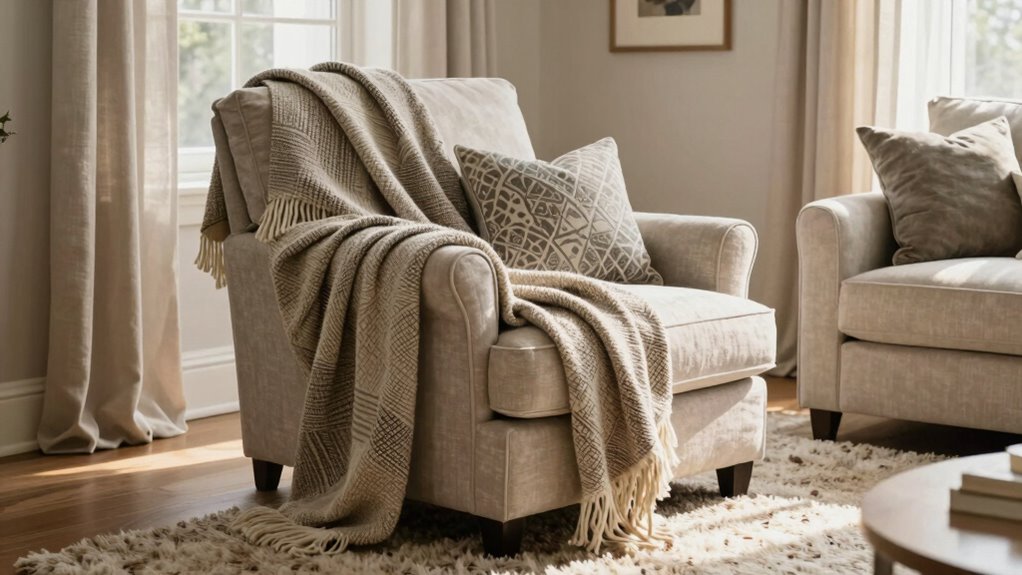
Have you ever wondered how to effectively layer textiles for ideal insulation and comfort? It’s all about creating a balanced, cohesive look that makes a room feel finished and inviting. The first step is understanding how color coordination and texture mixing work together. When you choose textiles, think about how their colors complement or contrast with each other. If your walls are neutral, you can add textiles in richer hues or subtle shades that enhance the overall palette. Alternatively, if your room features bold colors, opt for textiles that either match or tone down the vibrancy to avoid visual clutter. The goal is to create harmony, so your textiles don’t compete but instead work together to unify the space.
Next, focus on texture mixing. This is where the layering magic truly happens. Combining different textures adds depth and interest, preventing your room from feeling flat. Try pairing a smooth silk pillow with a chunky knit throw or a soft velvet cushion with a rougher woven rug. These contrasting textures create tactile appeal and make your space feel layered and curated. When mixing textures, consider the material weight and finish. Light, silky fabrics can balance heavier, textured pieces like woven baskets or plush rugs. This interplay makes the room feel thoughtfully designed, not cluttered.
Layering textiles is also about strategic placement. Place larger textiles, such as rugs or curtains, first to anchor the space. Then, add smaller items like throw pillows, blankets, or table runners to build layers that invite touch and visual interest. Keep in mind that your textiles should serve both aesthetic and functional purposes. For insulation, thicker fabrics like wool or fleece can be layered for warmth, especially in colder months. For comfort and style, softer materials like linen or cotton can be layered to create a cozy, inviting atmosphere. Incorporating textile layering techniques can help streamline this process and ensure a cohesive look.
Finally, don’t forget about the balance of color and texture. If your room is already busy with patterns and colors, opt for more subdued textiles to avoid overwhelm. Conversely, if your space is minimalistic, don’t be afraid to add bold colors or luxurious textures to create a focal point. The key is to layer thoughtfully, keeping in mind how each piece interacts with the others. When you master the art of color coordination and texture mixing, your textiles will seamlessly come together to make your room feel finished, cozy, and uniquely yours.
As an affiliate, we earn on qualifying purchases.
Frequently Asked Questions
How Do I Choose the Right Textiles for Different Seasons?
To choose the right textiles for different seasons, start by considering seasonal color schemes that match the time of year, like warm tones for winter and bright hues for summer. Incorporate fabric texture combinations that feel cozy in colder months, such as plush throws, and lighter, breezy fabrics in warmer seasons. Switching textiles based on these factors helps you create a comfortable, stylish space year-round.
Can Layering Textiles Make a Room Appear Larger?
Layering textiles can definitely make a room appear larger. Studies show that textured fabrics and varied fabric textures create visual depth, tricking the eye into perceiving more space. By skillfully combining fabric textures and color coordination, you add layers that draw attention outward, expanding the room’s feel. Use lighter shades and contrasting textures to give your space an airy, open vibe, making it seem bigger and more inviting.
What Are Common Mistakes to Avoid in Textile Layering?
To avoid common mistakes in textile layering, you should focus on fabric textures and color coordination. Don’t select fabrics that clash or are too similar, which can make the space feel dull or chaotic. Avoid over-layering with too many patterns or textures, as it overwhelms the room. Instead, balance different textures and stick to a cohesive color palette to create a polished, inviting look without clutter.
How Do I Maintain and Clean Layered Textiles?
You keep your layered textiles looking fabulous by regularly vacuuming or gently shaking off dust—think of it as a spa treatment! Spot clean stains immediately to preserve their scent and prevent damage. For durability, rotate your textiles so they don’t wear unevenly, and always follow care labels. If washing, opt for gentle cycles and air dry whenever possible. This routine keeps your textiles fresh, vibrant, and lasting longer.
Which Textiles Are Best for Allergy-Sensitive Households?
For allergy-sensitive households, you should choose hypoallergenic fabrics like tightly woven cotton or silk, which resist dust mites and allergens. Breathable textiles such as linen and certain synthetic fibers also help reduce moisture buildup, preventing mold and mildew. Always opt for washable covers and regularly clean textiles to keep allergens at bay. These choices guarantee a healthier environment while maintaining the layered, finished look you want in your space.
Conclusion
So, there you have it—your foolproof textile layering formula. Now, armed with just a few swaths of fabric, you can transform your room from “meh” to “marvelous” faster than you can say “overdone.” Remember, if it looks like a fabric explosion, you’re doing it right. Who knew that a little strategic layering could make your space feel finished and fabulous? Now go ahead, get those textiles layering—your room’s glow-up awaits!
Fall Picks
fall essentials
As an affiliate, we earn on qualifying purchases.