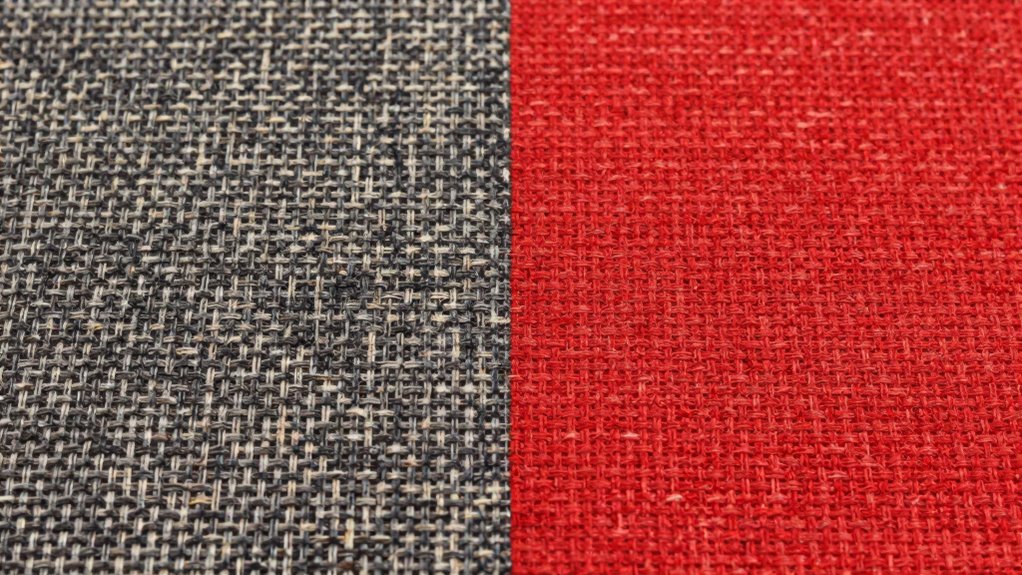

Woven patterns are created during fabric manufacturing by interlacing yarns, making them more durable and resistant to fading. Printed patterns are applied on the surface with techniques like digital or screen printing, offering vibrant and detailed designs. Woven fabrics tend to have richer textures and last longer, while printed fabrics allow for more intricate visuals but may fade or bleed over time. For a deeper understanding of these differences, keep exploring the details below.

Get furniture and decor delivered free with Prime
- Fast, free delivery on millions of items
- Prime Video, Amazon Music and more included
- Member-only deals all year
Key Takeaways
- Woven patterns are created during fabric construction by interlacing yarns, while printed patterns are applied onto the fabric surface after weaving.
- Woven designs are embedded into the fabric, making them more durable and resistant to fading compared to surface-printed patterns.
- Printed patterns allow for detailed, vibrant, and multicolored designs, whereas woven patterns offer intricate textures and depth.
- Woven fabrics generally have better colorfastness and wear resistance, while printed fabrics may require additional treatments for longevity.
- Woven patterns are ideal for durable applications like upholstery, while printed patterns suit fashion and decorative textiles.
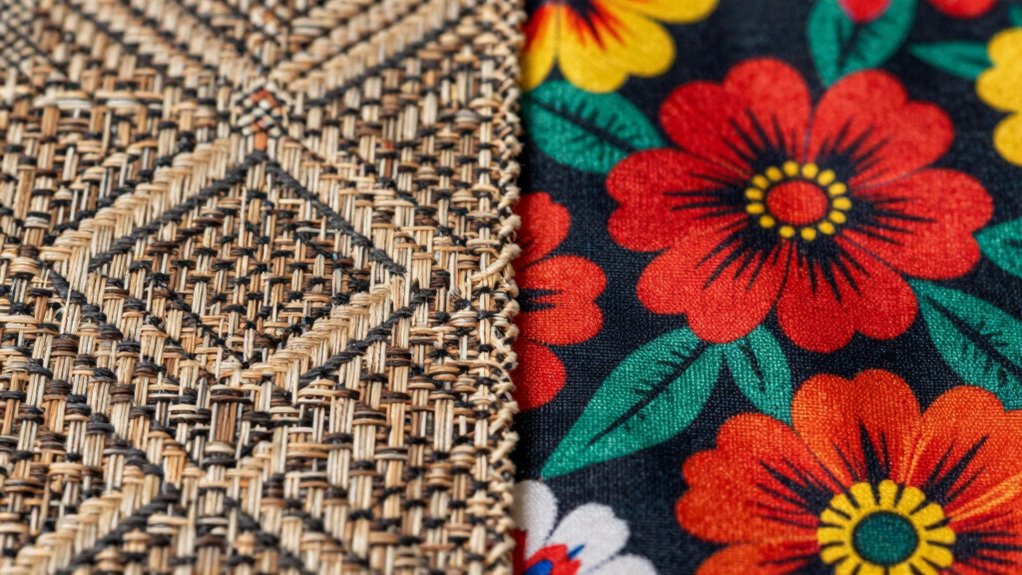
When choosing fabric patterns, understanding the differences between woven and printed designs can considerably impact your project’s look and feel. Woven patterns are created during the fabric’s construction process, where different yarns are interlaced to form intricate designs directly into the fabric. This method results in patterns that are an integral part of the textile, offering superior textile durability because the design is embedded in the fabric structure itself. As a result, woven patterns tend to hold up well over time, resisting fading and wear better than printed fabrics. They are especially suitable for items that require longevity, such as upholstery or heavy-use apparel. When considering colorfastness testing, woven fabrics usually perform better since the dyes are set into the yarns during manufacturing, making them less prone to bleeding or fading with washing or exposure to sunlight. This inherent stability makes woven patterns a reliable choice for projects where maintaining appearance over time is critical. Additionally, woven fabrics often exhibit a richer texture that adds depth to the design, enhancing their visual appeal and textile strength. The construction process of woven fabrics also allows for the creation of patterns with a tactile quality that is difficult to replicate with printing.
In contrast, printed patterns are applied after the fabric has been woven, usually through techniques like screen printing or digital printing. This process involves depositing dyes onto the fabric surface, allowing for a wide array of detailed and vibrant designs. However, because the pattern is on the surface, printed fabrics may be more susceptible to issues like color fading or bleeding, especially if not properly treated. Colorfastness testing becomes essential here, as it ensures that the printed dyes will withstand washing, sunlight, and general wear without losing their vibrancy. The advantage of printed patterns lies in their versatility and ability to showcase complex, multicolored designs that might be difficult to achieve with woven patterns. They’re ideal for fashion, decorative textiles, and items where intricate detail and color variety are paramount.
As an affiliate, we earn on qualifying purchases.
Frequently Asked Questions
Can Woven and Printed Patterns Be Combined in One Fabric?
Yes, you can combine woven and printed patterns in one fabric. This creates a striking texture contrast and visual complexity that adds depth and interest to your design. By blending these techniques, you can highlight different elements and play with tactile and visual effects. Just make certain the patterns complement each other in color and style, so the fabric feels cohesive rather than chaotic. This mix elevates your fabric’s overall aesthetic.
Which Pattern Type Is More Durable Over Time?
Woven patterns tend to be more durable over time because their pattern longevity is embedded directly into the fabric’s fibers. As fabric ages, woven designs resist fading and wear better than printed patterns, which can fade or crack with repeated washing and exposure. If you want a long-lasting look, you should choose woven patterns, especially for items subjected to frequent use or washing.
Are There Specific Fabrics Better Suited for Woven or Printed Patterns?
You’ll find that certain fabrics are better suited for woven or printed patterns based on fabric durability and pattern versatility. For woven patterns, natural fibers like linen or cotton work well because they’re durable and hold the weave tightly. Printed patterns often shine on fabrics like polyester or silk, which provide vibrant color and flexibility for intricate designs. Choosing the right fabric guarantees your pattern stays beautiful and lasts longer over time.
How Do Woven and Printed Patterns Affect Fabric Price?
Woven patterns tend to be more expensive because they require complex craftsmanship, making them less of a bargain compared to printed patterns. Printed fabrics, with their quick and versatile design options, offer greater pattern versatility at a lower cost. So, if you’re budget-conscious, printed fabrics might be your best bet, while woven fabrics provide a touch of luxury and durability that can justify their higher price tag.
Can Woven Patterns Be Customized Like Printed Ones?
Yes, woven patterns can be customized, but with some limitations. Unlike printed designs, woven patterns depend on fabric texture and yarn placement, so you can choose colors and weaving techniques to create unique patterns. However, this process is less flexible than printing, which offers greater pattern versatility. Woven designs often have a tactile quality, adding depth and richness to the fabric, making customization more about texture and craftsmanship than intricate detail.
Conclusion
In choosing between woven and printed patterns, you decide on texture, durability, and style. Woven patterns offer richness and longevity, while printed patterns provide versatility and boldness. You embrace the tactile beauty of woven designs, and you enjoy the vibrant possibilities of printed motifs. Ultimately, your choice reflects your personality, your vision, and your personality. Whether you seek timeless craftsmanship or modern flair, your pattern choice shapes your space, your mood, and your story.
Halloween Picks
halloween
As an affiliate, we earn on qualifying purchases.