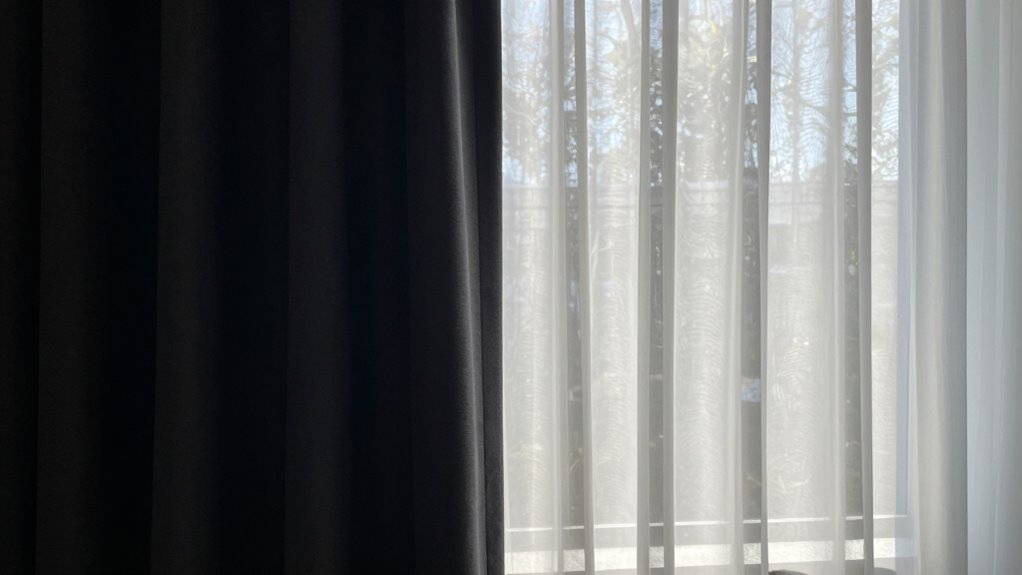

Blackout shades generally block more light than curtains because they’re made from dense, sealed materials that fit snugly against your window, minimizing gaps that let light seep through. Curtains can be effective if they’re heavily lined or blackout-treated, but they usually don’t seal as tightly. Proper installation makes a big difference in blocking light. If you want maximum darkness, blackout shades are your best bet—more details on how they compare are ahead.
Key Takeaways
- Blackout shades generally block more light due to dense, opaque materials and snug fit against the window frame.
- Proper installation of shades minimizes gaps, enhancing their light-blocking effectiveness compared to curtains.
- Curtains with blackout linings can approach shades in light control but often have gaps, reducing overall darkness.
- Outside-mounted shades typically block more light than inside-mounted curtains or shades.
- Overall, blackout shades usually provide a darker room than curtains designed for light reduction.

LazBlinds 100% Blackout Roller Shades, No Tools No Drill Cordless Blinds for Windows, Thermal Insulated UV Protection Privacy Window Shades for Bedroom (36''W x 72''H, Black)
100% Blackout Roller Shade: Made of polyester fabric coated with blackout backing. Blocking out 100% light for complete…
As an affiliate, we earn on qualifying purchases.
As an affiliate, we earn on qualifying purchases.
How Do Blackout Shades and Curtains Work to Block Light?
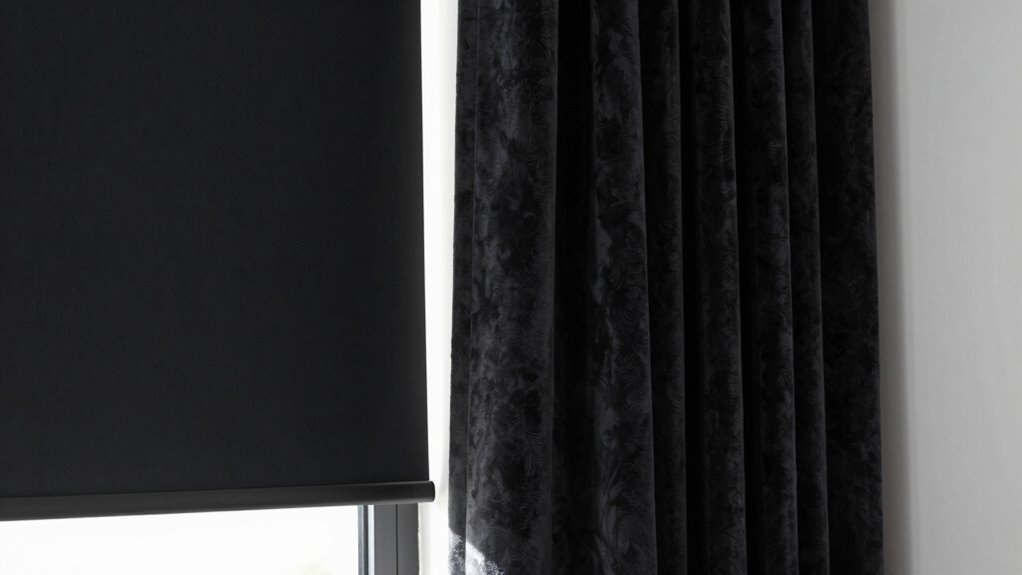
Blackout shades and curtains are designed to block out light effectively by creating a barrier that prevents sunlight from passing through. They achieve this through high opacity levels, which limit light transmission considerably. The material’s density plays a vital role, making it difficult for light to seep in. Blackout shades typically use layered fabrics or special coatings that enhance their opacity, ensuring minimal light gets through. Curtains labeled as blackout often rely on tightly woven fabrics that increase light blockage. Your choice depends on how much light you want to block; higher opacity levels mean less light transmission. This barrier effectively darkens your room, providing a more private, restful environment. Additionally, proper ventilation considerations can influence how well blackout solutions maintain a comfortable atmosphere. So, whether you choose shades or curtains, understanding how opacity influences light transmission helps you pick the best option.

NICETOWN 100% Blackout Window Curtain Panels, Cold and Full Light Blocking Drapes with Black Liner for Nursery, 84 inches Drop Thermal Insulated Draperies (White, 2 Pieces, 52 Wide Each Panel)
Ready Made: 2 panels per package. Each Classic Curtain measures 52" wide x 84" long (Total width is…
As an affiliate, we earn on qualifying purchases.
As an affiliate, we earn on qualifying purchases.
What Materials Are Used in Blackout Shades and Curtains?
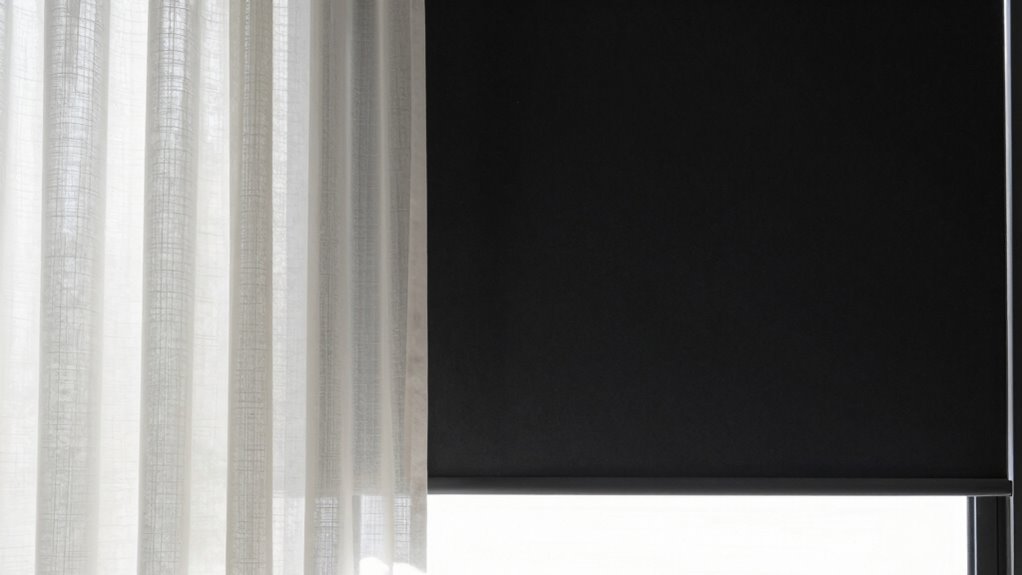
The materials in blackout shades and curtains determine how effectively they block light and how easy they are to maintain. You’ll find various fabric types and compositions, each offering different levels of durability and care requirements. Understanding these materials helps you choose the right option for your needs. For instance, some fabrics incorporate water-resistant coatings to enhance durability in humid environments, making them ideal for bedrooms or media rooms where light control and longevity are important. Additionally, the choice of fabric can influence the insulating properties, helping to improve energy efficiency and reduce noise. Modern blackout fabrics often include specialized linings that further enhance their light-blocking capabilities and longevity.
Fabric Types and Composition
Fabric types and compositions play a crucial role in the effectiveness and appearance of blackout shades and curtains. The fabric weave influences how tightly the fibers are interlaced, affecting light blockage. A dense, tight weave minimizes gaps, providing better blackout performance. Fiber density also matters; higher fiber density results in a thicker, more opaque fabric that blocks more light. Common materials include polyester, cotton, and blends, each offering different levels of durability and light control. Polyester, especially when woven tightly, is popular for blackout shades because it’s resistant to stretching and shrinking. Cotton fabrics tend to be softer but may require lining or additional layers to achieve full blackout. Understanding these fabric compositions helps you select window treatments that best suit your light-blocking needs. Additionally, fabric weave and material choice influence the overall durability and ease of maintenance of your window coverings.
Light-Blocking Layers Used
Materials used for light-blocking layers are essential in ensuring maximum darkness and privacy. Blackout shades typically feature dense, multi-layered fabrics or coated materials that prevent light from passing through, often incorporating decorative patterns that enhance aesthetic appeal. These layers may include foam-backed fabrics or special blackout linings designed to improve thermal insulation, helping regulate room temperature. Curtains, on the other hand, may use tightly woven fabrics or blackout panels sewn into the fabric to achieve similar light-blocking effects. Some curtains incorporate thermal linings to boost insulation, making rooms more energy-efficient. Overall, both blackout shades and curtains use specific materials and layered constructions to block light effectively, but the choice of materials and their decorative patterns can influence both functionality and style.
Material Durability and Care
Choosing the right light-blocking layers means considering how well they hold up over time. The materials used in blackout shades and curtains impact fabric longevity and ease of maintenance. Blackout shades often feature synthetic fabrics like polyester or vinyl, which resist fading and are easy to clean. Curtains typically use natural fibers like cotton or linen, which may require more careful care but offer a softer feel. To keep your layers durable:
- Regularly dust or vacuum to prevent dust buildup
- Spot clean with mild detergent for stains
- Avoid harsh chemicals that can damage fabric fibers
- Selecting materials with UV resistance can also help prolong their lifespan and maintain effective light blocking. Additionally, choosing fabrics with moisture-wicking properties can prevent mold and mildew in humid environments.

AOSKY Cordless Roller Shades Blackout Blinds for Windows Room Darkening Rolled Up Shades with Spring System, UV Protection Window Shades Door Blinds for Home and Office (23" W x 72" H, Black)
【Excellent Material】:Blind Size: 23"W x 72"H, Fabric Size: 22"W x 72"H. Fabric is 100% polyester material fabrics with…
As an affiliate, we earn on qualifying purchases.
As an affiliate, we earn on qualifying purchases.
Which Blocks More Light: Shades or Curtains? Comparing Effectiveness
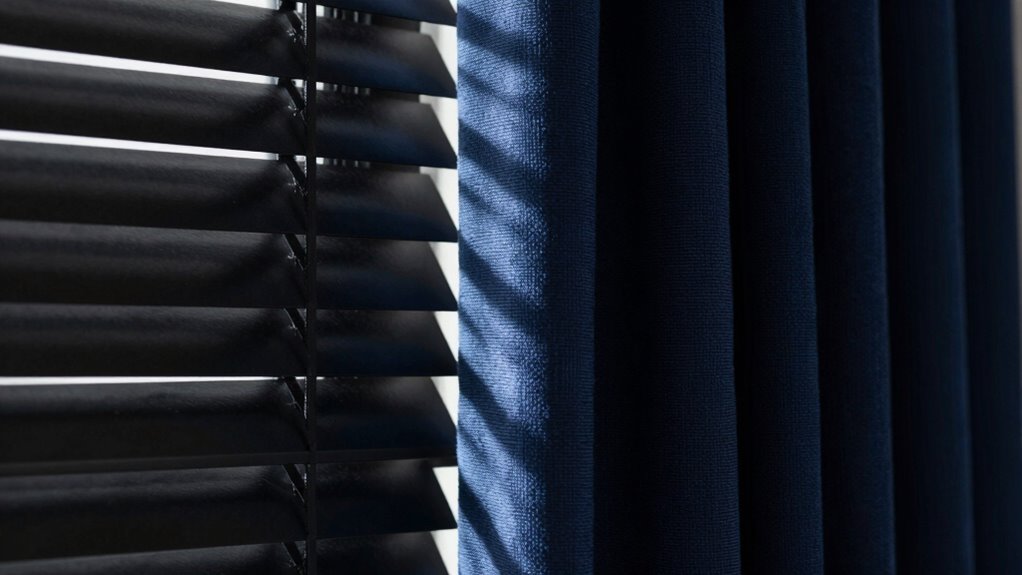
When it comes to blocking out light, shades generally outperform curtains because they fit snugly against your window frame, creating fewer gaps. This tight seal offers superior light control, making shades especially effective for blackout purposes. Curtains, even heavy or blackout-lined ones, often have slight gaps at the sides or bottom, allowing some light to seep through. Window treatments like roller shades or cellular shades are designed to minimize light leakage, providing a more complete blackout. While curtains can block a significant amount of light, shades tend to be more effective overall, especially when you need a dark room for sleeping or presentations. Your choice depends on your level of light control desired, but shades usually offer the best blackout performance. Proper installation is also crucial for maximizing light blockage with either option. Thermal behavior plays a role in how well these treatments insulate and control light, further influencing their blackout effectiveness. Additionally, connectivity features in some modern shades allow for automated adjustments to optimize light control throughout the day. Incorporating smart home automation can further enhance your control over light and privacy at any time. For optimal blackout results, selecting the right window treatment and ensuring precise measurement can make a significant difference.
AOSKY Cordless Roller Shades Blackout Blinds for Windows Room Darkening Rolled Up Shades with Spring System, UV Protection Window Shades Door Blinds for Home and Office (23" W x 72" H, Black)
【Excellent Material】:Blind Size: 23"W x 72"H, Fabric Size: 22"W x 72"H. Fabric is 100% polyester material fabrics with…
As an affiliate, we earn on qualifying purchases.
As an affiliate, we earn on qualifying purchases.
Does How You Install Them Affect Light Blocking?
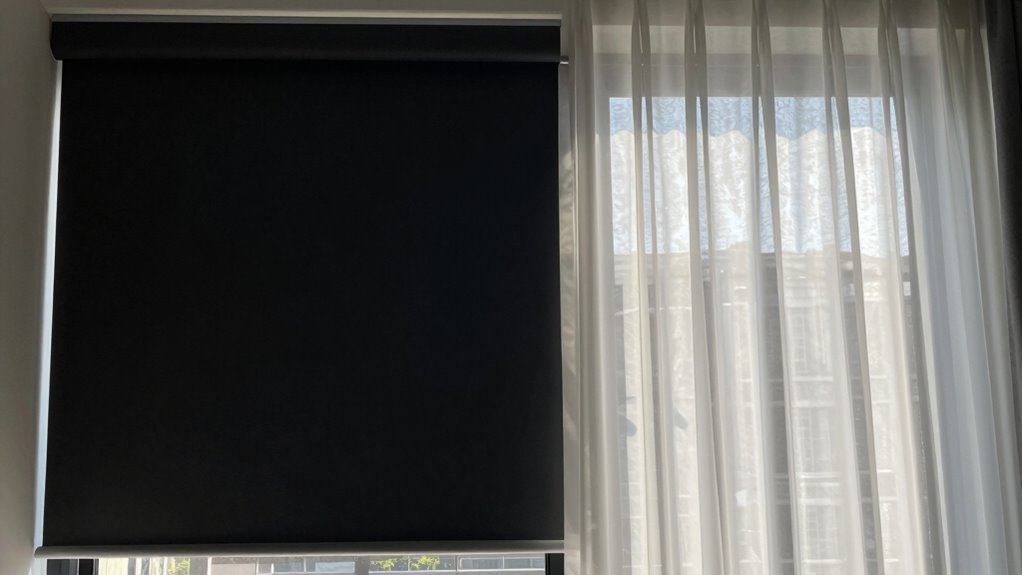
How you install your blackout shades or curtains makes a big difference in blocking light. Proper mounting techniques, like placing them inside or outside the window frame, can impact their effectiveness. Overlapping edges and sealing gaps guarantee maximum light stays out. Additionally, using quality materials designed for light blockage can further improve their performance. Ensuring correct installation also involves understanding correct mounting methods, which can prevent light leaks and enhance overall darkness. For example, choosing the right installation style can significantly influence how much light is blocked. Proper installation techniques are essential to optimize light control and achieve a fully blackout effect. Being aware of window frame considerations can help you select the most effective mounting approach for your specific window setup.
Proper Mounting Techniques Matter
The way you install blackout shades or curtains directly impacts their ability to block light effectively. Proper mounting techniques ensure minimal gaps and maximize coverage. Start with installation tips like measuring accurately to determine the right placement. Use sturdy brackets and ensure they’re level to prevent light leaks. Overlap edges slightly when mounting, so light doesn’t slip through gaps. For blackout shades, consider mounting outside the window frame to prevent light from sneaking in around the edges. For curtains, ensure they extend beyond the window frame for full coverage. Remember, a secure and precise setup makes all the difference in blocking unwanted light. Paying attention to these mounting techniques guarantees your window treatments perform their best, keeping your room dark and cozy.
Installing Inside Versus Outside
Installing blackout shades or curtains inside the window frame can provide a sleek, tailored look, but it may allow small gaps that let light seep through. This placement can limit thermal insulation and reduce privacy enhancement since gaps can let in drafts and visibility from outside. Outside mounting, on the other hand, covers the entire window frame, blocking more light and improving insulation by sealing gaps better. It also offers a more effective barrier against external noise and light leaks. Your choice impacts how well the window blocks light, affects energy efficiency, and enhances privacy. Additionally, window treatment installation can influence how effectively these options perform in different environments. The method of installation can also affect the overall light blocking effectiveness, especially in relation to the design and fit of the window coverings. Proper installation techniques are essential for maximizing light control and energy savings in both methods. The door and window design can also play a significant role in how well these coverings work, especially in older or uniquely shaped windows.
Overlap and Seal Gaps
Since gaps and overlaps can critically influence light control, your installation method plays a crucial role in blocking unwanted light. Properly sealing gaps ensures minimal light leaks around your blackout shades or curtains. Overlap coverage is equally important; extending the fabric beyond window edges helps seal out light completely. To maximize light blocking, consider these tips:
- Seal gaps around the edges with weatherstripping or adhesive strips
- Ensure blackout shades or curtains overlap the window frame for better coverage
- Install mounting hardware firmly to prevent shifting that creates light gaps
- Installation techniques can significantly improve light-blocking effectiveness by reducing gaps and leaks. Additionally, using light-blocking materials during installation can further enhance the overall effectiveness of your window coverings. Properly applying sealing methods not only prevents light intrusion but also improves energy efficiency by reducing drafts.
What Style Options Are Available for Blackout Shades and Curtains?
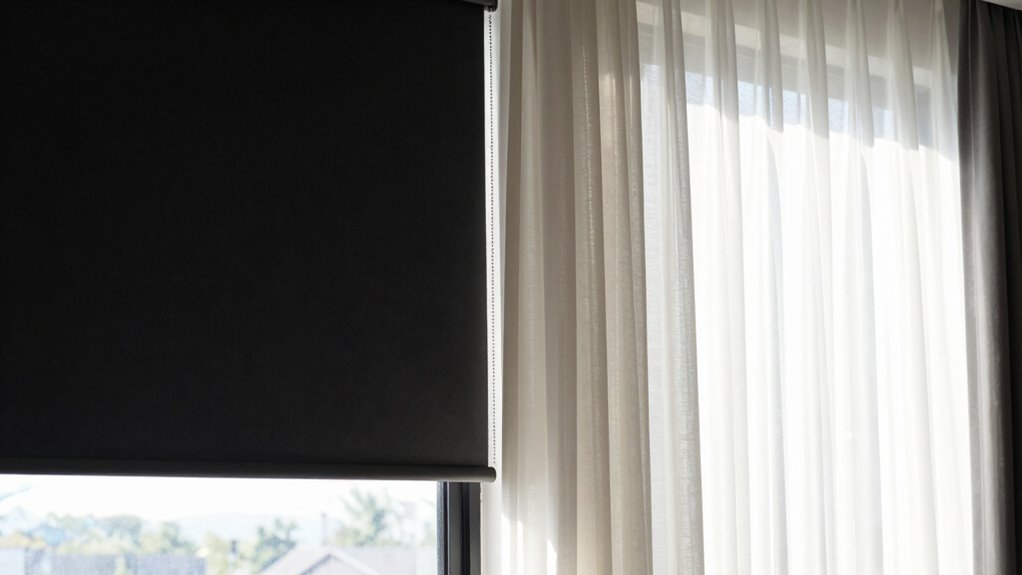
When choosing blackout shades or curtains, you’ll find a wide range of style options to match your decor and personal taste. Blackout shades often come in sleek, minimalistic designs, with fabric patterns that range from smooth, solid colors to textured weaves. You can select from neutral tones like gray, beige, or white, or opt for bold hues to add a pop of color to your room. Curtains, on the other hand, offer more variety in fabric patterns, including floral prints, geometric designs, or classic solids. They also come in numerous color options, allowing you to coordinate with your existing color scheme or create contrast. Whether you prefer a modern, traditional, or eclectic look, both blackout shades and curtains provide versatile style choices to suit any interior.
How Easy Are They to Clean and Maintain?
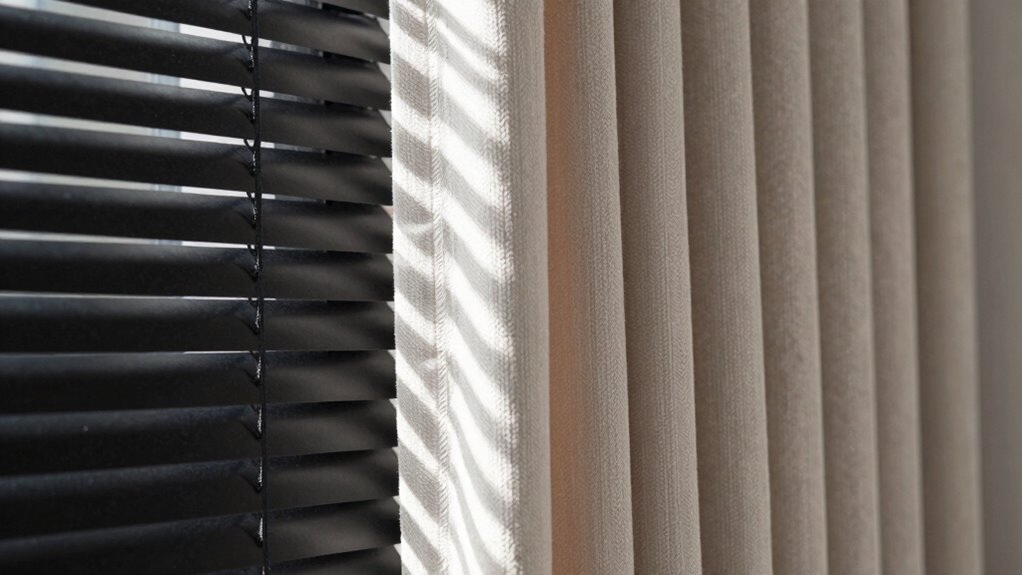
Blackout shades and curtains each have their own maintenance needs, making it important to contemplate how much effort you’re willing to invest in keeping them looking their best. Cleaning tips vary between the two; shades often require a quick wipe with a damp cloth, while curtains might need regular laundering. Stain removal can be straightforward if caught early—use mild soap or specialized cleaners for fabric curtains, and gentle dusting or vacuuming for shades. Consider durability and ease when maintaining your window coverings. Additionally, choosing safe and effective cleaning methods helps ensure the longevity of your window treatments while maintaining indoor air quality. Interestingly, some cultural beliefs suggest that certain colors or materials can influence personal traits, which may influence your choice based on aesthetic preferences.
What Do Blackout Shades and Curtains Cost? Budget and Value
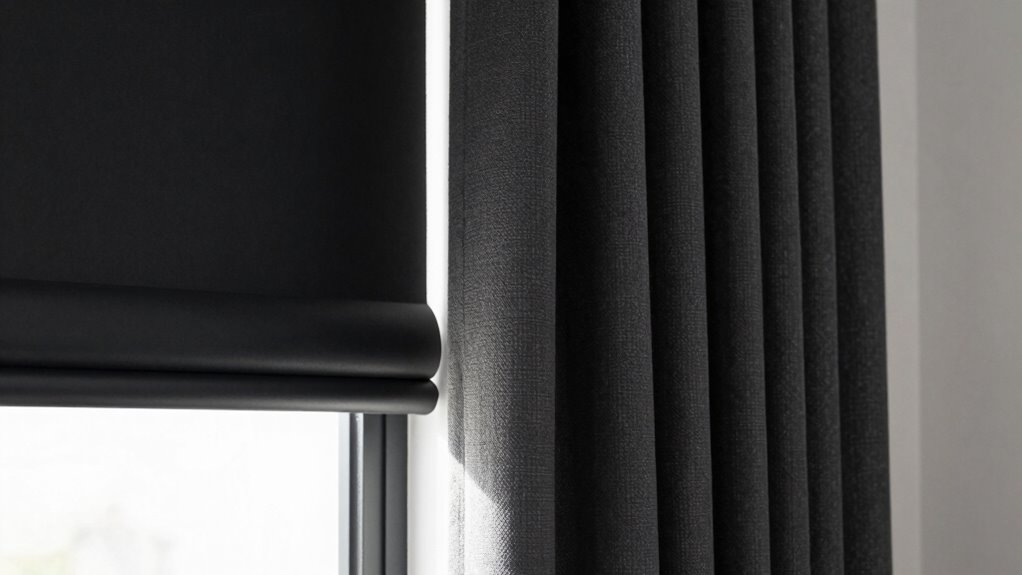
The cost of blackout shades and curtains varies widely, affecting your overall budget and the value you get. Blackout shades tend to be more expensive upfront but offer excellent light blocking and a sleek look. Curtains are usually more affordable initially but may require layering for full blackout effect. Here’s a quick cost comparison:
| Option | Price Range | Aesthetic Options |
|---|---|---|
| Blackout Shades | $50 – $300+ per window | Modern, minimal, streamlined |
| Blackout Curtains | $30 – $200 per panel | Classic, elegant, versatile |
| Custom Options | $200 – $1000+ | Personalized styles, premium fabrics |
| Ready-made | $20 – $100 | Budget-friendly, limited customization |
Your choice depends on your budget and desired aesthetic options, balancing cost with style and function.
When Should You Use Blackout Shades vs Curtains? Best Use Cases
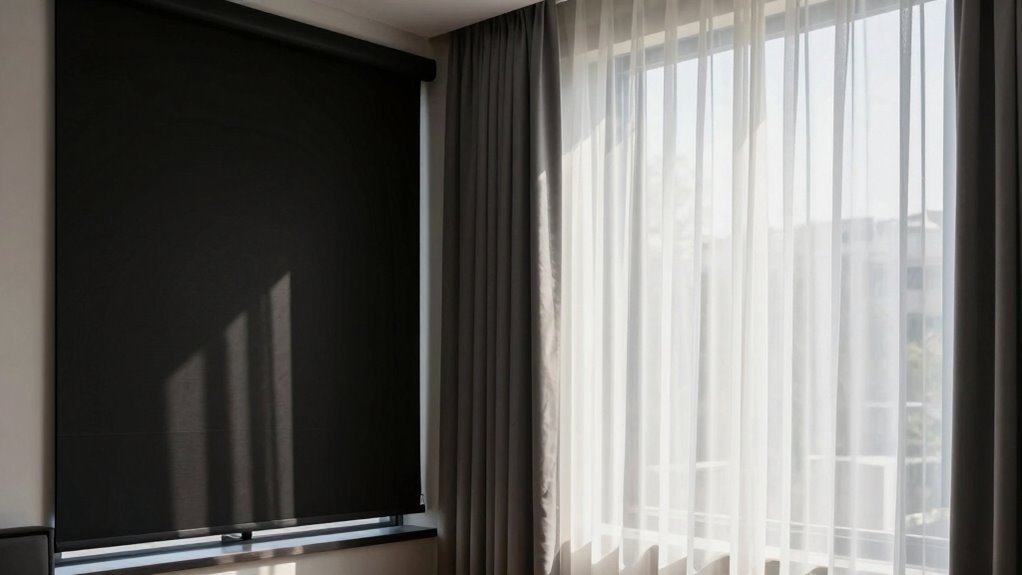
Choosing the right window treatment depends on your specific needs and living space. If you need to block out light completely or enhance privacy, blackout shades are the best choice. They work well in bedrooms, media rooms, or nurseries where darkness is essential. Curtains, on the other hand, are ideal for adding style, light filtering, or a softer aesthetic to living rooms and common areas.
Consider these use cases:
- Installing blackout shades for privacy enhancement and total light control in bedrooms
- Using curtains to add visual appeal while allowing some natural light to enter
- Combining both for versatile window treatments that balance light, privacy, and decor needs
How to Choose the Right Light-Blocking Solution for Your Room
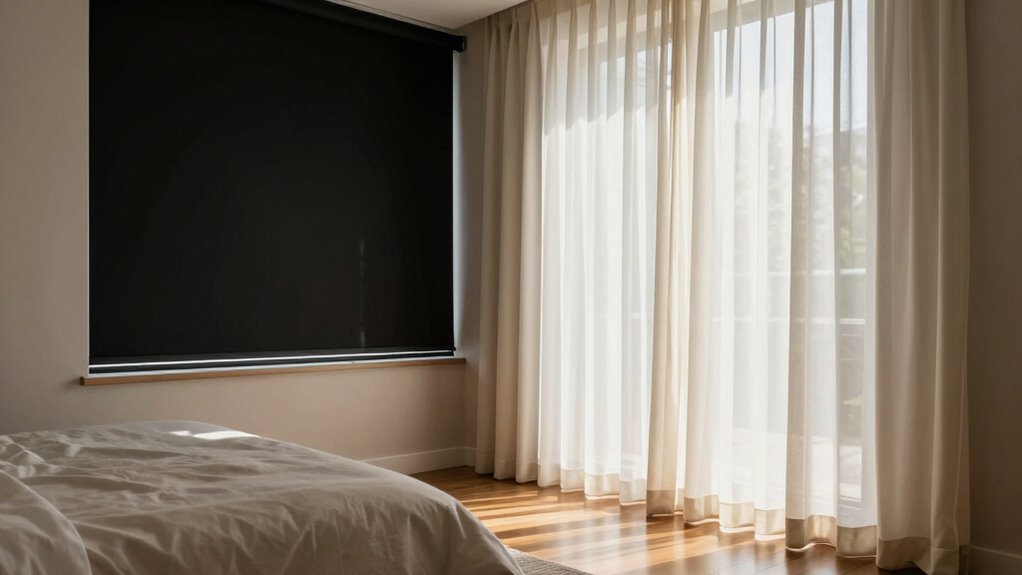
To select the right light-blocking solution for your room, start by evaluating your specific needs for light control, privacy, and style. Consider whether you want blackout shades for complete darkness or curtains for a softer look. Window treatments vary in their ability to block light, so think about how much light you want to filter or block out entirely. If you need maximum light control, blackout shades or heavy blackout curtains are your best options. For a more flexible approach, layered window treatments can give you adjustable light levels. Also, match your choice with your room’s décor and functionality. By understanding your priorities—whether privacy, light reduction, or aesthetic appeal—you can select the perfect solution to meet your needs.
Frequently Asked Questions
Can Blackout Shades and Curtains Improve Energy Efficiency?
Yes, blackout shades and curtains can improve your energy efficiency by enhancing thermal insulation and controlling daylight. They help keep heat in during winter and block heat out in summer, reducing your heating and cooling costs. By minimizing drafts and preventing unwanted sunlight, you maintain a more consistent indoor temperature. This means you use less energy and save money, all while enjoying better comfort and better control over your indoor environment.
Are Blackout Shades Suitable for Outdoor Use?
Blackout shades are generally not suitable for outdoor use because they lack outdoor durability and UV resistance. If you want to block light outside, look for shades made specifically with weather-resistant materials designed to withstand sun, rain, and wind. Regular blackout shades may fade, warp, or deteriorate quickly outdoors, so choose products labeled for outdoor durability to guarantee long-lasting performance and effective light blocking.
How Do Blackout Options Affect Room Temperature?
Blackout options can substantially influence your room temperature by improving thermal insulation and reflecting sunlight. Studies show that blackout shades can reduce indoor temperatures by up to 25% in summer. They block heat from entering during the day and retain warmth during winter, making your space more energy-efficient. By reflecting sunlight and minimizing heat transfer, blackout shades help keep your room cooler or warmer, depending on the season.
Do Blackout Shades or Curtains Reduce Noise Better?
Blackout shades generally provide better soundproofing benefits than curtains because their dense, snug fit reduces noise transmission. They also offer a sleek, modern look, fitting well with various aesthetic choices. You’ll notice less outside noise, making your space quieter and more comfortable. Curtains can help with soundproofing too, but blackout shades usually deliver a more effective barrier, especially when you want both noise reduction and a clean, stylish appearance.
Are There Eco-Friendly Blackout Shade or Curtain Options?
Imagine replacing your blackout shades with eco-friendly options, like those made from organic cotton or bamboo fabric. Yes, there are eco-friendly blackout shades and curtains available, crafted from sustainable manufacturing practices and eco-friendly fabrics. These options reduce environmental impact while blocking light effectively. By choosing eco-conscious materials, you support sustainability and enjoy a functional, stylish solution that aligns with your values.
Conclusion
Choosing between blackout shades and curtains is like picking the perfect veil for your window’s secret. Whether you want a fortress of darkness or a touch of gentle shadow, your choice shapes your space’s ambiance. Consider your style, budget, and how much light you want to block. With the right option, you’ll create a sanctuary where darkness shields your dreams and light dances on your terms. Your ideal room awaits behind your perfect window treatment.