
Conversation circles work better than straight-line seating because they promote equality, making everyone feel included and heard. Facing each other helps you directly engage, read facial cues, and build trust. This setup encourages open dialogue, reduces social hierarchies, and supports diverse participation. It creates a safe space where everyone’s voice matters, fostering genuine connection. If you keep exploring, you’ll discover how this simple change makes a big difference in group dynamics.

Get furniture and decor delivered free with Prime
- Fast, free delivery on millions of items
- Prime Video, Amazon Music and more included
- Member-only deals all year
Key Takeaways
- Conversation circles promote equality, ensuring all voices are valued equally, unlike hierarchical straight-line arrangements.
- Facing each other enhances eye contact and social cues, improving communication and understanding.
- Circular seating fosters a safe, trusting environment conducive to open sharing and vulnerability.
- It encourages balanced participation, reducing dominance by certain individuals and supporting diverse group dynamics.
- The layout reinforces group cohesion and a sense of community, leading to more meaningful discussions.
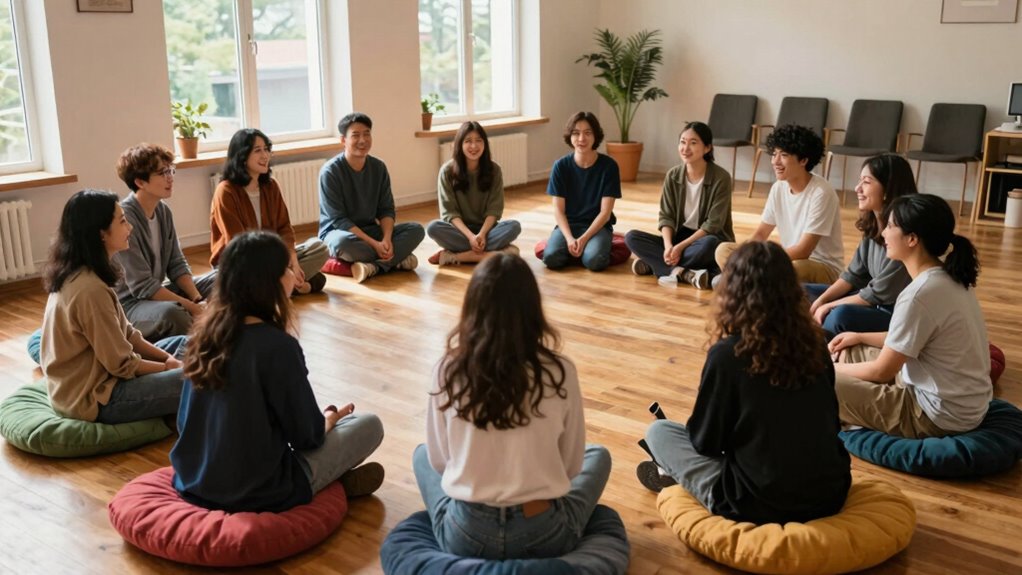
Choosing the right seating arrangement can considerably impact your group’s interaction and engagement. When you opt for conversation circles over straight-line seating, you create a space that fosters a sense of equality and openness. This setup encourages every participant to feel seen and heard, which is especially important in diverse groups where cultural inclusivity matters. Unlike traditional straight-line arrangements, which often position individuals as passive listeners or distant observers, conversation circles break down hierarchies. Everyone sits in a circle, making it clear that each voice holds equal weight. This visual cue promotes inclusivity, guaranteeing that no one feels marginalized or disconnected because of cultural differences or personal backgrounds.
Conversation circles foster equality and inclusivity, making every voice feel valued and heard in diverse groups.
You’ll notice that conversation circles naturally influence the engagement dynamics within your group. When participants face each other directly, it becomes easier to establish eye contact, read facial expressions, and pick up on subtle social cues. These non-verbal signals enhance communication and help develop a deeper understanding between members. As a result, discussions tend to flow more freely and authentically, because people feel more comfortable sharing their perspectives without the physical or psychological barriers created by straight-line seating. This arrangement invites spontaneous interactions and encourages shy or hesitant individuals to participate more actively. Additionally, visual cues in a circle setting can help reduce misunderstandings and foster empathy among participants. Creating a safe space for sharing is crucial for meaningful dialogue, especially when exploring cultural differences or sensitive topics. Recognizing the importance of inclusive communication techniques can further enhance the effectiveness of conversation circles. In fact, understanding how group dynamics operate in different seating arrangements can help facilitators better manage discussions and promote equitable participation.
Furthermore, conversation circles create an environment of shared responsibility for the conversation. When everyone is seated in a circle, it’s easier to facilitate equitable turn-taking and guarantee that no one dominates the discussion. You’re more likely to notice when someone is trying to speak or when someone has been quiet too long, prompting you to invite their input. This setup supports inclusive dialogue by balancing participation across cultural backgrounds and personality types. It also bridges gaps that might exist in traditional seating, where power dynamics or social hierarchies can inadvertently influence who speaks and who remains silent. Additionally, research shows that group cohesion can be significantly improved through this arrangement, leading to a more collaborative atmosphere.
Beyond individual interactions, conversation circles foster a collective sense of community. When everyone faces each other, it becomes clear that the group is working together, not against each other. This unity is essential when addressing sensitive topics or exploring cultural differences, as it creates a safe space for honesty and vulnerability. Over time, this arrangement can strengthen trust and mutual respect, making your group more cohesive and engaged. In the end, conversation circles work better than straight-line seating because they actively promote inclusive participation and positively influence the engagement dynamics, making every conversation more meaningful and impactful.
conversation circle seating arrangement
As an affiliate, we earn on qualifying purchases.
As an affiliate, we earn on qualifying purchases.
Frequently Asked Questions
How Do Conversation Circles Impact Participant Engagement?
Conversation circles boost your participant engagement by fostering interactive dynamics and creating inclusive environments. When you’re in a circle, everyone feels seen and heard, encouraging active participation. This setup breaks down barriers, promotes open dialogue, and helps build trust among participants. As a result, people are more likely to contribute ideas and listen attentively, making the entire experience more dynamic and effective for everyone involved.
Are Conversation Circles Suitable for Large Groups?
Yes, conversation circles work well for large groups because they enhance group dynamics and foster inclusivity. Unlike straight-line seating, circles allow everyone to see each other, encouraging more participation. You can adjust the size of the circle or create smaller breakout groups within the larger circle, making it easier to manage conversations and guarantee everyone’s voice is heard. This flexible seating arrangement promotes engagement across diverse group sizes.
What Materials Are Needed to Set up a Conversation Circle?
Setting up a conversation circle is like laying the groundwork for a well-oiled machine. You’ll need simple materials like chairs arranged in a circle, a space that encourages openness, and perhaps a timer or talking piece to manage group dynamics. Keep the seating arrangements flexible to foster inclusivity. Minimal materials make the circle easier to set up and more inviting, helping everyone feel valued and engaged.
How Do Conversation Circles Accommodate Shy or Introverted Members?
Conversation circles help shy participants and introverts feel more comfortable by creating an inclusive, equal space where everyone faces each other directly. You can encourage introvert comfort by allowing them to speak when ready, not forcing participation, and maintaining a calm, non-judgmental atmosphere. This setting minimizes intimidation, making shy members more willing to share their thoughts. The circle fosters trust and connection, helping introverts engage at their own pace.
Can Conversation Circles Be Integrated Into Virtual or Hybrid Settings?
Yes, conversation circles can be integrated into virtual or hybrid settings. For virtual adaptation, you can use video conferencing platforms that allow everyone to see each other in a circle layout or enable breakout rooms for smaller discussions. For hybrid integration, make certain both in-person and remote participants have equal access and opportunity to contribute, possibly by using shared digital tools. This approach fosters inclusivity and keeps the conversational flow engaging in any setting.
Conclusion
Imagine yourself in a cozy room, where conversation circles form a warm, inviting ring. You catch each other’s eyes, feeling connected and engaged, like pieces of a puzzle fitting perfectly together. Unlike straight-line seating, this circle invites open dialogue and genuine connection, transforming a simple gathering into a vibrant dance of ideas. Embrace the circle, and watch how conversations flow effortlessly, creating an atmosphere where everyone feels heard, valued, and truly part of something bigger.
Fall Picks
fall essentials
As an affiliate, we earn on qualifying purchases.