Skip traditional crunches and focus on effective alternatives that protect your spine and improve your core. Planks, variations, and dynamic movements like leg lifts activate multiple muscles and enhance stability. Use resistance bands, stability balls, or household items for added challenge. Incorporate yoga and Pilates moves for a stronger core without strain. With consistent effort and smart techniques, you can build a resilient, balanced core at home—stick around to discover these strategies in detail.
Key Takeaways
- Effective core activation can be achieved through plank variations and stability exercises, avoiding strain from traditional crunches.
- Multi-joint movements like deadlifts and kettlebell swings engage core muscles functionally and safely.
- Using tools like stability balls and resistance bands enhances core strength without neck or back risk.
- Proper technique, controlled movements, and mindful breathing maximize engagement and prevent injuries.
- Functional exercises improve posture, balance, and real-world strength, making core training more beneficial than crunches alone.

Pooboo Multi-Functional Machine Power Cage, 2000LB Squat Rack, LAT-Pull Down System, Dual Pulley Cable Crossover System, Home Gym Workout Machine with Strength Training Attachments (P43 01)
Transform your home workouts with the P43 Multifunctional Power Cage: Made from heavy-duty steel, this upgraded squat rack...
As an affiliate, we earn on qualifying purchases.
Why Skip Crunches? Benefits of Alternative Core Workouts
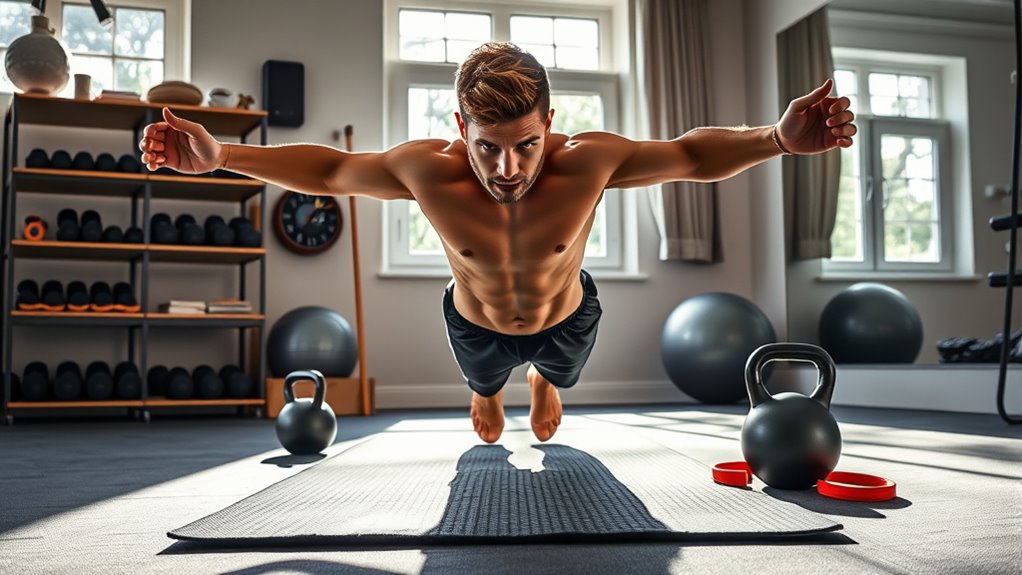
While crunches are a popular exercise for strengthening your core, skipping them can offer several advantages. Alternative core workouts often engage your muscles more effectively, promoting better core activation. These exercises target deeper muscles, reducing the risk of overusing superficial ones and minimizing injury chances. Crunches can strain your neck and lower back if performed improperly, especially with poor form or excessive repetition. By choosing different movements, you protect your spine and improve functional strength for daily activities. Additionally, alternative exercises often involve multi-muscle engagement, enhancing overall stability and balance. Skipping crunches doesn’t mean sacrificing core strength; it means opting for safer, more effective routines that support injury prevention while still building a strong, resilient core. Incorporating mental wellbeing strategies into your fitness routine can further boost motivation and consistency, helping you achieve lasting results.

Home Gym SCM-1148L 148LB Multifunctional Full Body Home Gym Equipment for Home Workout Equipment Exercise Equipment Fitness Equipment SincMill
【Professional】More than 20 years of professional fitness equipment production experience, carefully designed by professionals. This is a satisfying...
As an affiliate, we earn on qualifying purchases.
Planks and Variations for Core Stability
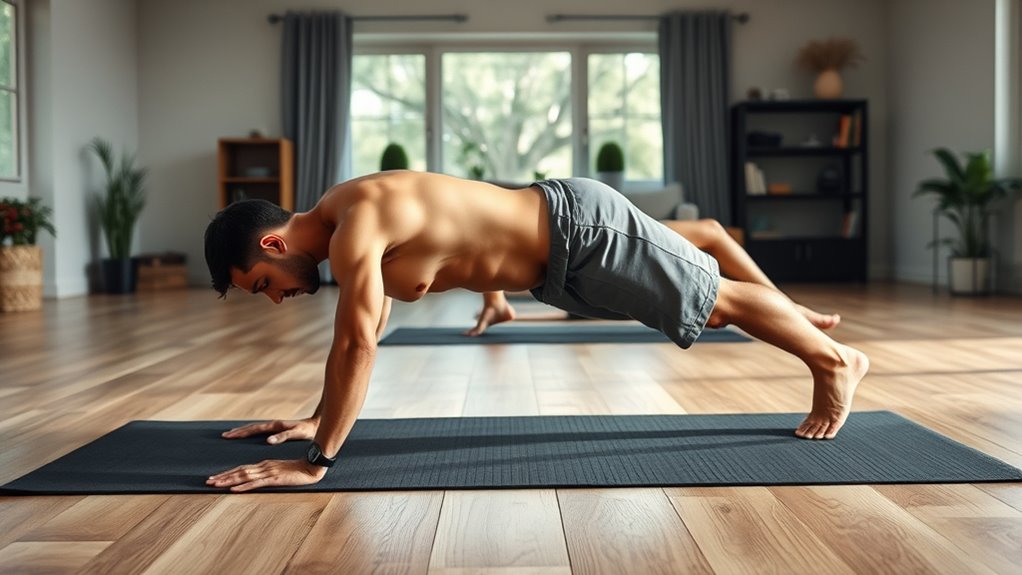
Planks are excellent for building core stability because they engage multiple muscles at once, helping you develop strength and endurance. You can keep things interesting by trying variations like side planks, forearm planks, or adding movement elements. Experimenting with these options keeps your workout challenging and effective. Incorporating proper workspace setup can also enhance focus and motivation during your training sessions.
Plank Position Benefits
Performing the plank position effectively strengthens your core muscles, providing a solid foundation for overall stability and balance. This exercise promotes core activation, engaging multiple muscles simultaneously, including your abdominals, back, and shoulders. As you hold the plank, you build muscle endurance, which helps improve posture and reduces injury risk during daily activities. Unlike crunches, planks focus on maintaining proper alignment and stability without straining your neck or spine. Over time, regular plank practice enhances your ability to stabilize your entire body, making other movements more efficient. The benefits extend beyond aesthetics, supporting functional strength needed for sports, lifting, or even everyday tasks. Incorporating planks into your routine offers an *extensive* way to strengthen your core without unnecessary strain. Understanding muscle activation helps explain how planks engage multiple muscle groups effectively, leading to improved core stability and overall strength.
Creative Variations to Try
To keep your core workouts engaging and challenging, try incorporating creative variations of the basic plank. These modifications enhance core activation and help prevent injuries by targeting different muscle groups. Side planks, for example, strengthen obliques and improve lateral stability, which is essential for injury prevention. Reach-through planks add rotational movement, engaging deep core muscles and enhancing overall stability. Elevated planks or planks with leg lifts increase difficulty, promoting better core engagement. Incorporating these variations keeps your routine fresh and effective, reducing the risk of overuse injuries from repetitive movements. Be mindful of proper form to maximize core activation and protect your spine. Headphone compatibility and the right setup can also make your workout sessions more enjoyable, especially if you prefer listening to motivating music or guided routines. Consistently challenging your core with creative plank variations boosts strength and stability, supporting your overall fitness and daily movement.

EVO Gym - Portable Home Gym Strength Training Equipment, at Home Gym | All in One Gym - 10 Resistance Bands, Base Holds Gym Bar & Handles for Travel | Portable Gym & Home Exercise Equipment | 320LBS
AS SEEN ON KICKSTARTER - PATENT PENDING - We were dissatisfied with other home gyms. So, we developed...
As an affiliate, we earn on qualifying purchases.
Dynamic Movements to Engage Your Abs and Back

Dynamic movements that mimic everyday activities help activate your abs and back more effectively. By focusing on functional movement patterns and multi-joint engagement, you build strength that translates to real-life stability. Incorporating stability drills keeps your core engaged through continuous, controlled motion, enhancing overall core resilience. Utilizing proper equipment and techniques ensures safe and effective training as you develop core strength without unnecessary strain.
Functional Movement Patterns
Engaging your core through functional movement patterns involves more than static exercises; it requires dynamic motions that mimic everyday activities. These movements promote core activation by challenging your muscles in real-world scenarios, improving overall movement efficiency. When you perform activities like twisting, reaching, or balancing, your abs and back work together to stabilize your spine and joints. This not only strengthens your core but also enhances coordination and control. Functional patterns encourage your body to move naturally, reducing the risk of injury and increasing stability during daily tasks. By incorporating these dynamic movements, you train your core in a way that’s practical and effective, helping you develop strength and resilience that translate directly to real-life situations. Additionally, understanding functional movement patterns can help prevent workaholic tendencies from causing imbalances that lead to injury.
Multi-Joint Engagement
Incorporating multi-joint movements effectively activates your core muscles, as these exercises involve several muscle groups working together to stabilize and move your body. By engaging multiple joints simultaneously, you promote better core activation, which enhances overall stability and strength. These dynamic movements challenge your abs and back in functional ways, mimicking real-life activities. They also improve joint mobility, allowing for smoother, more efficient movement patterns. Exercises like deadlifts, kettlebell swings, and thrusters target multiple muscle groups, including your core, without isolating specific muscles. This integrated approach not only strengthens your core but also boosts your coordination and overall athleticism. Additionally, understanding the importance of contrast ratio can help you optimize your training environment for better visibility and motivation. As you progress, you’ll notice improved posture, balance, and resilience during daily activities.
Dynamic Stability Drills
Building on the benefits of multi-joint movements, adding stability-focused drills enhances your core engagement during dynamic actions. These drills improve core activation and help prevent injuries by strengthening the muscles responsible for stability. To incorporate effective dynamic stability exercises, consider:
- Plank with shoulder taps – challenges your balance and engages your back and abs.
- Single-leg Romanian deadlifts – promote hip stability and core control.
- Bird-dogs – strengthen your posterior chain and enhance coordination.
- Side planks with hip dips – target obliques and improve lateral stability.
Additionally, understanding core muscle engagement can optimize your exercise effectiveness and injury prevention.
Perform these exercises with controlled movements, focusing on maintaining proper form. Consistently practicing dynamic stability drills boosts your core strength, supports injury prevention, and prepares your body for real-world, functional movements.

GarveeLife Home Gym Machine System with 100 LBS Weight Stack, Multifunctional Weight Machine, Full Body Workout Station Exercise Equipment, All in One Home Gym with Pulley System for Strength Training
【Carbon Steel & Chrome Plating】 Our home gym machine is constructed from Q235 steel with a 2 in...
As an affiliate, we earn on qualifying purchases.
Using Resistance Bands for Core Strengthening

Resistance bands are versatile tools that can effectively target your core muscles without the need for traditional crunches. They promote core activation by providing resistance during movements, which engages your deep abdominal muscles and obliques. To strengthen your core, try exercises like band-resisted standing twists, where you hold the band with both hands and rotate your torso, engaging your obliques. Another effective move is the seated row with a resistance band, which not only strengthens your back but also activates your core for stability. Using resistance bands allows you to control resistance levels easily, making exercises adaptable for all fitness levels. Incorporating these into your routine helps build a strong, stable core without the strain or fatigue associated with traditional crunches. Understanding core muscle engagement enhances the effectiveness of your workouts and helps prevent injury.
Incorporating Stability Balls for Better Balance
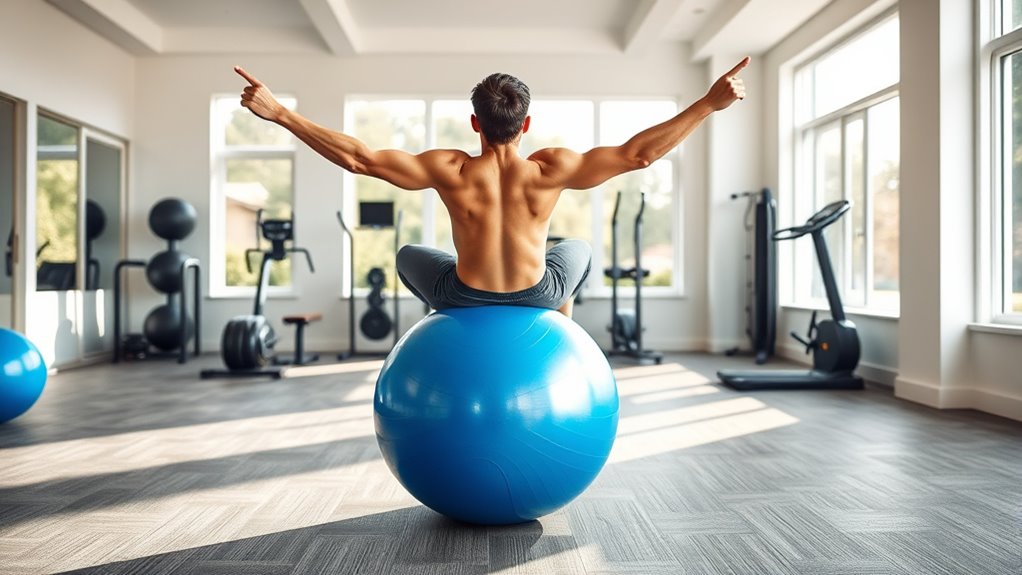
Using stability balls challenges your core muscles to work harder, enhancing engagement and strength. As you practice, your posture stability improves, helping you stand taller and more balanced. Over time, you’ll notice greater confidence in your balance abilities, making everyday movements easier and safer. Incorporating core strength exercises can further optimize your workout results.
Enhancing Core Engagement
Incorporating stability balls into your core workouts can substantially improve balance and engagement. To maximize core activation, focus on proper breathing techniques—inhale deeply, then exhale as you tighten your core. Using a stability ball challenges your stability, forcing your muscles to work harder. Here are four ways to enhance engagement:
- Maintain steady breathing to keep muscles activated and prevent fatigue.
- Engage your core before starting each movement for better stability.
- Use slow, controlled movements to increase muscle tension and awareness.
- Focus on balance by holding each position longer, feeling every muscle work.
- Incorporate tuning upgrades to optimize performance and ensure your equipment supports your workout effectively.
Improving Posture Stability
To improve your posture stability, stability balls are a highly effective tool because they challenge your balance and activate core muscles in real-time. When you sit or perform exercises on a stability ball, your core works harder to maintain proper posture, helping reduce core fatigue over time. This continuous engagement encourages better posture alignment, preventing slouching and uneven shoulders. By incorporating stability ball exercises into your routine, you train your muscles to stabilize your spine effectively, making you less prone to postural issues. As you build strength and coordination, you’ll notice improved posture and reduced discomfort. Regular use of the ball enhances your overall balance, making daily activities easier and supporting a healthier, more aligned posture. Additionally, stability balls can improve your core strength, which is essential for maintaining proper posture and preventing musculoskeletal problems.
Boosting Balance Confidence
Boosting your balance confidence becomes easier when you engage with stability balls, as they provide an unstable surface that challenges your muscles to work harder. Incorporate balance drills using a stability ball to enhance your proprioception and build confidence. Here are four effective ways to do this:
- Sit on the ball with feet flat, then lift one foot off the ground while maintaining stability.
- Perform gentle bouncing or rocking to engage core and leg muscles.
- Shift from sitting to standing without losing balance.
- Incorporate single-leg balance holds on the ball for added difficulty.
These exercises not only improve your balance but also foster confidence building, making everyday movements safer and more controlled. Consistent practice with stability balls accelerates your progress in core stability and overall balance. Additionally, integrating mind-body techniques like breathwork and body awareness can further support your confidence and stability during these exercises.
Bodyweight Exercises That Target Core Muscles

Bodyweight exercises that target core muscles offer an effective way to strengthen your midsection without crunches. These exercises focus on core activation, engaging deep stabilizers and superficial muscles simultaneously. Movements like planks, side planks, and mountain climbers promote muscle isolation, ensuring you work the targeted areas efficiently. Since you’re using your own body weight, these exercises improve functional strength and stability, reducing reliance on equipment. By maintaining proper form and engaging your core throughout each movement, you’ll enhance muscle activation and build endurance. This approach not only avoids the strain associated with crunches but also promotes balanced core development. Incorporating proper sitting methods and mindful movement during daily activities can further support core strength. Incorporate these exercises into your routine consistently for noticeable improvements in overall core strength and stability.
Pilates and Yoga Moves for a Stronger Core
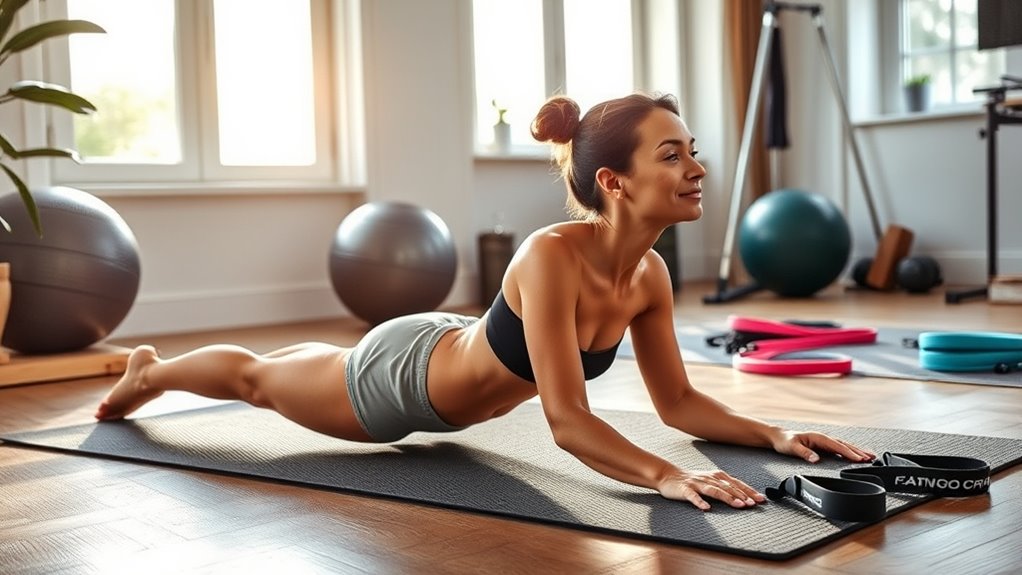
Pilates and yoga offer effective ways to strengthen your core by emphasizing controlled movements and mindful breathing. These practices promote core activation and muscle engagement without relying on traditional crunches. To maximize results, try these moves:
Discover core strength through mindful, controlled movements in Pilates and yoga, without traditional crunches.
- Boat Pose (Navasana): Engage your core, keep your spine straight, and lift your legs to challenge muscle engagement.
- Plank Variations: Maintain a strong, aligned core, activating deep abdominal muscles with forearm or side planks.
- Pilates Hundred: Focus on controlled breathing and core activation as you pump your arms while keeping your shoulders stable.
- Bridge Pose: Squeeze your glutes and core, lifting your hips to enhance muscle engagement throughout your posterior chain.
Incorporate these moves to build core strength through mindful, controlled engagement.
Leveraging Household Items for Core Training
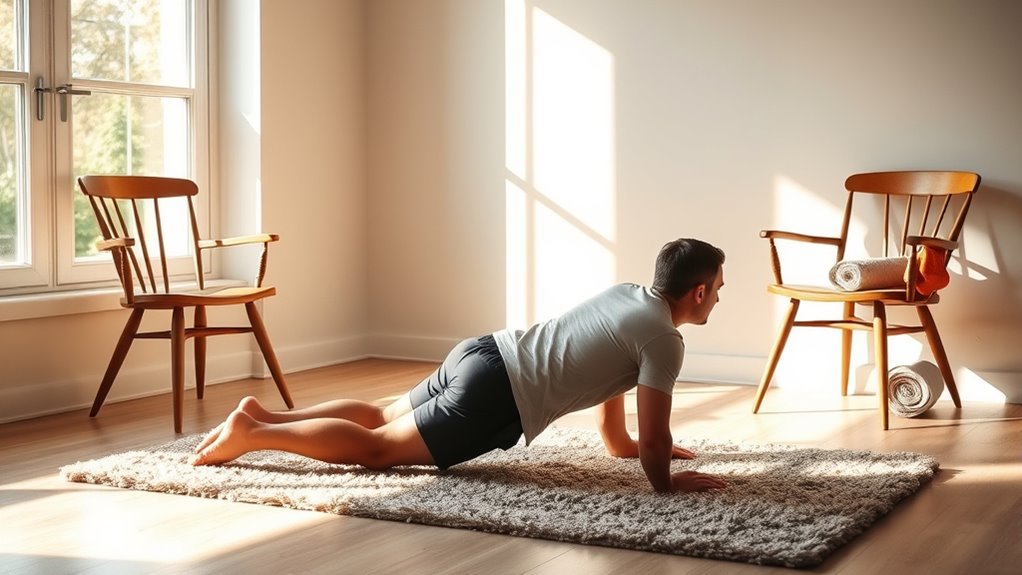
You can effectively strengthen your core by using common household items as workout tools, making exercise both convenient and budget-friendly. Household hacks, like using a sturdy chair for incline planks or a water bottle as a weight for added resistance, turn everyday objects into effective equipment. These hacks challenge your core muscles without expensive gear. It’s important to bust core myths, such as the idea that crunches are the only way to target your abs. Instead, you can engage your core with simple household items in creative ways, improving stability and strength. Additionally, incorporating muscle engagement techniques can maximize your workout effectiveness. Using what you already have at home makes consistent, effective core training more accessible, helping you build a stronger core without relying on traditional gym equipment or risking injury from outdated exercises.
Creating an Effective No-Crunch Core Routine at Home
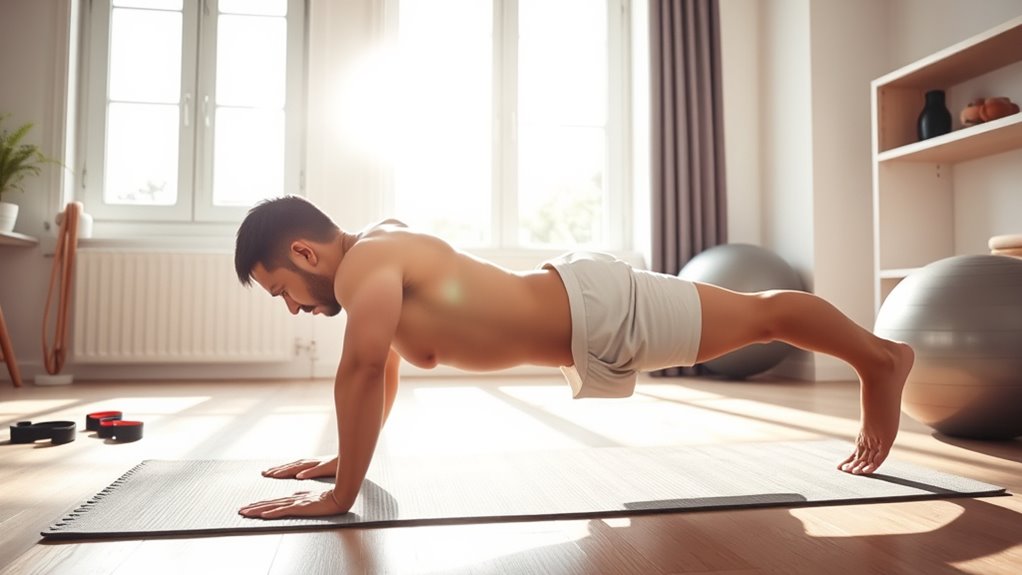
Creating an effective no-crunch core routine at home involves selecting exercises that target your abdominal muscles without putting strain on your neck or back. To achieve core fatigue and maximize abdominal isolation, focus on controlled movements that engage deep core muscles.
Consider these exercises:
- Plank variations (forearm, side, or extended) to build endurance.
- Dead bugs for coordinated limb movement and core activation.
- Bird dogs to enhance stability and abdominal engagement.
- Leg raises or flutter kicks to target lower abs without crunching.
These exercises promote core fatigue through sustained tension, helping you build strength without risking injury. Consistency and proper form ensure you isolate your abs effectively, creating a strong foundation for overall fitness without crunches. Additionally, incorporating core-focused exercises from reputable sources can enhance your routine and optimize results.
Tips for Maintaining Progress and Staying Motivated

Maintaining progress and staying motivated can be challenging, but setting clear, achievable goals keeps you focused and gives you a sense of direction. Use motivational strategies like celebrating small wins and visualizing your progress to stay energized. Regular progress tracking helps you see how far you’ve come, which boosts confidence and keeps you motivated to push forward. Keep a workout journal or use apps to log your exercises and improvements. Mix up your routines to prevent boredom and challenge your muscles differently. Remember, consistency is key, so remind yourself of your initial reasons for starting. Staying committed doesn’t mean perfection, but steady effort, and tracking your progress helps you recognize your achievements along the way. Be mindful of common goal tracking pitfalls and actively work to avoid them to ensure continued growth and success.
Frequently Asked Questions
Can I Achieve Visible Abs Without Doing Crunches?
Yes, you can achieve visible abs without crunches by focusing on effective abs development and core activation through alternative exercises. Incorporate planks, leg raises, and Russian twists to target your core muscles. Consistent full-body workouts, combined with proper nutrition, help reduce body fat, making abs more visible. Remember, core strength improves overall fitness, so you don’t need crunches to develop a toned, defined core.
How Often Should I Perform No-Crunch Core Workouts?
You should perform no-crunch core workouts three to four times a week, balancing exercise frequency with your recovery. Consistent workouts build strength, improve stability, and help reveal your abs. Avoid overtraining by allowing rest days, and stay committed to your routine. Remember, workout consistency is key—sticking to a regular schedule maximizes results and keeps your core engaged and healthy over time.
Are There Specific Foods to Enhance Core Strength?
You can boost your core strength by eating superfood snacks like nuts, berries, and Greek yogurt, which provide essential nutrients for muscle recovery. Hydrating drinks, such as water infused with lemon or coconut water, help keep you hydrated during workouts, improving overall performance. Incorporate these foods into your diet regularly to support muscle function and recovery, making your core training more effective without relying on crunches.
What Are Common Mistakes to Avoid in No-Crunch Core Training?
Nearly 80% of people experience poor posture due to improper core training. To avoid common mistakes, focus on maintaining proper form and engaging your core correctly during exercises. Don’t rush through movements or use momentum, as this reduces effectiveness and increases injury risk. Pay attention to alignment, breathe steadily, and avoid overtraining. These steps help you build a strong, stable core without risking injury from poor posture or improper form.
How Long Does It Take to See Results From These Exercises?
You’ll start noticing results from no-crunch core exercises in about 4 to 6 weeks, but it depends on your workout consistency and progress tracking. Stay committed, perform exercises regularly, and challenge yourself gradually. Tracking your progress helps you stay motivated and see improvements over time. Remember, patience and persistence are key; consistent effort will lead to noticeable core strength and stability soon enough.
Conclusion
Ditching crunches doesn’t mean sacrificing a strong core. By exploring alternative exercises, you challenge your muscles differently, often leading to better stability and reduced injury risk. Remember, the core’s true power lies in functional movement, not just six-pack abs. Embrace variety and consistency—your body adapts faster than you think. Ultimately, it’s about trusting the process and believing that effective, sustainable training can come from unexpected, creative moves.