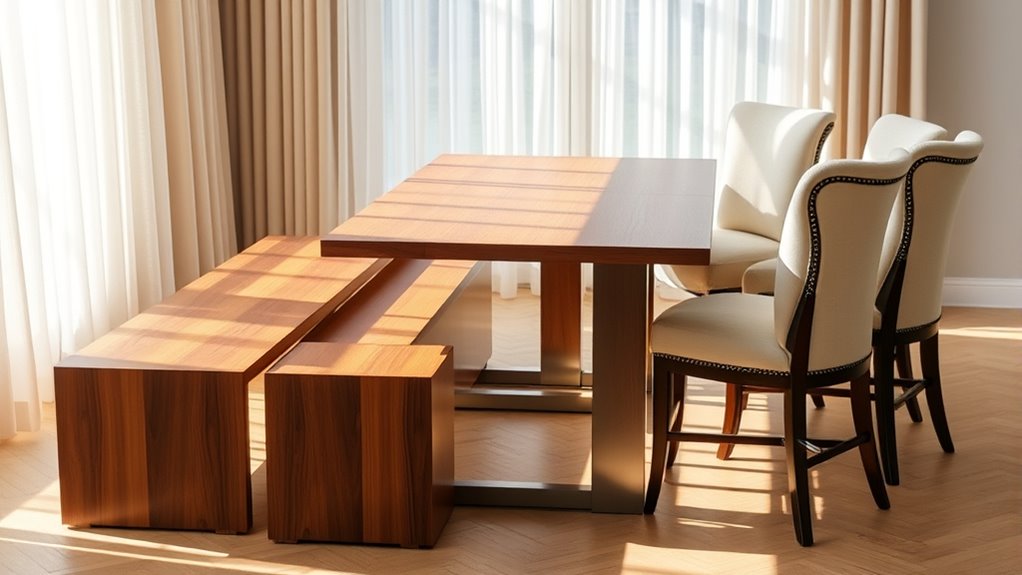

Choosing between a dining bench and chairs depends on your space, style, and how you plan to use your dining area. Benches save space and create a casual, communal feel, ideal for relaxed gatherings or tight spots. Chairs offer more comfort, flexibility, and a polished look for formal dinners. Consider your decor style, maintenance, and occasion needs. For detailed tips on making the best choice, keep exploring this guide.
Key Takeaways
- Benches maximize space efficiency and create a casual, communal dining atmosphere, ideal for informal gatherings or limited spaces.
- Chairs offer adjustable comfort and versatility, making them suitable for formal occasions and varied seating arrangements.
- Match furniture style, finish, and color with existing decor for a cohesive look, whether opting for benches or chairs.
- Benches often include storage options and support longer seating, while chairs provide easier mobility and flexible placement.
- Consider comfort needs—chairs generally offer better ergonomic support, whereas benches promote a relaxed, communal seating style.
Design and Aesthetic Appeal

When it comes to design and aesthetic appeal, dining benches often bring a more modern and streamlined look to your space, while chairs tend to offer a variety of styles to match different decor themes. With benches, material options like wood, metal, or upholstered fabrics create clean, minimalist lines that complement contemporary interiors. They also allow for seamless color coordination, blending smoothly with your existing color palette. Chairs, on the other hand, provide a broader range of styles, from ornate to sleek, and materials such as leather, fabric, or molded plastic help you tailor the look to your decor. This variety lets you add personality and visual interest, making your dining area more dynamic. Additionally, choosing between benches and chairs can influence the overall spatial layout, affecting how open or cozy your dining space feels. Ultimately, your choice depends on whether you prefer a cohesive, modern vibe or a more eclectic, decorative style.
Space Efficiency and Layout Flexibility

Dining benches often maximize space efficiency because they can seat multiple people along a single length, reducing the need for extra clearance behind chairs. This layout offers more flexibility in tight spaces, allowing you to fit a larger table or create a more open feel. Benches can also incorporate storage options underneath, helping you keep the dining area tidy. However, safety concerns arise if the bench is not sturdy or if children climb on it. Chairs, while less space-efficient, allow for easier rearrangement and access, especially in smaller rooms. Consider the following table for layout flexibility:
| Feature | Dining Bench | Chairs |
|---|---|---|
| Space efficiency | High | Moderate |
| Storage options | Often integrated | Rare |
| Flexibility in layout | Limited by length | Highly adaptable |
| Safety concerns | Stability needed | Less stability risk |
| Seating capacity | Usually more per unit | Fewer per piece |
Adding to this, the design versatility of chairs makes them a practical choice for multi-purpose spaces.
Comfort and Seating Experience
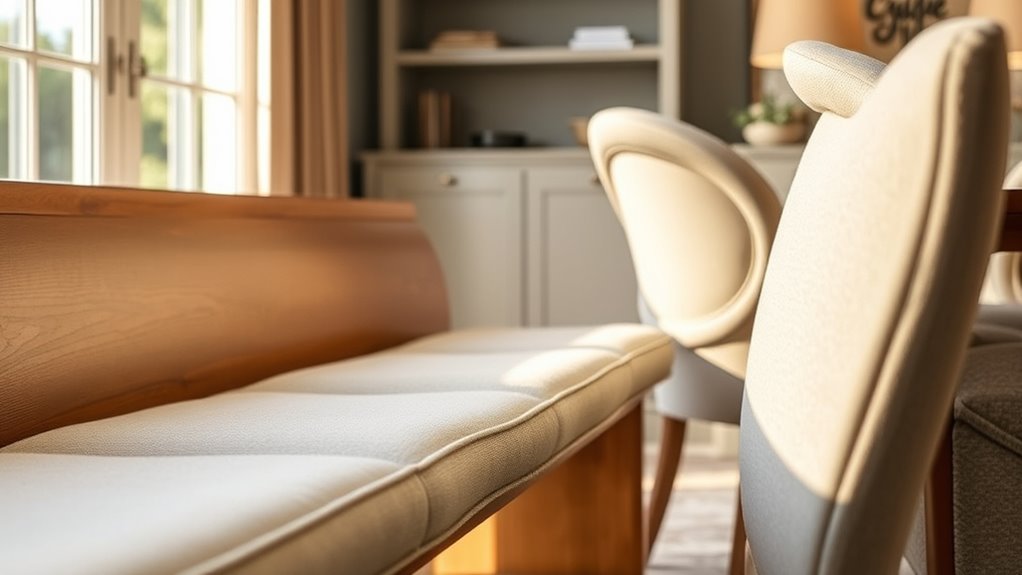
Choosing between a dining bench and chairs largely depends on how comfortable and supportive you want your seating to be. A bench offers a more communal, relaxed feel, but may lack individual ergonomic support. Chairs typically provide better back support and allow you to adjust your sitting position, enhancing overall comfort. Understanding local legal resources can help you make informed decisions about your space and comfort options. Imagine sinking into a cushioned chair that cradles your back, or stretching out on a bench that encourages a more casual posture. The right choice depends on your preference for support and comfort.
- Cushioned chairs that contour to your body for ergonomic support
- A bench that offers a wide, flat surface for a more relaxed seating experience
- Adjustable chairs that help you customize your ergonomic support for optimal comfort
Maintenance and Durability
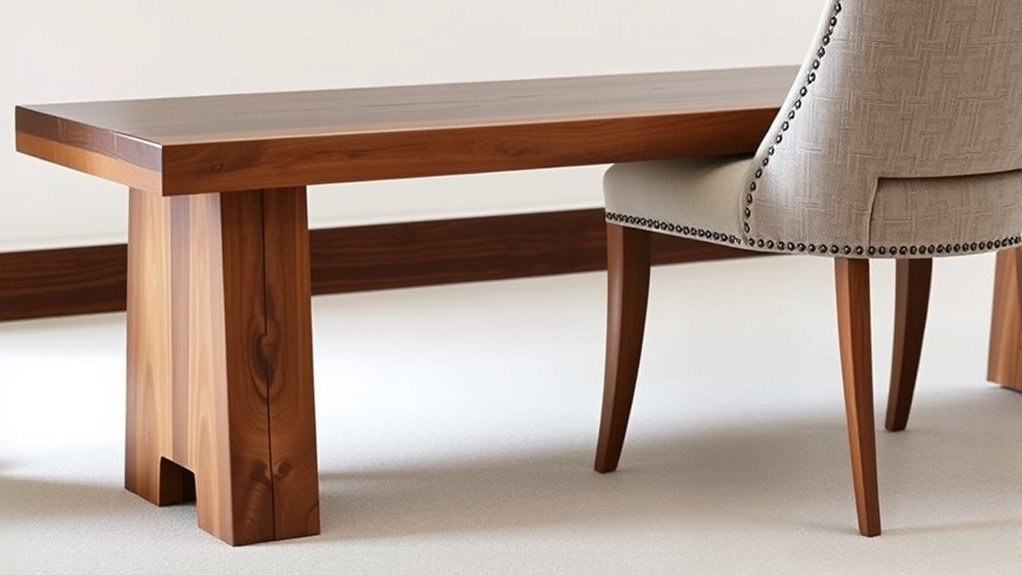
Both dining benches and chairs require regular maintenance to keep them looking their best and guarantee they last over time. To do this, follow simple cleaning tips suited to your furniture’s material options. For wooden pieces, wipe with a damp cloth and occasionally apply polish or sealant to protect against moisture. If your furniture is made of metal, regularly check for rust and clean with a gentle cleaner, then dry thoroughly. Upholstered options need vacuuming and spot cleaning to prevent stains and wear. Durability depends on selecting quality materials like solid wood, metal frames, or high-grade fabrics. Proper maintenance minimizes damage and prolongs lifespan, ensuring your dining furniture remains sturdy, attractive, and functional for years to come. Additionally, choosing performance-oriented materials can further enhance the longevity and resilience of your furniture.
Versatility and Multi-Purpose Use

While dining benches and chairs are primarily designed for meal settings, their versatility extends far beyond that. You can use them in various spaces and for multiple purposes. For example, a dining bench can double as a cozy reading nook or a casual workspace. Chairs can serve as extra seating for guests or be moved to create flexible arrangements. Their customization potential allows you to choose styles, colors, and finishes that suit different rooms. Additionally, some benches feature built-in storage options, making them perfect for decluttering or organizing essentials. Proper filtration systems in vacuums can help keep these multi-use areas free of dust and allergens. Whether you need a multi-use piece for your living area or a functional solution for tight spaces, both options adapt well to your evolving needs. This flexibility makes them valuable additions in many areas of your home.
Cost and Budget Considerations

When comparing costs, you need to consider both your initial budget and the long-term expenses. A dining bench might save you money upfront, but chairs could be more cost-efficient over time if they’re more durable. Evaluating these factors helps you make a smart choice that fits your financial plan. Additionally, understanding merchant service fees can influence your decision if you plan to incorporate payment options for your customers.
Budget Impact Analysis
Evaluating the cost and budget considerations of a dining bench versus chairs is essential before making a decision. Conducting a thorough cost comparison helps you understand which option offers better affordability factors. A dining bench often costs less upfront, especially when purchasing a set, and may require fewer replacements over time. Chairs, however, can vary widely in price depending on materials and design, impacting your budget differently. Consider these factors:
- Initial purchase price and available discounts
- Material durability and potential replacement costs
- Space efficiency, which could reduce additional furniture expenses
Being aware of these elements ensures you make a financially sound choice aligned with your budget constraints. By weighing each aspect carefully, you can select the option that provides the best value for your spending limits.
Long-term Cost Efficiency
Considering long-term cost efficiency is essential because initial savings might not reflect the true expense over time. A dining bench often offers better furniture portability, making it easier to move or replace, which can save you money if you frequently redecorate. Chairs, however, might involve higher assembly complexity, leading to increased maintenance or replacement costs if they become damaged or wear out quickly. Benches tend to be more durable and require fewer components, reducing ongoing expenses. Additionally, simpler assembly means you spend less on professional help or tools, lowering long-term costs. Moreover, choosing furniture with durability and ease of handling can significantly impact your overall expenses over the years. Weighing these factors helps you choose furniture that not only fits your budget now but also saves you money in the future through durability and ease of handling.
Style Compatibility With Your Decor

Your dining furniture should seamlessly blend with your decor, so consider how matching color schemes can create a unified look. Think about whether a bench or chairs complement your existing design style, whether modern, rustic, or traditional. Also, pay attention to material finishes to guarantee they harmonize with your overall space. Incorporating an understanding of design assessment can help you evaluate how well your chosen furniture fits your interior theme.
Matching Color Schemes
Matching color schemes is essential to creating a cohesive and inviting dining space. When you focus on color coordination, your furniture seamlessly blends with your decor, enhancing visual harmony. To achieve this, consider the following:
- Choose a color palette that complements your wall paint, curtains, and tableware.
- Use neutral tones for larger pieces, then add pops of color through accents or cushions.
- Mix and match shades within the same color family to maintain harmony without overwhelming the space.
- Remember that consistent messaging in your decor choices helps reinforce the overall style and vibe of your dining area.
Complementary Design Styles
Choosing furniture and decor styles that complement each other can substantially enhance your dining space’s overall look. When selecting between a dining bench or chairs, consider how their design aligns with your existing decor. Color coordination plays a crucial role; pairing neutral tones with bold accents creates visual harmony. Material diversity also matters—mixing wood, metal, or fabric can add texture and interest. For example, a rustic wooden bench pairs well with a farmhouse or traditional style, while sleek metal chairs suit modern decor. Keep consistency in your design theme, but don’t be afraid to introduce contrast for a dynamic effect. Balancing complementary styles ensures your dining area feels cohesive, inviting, and visually appealing. Your choices should reflect your personal taste while enhancing your space’s overall aesthetic.
Harmonizing Material Finishes
Harmonizing material finishes is essential for creating a cohesive and stylish dining space. When selecting a dining bench or chairs, focus on effective material pairing to match your existing decor. Think about how different textures work together to enhance your aesthetic, whether it’s smooth wood against soft fabric or sleek metal with rustic finishes. Achieving texture harmony guarantees your furniture doesn’t clash but complements the overall look. Consider these points:
- Match the finish of your table with your seating to create visual consistency
- Mix materials thoughtfully to add depth and interest
- Balance matte and glossy surfaces for a refined appearance
Ideal Occasions and Practicality
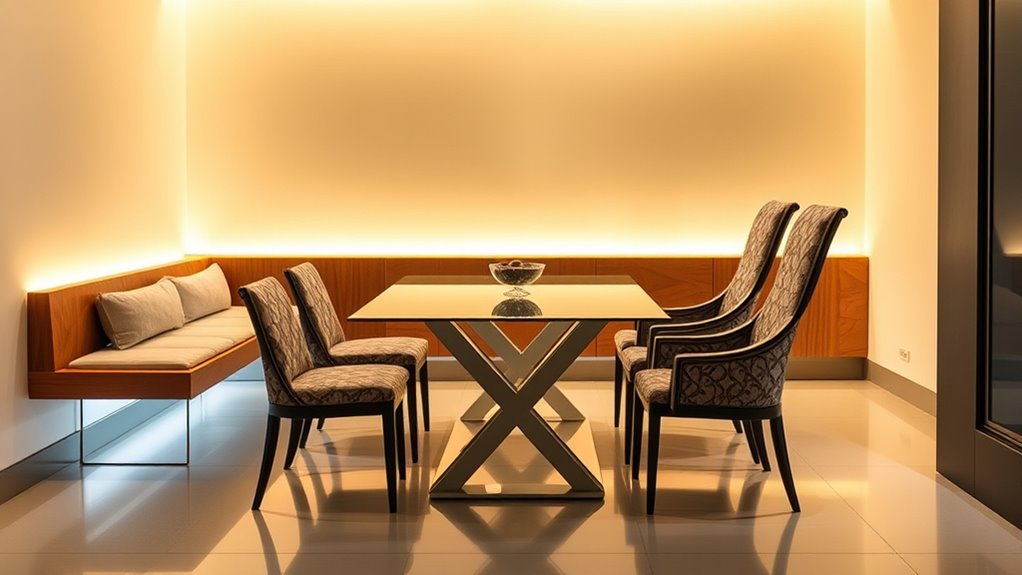
When considering the ideal occasions for using a dining bench versus chairs, practicality plays a key role in your decision. For casual dining, a bench offers flexibility, fitting more people in a compact space and making quick seating easier. It’s great for everyday meals or informal gatherings where convenience matters. On the other hand, chairs tend to be more suitable for formal gatherings, offering a polished look and individual comfort that enhances a refined setting. If you host special dinners or entertaining guests, chairs can create a more sophisticated atmosphere. Think about how often you’ll use the furniture and the type of occasions you host. Both options serve different needs; choose based on your practicality and the vibe you want to create.
Frequently Asked Questions
Which Option Is Better for Small Dining Areas?
A dining bench is better for small dining areas because it maximizes space efficiency and offers flexible seating options. You can fit more people along a bench without cluttering the room, and it keeps the area feeling open. Plus, many benches provide comfortable seating, especially when paired with cushions. This way, you get practical, cozy seating that makes the most of limited space without sacrificing comfort.
Are Benches Suitable for Outdoor Dining Spaces?
Benches are like sturdy ships sailing through outdoor spaces, making them suitable for outdoor dining. They’re built for bench durability, with weather-resistant materials that stand up to the elements. Plus, they help you coordinate style effortlessly, blending natural charm with your outdoor decor. Their versatility and robustness make them an excellent choice for patios or gardens, where they can withstand the outdoor environment while adding a sleek, cohesive look.
How Do Benches Impact Dining Room Traffic Flow?
Benches can improve your dining room traffic flow by offering space optimization, allowing more seating without cluttering the area. They encourage easy movement around the table and can be tucked neatly against walls or in corners. Plus, their aesthetic appeal adds a cozy, streamlined look to your space. This setup makes your dining area more functional, welcoming, and stylish, ensuring guests can move comfortably during meals and gatherings.
Can Benches Be Customized to Match Existing Furniture?
Yes, benches can be tailored to match your existing furniture. You can explore various bench styles and material options, like wood, metal, or upholstered designs, to complement your decor. Customization allows you to select finishes, colors, and dimensions that seamlessly blend with your current pieces. By working with a craftsman or retailer, you ensure your bench fits perfectly and enhances your dining space’s overall aesthetic.
What Are the Safety Considerations for Bench Seating?
You should prioritize child safety by choosing a bench with stable, sturdy construction and smooth edges to prevent injuries. Guarantee the material is durable and non-toxic, especially if kids will be around. Regularly check the bench for loose parts or wear, and avoid sharp corners. By focusing on these safety considerations, you can create a secure seating area that’s both functional and safe for everyone.
Conclusion
Choosing between a dining bench and chairs is like selecting the perfect dance partner — each offers unique rhythm and style. Think about your space, comfort needs, and how you want your table to look and feel. Whether you go for the flexible, communal vibe of a bench or the classic elegance of chairs, the right choice will make your dining area truly shine. Trust your instincts, and dance to the beat of your home’s personality.