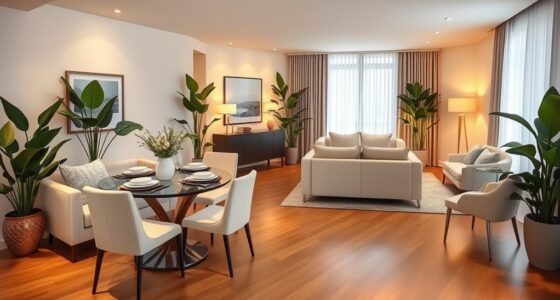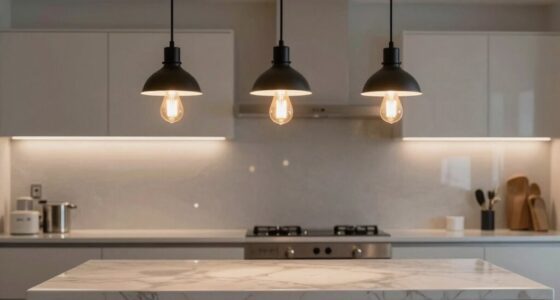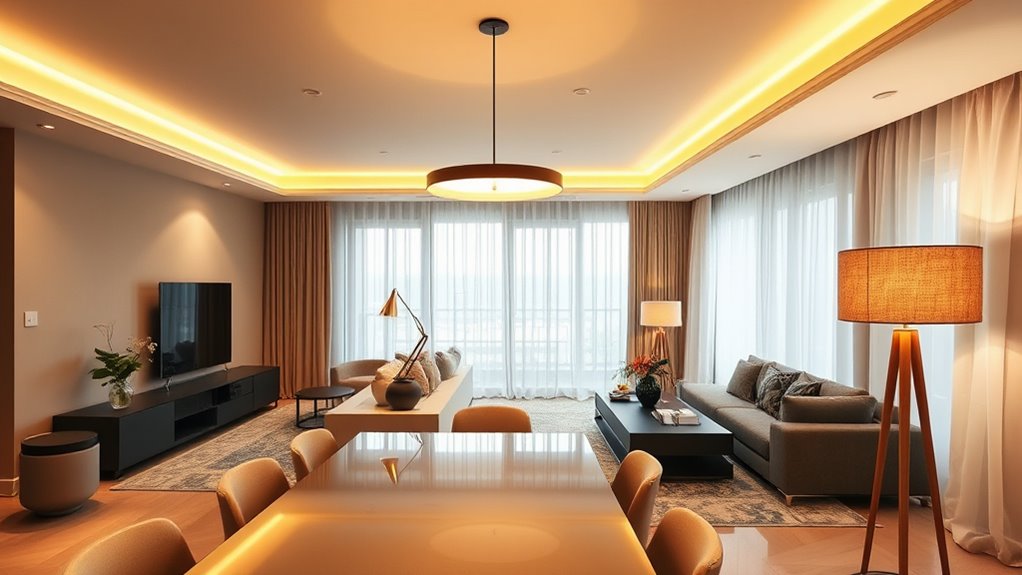

To layer lighting in your living and dining areas, combine ambient, task, and accent lights to create a balanced, inviting space. Use central ceiling fixtures for overall illumination, add task lights like table lamps or pendant lighting near seating and dining zones, and highlight features with sconces or spotlights. Incorporate dimmers for flexibility and choose fixtures that complement your decor. Keep strategic placement in mind to avoid shadows and dark spots—if you want to learn more, keep going.

Get furniture and decor delivered free with Prime
- Fast, free delivery on millions of items
- Prime Video, Amazon Music and more included
- Member-only deals all year
Key Takeaways
- Combine ambient, task, and accent lighting for a balanced and inviting atmosphere.
- Use multiple light sources at varying heights and zones to add depth and flexibility.
- Incorporate dimmable fixtures to adjust lighting levels for different moods and activities.
- Strategically place fixtures to ensure even illumination and highlight focal points.
- Select fixture styles and bulb temperatures that complement the room’s design and purpose.
dimmable LED ceiling light fixtures
As an affiliate, we earn on qualifying purchases.
As an affiliate, we earn on qualifying purchases.
Understanding the Three Layers of Lighting

To create a well-lit living or dining area, understanding the three layers of lighting is essential. Layered lighting involves combining different types of illumination to create a balanced lighting hierarchy. The three layers include ambient, task, and accent lighting. Ambient lighting provides overall illumination, setting the room’s mood. Task lighting focuses on specific areas where activities like reading or dining happen, ensuring enough brightness without shadows. Accent lighting highlights features or decor, adding depth and visual interest. When you master these layers, you build a lighting hierarchy that enhances functionality and aesthetic appeal. This layered approach prevents harshness and shadows, making your space inviting and versatile. Knowing how each layer works helps you create a cohesive, well-designed environment. Integrating layered lighting techniques can significantly improve both the functionality and ambiance of your space.
Choosing the Right Ambient Lighting

When selecting ambient lighting, you want to balance brightness and mood to create a comfortable atmosphere. Consider light color temperatures that match the room’s purpose, whether warm for relaxing or cooler for activity. Proper placement guarantees even illumination, so your space feels inviting and well-lit without harsh shadows.
Brightness and Mood Balance
Finding the perfect balance between brightness and mood in your living and dining areas involves selecting ambient lighting that complements the space’s purpose and atmosphere. Aim for a level of brightness that provides enough illumination for tasks without overwhelming the room’s ambiance. Consider fixtures that offer adjustable brightness to adapt to different activities and times of day. Incorporate lighting that enhances color harmony, making the space feel cohesive and inviting. Prioritize energy efficiency by choosing LED options that deliver ample light while minimizing power consumption. This balance ensures your living and dining areas are functional yet cozy, encouraging relaxation and social interaction. Proper ambient lighting sets the foundation for layered lighting, elevating your overall interior design. Additionally, understanding how limits can inspire innovative solutions helps in selecting versatile lighting options that maximize space and functionality.
Light Color Temperature Options
Choosing the right light color temperature is key to creating the desired ambiance in your living and dining areas. Your choice of color temperature influences mood, functionality, and style. For a warm, inviting glow, opt for 2700K to 3000K, which mimics traditional incandescent lighting. If you prefer a cooler, more energizing atmosphere, go for 3500K to 4100K. LED options now offer versatile color temperatures, making it easy to match your space’s vibe. Consider these three factors when selecting your LED options: 1. The room’s purpose and mood 2. Compatibility with existing fixtures 3. Energy efficiency and longevity and the overall design style.
Placement for Even Illumination
To achieve even illumination in your living and dining areas, it’s essential to carefully plan the placement of your ambient lighting. Proper lamp placement guarantees light diffusion across the space, eliminating shadows and dark spots. Position ceiling fixtures centrally for balanced coverage, and avoid clustering lamps in one corner. Use multiple light sources at different heights to create a harmonious glow. Remember, light diffusion depends on fixture type and placement; diffusers help spread light evenly. Additionally, consulting retail hours can ensure your lighting purchases are made during store hours for convenience.
Incorporating Task Lighting for Functionality

Have you considered how task lighting can enhance both the functionality and ambiance of your living and dining spaces? Proper task lighting guarantees you can perform activities comfortably and efficiently. To maximize effectiveness, focus on these key areas:
Enhance your living and dining rooms with strategic task lighting for comfort and style.
- Install adjustable reading lamps near sofas or chairs for flexible light placement.
- Use pendant lights or focused fixtures above dining tables for clear visibility during meals.
- Incorporate under-cabinet lighting in sideboards or bar areas to improve task performance.
- Selecting the right materials for fixtures, such as self-watering plant pots, can also contribute to a cohesive and functional design.
Using Accent Lighting to Highlight Features

Accent lighting adds drama and depth to your living and dining areas by drawing attention to architectural features, artwork, or decorative elements. It’s a powerful tool for feature highlighting, helping certain details stand out and creating visual focal points. Use adjustable spotlights or wall-mounted fixtures to direct light precisely where you want it. For artwork, install picture lights or track lighting that emphasizes colors and textures. Highlight architectural details like moldings, built-ins, or textured walls with small, focused fixtures. Proper placement prevents overwhelming the space while adding visual interest. Remember, accent lighting isn’t meant to brighten the entire room but to enhance specific features, making your living and dining areas more dynamic and inviting. Incorporating vibrational energy into your design choices can also create a more harmonious atmosphere that resonates with your desired ambiance.
Balancing Brightness and Mood

To create the right atmosphere, you need to adjust light intensity so your space feels comfortable and inviting. Choosing between warm and cool tones can influence the mood, making your rooms feel cozy or energetic. Layering ambient lighting helps balance brightness and sets the perfect tone for any occasion.
Adjusting Light Intensity
Adjusting light intensity is essential for creating the right atmosphere in your living and dining areas. Proper control allows you to set the mood and enhance your space’s functionality. With dimming controls, you can easily vary brightness levels to suit different activities. Consider these key tips:
- Use dimmers on main fixtures to adjust overall brightness.
- Layer lighting by combining ambient, task, and accent lights for versatility.
- Set different levels for each layer to create dynamic, balanced light throughout the room.
- Incorporating lighting control options can further optimize your lighting setup and provide more precise adjustments.
Choosing Warm vs. Cool
Choosing the right color temperature for your lighting can considerably influence the mood and ambiance of your living and dining areas. Warm light, with a lower color temperature, creates a cozy, inviting atmosphere ideal for relaxing or intimate gatherings. Cool light, with a higher color temperature, promotes alertness and makes spaces feel bright and modern, perfect for dining or socializing. Consider how the lighting mood aligns with your activities and personal preferences. If you want a calming environment, opt for warmer tones. For a more energetic or contemporary vibe, cooler lighting works best. Balancing these options helps you craft a versatile space that adapts to different occasions and enhances the overall ambiance. Additionally, understanding how contrast ratio impacts image perception can help you optimize your space for both visual comfort and aesthetic appeal.
Creating Ambient Layers
Creating ambient layers involves combining different lighting sources and intensities to achieve a balanced and inviting atmosphere. To do this effectively, consider these layering techniques: 1. Use multiple lighting zones—dedicate areas for task, accent, and ambient lighting—to create depth. 2. Adjust brightness levels within each zone to balance overall illumination without overwhelming the space. 3. Incorporate dimmable fixtures to easily control mood and adapt to different occasions. Additionally, selecting appropriate lighting fixtures can enhance the flexibility and effectiveness of your layered lighting design.
Selecting the Perfect Fixtures and Bulbs

Selecting the right fixtures and bulbs is essential to achieving a layered lighting scheme that enhances your living and dining spaces. Your choice of fixture styles can set the overall tone, from sleek pendants to traditional chandeliers or recessed lighting, each offering different ambiance and functionality. When choosing bulbs, consider bulb types—LEDs, incandescents, or CFLs—that suit your desired brightness and energy efficiency. Warm-toned bulbs create a cozy atmosphere, while cooler tones add vibrancy. Pay attention to fixture compatibility with dimmers to give you control over the light intensity. Combining different fixture styles and bulb types allows you to tailor your space’s lighting, balancing aesthetics with practicality. The right combination ensures your lighting complements your decor and meets your daily needs effectively.
Strategic Placement of Lights in Your Space

Once you’ve picked the right fixtures and bulbs, the next step is to think carefully about where to place your lights. Effective layering techniques depend on strategic placement to highlight key areas and create a balanced ambiance. Consider these steps:
After choosing fixtures and bulbs, strategic placement creates balanced, inviting lighting layers.
- Accent lighting: Use spotlights or wall sconces to emphasize artwork or architectural features.
- Task lighting: Position table or floor lamps near seating areas or dining tables for practical illumination.
- Ambient lighting: Install ceiling fixtures or recessed lights evenly across the space to provide a warm, overall glow.
- Security and safety: Incorporate proper lighting placement to prevent accidents and enhance security throughout your living and dining areas.
Choosing fixture styles that complement your room’s design enhances cohesion. Proper placement ensures each layer works together seamlessly, creating a well-lit, inviting environment that feels both functional and stylish.
Creating Flexibility With Dimmer Switches
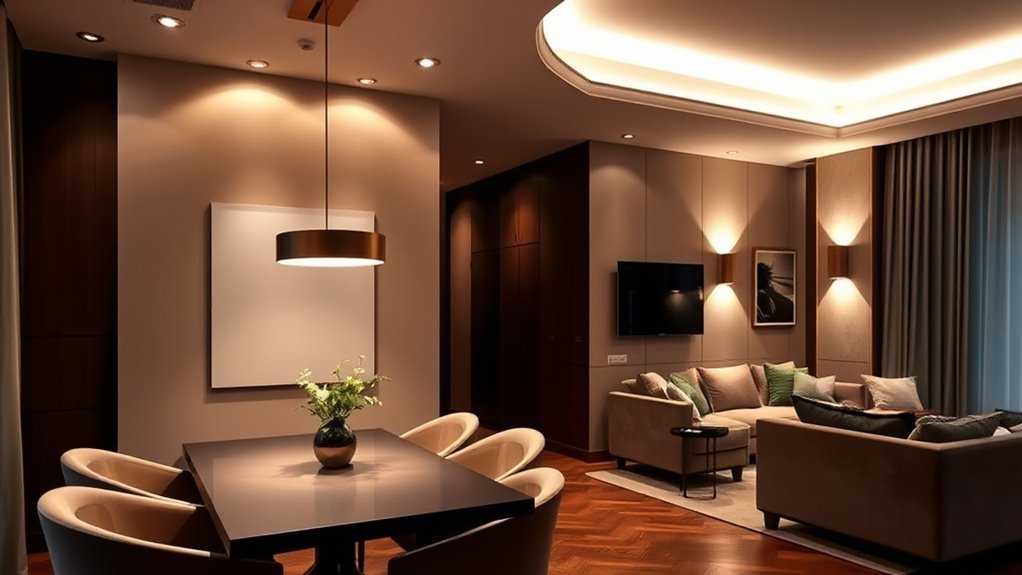
Adding dimmer switches to your lighting setup gives you immediate control over your room’s mood and brightness. With adjustable lighting, you can effortlessly shift from bright, energetic spaces to cozy, intimate environments. Dimmer switches allow you to customize your lighting for any occasion, enhancing comfort and ambiance. Imagine dimming the lights for a romantic dinner or brightening them for lively gatherings—all with a simple switch. This flexibility not only improves functionality but also elevates your overall decor. Here’s a quick look at how dimmer switches evoke emotion through lighting:
| Bright and Inviting | Calm and Serene |
|---|---|
| Vibrant, energetic | Soft, relaxing |
| High contrast | Gentle glow |
| Focused illumination | Subtle ambiance |
| Daily versatility | Mood enhancement |
Tips for a Cohesive and Inviting Lighting Design

Creating a cohesive and inviting lighting design starts with understanding how different light sources work together to enhance your space. To achieve this, focus on three key tips:
- Use decorative fixtures to add personality and style, ensuring they complement your overall decor.
- Integrate natural light effectively by maximizing window placement and choosing window treatments that allow daylight to flow in.
- Layer lighting with ambient, task, and accent lights to create depth and flexibility, making your living and dining areas feel warm and welcoming.
Balancing these elements helps prevent harsh shadows or overly bright spots. By thoughtfully combining decorative fixtures with natural light, you craft an inviting atmosphere that adapts to various moods and activities, making your space both functional and stylish.
Frequently Asked Questions
How Can I Ensure Even Lighting Distribution in Large Rooms?
To guarantee even lighting distribution in large rooms, focus on achieving an ambient balance by strategically placing fixtures throughout the space. Use a mix of ceiling-mounted lights, wall sconces, and floor lamps, positioning them to cover all areas evenly. Avoid dark corners by clustering fixtures thoughtfully, and consider dimmable options for flexibility. Proper fixture placement guarantees a well-lit, inviting environment that eliminates shadows and bright spots.
What Are the Best Energy-Efficient Lighting Options for Living/Dining Areas?
If you want to save the planet and your wallet, go for LED bulbs—they’re the superheroes of energy efficiency. Solar fixtures are also a clever choice, soaking up sunlight by day and lighting your nights guilt-free. You’ll enjoy bright, stylish living and dining spaces without draining your power bill or the Earth’s resources. Embrace these eco-friendly options, and your home will shine—literally and figuratively.
How Do I Incorporate Natural Light Into My Layered Lighting Design?
You can incorporate natural light into your layered lighting design by choosing window treatments that control glare and privacy, like sheer curtains or blinds. Use daylight harvesting techniques, such as installing sensors that adjust artificial lighting based on the amount of sunlight entering the room. This way, you maximize natural light during the day, reduce energy use, and create a warm, inviting ambiance that complements your layered lighting setup.
Can Smart Lighting Systems Enhance My Layered Lighting Setup?
Sure, smart lighting systems can totally elevate your layered lighting setup—if you enjoy the irony of controlling ambiance with just your voice or an app. You can easily customize brightness, color, and timing, creating perfect moods for every occasion. Voice control makes adjustments effortless, while app customization lets you fine-tune your lighting scenes. It’s the modern way to enhance your space, even if it feels a little too convenient.
What Are Common Mistakes to Avoid When Layering Lighting?
You should avoid common mistakes like creating overhead shadows by placing fixtures too high or unevenly. Also, steer clear of inconsistent brightness by mixing different light intensities without balance, which can make the space feel disjointed. Guarantee your layered lighting is well-distributed and coordinated, so each layer complements the others. Proper planning prevents shadows and maintains a warm, inviting atmosphere, making your living or dining area more functional and aesthetically pleasing.
Conclusion
Think of your living and dining areas as a symphony, where each lighting layer plays its part perfectly. When you layer ambient, task, and accent lighting thoughtfully, your space becomes a harmonious haven—bright enough for activity, cozy enough for relaxation. Just like tuning an instrument, balancing these elements transforms your room into a masterpiece. With a little planning, you’ll create a lighting design that feels both functional and inviting, inviting everyone to feel right at home.
Halloween Picks
halloween
As an affiliate, we earn on qualifying purchases.