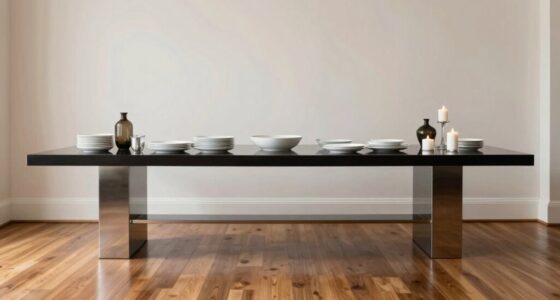
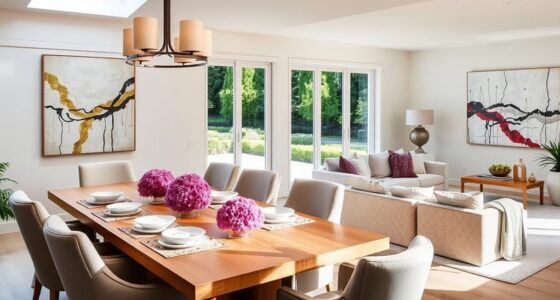
When selecting the size of a sideboard or buffet, measure your space carefully, including length, width, and height, to guarantee a good fit with your room and existing furniture. Choose a width that balances function and style without crowding or overwhelming the area, and pick a height that’s comfortable for use. Consider depth for storage and ease of access, and leave enough clearance for easy movement. Keep proportional sizes in mind—if you want to learn more, stay tuned.
Key Takeaways
- Measure your room’s dimensions and available space to determine appropriate sideboard or buffet width and depth.
- Maintain at least 36 inches of clearance in front and 24 inches on sides for comfortable access and traffic flow.
- Choose a height that aligns with existing furniture and room purpose, typically 34-36 inches for comfort.
- Match the piece’s size and proportions to room scale for visual balance and aesthetic cohesion.
- Assess storage needs to select internal compartments and overall size that accommodate your items efficiently.

VASAGLE LIRY Collection – Buffet Cabinet, Coffee Bar Cabinet with a Drawer, Adjustable Shelf, Sideboard Storage with Cable Hole, Drawer Divider, Antique Charcoal UBBK341B02
Modern Farmhouse Style: The buffet cabinet from LIRY Collection combines an antique charcoal color, recessed panels, and tapered…
As an affiliate, we earn on qualifying purchases.
As an affiliate, we earn on qualifying purchases.
Assessing Your Space and Room Dimensions

Before choosing a sideboard or buffet, you need to measure your space carefully. Start by inspecting the room’s dimensions—length, width, and ceiling height—to ensure the furniture fits comfortably. Consider the wall color; lighter shades can make smaller spaces feel more open, while darker hues add warmth. When evaluating material options, think about durability and style—wood offers classic appeal, while metal or glass can provide a modern touch. Keep in mind the existing decor and how the sideboard’s size will impact traffic flow. A well-measured space prevents overcrowding and helps you select a piece that enhances your room without overwhelming it. Accurate measurements and thoughtful consideration of wall color and material options ensure your chosen sideboard complements your space perfectly. Additionally, understanding portable furniture options can help when selecting versatile pieces that are easier to move and adapt to different room layouts.

IFGET Modern Buffet Cabinet with Storage, 92.63" W Fluted Arched Sideboard Cabinet w/Adjustable Shelves, Wooden Modular Coffee Bar for Dining Room, Kitchen, Living Room, Entryway, Natural
【Modular Buffet Cabinet with Storage】This wooden storage cabinet (15.75"D x 92.63"W x 34"H) consists of three credenza storage…
As an affiliate, we earn on qualifying purchases.
As an affiliate, we earn on qualifying purchases.
Determining the Ideal Height for Your Sideboard or Buffet
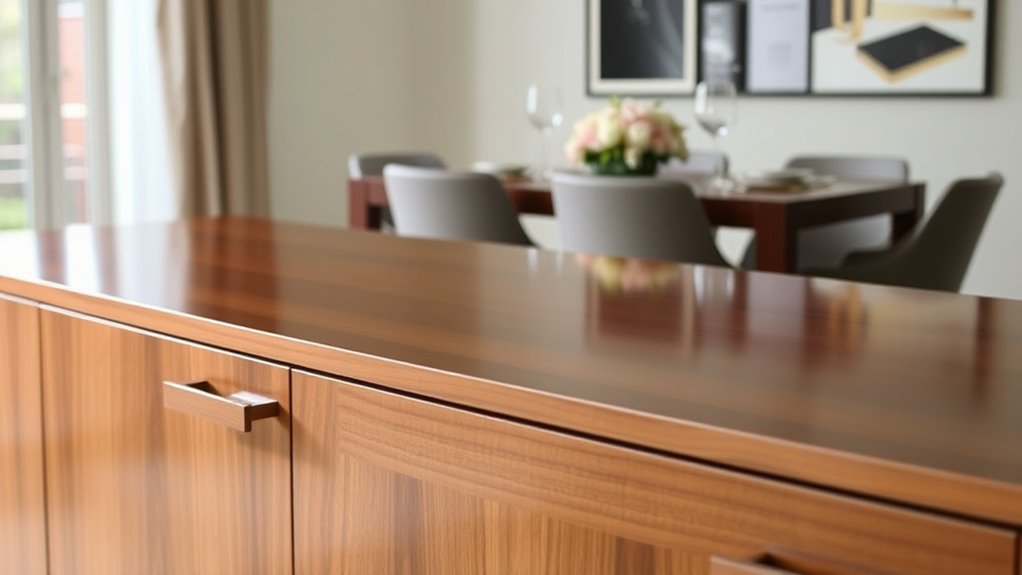
Choosing the right height for your sideboard or buffet depends on standard guidelines and how you’ll use the piece. You should also consider how it fits with your existing furniture and the room’s overall functionality. By keeping these points in mind, you’ll find a balanced height that works perfectly in your space. Additionally, aiming for a height that complements rustic decor can help maintain a cohesive farmhouse aesthetic.
Standard Height Guidelines
The ideal height for a sideboard or buffet typically falls between 34 and 36 inches, ensuring comfortable access and a balanced aesthetic. Following height standards and ergonomic considerations helps you choose pieces that fit well within your space. To determine the best height, consider your primary use and the height of surrounding furniture. Here’s a quick guide:
| Purpose | Recommended Height | Notes |
|---|---|---|
| Serving surface | 34-36 inches | Matches standard table height |
| Display items | 36-38 inches | Slightly taller for visibility |
| Storage access | 30-34 inches | Easier to reach drawers |
| Complementary furniture | 34-36 inches | Maintains visual harmony |
| Ergonomic comfort | 34-36 inches | Reduces strain during use |
Aligning your sideboard’s height with these standards ensures functional and aesthetic harmony. Additionally, considering safety of electric heated mattress pads can inspire safety-conscious choices in your furniture arrangement.
Consider Room Functionality
Understanding how your sideboard or buffet will be used in the room helps determine the ideal height. If you plan to display decorative accents like vases or artwork, a taller piece that reaches eye level enhances visibility and aesthetic appeal. Conversely, if you need storage for dishes or linens, a lower height might be more practical. Consider your material choices too; lighter woods or glass elements can influence the visual weight and proportion of the piece. Think about the room’s overall function—whether it’s for serving, storage, or display—and choose a height that balances accessibility with style. By aligning the piece’s height with your room’s purpose, you ensure it complements both your functional needs and decorative goals. Additionally, material selection can impact the durability and maintenance of your sideboard or buffet over time.
Match Existing Furniture
Matching your sideboard or buffet to existing furniture guarantees a cohesive look and proper scale within the room. To achieve this, consider your decor style—whether it’s modern, traditional, or eclectic—and select furniture that complements it. Material compatibility matters too; if your other pieces are crafted from wood, opt for a sideboard in a similar finish or grain to maintain harmony. For metal or glass accents, choose a piece that incorporates those materials subtly, ensuring visual consistency. Matching height is also key: align the sideboard’s top with other furniture, like a nearby table or console, to create a balanced appearance. When your furniture pieces work together in style and material, your space feels thoughtfully curated and harmonious. Additionally, considering size proportions ensures that the sideboard enhances your room without overwhelming or appearing too small.
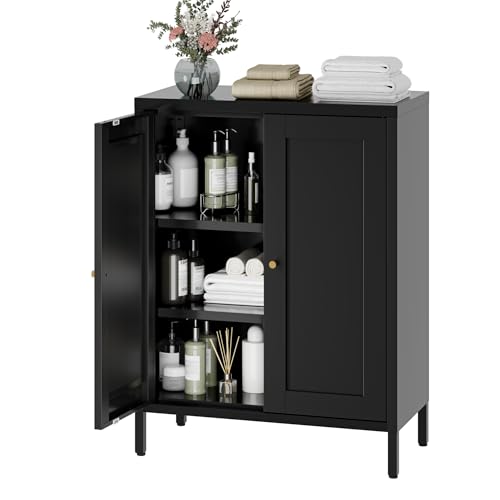
YAUWOH Small Metal Cabinet,Bathroom Storage Cabinet with 2 Adjustable Shelves and 2 Doors,Freestanding Sideboard for Small Spaces, Living Room, Home Office, Dining Room(1PC,Black)
[ROBUST & STABLE] Metal Storage Cabinet is manufactured by a duty steel frame, allows each shelf able to…
As an affiliate, we earn on qualifying purchases.
As an affiliate, we earn on qualifying purchases.
Choosing the Right Width for Functionality and Style
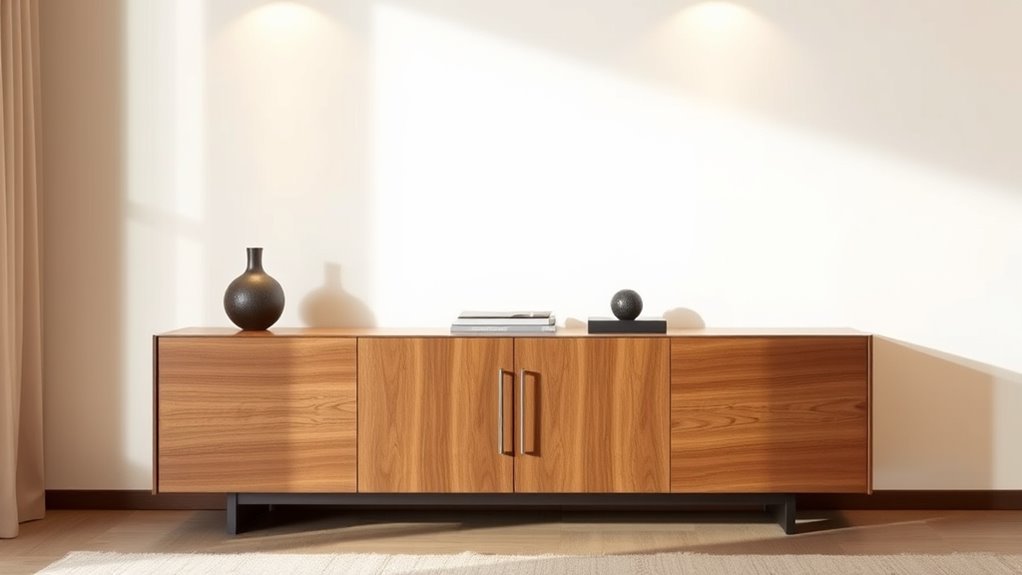
When selecting the width of your sideboard or buffet, consider your room size to make sure it fits comfortably without overwhelming the space. You’ll also want to think about visual balance, making sure the piece complements other furniture and maintains proportion. Finding the right width enhances both functionality and style, creating a cohesive look you’ll enjoy. Additionally, think about self watering plant pots if you plan to incorporate indoor greenery, as their size and placement can influence overall furniture arrangement.
Room Size Compatibility
Choosing the right width for a sideboard or buffet is essential to guarantee it fits comfortably within your space and enhances your room’s style. Measure your room carefully to determine what size complements your decor style without overwhelming the area. If your space is small, opt for narrower pieces that won’t clutter the room, emphasizing material durability to ensure longevity. In larger rooms, wider buffets can serve as focal points or storage solutions without feeling out of scale. Consider the flow of traffic and functional zones to avoid obstructing pathways. Matching the piece’s width with your room size ensures a balanced look and practical use, helping your furniture integrate seamlessly with your overall decor style while maintaining durability for years to come. Additionally, space optimization techniques can help you select furniture that maximizes functionality without sacrificing style or comfort.
Visual Balance and Proportion
Selecting the right width for your sideboard or buffet is essential to achieving visual balance and harmony in your space. When choosing, consider how it aligns with your room’s size and existing furniture. To evoke emotion and create a cohesive look:
- Aim for a width that complements your room’s proportions, avoiding overwhelming or underwhelming visuals.
- Focus on color coordination to ensure the piece blends seamlessly with your decor, enhancing overall style.
- Prioritize material harmony to create a unified feel, whether you choose wood, metal, or painted finishes.
A well-sized sideboard enhances functionality without disrupting flow. When proportions are right, it anchors your space beautifully, making your room feel inviting, balanced, and thoughtfully curated.

ONBRILL 44" Sideboard Buffet Cabinet with Outlet & 2 Open Storage Spaces, Fluted Sideboard Cabinet with Sliding Door & Adjustable Shelves, Mid-Century Accent Coffee Bar Console Table with Wooden Feet
SIDEBOARD CABINET WITH BUILT-IN OUTLET: This sideboard cabinet boasts mid-century modern aesthetics, making it a showstopping accent piece…
As an affiliate, we earn on qualifying purchases.
As an affiliate, we earn on qualifying purchases.
Considering Depth for Ease of Access and Storage
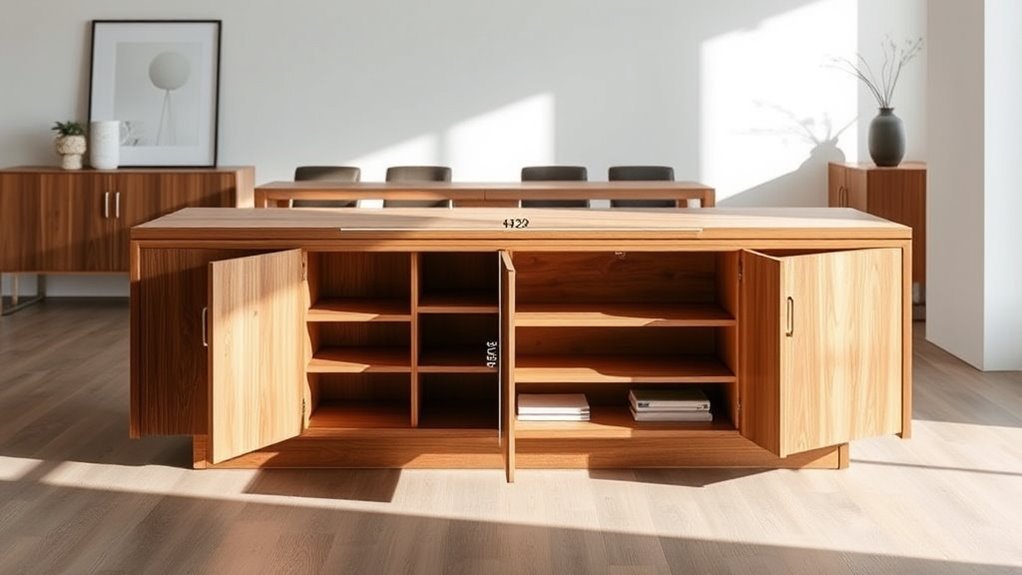
Considering the depth of your sideboard or buffet is essential for ensuring easy access and efficient storage. You want a depth that allows you to reach items comfortably without feeling cramped. Typically, a depth of around 16-20 inches balances storage capacity and accessibility. When evaluating options, keep height considerations in mind to match your space and ergonomic needs. Heavier materials, like solid wood or metal, offer durability but can influence weight and handling. Thinner materials may save weight but might compromise longevity. Aim for a depth that suits your storage needs while considering material durability, ensuring your piece remains functional and attractive over time. Proper depth maximizes usability without sacrificing style or stability. Additionally, considering storage organization can help maximize space efficiency and keep your items easily accessible.
Planning for Clearance and Movement Space

Ensuring there’s enough clearance around your sideboard or buffet is essential for smooth movement and functional use. Proper planning enhances traffic flow and ergonomic access, making your space inviting and safe. Consider these key points:
- Maintain at least 36 inches of space in front for comfortable passage.
- Leave a minimum of 24 inches on either side for easy access and to prevent congestion.
- Ensure unobstructed pathways, especially near doorways or high-traffic areas, to facilitate effortless movement.
- Incorporating space planning principles can optimize your layout and improve overall functionality.
Matching Your Sideboard or Buffet to Existing Furniture
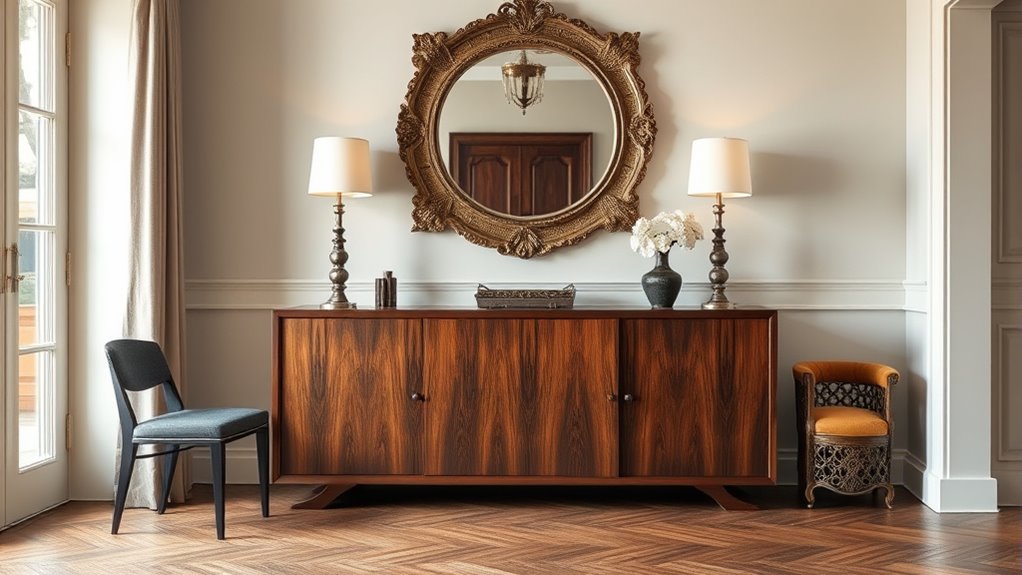
To create a cohesive look, it’s important to match your sideboard or buffet with your existing furniture. Consider your decor style—whether modern, rustic, or traditional—and select a piece that complements it. Material matching also plays a key role; for example, if your furniture features wood, choose a sideboard with a similar finish or grain. Pay attention to proportions and scale to ensure harmony across your space. Here’s a quick guide:
| Decor Style | Material Matching | Recommended Features |
|---|---|---|
| Modern | Sleek metal, glass | Minimal design |
| Rustic | Reclaimed wood | Distressed finish |
| Traditional | Dark wood, leather | Ornate details |
Matching these elements helps your furniture blend seamlessly and enhances your room’s overall aesthetic. Interior design principles emphasize the importance of balance and harmony in furniture selection.
Evaluating Storage Needs and Internal Organization

Once you’ve chosen a sideboard or buffet that complements your existing furniture, the next step is to assess your storage needs. Think about what you’ll store and how often you’ll access it. Focus on the storage capacity you require to keep your space organized and clutter-free. Examine the internal compartments carefully—are they adjustable, deep, or specialized? Consider these factors:
Assess your storage needs and internal compartment features to choose the perfect sideboard or buffet.
- Do you need enough space for everyday essentials, like dishes or linens?
- Will you store larger items that demand spacious internal areas?
- Are you looking for compartments that help categorize items for quick access?
Selecting Proportional Sizes for Visual Balance
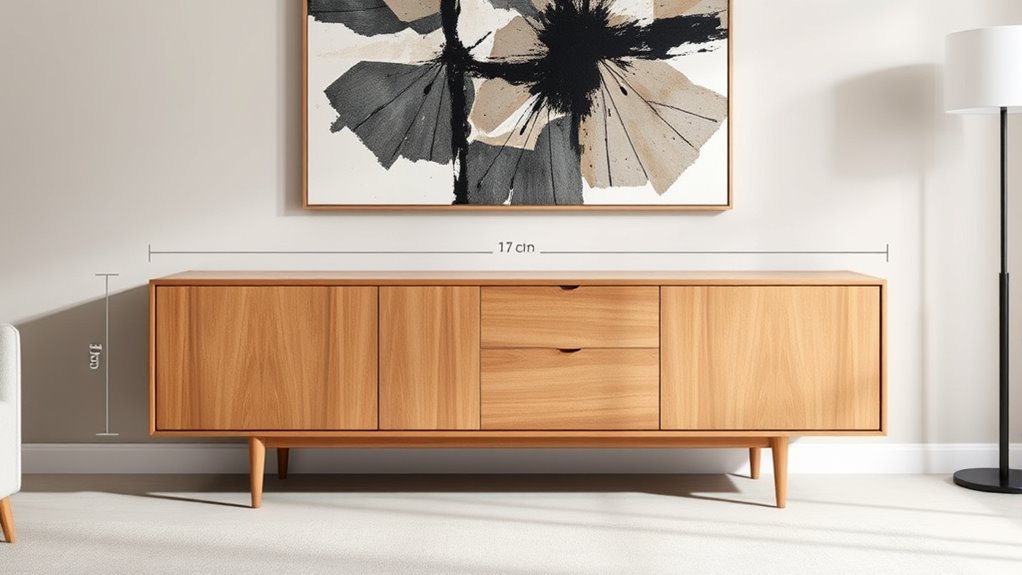
Choosing a sideboard or buffet with proportions that match your space is key to creating a balanced and harmonious look. To achieve this, focus on scale harmony—where the piece complements the size of your room and other furniture. An appropriately sized sideboard shouldn’t overpower or get lost; instead, it should enhance your space’s aesthetic proportion. Consider the room’s dimensions and the visual weight of surrounding furniture when selecting the piece. For example, a wide, low sideboard works well in a spacious area, while a narrower, taller piece suits smaller rooms. By paying attention to these proportional details, you ensure your furniture feels integrated and visually pleasing, fostering a cohesive environment.
Custom vs. Standard Sizes: Pros and Cons
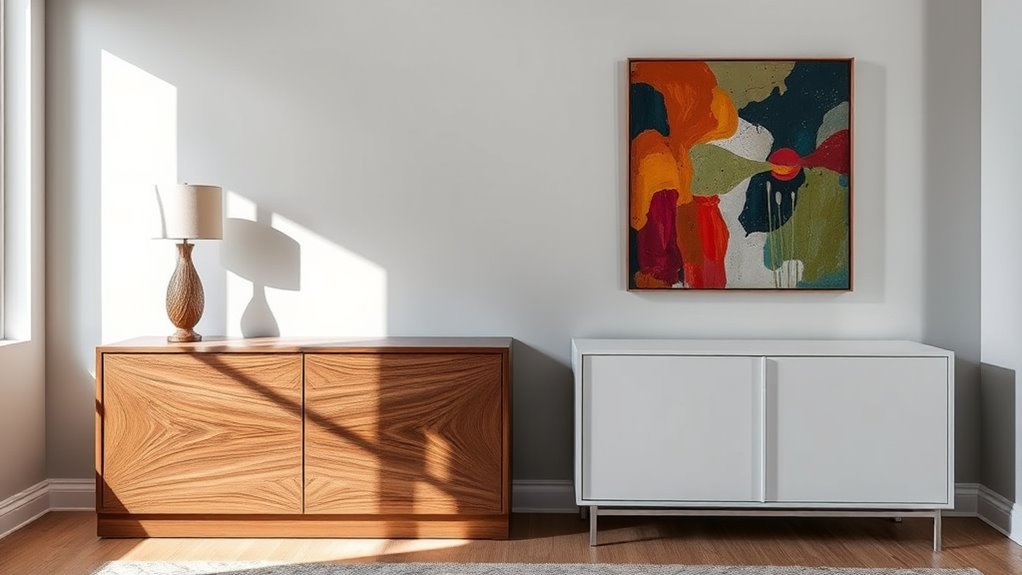
When deciding between custom and standard-sized sideboards and buffets, understanding their respective advantages and drawbacks helps you make an informed choice. Custom sizes offer versatile configurations tailored to your space, ensuring a perfect fit that enhances your room’s flow. They also provide opportunities for decorative accents, making your furniture a unique statement piece. However, custom options tend to be more expensive and take longer to craft. Standard sizes are typically more affordable, readily available, and easier to replace or upgrade. They can still be styled with decorative accents to match your decor. Consider these points:
- Custom sizes create a seamless, personalized look that elevates your space.
- Standard sizes offer quick, budget-friendly solutions.
- Your choice impacts the overall aesthetic and functionality of your room.
Measuring and Double-Checking Before Purchase
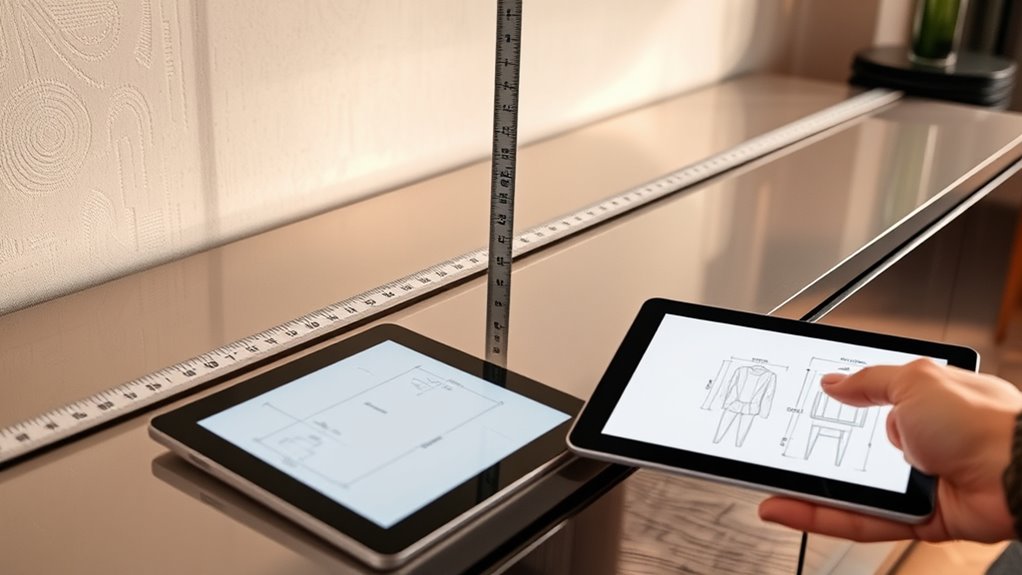
Before making a purchase, it’s essential to carefully measure your space and double-check all dimensions to guarantee the sideboard or buffet will fit perfectly. Consider your decor style to select a piece that complements your existing furniture and aesthetic. Remember to measure the available height, width, and depth, accounting for clearance and ease of access. Double-check these measurements to avoid surprises at delivery. Additionally, evaluate material durability to ensure the sideboard withstands daily use and fits your lifestyle. A sturdy material like solid wood or metal provides longevity, especially if you have kids or plan to use the piece frequently. Taking these steps helps you choose a functional, stylish piece that fits well and lasts over time.
Frequently Asked Questions
How Do I Choose a Sideboard That Complements My Overall Decor?
To select a sideboard that complements your decor, focus on matching color schemes and style coordination. Pick a piece with a finish or hue that echoes other furniture or accents in your space. Consider the overall style—if your decor is modern, opt for sleek, minimalist designs; for traditional decor, choose ornate or classic styles. This guarantees your sideboard seamlessly integrates into your room’s aesthetic.
What Materials Are Best for Durability and Style?
For durability and style, consider materials like solid wood, which offers longevity and timeless appeal, or metal, which adds a modern touch and resilience. A materials comparison shows that particleboard is budget-friendly but less durable, while glass can enhance style considerations but may be fragile. Your choice depends on your lifestyle and decor, balancing durability with aesthetic preferences for the perfect sideboard or buffet.
How Can I Incorporate a Sideboard Into a Small or Awkward Space?
When faced with a small or awkward space, think of your sideboard as a versatile asset. Use space-saving solutions like narrow or wall-mounted designs, and opt for multifunctional pieces that serve as storage and decor. Position it against a wall or tucked into a corner to maximize flow. By choosing the right size and style, you’ll turn a tricky spot into a functional, stylish focal point that enhances your room.
Are There Eco-Friendly Options for Sideboards and Buffets?
Yes, you can find eco-friendly sideboards and buffets made from sustainable materials like reclaimed wood or bamboo. Look for options with eco-friendly finishes, such as non-toxic paints or natural oils, to minimize environmental impact. By choosing these sustainable materials and finishes, you support eco-conscious living while adding stylish, functional storage to your space. Always check product labels and manufacturer details to verify they meet your eco-friendly standards.
How Do I Ensure My Sideboard Fits My Lifestyle and Usage Habits?
Think of your sideboard as the backbone of your space. To guarantee it fits your lifestyle, consider your storage needs and daily usage habits. Do you need ample space for entertaining or just a few essentials? Measure your items and think about accessibility. This way, your sideboard will serve you well, whether it’s holding dinnerware, linens, or everyday necessities, making your home both functional and stylish.
Conclusion
Think of your sideboard or buffet as the anchor of your room’s ship. When you size it right, it keeps your space steady and inviting. Measure carefully, consider your needs, and choose proportions that balance beauty with function. Like a skilled captain steering calm waters, your thoughtful selection guides your room to harmony. Trust your measurements, and you’ll set sail on a stylish, well-organized voyage that feels just right.