To master flatware, understand gauge, which affects thickness and durability—lower numbers mean thicker, sturdier pieces. Check the balance by holding utensils to ensure they feel comfortable and well-weighted. Proper care includes gentle cleaning with soft materials, drying immediately, and storing in dry, padded areas to prevent tarnish. Recognizing quality craftmanship and knowing when to upgrade keeps your flatware looking and feeling its best—exploring these tips will help you maintain and select the perfect pieces.
Key Takeaways
- Gauge indicates metal thickness; lower gauges are thicker and more durable, while higher gauges are lighter and more delicate.
- Flatware should feel balanced and ergonomic, ensuring comfort and ease of use during meals.
- Use soft cloths and mild solutions for cleaning, avoiding abrasives to protect surface finishes and prevent scratches.
- Store flatware in dry, padded containers and dry immediately after washing to prevent tarnishing and corrosion.
- Replace or upgrade flatware when patterns fade, utensils bend, or comfort and balance no longer meet needs.

KINGSTONE Silverware Set, 20 Piece Flatware Cutlery Set for 4, 18/10 Stainless Steel Silverware Mirror Polished Dishwasher Safe for Home, Restaurant, Wedding, Party(Silver, 20 pieces for 4)
Silverware Set Includes: 20-piece flatware set includes 4 dinner knife(8.9’’/2.81oz),4 dinner fork(8’’/1.6oz),4 dinner spoon(8’’/1.94oz),4 salad fork(6.7’’/1.24oz) and 4…
As an affiliate, we earn on qualifying purchases.
As an affiliate, we earn on qualifying purchases.
Understanding Different Types of Flatware Materials
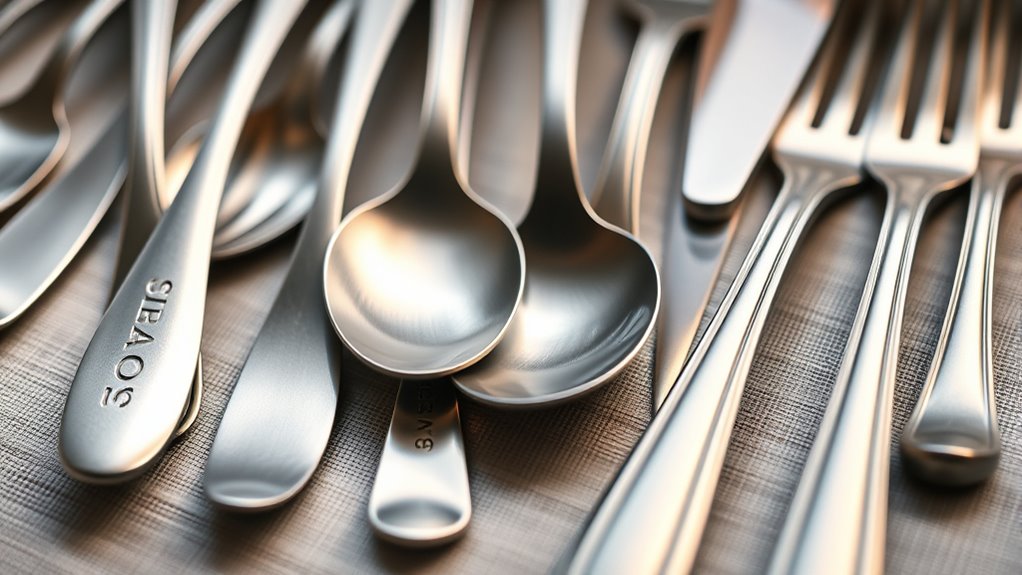
Have you ever wondered what makes some flatware more durable or stylish than others? It all comes down to the material comparison and the historical evolution of flatware. Traditionally, silver was the go-to choice, prized for its beauty and antimicrobial properties, but it’s softer and more expensive. Over time, stainless steel emerged in the early 20th century, offering greater durability, resistance to tarnish, and affordability, transforming the market. Today, you can find flatware made from various materials like plated metals, titanium, or even eco-friendly options, each with unique qualities. Understanding the historical evolution helps you appreciate why certain materials are preferred for specific uses, whether for everyday meals or special occasions. Your choice of material impacts both style and longevity.

HOMMP 80-Piece Stainless Steel Flatware Set, Service for 16
80-piece stainless steel flatware set with service for 16
As an affiliate, we earn on qualifying purchases.
As an affiliate, we earn on qualifying purchases.
What Does Gauge Mean in Flatware?
Gauge measures the metal thickness in flatware, affecting its strength and longevity. Thicker gauges typically mean more durable utensils that can withstand frequent use. Understanding common gauge standards helps you choose flatware that balances quality and affordability.
Metal Thickness Measurement
Understanding what gauge means in flatware is essential when selecting the right pieces for your needs. Metal thickness is measured through gauge measurement, which indicates how thick or thin the flatware is. A lower gauge number means a thicker, more substantial piece, while a higher gauge indicates a thinner, lighter utensil. This measurement helps you gauge durability, weight, and overall feel. For example, flatware with a gauge of 16 is thicker and more durable, suitable for everyday use, while a gauge of 18 or higher offers a more delicate feel, often preferred for formal settings. Knowing how metal thickness relates to gauge measurement allows you to choose flatware that matches your preferences for weight and sturdiness, ensuring you get the right balance for your dining experience. Sulfate-free options are also available to reduce potential damage and maintain the quality of your flatware over time.
Impact on Durability
The thickness of your flatware directly influences its durability, with thicker pieces generally lasting longer and resisting bending or breaking. Heavier flatware typically indicates a sturdier build, making it less prone to damage during daily use. However, the material composition also plays a vital role; high-quality metals resist material corrosion, which can weaken flatware over time. Thicker flatware with corrosion-resistant materials will maintain its strength and appearance longer. Conversely, thinner or lower-quality flatware may bend or warp more easily and be more vulnerable to rust or tarnish. When choosing flatware, consider both the gauge and the material’s corrosion resistance to guarantee your utensils stand up to regular use without compromising durability. Additionally, understanding the contrast ratio of the material can help in assessing its resilience and visual appeal over time.
Common Gauge Standards
When selecting flatware, knowing what the numbers on the packaging or descriptions mean can help you choose pieces that balance durability with ease of use. Common gauge standards indicate the thickness and weight of the silverware, affecting how sturdy or delicate it feels. Thicker gauges (lower numbers) are more durable, suitable for everyday use and formal settings that follow silverware etiquette. Thinner gauges (higher numbers) often match the elegance of historical flatware styles but may be less durable. Understanding gauge helps you select flatware that aligns with your needs, whether for casual or formal dining. Recognizing these standards also allows you to appreciate the evolution of silverware etiquette and design, blending modern practicality with traditional aesthetics.

Palksky Jewelry Cleaning Brush Set, Sterling Silver Polish Cloth Kit, Silverware Care Products, 14PCS
COMPLETE SET: 14-piece jewelry cleaning kit includes specialized brushes and polishing cloth for thorough cleaning of precious metals…
As an affiliate, we earn on qualifying purchases.
As an affiliate, we earn on qualifying purchases.
How to Assess and Choose the Right Balance
How can you tell if a piece of flatware has the right balance? You want it to feel natural in your hand, without tipping forward or backward. To assess this, hold the flatware by its handle and see how it rests naturally. A well-balanced piece offers an ergonomic grip, making it comfortable and easy to maneuver during use. Additionally, crochet styles for locs can inspire you to explore ergonomic designs that enhance comfort and functionality.
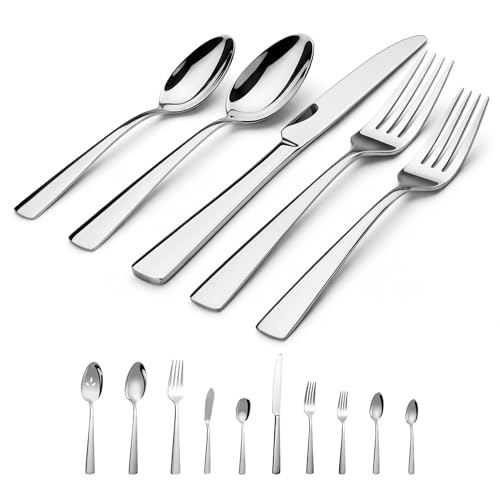
45-Piece Flatware Sets, Silverware Set for 8, Durable Stainless Steel Tableware in Ergonomic Design Size and Weight, Kitchen Utensils Set with Steak Knives, Rust-proof, Dishwasher Safe
45-Piece Flatware Sets: This stainless steel silverware sets includes 8 pieces each of dinner fork, dinner spoon, dinner…
As an affiliate, we earn on qualifying purchases.
As an affiliate, we earn on qualifying purchases.
The Importance of Proper Flatware Handling and Use
Handling your flatware correctly guarantees it stays in great shape and functions properly. Using proper techniques and following maintenance tips can extend its lifespan and improve your dining experience. Let’s explore how to handle, use, and care for your flatware effectively.
Proper Handling Techniques
Proper flatware handling is essential for maintaining hygiene and ensuring a pleasant dining experience. To do this effectively, focus on handling safety and maintaining an ergonomic grip. Here are three tips to help you handle flatware properly:
- Always wash your hands before handling flatware to prevent contamination.
- Use a comfortable, ergonomic grip to avoid fatigue and maintain control during use.
- Handle flatware by the handles, avoiding touching the eating surfaces to prevent germs from spreading.
Correct Usage Practices
Using flatware correctly not only enhances your dining experience but also promotes good hygiene and respect for the meal. Following etiquette guidelines helps you handle utensils properly, such as holding them by the handles and avoiding unnecessary contact with the eating ends. Proper usage includes using the correct utensil for each course and placing them neatly on your plate or rest when not in use. Storage solutions are equally important; storing flatware in designated drawers or compartments prevents damage and keeps utensils clean. Avoid stacking or mixing different types of flatware, which can cause scratches or tarnish. Adhering to proper handling practices ensures your flatware remains in good condition, prolongs its lifespan, and reflects your respect for the dining process. Proper flatware handling also contributes to a respectful and pleasant dining atmosphere.
Regular Maintenance Tips
To keep your flatware in top condition, proper handling and usage are essential on a regular basis. Ensuring dishwasher safety prevents damage and preserves finishes, so always rinse off food residue before loading. Additionally, pay attention to ergonomic design by handling flatware gently to avoid bending or scratching. Here are some maintenance tips:
- Use a gentle cycle in the dishwasher and avoid overcrowding for thorough cleaning without damage.
- Hand wash delicate pieces to prevent scratches or tarnishing, especially for high-end flatware.
- Store flatware properly in a dry, organized drawer to prevent tarnish and maintain balance.
- Be aware of support hours for your local parks or service providers to plan maintenance and cleaning schedules accordingly.
Regular care keeps your flatware looking new, prolongs its lifespan, and preserves its ergonomic comfort.
Tips for Maintaining Shine and Preventing Tarnish
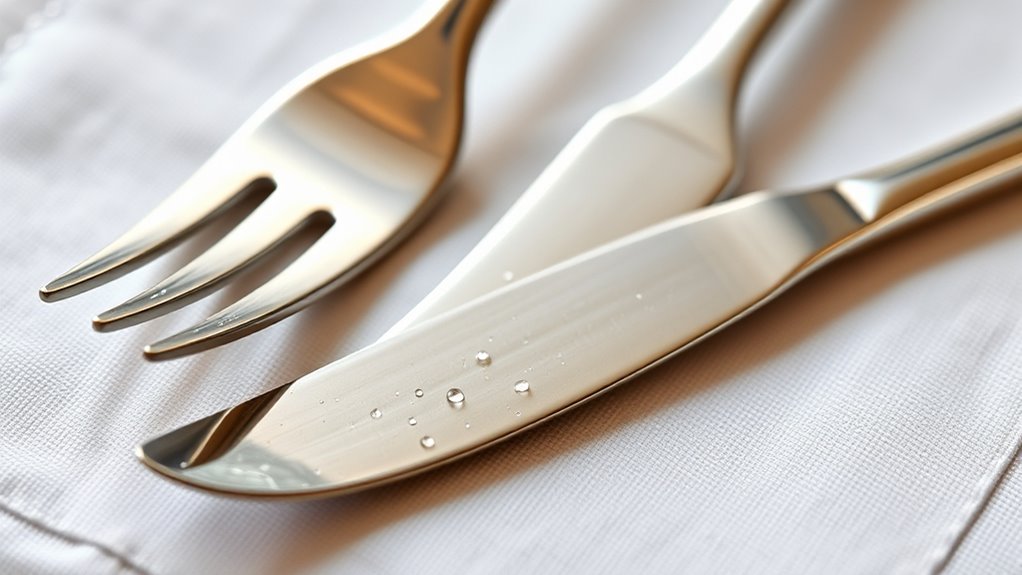
Keeping your flatware shining and free from tarnish requires regular care and attention. To prevent dullness, handle your pieces with care, avoiding abrasive materials that can scratch surfaces. When cleaning, use gentle methods similar to those in antique restoration—soft cloths and mild solutions. An ergonomic design in flatware means you can clean comfortably, reaching all areas easily. To maintain their luster, dry your flatware immediately after washing to prevent water spots. Store it in a dry, airtight environment to slow tarnishing. Applying a thin layer of protective wax or polish can also help preserve shine. Regular upkeep guarantees your flatware remains beautiful, maintaining its antique charm and ergonomic appeal for years to come. Incorporating proper storage techniques can further extend the life and appearance of your flatware.
Best Practices for Cleaning and Storing Flatware
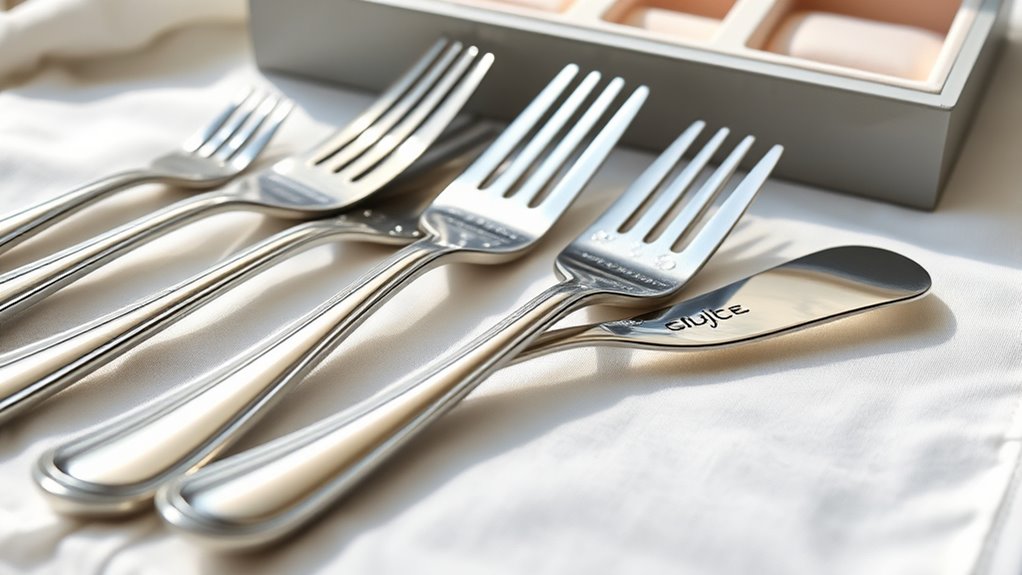
Proper cleaning and storage are essential to maintaining your flatware’s appearance and longevity. To keep your flatware looking its best, follow these best practices:
- Use dishwasher safety tips by placing flatware properly to prevent scratches and corrosion. Avoid overcrowding, and separate silverware from other metals.
- Opt for eco-friendly cleaning solutions, like natural dish soaps or vinegar, to reduce environmental impact and keep your flatware tarnish-free.
- Store flatware in a dry, padded container or drawer to prevent moisture buildup, which can cause tarnish or rust over time. Additionally, understanding metal composition can help you select appropriate cleaning and storage methods to preserve your flatware’s quality.
Recognizing Quality Craftsmanship and Design Features
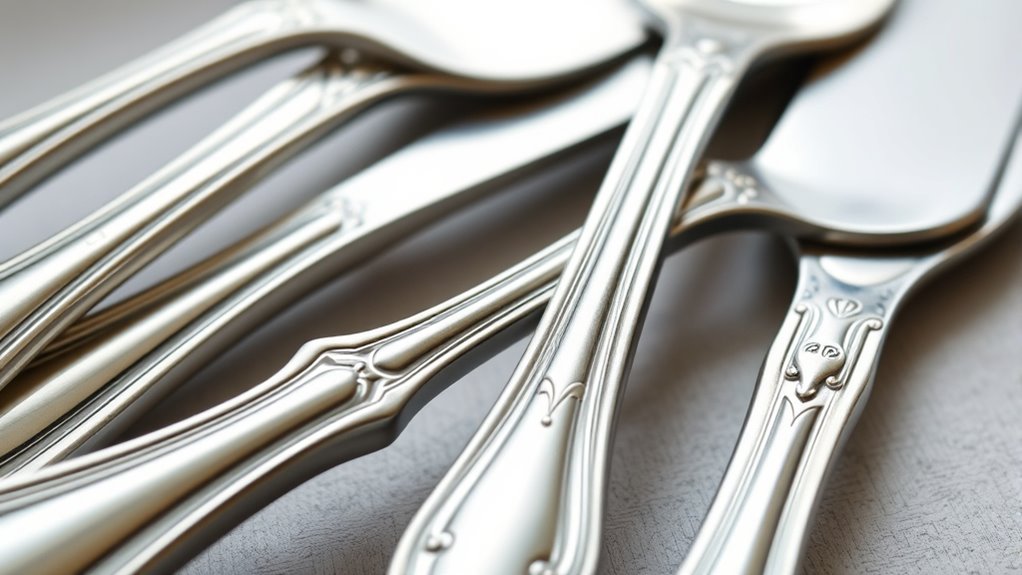
When evaluating flatware, paying attention to craftsmanship and design features reveals the quality behind each piece. Look for intricate engravings that showcase detailed, precise work, indicating skilled craftsmanship. These engravings often add elegance and reflect careful attention to detail. Additionally, assess the ergonomic designs—comfortable handles and well-balanced weight—that make daily use easier. High-quality flatware feels sturdy yet comfortable in your hand, with smooth edges and thoughtfully shaped handles. Notice how the design elements align seamlessly, without rough spots or uneven finishes. Recognizing these features helps you distinguish well-made flatware from cheaper alternatives. By focusing on craftsmanship and thoughtful design, you ensure your flatware not only looks beautiful but also offers durability and comfortable use for years to come. Attention to these details can significantly enhance your overall dining experience.
When to Replace or Upgrade Your Silverware
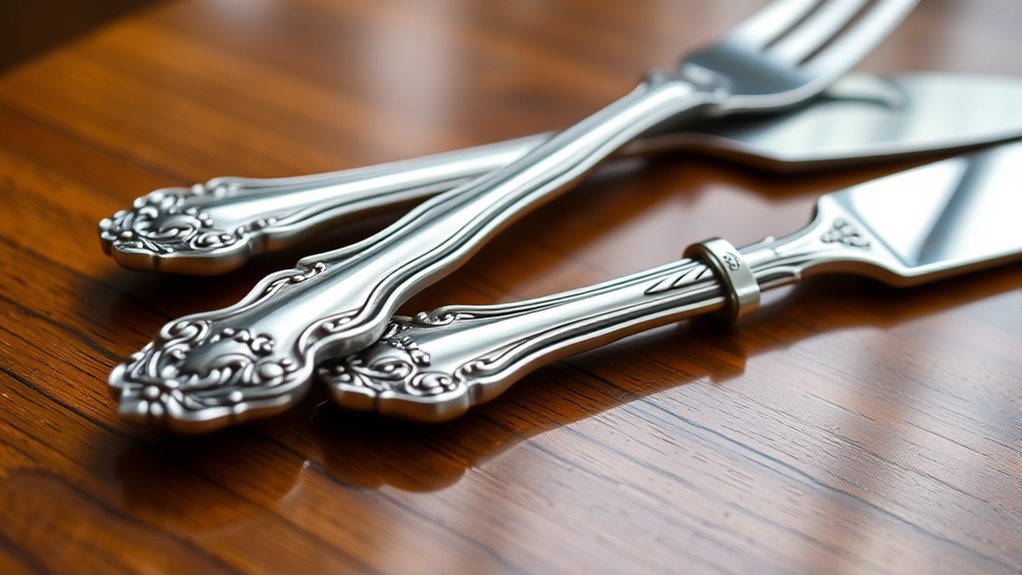
Knowing when to replace or upgrade your silverware guarantees you maintain both functionality and style. Over time, decorative patterns may fade, and utensils can become dull or bent, signaling it’s time for an upgrade. Consider replacing your flatware if:
- The decorative patterns are worn or chipped, diminishing its visual appeal.
- Utensils are no longer balanced or feel uncomfortable to hold, affecting your dining experience.
- You’ve outgrown your current storage solutions, making it difficult to keep your silverware organized and protected.
- Regular use can lead to oxidation and tarnishing, which may require replacement to preserve appearance and hygiene.
Upgrading also offers a chance to choose modern designs that suit your evolving style. Proper storage solutions protect your silverware’s finish and decorative patterns, extending its life. Regular updates ensure your flatware remains both beautiful and functional for years to come.
Frequently Asked Questions
How Can I Identify Real Silver Flatware From Stainless Steel?
To identify real silver flatware, check for markings or hallmarks indicating sterling silver or 925 silver. You can also assess weight and density—silver flatware feels heavier and denser than stainless steel. Sometimes, real silver tarnishes or develops a patina, which stainless steel doesn’t. Use a magnet; silver isn’t magnetic, so if a magnet sticks, it’s likely stainless steel. These clues help you distinguish genuine silver flatware from stainless steel easily.
What Are the Safest Cleaning Methods for Delicate Flatware?
Did you know that over 60% of people damage delicate flatware by using harsh cleaners? To keep it safe, always opt for gentle cleaning methods. Use natural remedies like a mix of baking soda and water or mild dish soap. Avoid abrasive scrubbers and dishwasher cycles, which can harm your flatware’s finish. Instead, hand wash carefully, rinse thoroughly, and dry immediately to preserve its beauty and integrity.
How Does Handle Design Affect Comfort and Usability?
Handle design greatly impacts your comfort and usability. An ergonomic grip fits naturally in your hand, reducing fatigue during extended use. Smooth, well-balanced handles enhance control, making cutting or serving easier. Additionally, the aesthetic appeal of the handle adds elegance to your table setting, making your flatware not just functional but also visually pleasing. Overall, thoughtful handle design guarantees you enjoy comfort and style every time you use your flatware.
Can Flatware Be Repaired if Damaged or Bent?
Think of your flatware as a trusted friend—you can sometimes mend what’s bent or damaged. Yes, repair options exist for bent flatware, especially for minor damage. You can try bending repair carefully with gentle heat or seek professional restoration for more serious issues. While not all damage is fixable, with patience and proper techniques, you can often restore your flatware’s function and keep it shining like new.
What Are Eco-Friendly Options for Disposing of Old Flatware?
You can opt for eco-friendly disposal by participating in recycling programs that accept metal flatware or exploring donation options. Recycling your old flatware guarantees it gets repurposed instead of ending up in landfills. Donating to charities or community centers is another great way to give your flatware a second life. These methods help reduce waste and support sustainable practices while keeping your space clutter-free.
Conclusion
Now that you know the essentials of flatware—materials, gauge, balance, and care—you’re equipped to make smarter choices. But remember, the true test lies in your daily use and maintenance. Will your flatware stand the test of time? Will it retain its shine and elegance or start to fade? The next step is yours—stay attentive, care diligently, and watch your silverware transform from ordinary to extraordinary. The secret to lasting beauty is in your hands.